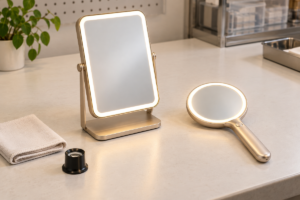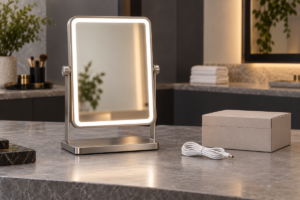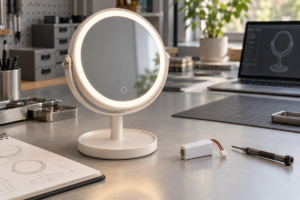

For most brand and retail buyers, 3-color LED makeup mirrors are better for mid-range and premium assortments where customers compare warm, neutral, and daylight lighting before purchase. Single-color LED makeup mirrors are better for cost-controlled programs, simple gift items, or markets where one stable neutral light is enough. A practical sourcing decision is to match color-temperature function, dimming logic, packaging promise, QC test method, and target price before sample approval.
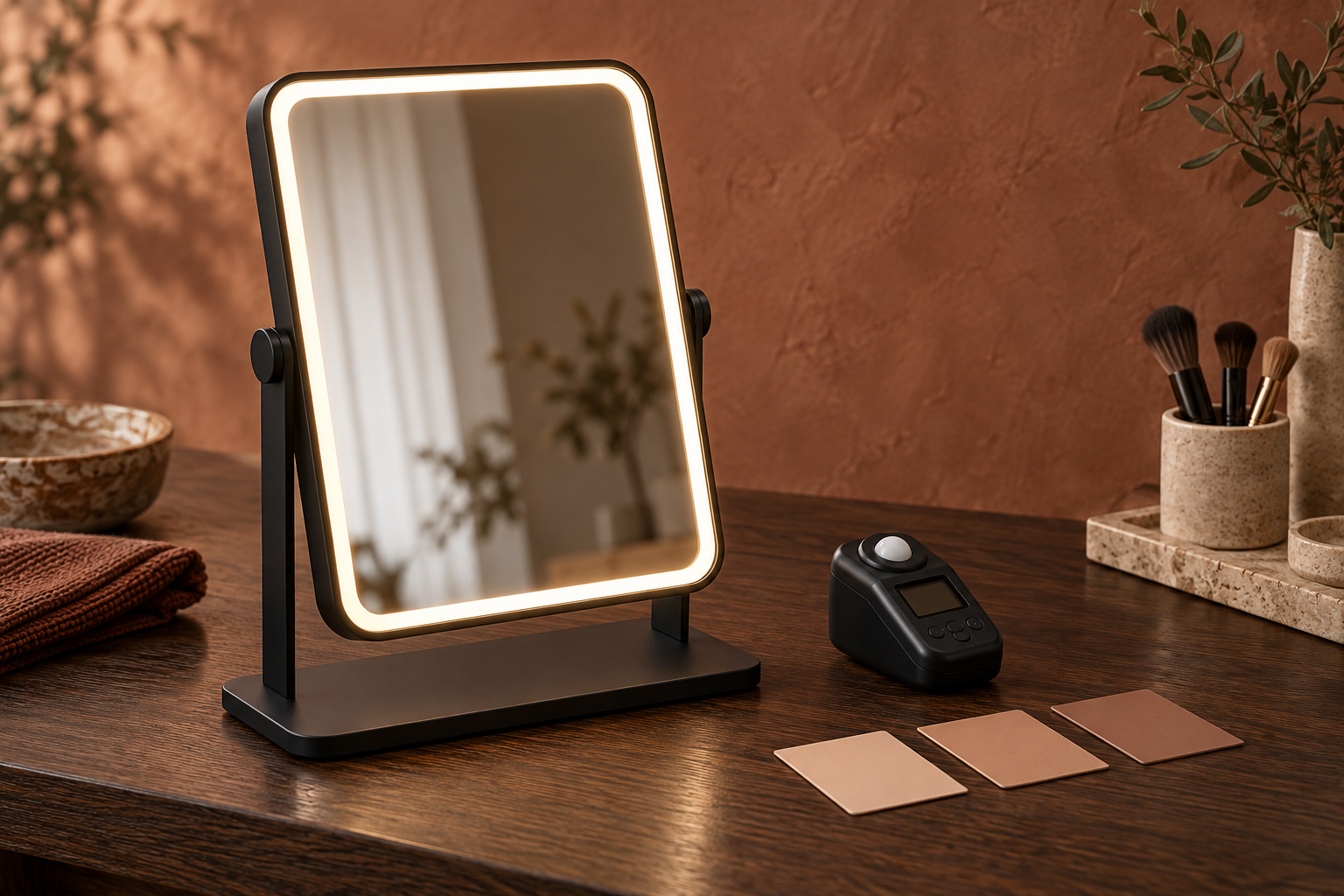
Why This Comparison Matters for Buyers
Lighting options are now one of the easiest LED makeup mirror features to promote online, in retail packaging, and in beauty-store displays. A 3-color model can sound more premium because it gives end users warm, neutral, and daylight modes. But the feature only helps if the light modes are visibly different, comfortable on the face, easy to control, and consistent from sample to mass production.
For a sourcing manager, the question is commercial: will 3-color lighting increase perceived value enough to justify the added component control and QC work? A single-color LED mirror may look simpler, but it can be the better choice when the buyer needs stable cost, fewer user instructions, and fewer function-related complaints.
Buyers planning a larger LED makeup mirror range should treat color temperature as part of assortment planning, not as a decorative feature. The decision affects LED strip selection, driver or PCB design, switch logic, user manual, product claim wording, inspection steps, packaging copy, and after-sales troubleshooting.
3-Color vs Single-Color LED Makeup Mirrors
| Decision point | 3-color LED makeup mirror | Single-color LED makeup mirror |
|---|---|---|
| Best fit | Beauty brands, Amazon/e-commerce sellers, mid-range retail, gift programs with feature-led packaging | Entry retail, price-sensitive wholesale, simple gift lines, distributor replenishment SKUs |
| Main buyer value | Stronger feature story and wider use-case coverage | Lower complexity and easier consistency control |
| Lighting promise | Warm, neutral, and daylight modes should be clearly different and comfortable | One agreed CCT should be stable across production |
| QC focus | CCT mode accuracy, mode memory, switch sequence, brightness balance, labeling claims | CCT consistency, brightness, glare control, switch reliability |
| Packaging impact | More explanation needed on box, manual, and listing images | Cleaner packaging copy and fewer user questions |
| Main risk | Modes look too similar, switch logic confuses users, claims are not tested | Product feels basic if competitors promote adjustable lighting |
The practical tradeoff is simple: 3-color lighting helps when the sales channel rewards feature comparison, while single-color lighting helps when the order needs cost control and operational simplicity.
When 3-Color LED Makeup Mirrors Are the Better Choice
Choose 3-color lighting when the mirror will be sold as a feature-led beauty tool, not only as a basic illuminated mirror. Retailers can use the three modes to explain use scenarios: warm light for evening makeup, neutral light for daily routines, and daylight for more detailed color checking. E-commerce sellers can also turn the lighting modes into listing images, short videos, and review-friendly product claims.
This option is especially useful for rechargeable tabletop mirrors, travel LED mirrors, and retail-ready gift programs where the buyer wants the product to feel current. If the mirror also includes dimming, magnification, USB-C charging, or a premium finish, 3-color lighting can support a stronger price position.
However, buyers should not approve the feature from a showroom demo alone. Ask the supplier to confirm target CCT ranges, brightness at each mode, switch sequence, long-press dimming behavior, and whether the mirror remembers the previous mode after power-off. If the modes are too close together, the product may create customer disappointment even if the technical feature exists.
When Single-Color LED Makeup Mirrors Are Still the Safer Option
Single-color lighting can be the better sourcing choice for entry-level retail, promotional gift programs, distributor stock, or markets where buyers value reliability more than adjustable modes. A well-designed single-color mirror with comfortable neutral light can feel more professional than a cheap 3-color mirror with harsh glare and unstable switching.
Single-color models also simplify production control. The supplier needs to keep one CCT target stable, one light output range consistent, and one product claim clear. That can reduce QC workload and make repeat orders easier to manage, especially when the buyer is ordering several mirror colors, packaging versions, or private-label SKUs at the same time.
For importers and wholesalers, simpler controls may reduce explanation needs, but support demand should be checked in a channel-specific pilot. If the product is sold through lower-touch channels, complicated button logic can become a complaint source. In that case, a single stable neutral-white light may be easier for the customer to understand and easier for the buyer to reorder.
Specification Details Buyers Should Confirm
Before requesting a quotation, buyers should define the lighting standard in plain commercial language and technical terms. Do not only write “3 colors” or “white light” in the RFQ. Those descriptions are too loose for sample approval and mass production.
For 3-color LED makeup mirrors, confirm the target color temperatures for warm, neutral, and daylight modes. Common commercial ranges may vary by market, but the supplier should be able to explain the intended difference and show samples under normal indoor conditions. Also confirm whether brightness is adjustable in every mode and whether the dimming curve feels smooth.
For single-color LED makeup mirrors, confirm the one CCT target and acceptable tolerance. A buyer may prefer neutral white for a general retail line or warmer light for a bedroom vanity concept. The key is consistency: the approved sample, production units, packaging claim, and listing copy should all describe the same lighting result.
Switch design also matters. A touch switch with short press for color change and long press for dimming can work well, but only if the manual is clear and the response is stable. If the mirror is for older consumers, hotels, or simple gift channels, buyers may prefer fewer control steps.
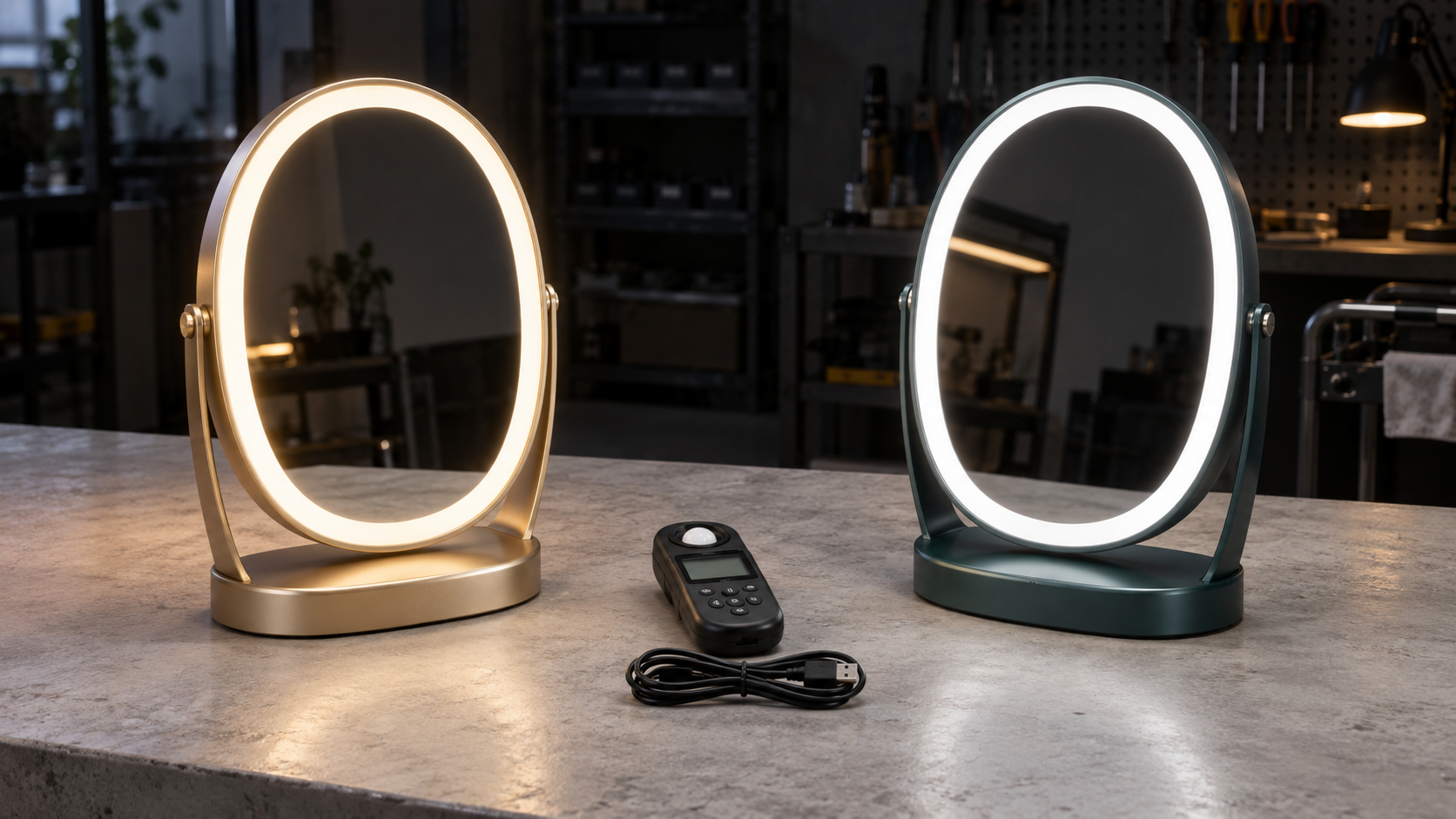
For sample approval, request measured CCT and color-rendering data at each selectable mode, using the same distance, power state and dimming level. Agree a CRI acceptance target and review skin-tone and cosmetic-color appearance alongside the measurements; CCT alone does not establish color accuracy. Check diffusion, glare, low-level flicker and brightness balance across modes. Record tolerances and the approved LED and driver versions in the purchase specification.
Approve Each Mode Against the Same Test Record
Ask for one results sheet per identified sample and hardware revision. Record actual results alongside the buyer-approved acceptance limits; a photograph or a mode label is not a measurement. Agree the sample quantity and test method before comparing quotations.
| Check | Record with each result | Release decision |
|---|---|---|
| Light output and color | Mode, CCT, color-rendering result, illuminance at the agreed face position, instrument and measurement geometry | Approve each mode against its own agreed limits; do not assume equal output at equal button settings |
| Dimming and power | Dimming setting, power source, battery state where applicable, stabilization time and test duration | Investigate changes under the same conditions before accepting a different LED or driver |
| Controls and memory | Short/long press sequence, mode after restart and any reset after charging or power disconnection | Make the delivered manual and listing match the verified behavior |
| Exceptions | Sample ID, failed result, corrective action, owner and retest evidence | Hold the affected configuration until the buyer signs off the correction and claim wording |
Use the custom sample approval guide to retain the signed revision. Evaluate glare at the actual working distance using the 5x versus 10x comparison; a lighting mode that works for one viewing position may need a different dimming setting for another.
Common Sourcing Mistakes
The first mistake is choosing 3-color lighting only because competitors use it. If the buyer’s target price is tight and the mirror is sold as an entry SKU, the extra feature may reduce margin without improving sell-through enough.
The second mistake is approving a single sample in a bright office without checking real use conditions. Makeup mirrors are used in bedrooms, bathrooms, dressing tables, retail displays, and small studios. A light that looks impressive under factory lighting may feel too cold, too dim, or too harsh in normal use.
The third mistake is leaving packaging and listing claims vague. If a box says “natural daylight” or “3 lighting modes,” the buyer should confirm that the product, manual, and inspection report support that claim. This is especially important for e-commerce sellers because lighting dissatisfaction often appears in reviews.
The fourth mistake is forgetting repeat-order control. When a buyer reorders six months later, the LED bin, PCB version, switch logic, and packaging copy should still match the approved standard. A good supplier should maintain model number control and sample records so the second batch does not drift from the first.
Pre-RFQ Checklist for Sourcing Teams
- Define the sales channel: retail shelf, Amazon/e-commerce, wholesale, gift, salon, or project use.
- Confirm whether the mirror should be 3-color or single-color before comparing prices.
- For 3-color models, specify warm, neutral, and daylight expectations instead of using vague wording.
- For single-color models, define the target CCT and acceptable tolerance.
- Confirm whether dimming is included and whether it works in every color mode.
- Review switch sequence, memory function, charging method, battery/runtime claim, and adapter or cable package.
- Ask how lighting consistency will be checked during sample approval and pre-shipment inspection.
- Align box copy, user manual, online listing claims, and inspection records with the approved lighting specification.
- Confirm MOQ changes if the buyer customizes LED color temperature, packaging, logo, or manual language.
Bottom-Line Recommendation
Choose 3-color LED makeup mirrors when the buyer needs a stronger feature story, higher perceived value, and better channel differentiation for beauty retail or e-commerce. Choose single-color LED makeup mirrors when the buyer needs a simpler, cost-stable, easier-to-control SKU. In both cases, the sourcing decision should be locked through sample testing, CCT confirmation, dimming review, switch approval, packaging claim control, and pre-shipment inspection.
For related planning, buyers can review Mingda Mirror’s LED makeup mirror brightness range guide, custom magnification LED makeup mirror specification guide, and LED makeup mirror retail assortment planning checklist. To discuss private-label LED tabletop, travel, compact, or wall-mounted makeup mirror projects, visit Mingda Mirror makeup mirrors or contact the Mingda Mirror team.
Request a lighting-option sample quotation: send your channel, quantities by SKU, mirror size and magnification, target lighting modes, power design, packaging claims and launch date. Ask for separate sample costs, MOQ, component-change terms and production lead time after written sample approval.
FAQ
Are 3-color LED makeup mirrors always better for retail?
No. They are better when the target customer values lighting flexibility and the sales channel can explain the feature. For entry-price programs, a stable single-color LED mirror may deliver better cost control.
What should buyers test before approving a 3-color mirror sample?
Buyers should test color-temperature difference, brightness in each mode, dimming smoothness, switch response, mode memory, battery runtime if rechargeable, packaging claims, and whether the sample matches the intended retail or e-commerce promise.
How should buyers choose CCT for a single-color makeup mirror?
There is no universal best CCT. Evaluate intended users and room conditions on samples, then agree the target, tolerance, brightness and diffusion. A neutral-white option is a candidate to test, not a guarantee of comfort or color accuracy.
Does 3-color lighting increase MOQ or lead time?
It can, especially when the buyer requests custom LED specifications, private-label packaging, or a nonstandard switch design. Buyers should confirm MOQ, sample time, component availability, and production lead time during RFQ.
Can Mingda Mirror support both 3-color and single-color LED makeup mirror projects?
Yes. Mingda Mirror can help buyers compare lighting options, sample approval standards, packaging requirements, logo customization, and QC inspection points for LED makeup mirror orders.
Social Media Content Ideas
LinkedIn angle: Share the comparison table and explain why sourcing teams should decide color-temperature function before comparing LED makeup mirror quotations.
Facebook angle: Turn the article into a buyer-education post about when 3-color lighting is worth the upgrade and when a stable single-color mirror is enough.
Instagram angle: Use the lighting comparison image to create a simple visual post showing warm, neutral, and daylight decisions for retail-ready LED makeup mirrors.
Short CTA: Read the full sourcing comparison and contact Mingda Mirror for LED makeup mirror sampling support.