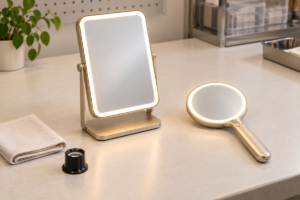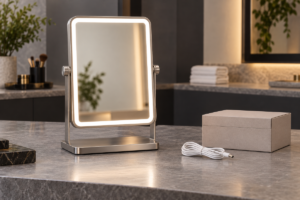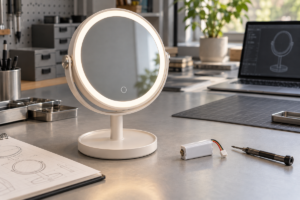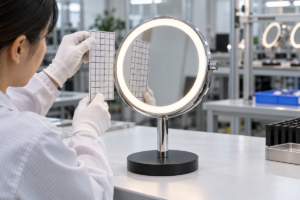

For a custom magnification LED makeup mirror, buyers should confirm the magnification level, lens diameter, working distance, mirror structure, lighting uniformity, power system, packaging, and inspection standard before approving a sample. A practical OEM approach is to match the magnification to the sales channel first, then lock the lens and lighting specifications in the sample approval record. This helps identify a potential bulk-order problem: the mirror looks attractive, but shoppers complain that the magnifying side is too strong, too small, distorted, or difficult to use.
Mingda Mirror manufactures LED makeup mirrors for brands, retailers, wholesalers, and e-commerce sellers that need private-label product lines with practical specifications. This guide explains how business buyers should define custom magnification before requesting a quotation or approving mass production.
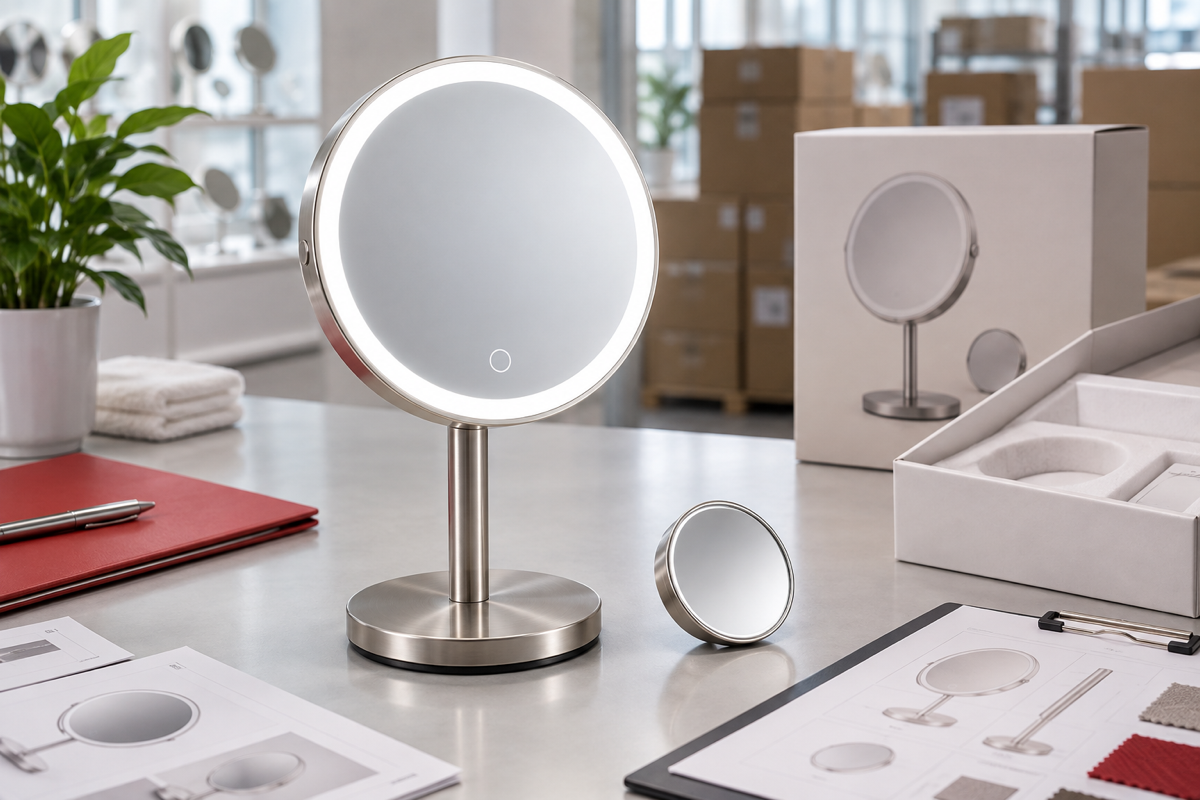
Why Magnification Specs Matter in OEM Mirror Orders
Magnification is not just a feature line on a retail box. It affects customer comfort, return risk, packaging claims, lens sourcing, QC inspection, and even the way a product is positioned in a retail assortment.
For a beauty brand, 5x may feel more comfortable for daily skincare and broad detail work. For an Amazon seller, 10x can support a precision-task proposition that buyers should validate with their own query and sales data, but it also needs clearer instructions because the correct viewing distance is shorter. For a retail chain, the best solution may be a two-sided LED makeup mirror with 1x on one side and 5x or 10x on the other. For a gift or travel line, a removable magnetic magnifying insert may be better than a full double-sided structure if its quoted packed size and complete-unit cost meet the brief.
The buyer’s decision should start with the user scenario, not only the highest number.
Choose the Magnification by Buyer Scenario
| Buyer scenario | Practical magnification choice | Why it works | Sourcing risk to control |
|---|---|---|---|
| Beauty brand daily-use line | 1x plus 5x | Comfortable for skincare, eyeliner, and general close-up work | Avoid weak differentiation if competitors promote 10x |
| Amazon or marketplace listing | 1x plus 10x | Precision-task positioning; validate channel demand | Add usage guidance to reduce distortion complaints |
| Retail chain shelf assortment | 1x, 5x, and selected 10x SKUs | Covers different shopper needs without overloading one SKU | Keep packaging claims consistent across stores |
| Salon or professional buyer | 5x or 7x | Evaluate sample-specific working distance for repeated use | Confirm brightness and glare control for longer sessions |
| Travel or compact mirror program | 1x plus 10x insert | Small format, easy feature story, giftable | Test magnet, insert fit, and anti-scratch packing |
If the product is for first-time LED makeup mirror buyers, 5x is usually easier to use. If the product is promoted around eyebrow shaping, lashes, tweezing, or precision skincare, 10x may be a stronger commercial hook. The key is to specify the working distance and lens quality together with the magnification.
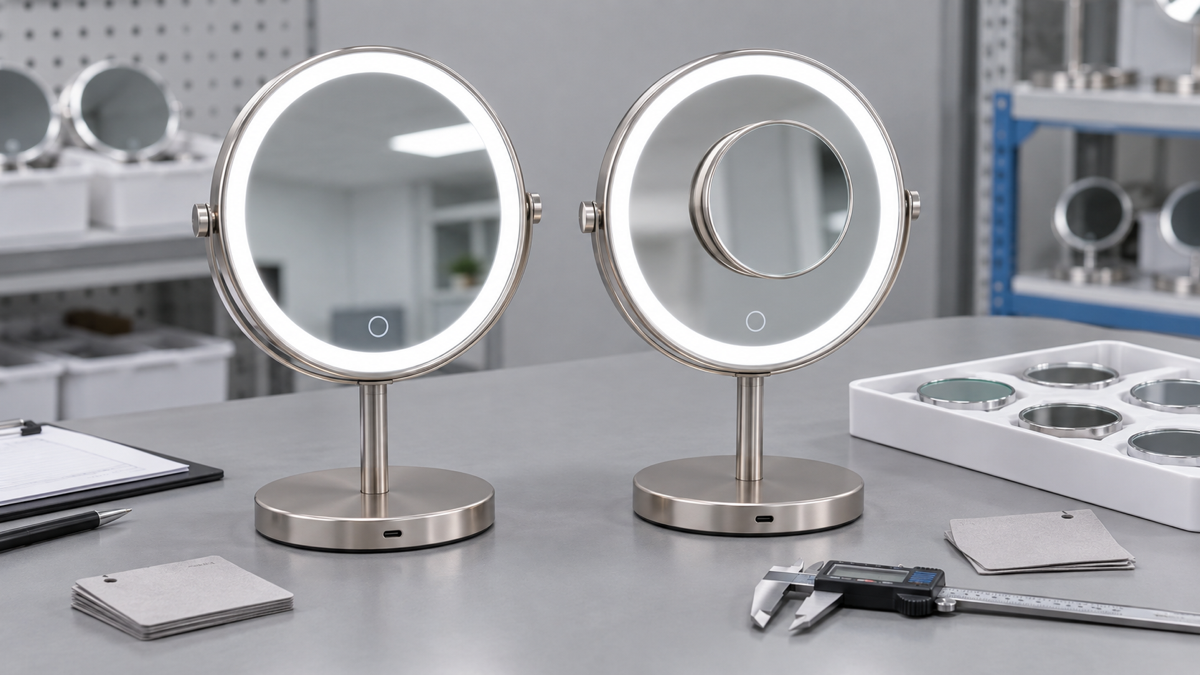
Specifications to Confirm Before Quotation
When requesting a custom magnification LED makeup mirror quotation, buyers should send more than a product photo. A complete RFQ should describe the expected mirror structure, market channel, packaging format, and testing requirement.
1. Magnification Level and Lens Diameter
Confirm whether the mirror uses 1x/5x, 1x/7x, 1x/10x, or a removable magnifying insert. Also specify the lens diameter. A large full-side magnifying mirror gives a stronger premium feel, but it can raise cost and packaging requirements. A smaller insert is economical and flexible, but the buyer must test whether the usable viewing area feels large enough.
2. Working Distance
Higher magnification usually requires a shorter working distance. If the packaging says 10x but the consumer uses it too far from the face, the reflection may appear distorted. This is a common source of negative reviews. OEM buyers should approve a simple English usage note for retail box, insert card, or online listing content.
3. LED Ring and Brightness
Magnification only works well when the lighting is comfortable. Confirm CCT options, CRI target, brightness range, dimming method, glare diffusion, LED quantity, and whether the magnifying side receives even light. A high-magnification mirror with harsh light can make details visible but uncomfortable.
4. Power System
For current retail and e-commerce channels, rechargeable models are highly attractive because they reduce battery replacement friction. Confirm USB-C or Micro USB, battery capacity, charging time, working time, overcharge protection, and whether the charging cable and adapter policy match the target market. If a plug-in model is chosen, confirm cord length and plug requirement.
5. Mechanical Structure
Check hinge torque, swivel angle, base weight, stand height, and stability. Magnifying mirrors encourage users to lean closer, so wobble feels more obvious than it does on a standard 1x mirror. For wall-mounted or suction designs, confirm surface compatibility and load testing.
Sample Approval Checklist for Custom Magnification Mirrors
Before releasing mass production, the buyer should approve a physical sample and record the following points:
- Magnification level matches the approved specification and packaging claim.
- Lens has no obvious distortion, waves, scratches, black dots, or edge defects.
- Working distance is acceptable for the intended consumer use.
- LED light is even around the mirror and does not create harsh glare.
- Dimming, color temperature, touch button, and memory function match the quotation.
- Rechargeable battery, charging port, cable, and safety protection pass the agreed test.
- Hinge, rotation, stand, base, and removable insert feel stable after repeated use.
- Retail box, instruction sheet, barcode area, warning label, and carton marks are approved.
- Drop-test and vibration-test packaging results are acceptable for the sales channel.
- Golden sample photos and inspection criteria are saved before bulk production.
This checklist should be part of the purchase file, not only a conversation with the supplier. It helps the buyer compare future production batches against an agreed standard.
Common Mistakes Buyers Should Avoid
The first mistake is choosing the highest magnification only because it looks stronger in marketing copy. A 10x mirror can be excellent, but it must be paired with correct lens quality, working distance guidance, and lighting comfort.
The second mistake is approving the mirror appearance but not testing repeated movement. If the stand, hinge, or rotation structure loosens too quickly, returns may come from perceived low quality rather than the magnification itself.
The third mistake is using one packaging claim across several customized versions. If one SKU is 5x and another is 10x, the retail box, instruction sheet, online listing, barcode file, and carton label must stay aligned. A claim mismatch can create warehouse confusion and customer complaints.
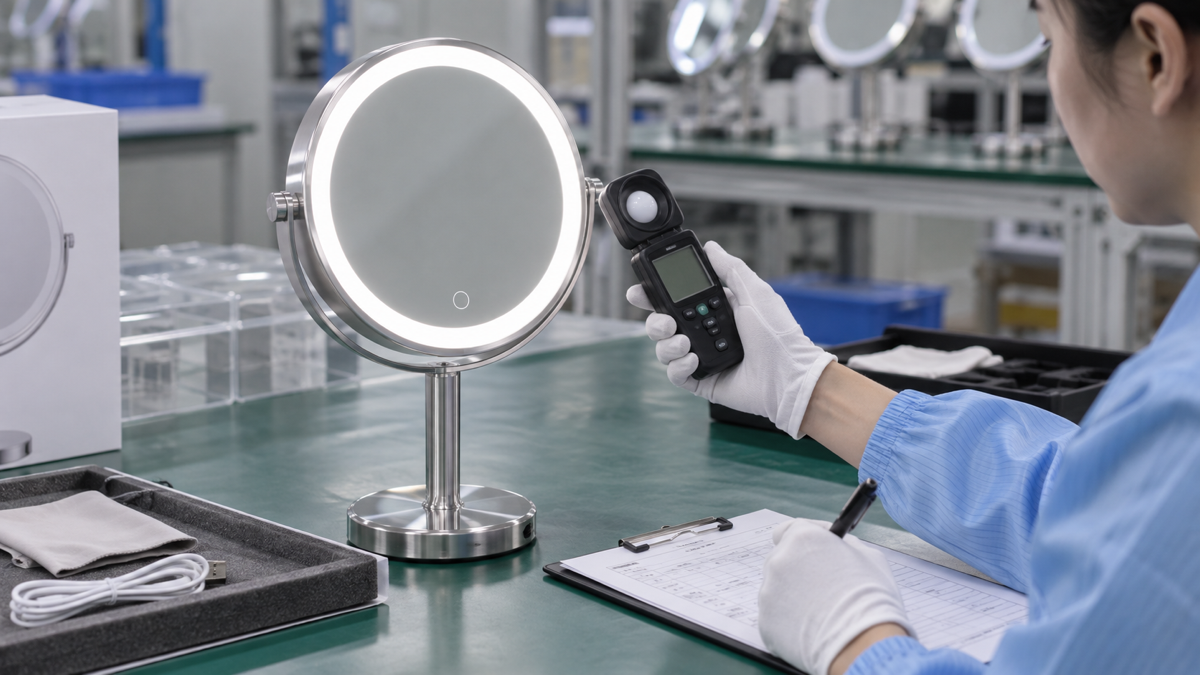
The fourth mistake is skipping pre-shipment inspection for the magnifying lens. Cosmetic defects are easier to notice on a magnifying mirror, so AQL criteria should include lens clarity, LED uniformity, button response, charging function, and packing condition.
How Mingda Mirror Supports OEM/ODM Customization
For custom LED makeup mirror projects, Mingda Mirror can help buyers review product structure, magnification plan, LED lighting, rechargeable power design, finish options, logo placement, packaging, and inspection standards. Buyers can start from existing makeup mirror models or request ODM development based on a target sales channel.
Useful internal pages for planning:
- Makeup Mirrors for product direction and model reference.
- Services for OEM/ODM customization options.
- QC Process for production and inspection control.
- Contact Mingda Mirror to send drawings, samples, packaging files, or RFQ details.
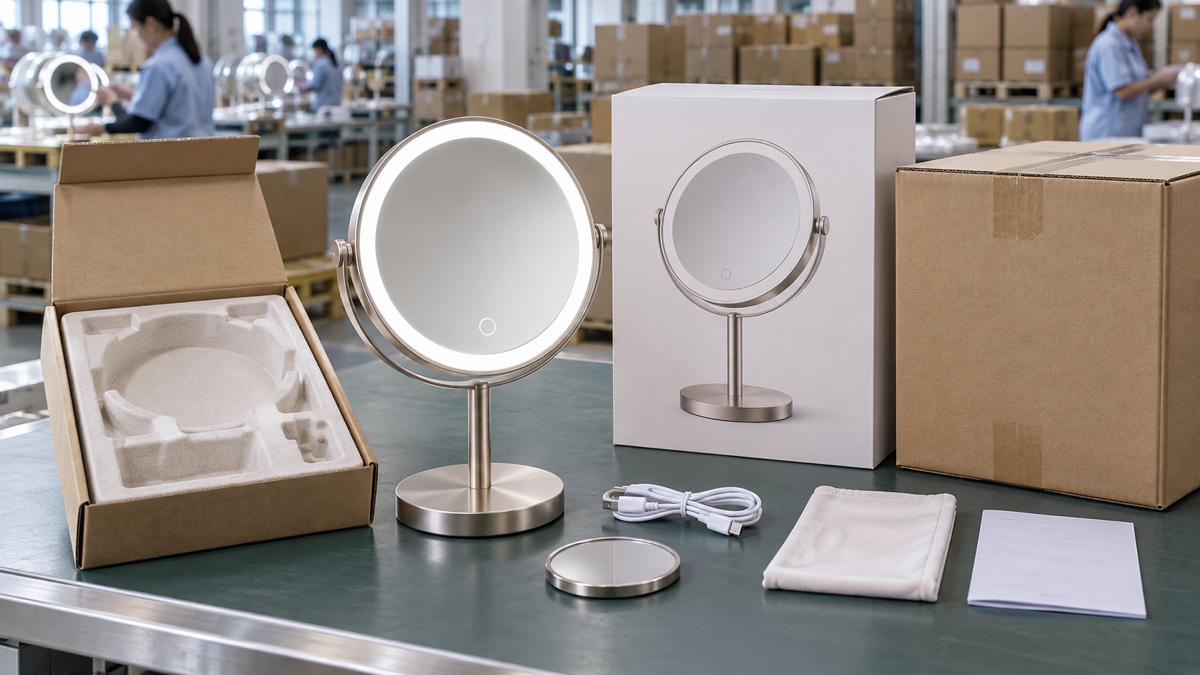
RFQ Details Buyers Should Send
A clear RFQ for a custom magnification LED makeup mirror should include:
- Target buyer type: retail, Amazon, beauty brand, distributor, hotel amenity, or gift channel.
- Preferred magnification: 1x/5x, 1x/7x, 1x/10x, or removable insert.
- Mirror size, base style, stand height, finish, and color.
- LED requirements: CCT, CRI, brightness, dimming, and button style.
- Power requirement: rechargeable battery, USB-C, plug-in, or dual power.
- Logo position, retail box style, instruction language, barcode needs, and carton marks.
- MOQ target, sample deadline, launch schedule, and required certification or test reports.
- Packaging test expectations for e-commerce, retail shelf, or export shipment.
The more complete the RFQ, the easier it is for a supplier to quote accurately and avoid later cost changes.
Define the Optical Acceptance Record Before Tooling
Ask the supplier how the stated magnification is defined and verified. Record the lens supplier or part reference, sample ID, lens diameter, eye-to-mirror viewing range, usable field of view, center and edge clarity, LED mode and brightness. Agree the measurement method and buyer acceptance limits before testing; neither a printed 10x label nor a product photograph proves optical performance.
Keep the 5x versus 10x assortment decision separate from OEM approval: this record controls the exact lens, mounting and lighting revision being ordered. Retest after a lens, insert attachment or mechanical change. Link each magnification SKU to its signed finish and color reference, packaging revision and approval owner so a reordered variant can be traced.
Check Magnification Claims Against Delivered Packaging
At the two-week review, retain one delivered pack per magnification SKU and compare its box, manual, insert label and listing with the signed optical sample. Record the delivery batch, artwork revision, stated magnification and viewing-distance guidance; separate a labeling mismatch from a confirmed lens fault.
For a mismatch, identify the affected stock and owner, agree relabeling or replacement with the buyer, and retain a corrected packed sample before reordering. Use the packaging artwork release workflow to retire obsolete files. Track observed cases against delivered units and the observation cutoff; early feedback alone does not establish a return-rate improvement.
Bottom-Line Recommendation
For most private-label LED makeup mirror programs, the best magnification specification is not automatically the highest number. Choose 5x, 7x, or 10x based on the buyer scenario, confirm the working distance, test the lens and LED comfort together, and lock packaging claims before bulk production. If the mirror will be sold online, include clear use guidance and inspect every batch against the approved golden sample.
FAQ
Is 5x or 10x better for custom LED makeup mirrors?
5x is easier for many daily-use shoppers, while 10x is stronger for precision tasks such as eyeliner, lashes, and tweezing. Business buyers should match the magnification to the sales channel and provide correct working-distance guidance.
Can Mingda Mirror customize magnification for private-label orders?
Yes. Mingda Mirror can support custom magnification plans, mirror structure, lighting, rechargeable power, finish, logo, packaging, and QC standards for OEM/ODM LED makeup mirror orders.
What should buyers test before approving a magnifying mirror sample?
Buyers should test lens clarity, distortion, working distance, LED uniformity, brightness, dimming, charging, hinge stability, packaging fit, and claim consistency between the mirror, retail box, and instruction sheet.
Does a higher magnification increase return risk?
It can if the user does not understand the correct viewing distance or if the lens quality is poor. Return risk can be reduced with better lens inspection, clear usage instructions, and honest packaging claims.
What is the usual MOQ for custom LED makeup mirrors?
MOQ depends on the mirror model, tooling needs, finish, packaging, and logo method. Buyers should send the target specification and packaging requirement first so the supplier can confirm a realistic MOQ and sample plan.
Request an itemized OEM sample quotation with your lens diameter, magnification mix, target users, quantity per SKU, power design, packaging and launch date. Ask for tooling and sample charges, MOQ by variant, optical acceptance method and lead time measured from written sample approval.
Social Media Content Ideas
LinkedIn angle: explain why magnification should be treated as a sample-approval specification, not only a marketing claim.
Facebook angle: educate brand and retail buyers on when 5x, 7x, or 10x mirrors fit different shoppers.
Instagram angle: use a sample-room image showing LED mirror, magnifying insert, packaging, and QC tools to tell the story of private-label approval.
CTA: Read the full guide, then contact Mingda Mirror with your target channel, magnification plan, and packaging requirements for an OEM/ODM quotation.