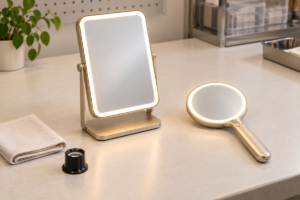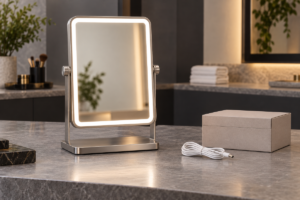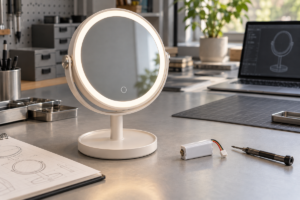

For LED makeup mirror e-commerce programs, buyers should prepare the listing kit before mass production, not after the goods are packed. A complete listing kit connects the approved product sample, product photos, feature claims, dimensions, barcode data, packaging, manual, warranty terms, and inspection records. When these items are aligned before bulk orders, Amazon sellers, DTC brands, retailers, and distributors can launch faster, reduce listing disputes, avoid warehouse relabeling, and lower return risk caused by unclear product information.
This guide is written for buyers sourcing tabletop LED makeup mirrors for online retail, marketplace fulfillment, social commerce, and private-label channels. The goal is to make the mirror easy to list, easy to receive, and easy for customers to understand.
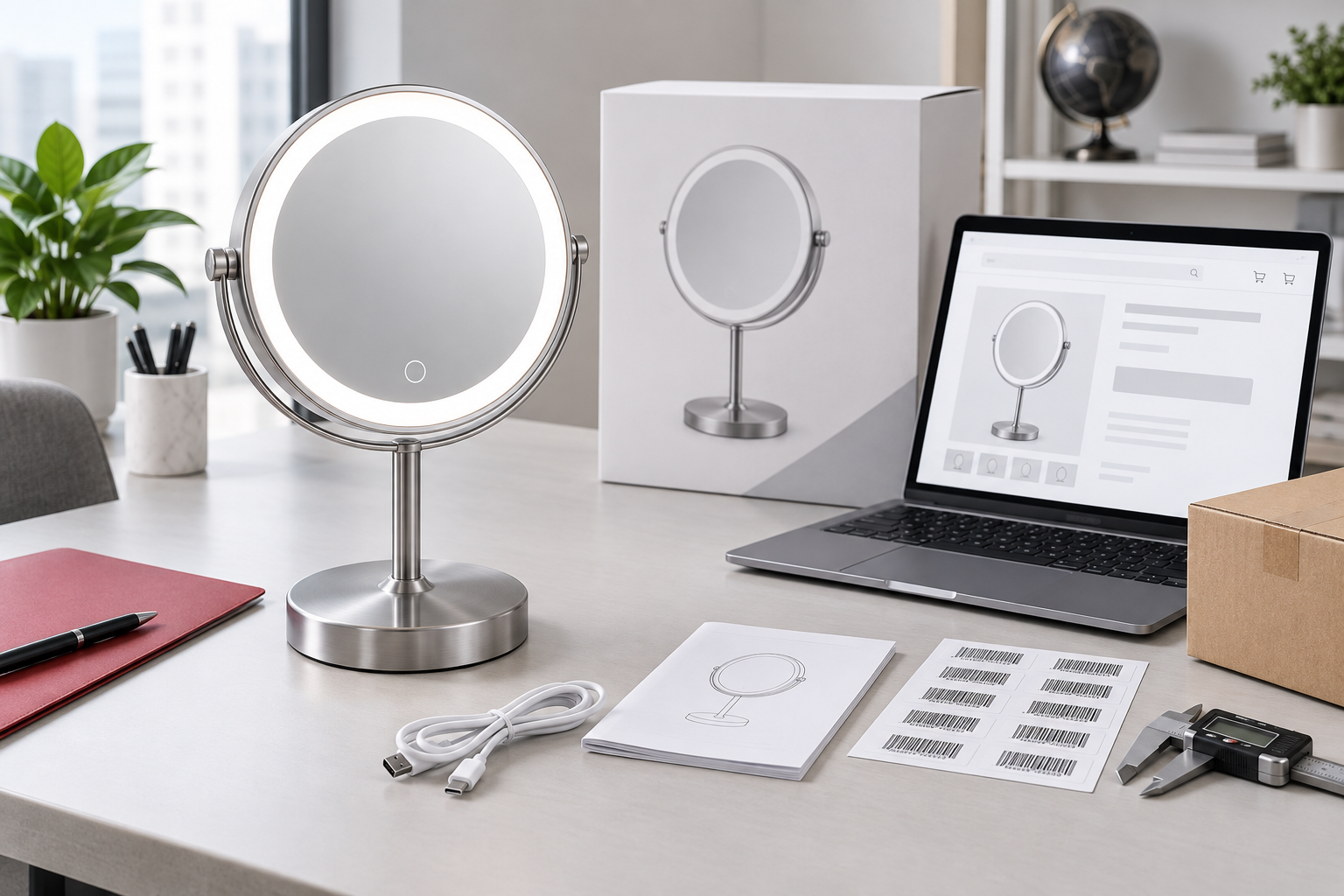
Why the Listing Kit Should Start Before Production
Many buyers treat the online listing as a marketing task that happens after shipment. For LED makeup mirrors, that is risky because listing information depends on real product and packaging decisions. If the mirror size, magnification, light color, charging port, battery claim, accessory list, box dimensions, barcode, or manual language changes after production, the listing may no longer match the goods.
That mismatch creates commercial problems. Customers may expect a different brightness level or magnification. Warehouse teams may scan the wrong code. Customer service may not know whether the cable, pouch, adapter, or spare magnifying mirror is included. A marketplace listing may also be delayed if images, product identifiers, variation data, or packaging details are incomplete.
The safer workflow is simple: approve the listing kit together with the packed sample. The buyer should be able to compare the physical LED makeup mirror, product photos, title claims, bullet points, manual, retail box, barcode label, and inspection report before approving mass production.
What Should Be Included in an E-Commerce Listing Kit?
An e-commerce listing kit is the commercial information package that turns a factory sample into a sellable online SKU. It should include the product data, visual assets, packaging data, and support documents needed by the buyer’s marketplace, warehouse, marketing team, and customer service team.
| Listing kit item | What buyers should confirm | Why it matters |
|---|---|---|
| Product specification sheet | Size, magnification, LED mode, dimming, CCT, CRI if specified, power source, charging port, material, finish, weight | Prevents inaccurate listing claims and wrong variation setup |
| Image shot list | Main image, angle views, lighting modes, scale photo, accessories, packaging, lifestyle use | Helps buyers prepare complete product pages before launch |
| Packaging and barcode data | Retail box size, master carton size, UPC/EAN/FNSKU area, carton mark, unit count | Reduces warehouse delay and relabeling risk |
| Manual and support copy | User steps, charging instructions, care notes, warranty scope, troubleshooting | Reduces avoidable returns and customer service confusion |
| Inspection evidence | Lighting test, charging test, accessory check, packaging check, packed sample photos | Connects listing claims to real pre-shipment QC |
For private-label orders, the listing kit should also include logo position, packaging artwork version, SKU naming rules, color names, language versions, and any buyer-specific warning or compliance text that must appear on the box or manual.
Product Data Buyers Should Lock First
The product data should be more specific than a basic catalog description. A strong LED makeup mirror listing should clearly define the buyer-facing SKU and the factory-controlled specification.
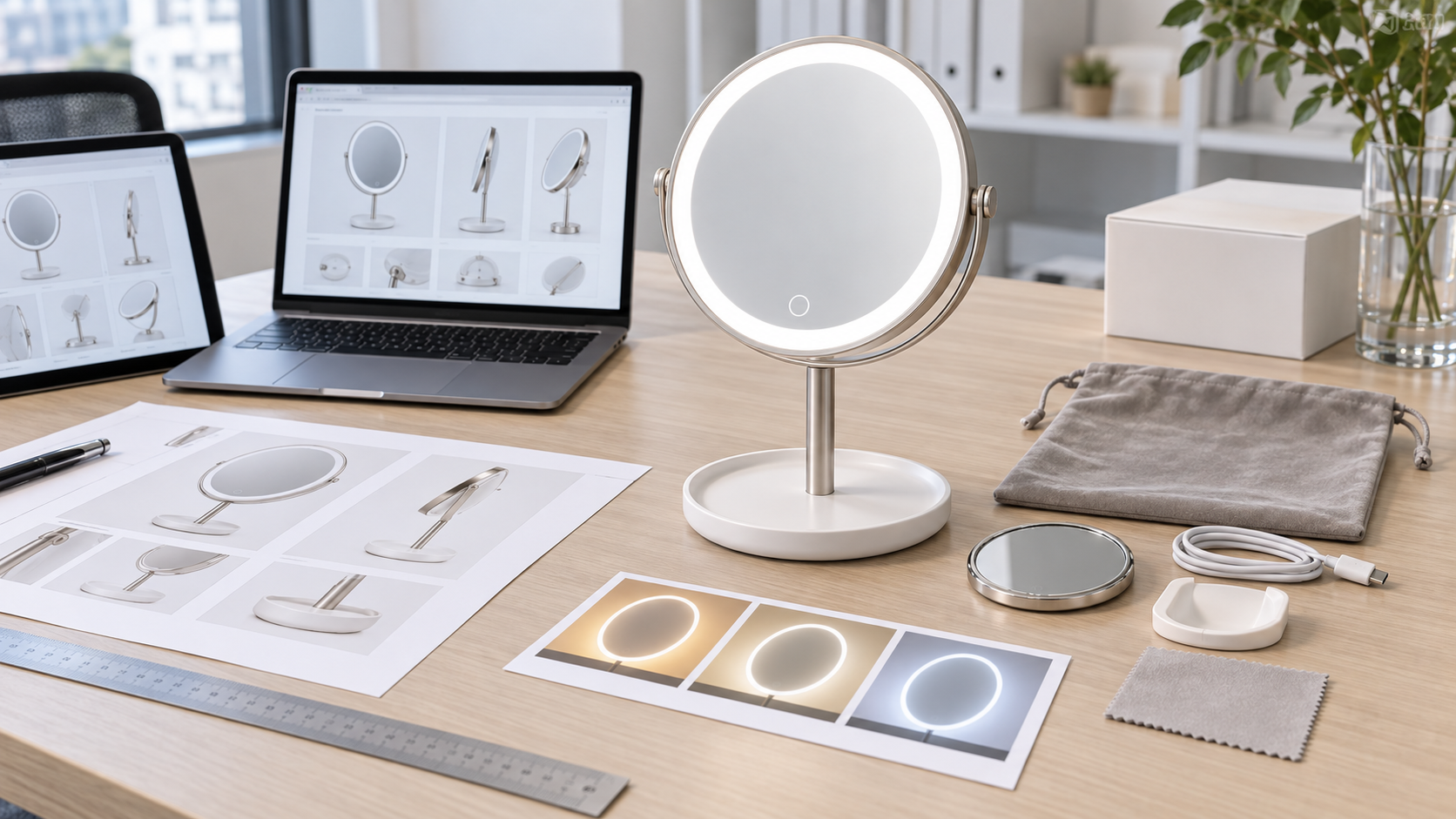
Start with the physical product: mirror diameter, total height, base size, frame material, finish, stand movement, magnification, LED layout, brightness control, color temperature options, charging port, battery capacity if used, charging time, and included accessories. If the order has multiple variations, create one data row per SKU, not one shared description for the whole assortment.
The most common e-commerce mistake is using attractive copy that is not tied to the approved sample. For example, buyers should not claim “3 color lights” unless the sample has warm, neutral, and cool light modes and the manual explains the switching logic. They should not claim “travel friendly” if the mirror is too tall, heavy, or fragile for that channel. They should not claim a battery runtime unless the supplier has tested it under defined brightness conditions.
For RFQ and sample approval, ask the supplier to confirm:
- mirror size and full product dimensions
- magnification level and whether it is one-sided, double-sided, or includes a removable magnifying mirror
- LED color modes, dimming method, and switch type
- USB-C, Micro-USB, plug-in, battery, or rechargeable configuration
- accessory list and whether each accessory appears in the retail box
- product weight and packed unit weight
- finish name, material, and approved color reference
- warranty, spare parts, and replacement policy
This data should feed the title, bullets, image captions, product attributes, customer support script, and carton labels. If those teams work from different files, the launch becomes harder to control.
Listing Images Should Match the Actual Packed SKU
E-commerce images are not only beauty shots. For LED makeup mirrors, they are also a specification control tool. The buyer should request images that show what the customer will actually receive: complete mirror, accessories, charging cable, manual, pouch if included, retail box if relevant, and the light modes that are truly available.
A practical shot list can include:
- hero product image with the complete mirror fully visible
- side and rear views that show hinge, stand, base, and charging port
- light mode images under controlled exposure, not exaggerated glow
- scale image showing mirror size on a vanity table
- accessory image showing cable, pouch, manual, adapter if supplied, and spare mirror if included
- packaging image showing the retail box and protection method
- use-case image for beauty desk, travel, gift, salon, or influencer setup
Buyers should avoid relying only on factory catalog images if the private-label version has a different finish, logo, accessory set, cable type, or retail box. If the product listing shows one accessory set but the packed sample includes another, customers may treat the difference as missing parts.
Packaging and Barcode Details for E-Commerce Receiving
Packaging data should be part of the listing kit because marketplaces and warehouses depend on labels, dimensions, and scannability. A visually polished retail box is not enough if the barcode area is hard to scan, the carton mark does not match the SKU, or the packed unit dimensions were estimated before the final insert was approved.
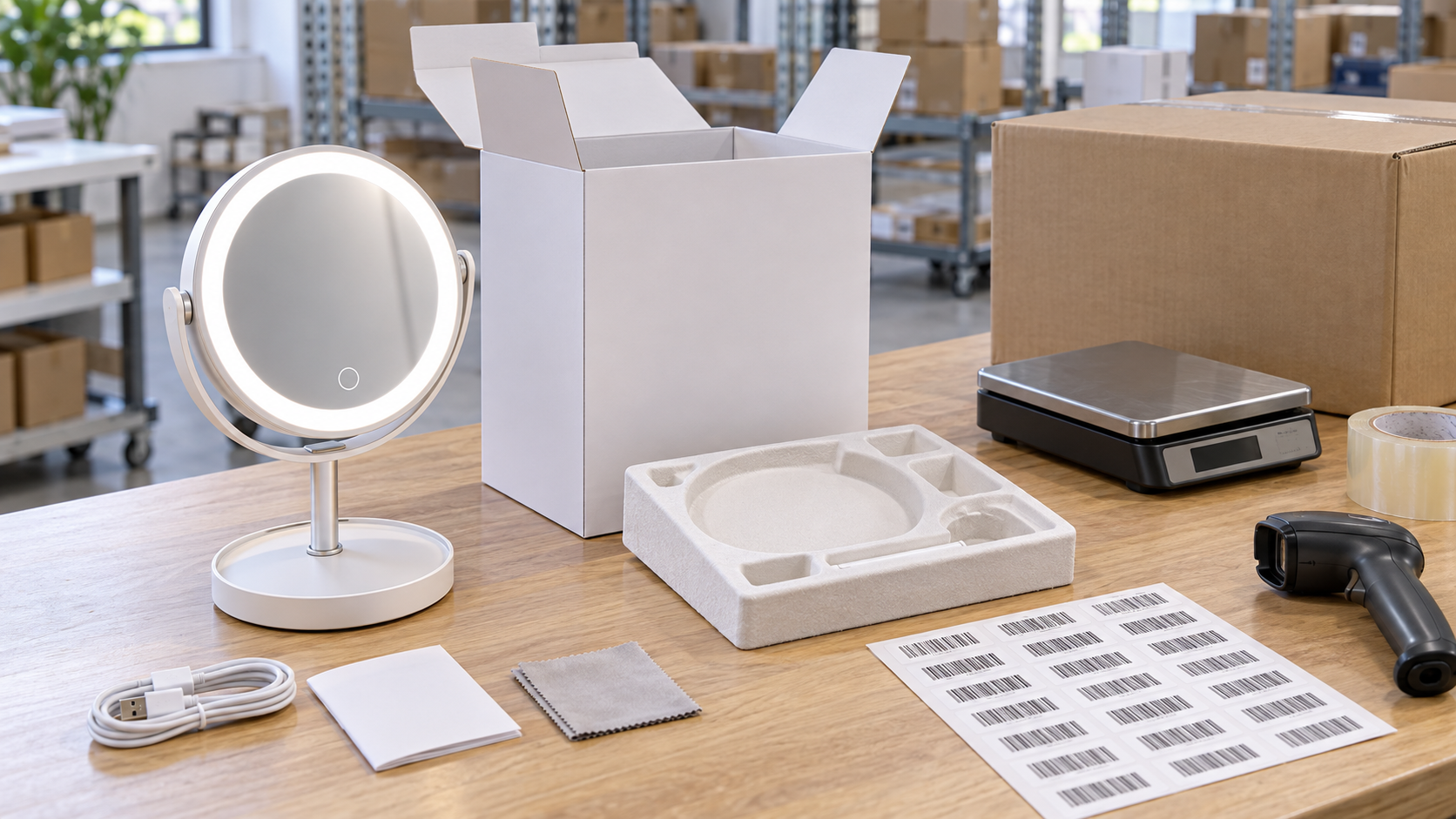
For LED makeup mirror e-commerce orders, buyers should confirm:
- retail box size and packed unit weight
- master carton size, quantity per carton, gross weight, and carton number logic
- barcode type and placement area on the retail box
- whether marketplace-specific labels are applied by the factory, buyer, or warehouse
- carton mark fields, including buyer SKU, factory model number, color, plug type, and quantity
- accessory placement inside the retail box
- inner protection for mirror surface, LED ring, stand, hinge, base, and cable
- photo evidence of the packed unit and sealed carton
This is especially important when the same mirror body is sold in different finishes, magnification levels, or packaging versions. Two SKUs may look similar on the packing table but require different barcodes and listing pages. If the barcode plan is not controlled before shipment, the buyer may pay for rework after the goods arrive.
Manual, Warranty, and After-Sales Information
The listing kit should also support the customer after purchase. For rechargeable LED makeup mirrors, buyers should prepare clear charging instructions, light-control steps, cleaning guidance, warranty coverage, and troubleshooting points before the goods leave the factory.
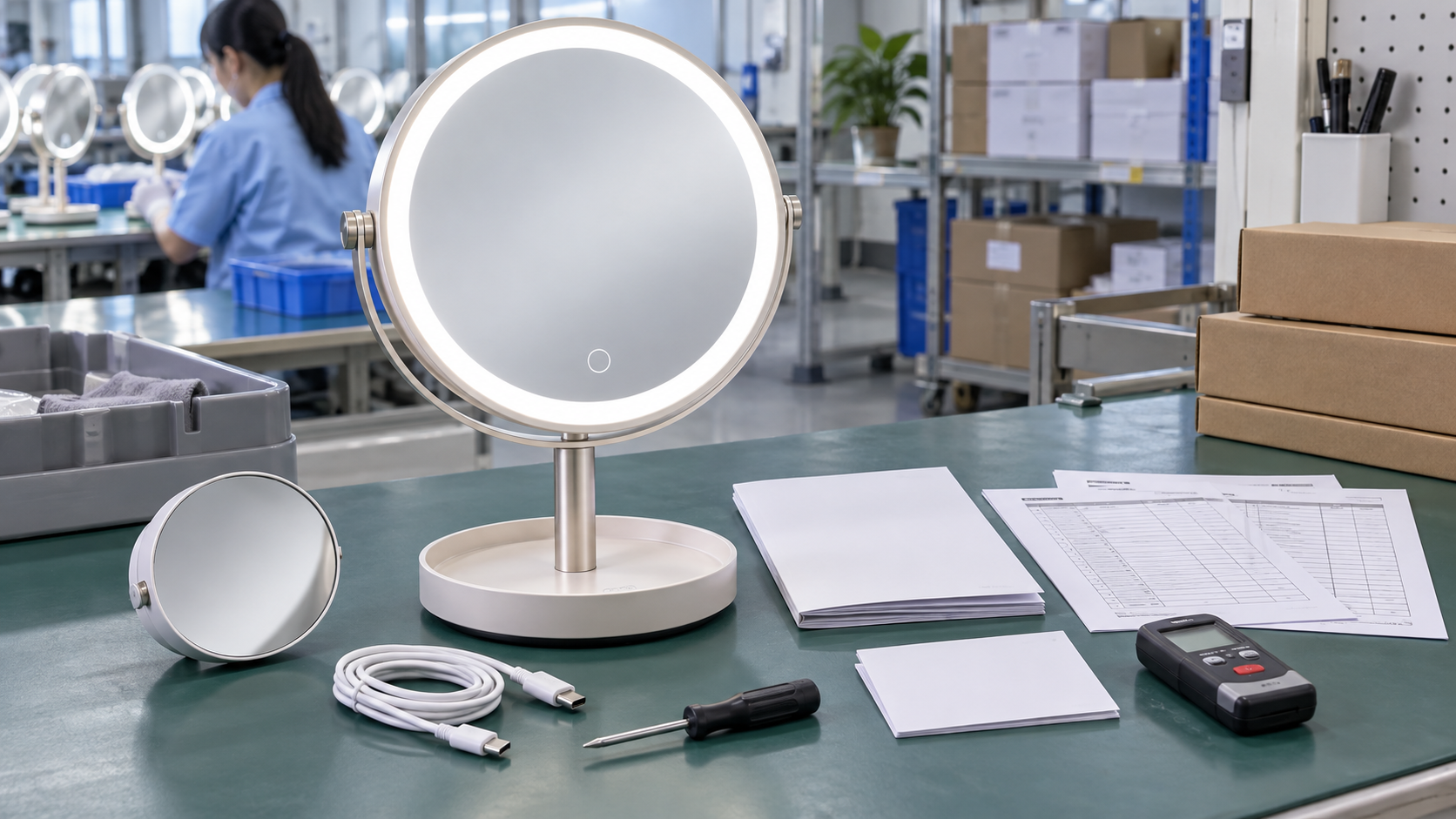
A useful after-sales information pack includes:
- user manual that matches the exact switch, charging port, and lighting modes
- warranty card or warranty copy that matches the buyer’s service policy
- simple troubleshooting for charging, dimming, loose cable, and light mode operation
- care instructions for mirror surface, LED ring, frame finish, and stand movement
- spare parts list for cable, pouch, magnifying mirror, base, hinge, or packaging where applicable
- inspection report identifying the sampled SKU, checks performed, results, and release decision
For buyers selling through Amazon, DTC stores, social commerce, or retail marketplaces, this information can reduce avoidable negative reviews. Many returns begin with small misunderstandings: the customer cannot find the charging port, does not know how to long-press dimming, expects an adapter that was not included, or thinks a removable magnifying mirror should be attached permanently. Clear pre-approved content helps prevent those issues.
Release One Listing Record for Each Approved SKU
Use one revision-controlled record per sellable SKU. Name a buyer-side approver, record the approval date, and link each claim or asset to the approved sample revision. Reopen approval when a change affects the product, accessories, packaging, or customer instructions.
| Release field | Evidence to retain | Action if it differs |
|---|---|---|
| Product claims and attributes | SKU, sample revision, measured value, test conditions, evidence file | Correct or remove unsupported claims before launch |
| Images and included accessories | Photo filename, approved sample, signed packed-unit list | Reshoot changed parts and reconcile the contents list |
| Barcode and packing data | Approved code-to-SKU mapping, scan result, measured packed dimensions and weight | Hold mismatched labels and recheck corrected units |
| Manual and support instructions | Language, document revision, service scope, approver and date | Withdraw obsolete files and verify the replacement version |
Keep the supporting manual and label approval record with the kit. Use the spare parts kit guide to define which accessories are included with the product and which are separate service items. Confirm channel-specific listing and identifier requirements with the buyer before release; this table is an internal control record, not marketplace approval.
Common Mistakes That Delay Online Launches
The first mistake is preparing product copy from an early sample and never updating it after production changes. A supplier may improve the base, change cable type, adjust battery capacity, or revise packaging, but the listing file stays old.
The second mistake is using one listing kit for several SKUs. A white mirror, black mirror, rose-gold mirror, 5X version, 10X version, USB-C version, and plug-in version may need separate images, titles, barcodes, cartons, and manuals. Grouping them too casually can create variation errors and warehouse mismatch.
The third mistake is treating the manual and packaging as separate from the listing. In reality, the listing, manual, retail box, and inspection report should repeat the same product identity. If they use different model names or claims, customer service and warehouse teams lose confidence in the SKU.
The fourth mistake is approving images that hide important details. If a listing only shows the mirror glowing from the front, buyers may miss the thickness, hinge type, charging port, base stability, or accessory set. Those are not minor details for a functional LED makeup mirror.
Pre-RFQ Checklist for E-Commerce Buyers
Before requesting a quotation for an e-commerce LED makeup mirror program, send the supplier a clear launch brief:
- target channel: Amazon, DTC, TikTok shop, retail marketplace, distributor portal, or omnichannel retail
- target SKU list, colors, magnification levels, and product variations
- required product data fields and marketplace attributes
- image shot list and whether private-label photos are needed
- packaging style, barcode type, and label responsibility
- destination market and language requirements
- accessory list and whether adapter, pouch, manual, or spare mirror is included
- testing requirements for lighting, charging, hinge, switch, packaging, and barcode scanning
- launch timeline, sample deadline, artwork deadline, and bulk shipment window
When Mingda Mirror receives this information early, the quotation can include the right product configuration, packaging structure, labeling work, sample plan, and lead-time assumptions. That makes the RFQ more realistic than asking for “one LED makeup mirror for online sales” without defining the listing and fulfillment needs.
Check the Listing Kit After the First Deliveries
At the first post-launch review, reconcile the live listing revision with the delivered SKU, package contents and current support instructions. Log unique affected orders, delivered units, delivery dates and the observation cutoff by channel and product revision; do not use the number of published reviews as the denominator for a defect rate. Separate missing accessories, misunderstood instructions, inaccurate dimensions and reproduced product faults.
Use the e-commerce review-risk decision table to assign an owner and correction date. Record the old and replacement asset filenames, the affected SKU and the recheck result. Verify that obsolete images and manuals have been withdrawn from each live channel before approving the next release; a corrected master file alone does not confirm the customer-facing page changed.
Bottom-Line Recommendation
For LED makeup mirror e-commerce sourcing, do not wait until shipment to organize listing information. Build the listing kit during sample approval and verify it against the packed sample before mass production. The product specification, images, manual, barcode labels, packaging dimensions, carton marks, and inspection records should all describe the same SKU.
The best online launch is not only a good-looking product page. It is a controlled buying workflow where the product, package, warehouse data, customer-facing claims, and after-sales information are consistent from factory to customer.
FAQ
Should product photos be taken before or after sample approval?
Use early photos for planning, but final listing photos should match the approved sample and packed SKU. If the finish, switch, cable, box, logo, or accessory set changes, update the images before launch.
What product data is most important for LED makeup mirror listings?
Buyers should confirm size, magnification, lighting modes, dimming method, power source, charging port, material, finish, included accessories, packed weight, box size, and warranty terms. These details affect both customer expectations and warehouse setup.
Do Amazon and e-commerce sellers need factory-applied barcodes?
It depends on the fulfillment workflow. Some buyers apply labels at their own warehouse, while others ask the factory to apply retail box or channel labels. In either case, the barcode area, SKU logic, and scan check should be approved before shipment.
Can one listing kit cover multiple mirror variations?
Only if each variation is clearly separated. Buyers should create variation-level data for color, magnification, plug type, charging version, accessory set, and packaging. Shared images or shared copy can create confusion if the SKUs are not identical.
What should suppliers include in pre-shipment listing support?
A practical supplier package should include packed sample photos, product specification confirmation, accessory list, barcode and carton photos, inspection report, manual version, and packaging dimensions. Buyers can use these files to confirm that the listing and shipment match.
Work With Mingda Mirror
Mingda Mirror manufactures LED makeup mirrors, compact mirrors, handheld mirrors, Hollywood mirrors, and LED bathroom mirror products for brands, e-commerce sellers, retailers, distributors, and project buyers. If you are preparing an online mirror launch, share your target channel, SKU list, product attributes, packaging plan, barcode needs, image shot list, and launch timeline.
Our team can help align the product sample, listing kit, packaging, and pre-shipment QC before bulk production. Explore Makeup Mirrors, review our OEM/ODM services, check the QC process, or contact Mingda Mirror to request an e-commerce-ready quotation.
Request an itemized listing-kit quotation with your SKU count, channel, destination, quantity, sample deadline, image shot list, label responsibility, and launch date. Ask the supplier to separate product, photography, artwork, labeling, sample, and inspection costs, with file deliverables and approval dates.
Social Media Content Ideas
LinkedIn angle: explain why an LED makeup mirror listing kit should be approved with the packed sample, not after production.
Facebook angle: show how clear photos, accessories, instructions, and barcode planning reduce customer confusion and launch delays.
Instagram angle: use the listing content preparation image to show the complete mirror, lighting modes, accessories, and product photo workflow.
CTA: Read the full e-commerce listing kit checklist and send Mingda Mirror your SKU list, channel requirements, and packaging plan for an RFQ-ready review.