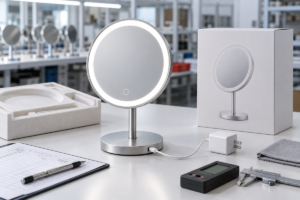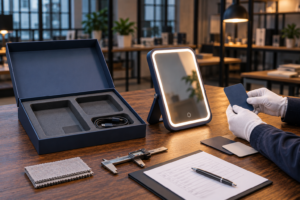

For a rechargeable LED makeup mirror order, buyers should not approve bulk production with only a working sample and a product photo. The safer approach is to build a compliance file before shipment: battery specification, USB-C charging design, protection circuit, aging test, transport document, packaging warning, instruction manual, and model-number match between the sample, test report, carton, and online listing. This file helps buyers identify document gaps and manage customs, marketplace review, and after-sales risks when the mirror enters retail or e-commerce channels.
Mingda Mirror manufactures rechargeable LED makeup mirrors for brands, retailers, wholesalers, distributors, and marketplace sellers that need private-label products with dependable quality control. This guide explains what importers should confirm before requesting a quotation, approving a sample, or releasing mass production.
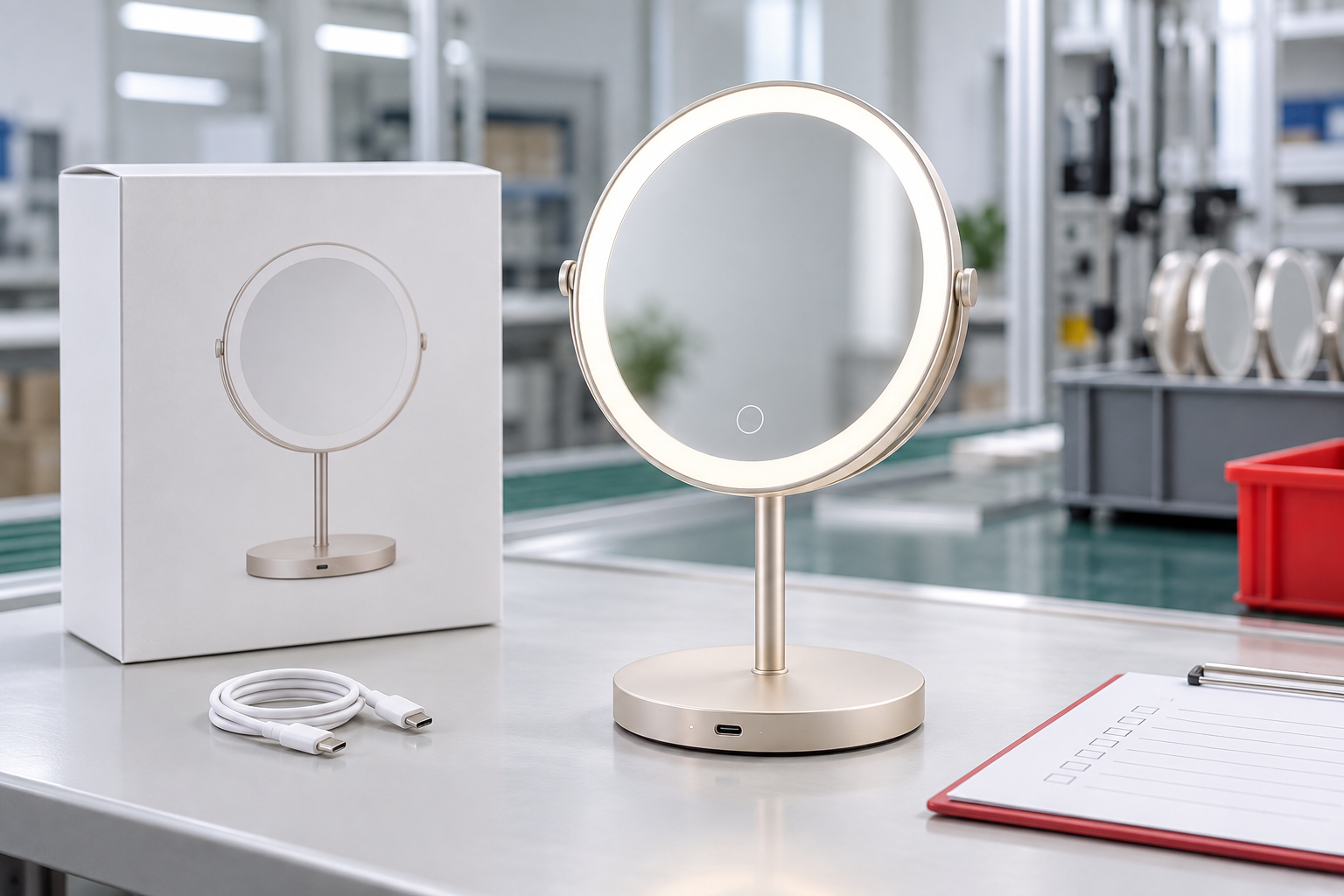
Why Battery Safety Is Now a Procurement File, Not a Small Detail
Rechargeable mirrors are attractive because shoppers do not need to replace dry batteries, and retailers can position the product as modern, portable, and giftable. But the same rechargeable design also adds responsibility for the buyer: battery cell quality, charging port durability, adapter compatibility, product labeling, shipping documentation, and user instructions must all match the target market.
For EU sales, buyers also need stronger traceability and product-safety records because the General Product Safety Regulation increases attention on responsible economic operators, online marketplaces, and product-risk documentation. For battery-powered products, the EU Batteries Regulation also points buyers toward clearer battery information, sustainability, and future design expectations. For other destinations, confirm the retailer, platform and local requirements separately; an EU-focused file should not be assumed to cover another market.
The practical point is simple: a rechargeable LED makeup mirror should be purchased as an electrical consumer product, not as a simple cosmetic accessory.
What Should Be Inside a Rechargeable Mirror Compliance File?
| File item | What buyers should request | Why it matters for importers |
|---|---|---|
| Battery specification | Cell type, capacity, voltage, supplier, protection board, batch traceability | Helps match the approved sample to bulk production |
| Charging design | USB-C or Micro USB, input rating, charging time, overcharge protection, cable quality | Reduces overheating, port failure, and customer complaints |
| Test documents | UN 38.3 where needed, MSDS/SDS, electrical safety reports, aging test records | Supports transport, platform review, and buyer due diligence |
| Label and manual files | Rated input, warnings, charging instructions, disposal notes, language version | Keeps packaging, manual, and listing claims consistent |
| Packaging evidence | Drop test, vibration test, inner tray photos, carton marks, lithium-battery handling where applicable | Reduces breakage, warehouse confusion, and shipping questions |
| Model-control record | Model number, color, finish, battery capacity, packaging version, test report version | Prevents one report being used for the wrong SKU |
This does not mean every buyer needs the same certification package. A beauty brand selling through department stores, an Amazon seller using FBA, and a distributor shipping mixed cartons may have different document requirements. But every serious rechargeable mirror order should have a written file that connects the physical product to the approved documents.
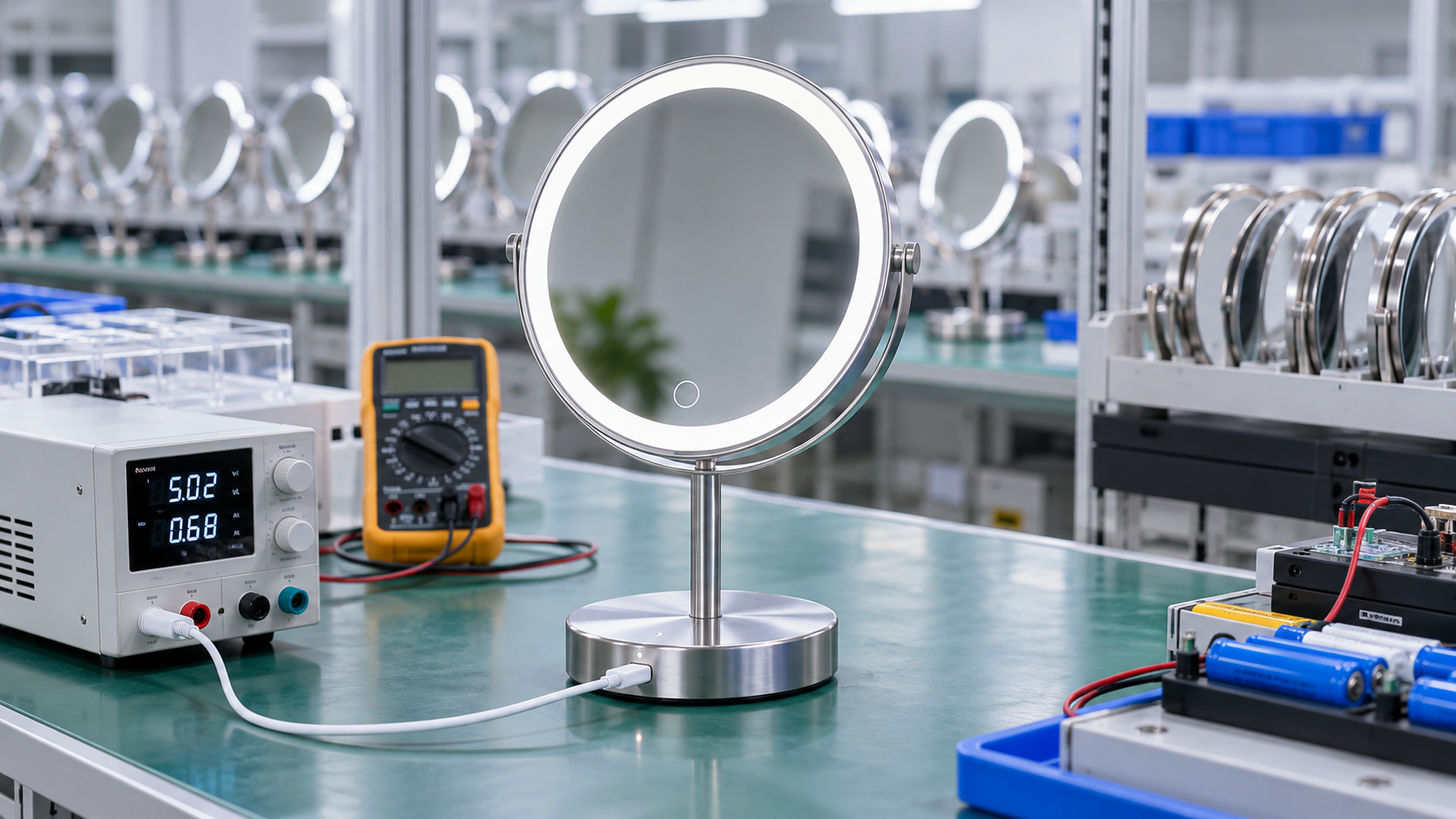
Battery and Charging Specifications to Confirm Before RFQ
Before asking for a final price, buyers should confirm the core electrical and commercial requirements. If these details change after quotation, the cost, lead time, packaging, and test report can also change.
Battery Cell and Capacity
Confirm the battery chemistry, capacity, supplier grade, protection board, and expected working time. A higher battery capacity can improve the consumer experience, but it may also affect charging time, cost, shipping paperwork, and internal structure. Do not approve a sample only because the mirror turns on; test whether the working time matches the retail claim after full charge.
Charging Port and Cable
USB-C is now expected in many modern beauty and personal-care products. Buyers should still confirm whether the port is only USB-C shaped or whether the electrical design, cable quality, and charging protection are suitable for the target market. The cable should fit firmly, the port should survive repeated insertion, and the manual should state the correct charging input.
Adapter Policy
Many mirror programs include a cable but not a wall adapter. That can reduce cost and simplify regional plug issues, but the packaging and manual must make this clear. If an adapter is included, confirm plug type, rated input and output, certification expectation, and whether the adapter is from an approved supplier.
Protection and Aging Test
For rechargeable LED makeup mirrors, buyers should ask how the supplier checks overcharge protection, charging temperature, short-circuit protection, LED aging, button response, and battery performance after repeated use. A useful pre-shipment inspection should include more than cosmetic appearance.
Common Procurement Mistakes
The first mistake is treating the battery as a hidden component. Consumers may not see it, but returns often begin with charging failure, weak battery life, overheating concern, or unclear instructions.
The second mistake is asking for a test report after production is finished. If the report uses a different model number, battery capacity, cable, PCB, or adapter from the approved sample, it may not support the shipped product.
The third mistake is changing packaging claims without updating the manual and listing. If the retail box says one charging time, the manual says another, and the online listing promises a longer working time, the inconsistent claims can create avoidable customer-service disputes.
The fourth mistake is ignoring transport documentation until the goods are ready. Rechargeable products may require battery documents and handling details for air, sea, courier, marketplace warehouse, or local distributor receiving processes. This should be planned during sample approval, not during pickup.
Sample Approval Checklist for Importers
Use this checklist before approving bulk production:
- Confirm the final battery capacity, charging port, cable, adapter policy, and rated input.
- Test charging time, working time, dimming, CCT switching, memory function, and low-battery behavior.
- Ask for battery specification, MSDS/SDS, UN 38.3 when applicable, and supplier traceability records.
- Match the test report model number to the actual mirror, packaging, manual, and order documents.
- Approve English warnings for charging, storage, disposal, and use near water or high heat.
- Check whether the retail box clearly states what is included: mirror, cable, adapter, manual, pouch, or accessories.
- Test the USB port with repeated insertion and removal.
- Run aging tests for LED brightness, touch button response, charging stability, and battery performance.
- Review packaging drop-test and vibration-test results for the intended channel.
- Save golden sample photos and final document versions before mass production starts.
This checklist is especially important for Amazon, marketplace, and chain-store programs because product content, packaging content, and supplier documents may be reviewed by different teams. If those teams see inconsistent information, the listing launch can slow down.
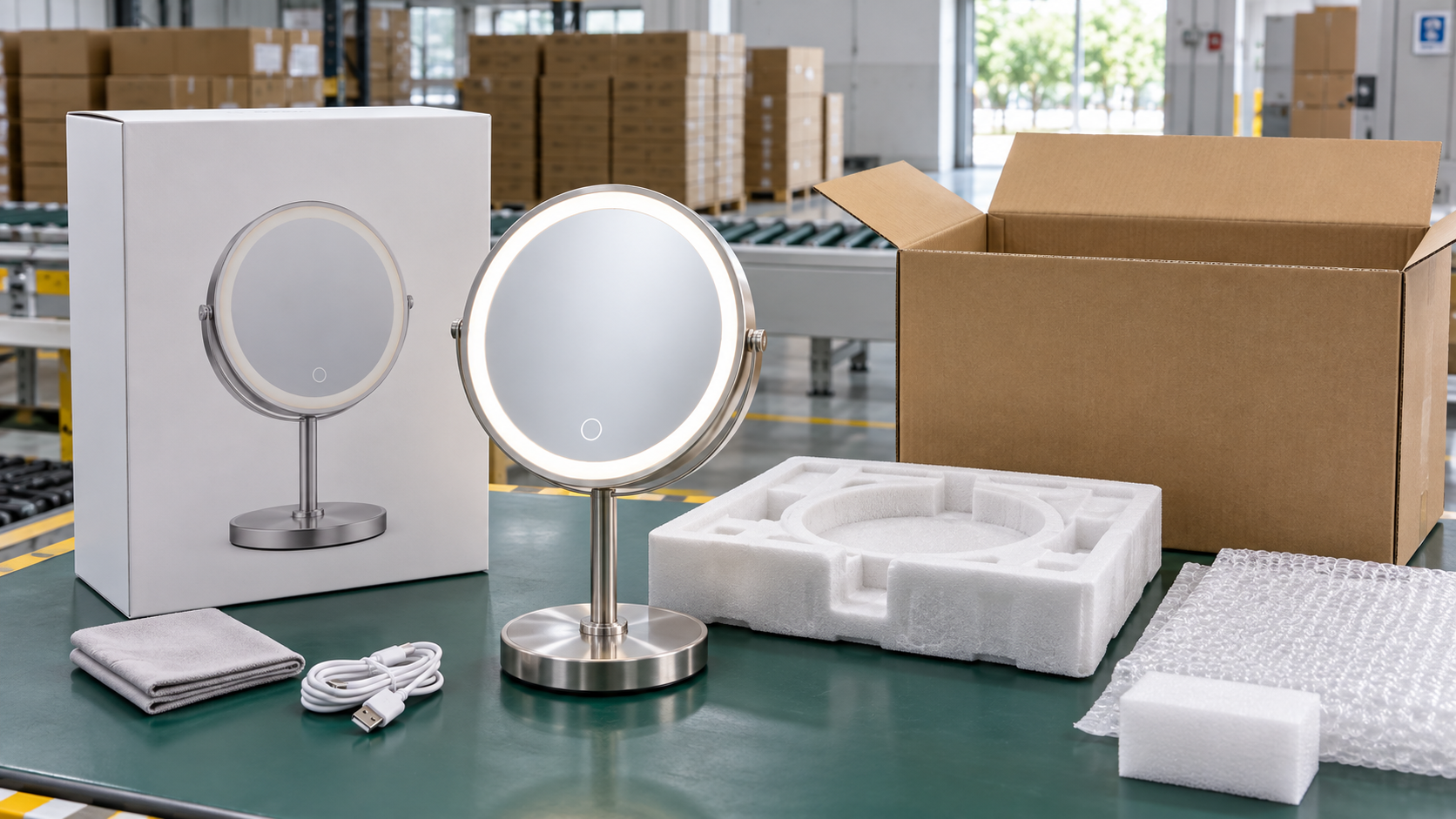
Packaging and Shipping Details Buyers Should Not Skip
Rechargeable LED makeup mirrors need packaging that protects both the mirror and the electrical accessories. A good packaging plan should hold the mirror firmly, separate the cable and adapter from the mirror surface, protect the LED ring and stand, and keep the carton strong enough for the sales channel.
For e-commerce, the packaging should be tested against courier handling and warehouse compression. For retail, the box should also support shelf display, barcode scanning, and clear accessory information. For distributors, master carton marking and SKU separation are important because multiple mirror versions may look similar from the outside.
Buyers should also confirm whether the battery document package and carton marks support the shipping mode. Air freight, courier, sea shipment, and marketplace warehouse delivery may not ask for the same evidence, but a missing document can still delay pickup or receiving.
How Mingda Mirror Supports Rechargeable LED Mirror Orders
Mingda Mirror can help buyers review rechargeable LED makeup mirror structure, battery capacity, USB-C charging design, sample approval, packaging, and production inspection standards. Buyers can begin with an existing model from the Makeup Mirrors range or request OEM/ODM customization through Mingda Mirror Services.
For buyers building a private-label line, Mingda can also help align product version, finish, logo placement, instruction manual, packaging file, carton mark, and inspection checklist. This is useful when the same mirror family has multiple colors, magnification options, or channel-specific packaging versions.
Related planning resources:
- QC Process for production and inspection control.
- LED Makeup Mirror Inspection Report Checklist for importers reviewing pre-shipment quality.
- LED Makeup Mirror Retail Box vs Master Carton Packaging for packaging decisions.
- Contact Mingda Mirror to send your target channel, compliance requirement, and RFQ details.
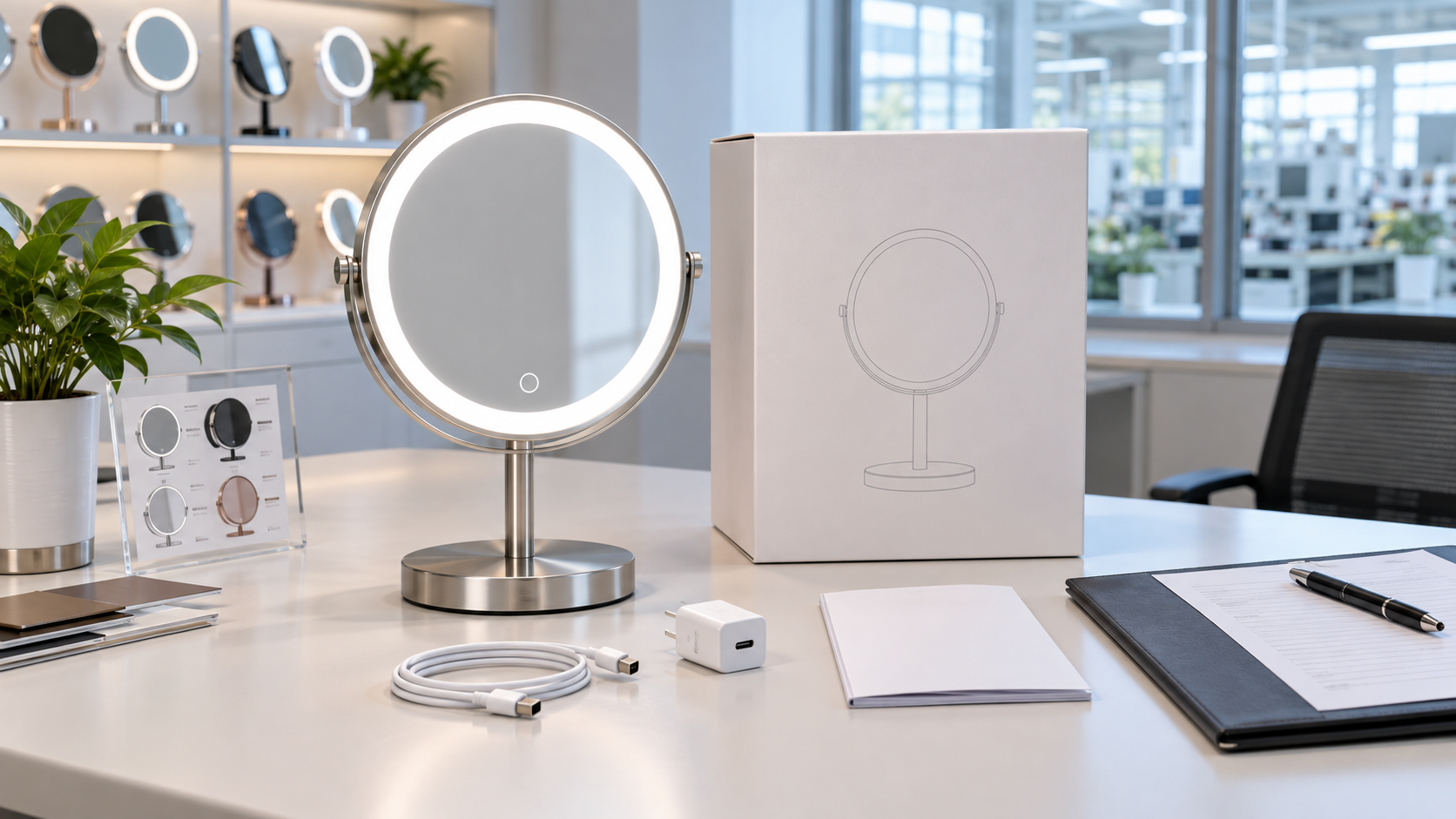
RFQ Details Buyers Should Send
A clear RFQ for a rechargeable LED makeup mirror should include:
- Target market and sales channel: retail, Amazon, distributor, beauty brand, gift program, or wholesale.
- Mirror type, size, magnification, finish, stand style, and LED lighting requirement.
- Battery capacity, charging port preference, cable and adapter policy, and expected working time.
- Required documents, test reports, language versions, warning labels, and packaging claims.
- Logo position, retail box style, inner tray preference, barcode area, and carton marks.
- Sample deadline, launch date, MOQ target, inspection requirement, and shipping mode.
- Whether the buyer needs supplier support for marketplace compliance files or retailer onboarding documents.
When these details are clear, the supplier can quote with fewer assumptions and build a sample that is closer to the final production version.
Build a SKU Evidence Register Before Release
Use one register to connect each ordered SKU with its cell and battery-pack reference, PCB revision, cable, adapter policy, sample ID, report reference, packaging artwork and manual version. Give every document an owner, revision date and review status. If the battery supplier, charging board or accessory changes, ask the responsible technical reviewer which evidence must be updated before release.
Separate supplier declarations, independent test reports and routine production checks in the register. A photograph of test equipment or a passed aging screen does not establish full product compliance. Record the target market and shipping mode, then have the importer and qualified testing or transport partner confirm the applicable document scope for that exact configuration.
Use the LED makeup mirror aging-test checklist for lot-level operating records, and keep unresolved document gaps on hold with a named owner and due date. Request a sample quotation with the mirror configuration, quantity per SKU, destination, cable and adapter combination, packaging revision, required evidence and launch date.
Bottom-Line Recommendation
For rechargeable LED makeup mirror sourcing, buyers should approve the product and the compliance file together. The mirror should look good, charge reliably, pass aging tests, ship with the right battery documents, and carry packaging/manual information that matches the approved sample. If the project will be sold through e-commerce or retail chains, lock the model number, battery capacity, charging claim, accessory list, and packaging version before production.
FAQ
What documents should buyers request for rechargeable LED makeup mirrors?
Buyers should request battery specification, MSDS/SDS, UN 38.3 when applicable, electrical safety reports, aging test records, packaging test evidence, and final manual or label files. The exact package depends on the market and sales channel.
Is USB-C better than Micro USB for LED makeup mirrors?
USB-C is often better for modern retail positioning and consumer convenience, but buyers should still check port durability, charging protection, cable quality, and instruction wording. A USB-C port alone does not prove the charging design is reliable.
Should the wall adapter be included?
It depends on the market, price point, and retailer expectation. Including an adapter can improve the ready-to-use experience, but it adds plug-type and certification questions. If the adapter is not included, the retail box and manual should state this clearly.
How can buyers reduce rechargeable mirror return risk?
Buyers can reduce return risk by testing charging time, working time, LED aging, button response, port durability, packaging drop resistance, and claim consistency before shipment. Clear English charging instructions also help prevent user confusion.
Can Mingda Mirror support private-label rechargeable LED makeup mirror orders?
Yes. Mingda Mirror supports OEM/ODM rechargeable LED makeup mirror projects, including mirror structure, lighting, battery capacity, USB-C charging, logo, packaging, QC inspection, and sample approval files.
Request a rechargeable mirror sample and document review with your SKU list and destination. Ask for itemized sample, testing, tooling and packaging costs, the document-gap owner, and lead time from written sample approval.
Social Media Content Ideas
LinkedIn angle: explain why rechargeable LED makeup mirror sourcing should include a compliance file, not only a product sample.
Facebook angle: educate retail and brand buyers on common charging, manual, and packaging mistakes that lead to returns.
Instagram angle: show a clean sample approval scene with mirror, cable, packaging, and inspection record to communicate professional private-label preparation.
CTA: Read the full checklist, then contact Mingda Mirror with your target market, battery requirement, packaging plan, and launch schedule.