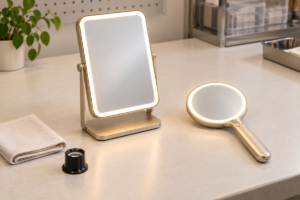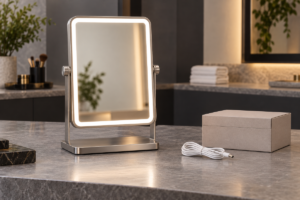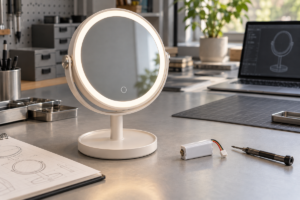

An LED makeup mirror inspection report should prove that the approved sample, lighting performance, charging function, packaging, barcode labels, manuals, and carton information all match the buyer’s order before shipment. For importers, private-label brands, Amazon/e-commerce sellers, and distributors, the report is not just a QC form. It records which production samples were checked, against which approved requirements, and what evidence supports the shipment decision.
Why Inspection Reports Matter for LED Makeup Mirror Orders
LED makeup mirrors combine cosmetic appearance, electrical function, glass or acrylic mirror quality, packaging protection, and channel labels. A shipment can pass a quick power-on check but still create returns if the wrong charging cable, manual version, barcode, color temperature, carton mark, or accessory set is packed.
For B2B buyers, the inspection report should connect three things:
- the approved sample and signed specification
- the actual mass-production goods
- the documents, labels, and packaging needed for receiving and resale
That is especially important for rechargeable mirrors, private-label programs, multi-SKU assortments, and marketplace orders where product identifiers and packaging control affect receiving accuracy. Confirm the destination, carrier, and sales-channel documentation requirements for the actual shipment, and keep the buyer-approved instructions with the inspection record.
What a Useful Inspection Report Should Include
The best report is short enough to review quickly but specific enough to prevent disputes. It should not simply say appearance OK or function OK. It should show measurable checks, photo evidence, sample references, and clear pass/fail notes.
| Report section | What buyers should see | Why it matters |
|---|---|---|
| Order identity | PO number, buyer SKU, factory model, version, finish, plug/cable type | Prevents sample, test report, carton, and SKU mismatch |
| Quantity check | Ordered quantity, inspected quantity, carton count, AQL level if used | Confirms the report covers the actual shipment |
| Appearance | Mirror surface, frame finish, stand, hinge, touch area, logo position | Reduces visible defects and retail complaints |
| Lighting test | CCT, brightness/dimming range, LED uniformity, glare, memory mode if applicable | Protects listing claims and user experience |
| Power and charging | USB-C or plug type, adapter rating if supplied, battery/runtime claim if applicable | Prevents charging complaints and documentation gaps |
| Accessories | Cable, manual, pouch, magnifying attachment, screws, spare parts | Avoids missing-item returns |
| Packaging | Retail box, molded insert, barcode, warning labels, carton marks, drop-protection points | Supports warehouse receiving and damage control |
| Photo evidence | Product, label, manual, packaging, carton, function test photos | Gives buyers auditable shipment evidence |
Lighting and Electrical Checks Buyers Should Request
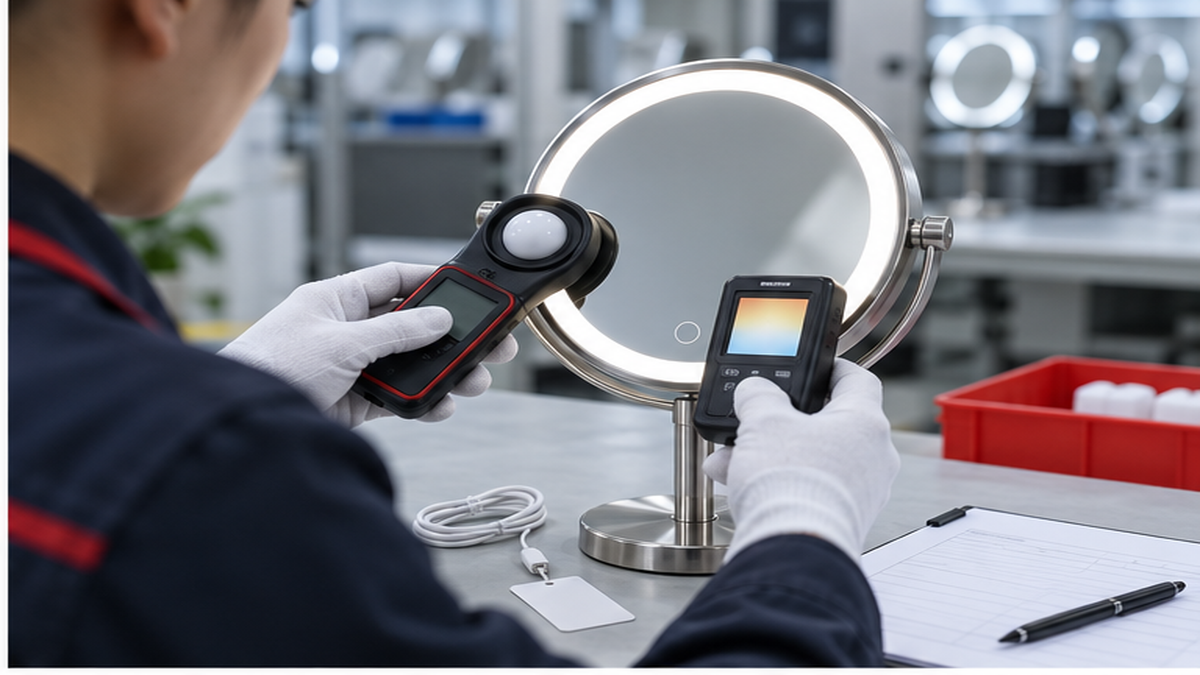
Lighting is one of the most common reasons an LED makeup mirror feels either premium or disappointing. The inspection report should record more than whether the LED turns on.
Ask the supplier to confirm:
- color temperature range for warm, neutral, and cool modes
- dimming response and lowest/highest brightness levels
- LED ring uniformity with no dark spots or flicker visible to users
- touch switch, sensor switch, or button response after repeated operation
- charging port fit, cable connection, charging indicator, and runtime claim basis
- adapter or plug details if the order includes a wall power accessory
For Amazon and e-commerce orders, avoid vague claims such as super bright or long battery life unless the inspection report and sample approval define what those claims mean. A practical report should help your listing, packaging, and manual say the same thing.
Packaging and Label Evidence Is Part of QC
Many mirror problems are not caused by a defective LED or poor mirror surface. They are caused by the wrong item arriving at the wrong warehouse, crushed retail boxes, missing accessories, or labels that cannot be scanned.
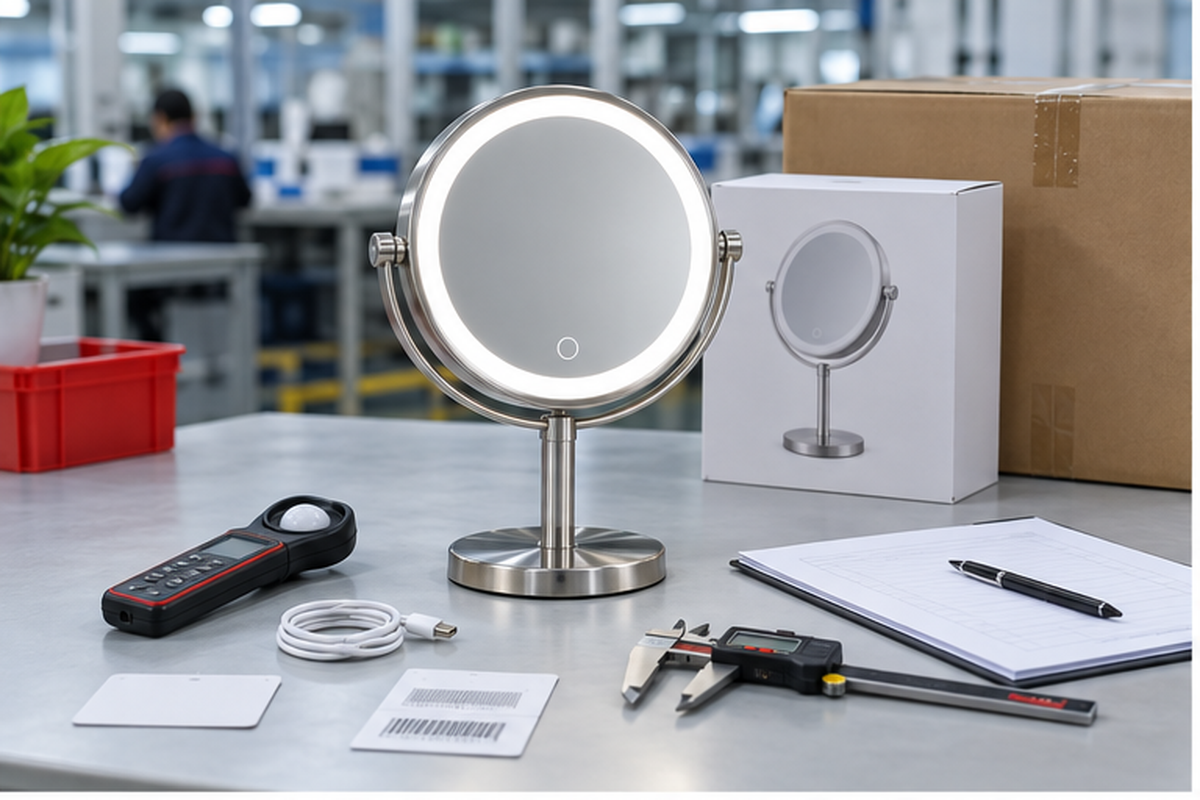
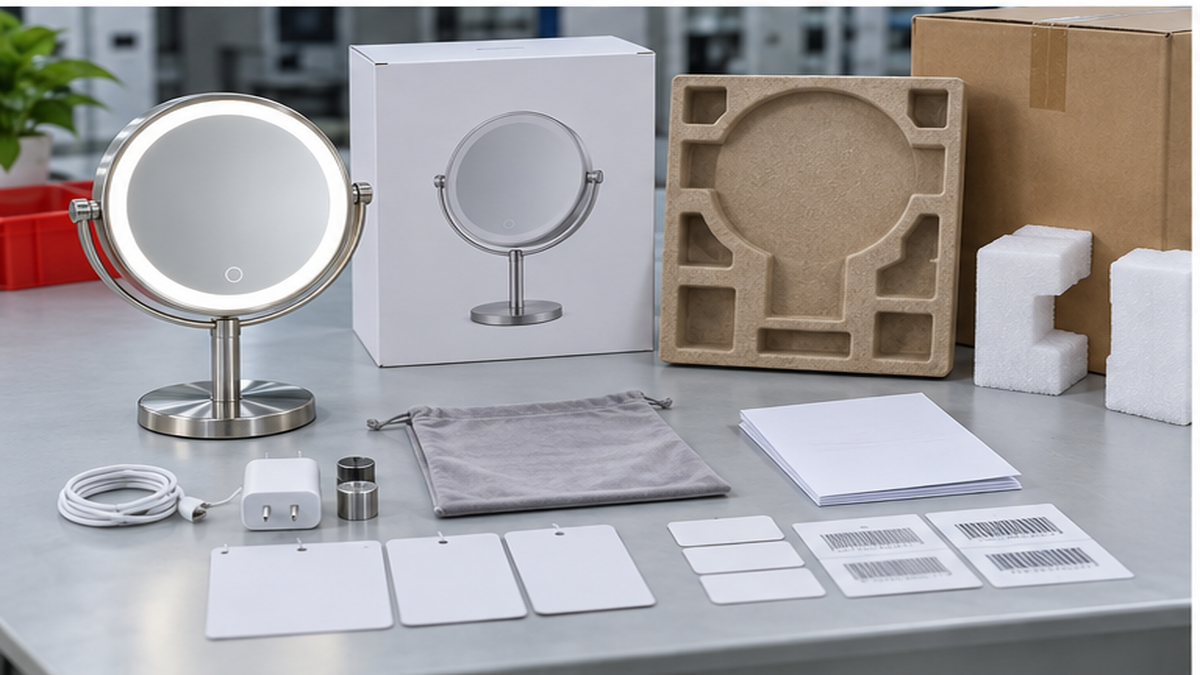
For private-label and marketplace programs, the inspection report should include photos of the packed unit before carton sealing. Buyers should see the mirror, insert, cable, manual, retail box, barcode label, carton mark, and any channel-specific label placement.
Packaging Items to Verify Before Shipment
- Retail box artwork matches the approved version.
- Barcode or SKU label is on the agreed side and remains scannable.
- Manual language, function instructions, and charging details match the product.
- Molded insert or protection tray holds the mirror and accessories securely.
- Carton mark separates buyer SKU, factory model, quantity, color, and PO number.
- Rechargeable-product or battery-related documents are included when needed.
- Master carton weight and dimensions match the shipping plan.
If a buyer sells through multiple channels, use separate packed-sample photos for each channel version. Retail, Amazon, wholesale, and distributor orders may need different barcode locations, carton marks, inserts, or manual bundles.
Pre-Shipment Inspection Checklist for Buyers
Before you approve shipment, ask the supplier or third-party inspector to answer these points in the report:
| Buyer question | Evidence to request |
|---|---|
| Is this the approved model version? | Photo of sample reference, model label, buyer SKU, and production unit |
| Does lighting match the signed specification? | CCT/brightness readings plus photos of each light mode |
| Are all charging parts correct? | Cable/adapter photos, port test, charging indicator, runtime or charging-time note |
| Is the mirror stable and usable? | Stand angle, hinge tension, base stability, switch response, magnification check if applicable |
| Is the packaging ready for the sales channel? | Retail box, insert, barcode, carton mark, and packed unit photos |
| Are documents consistent? | Manual, warning label, test report, product label, and carton mark comparison |
| Are defects recorded clearly? | Defect photos, quantity affected, acceptance decision, and rework plan |
Define the Sampling Scope and Shipment Release Decision
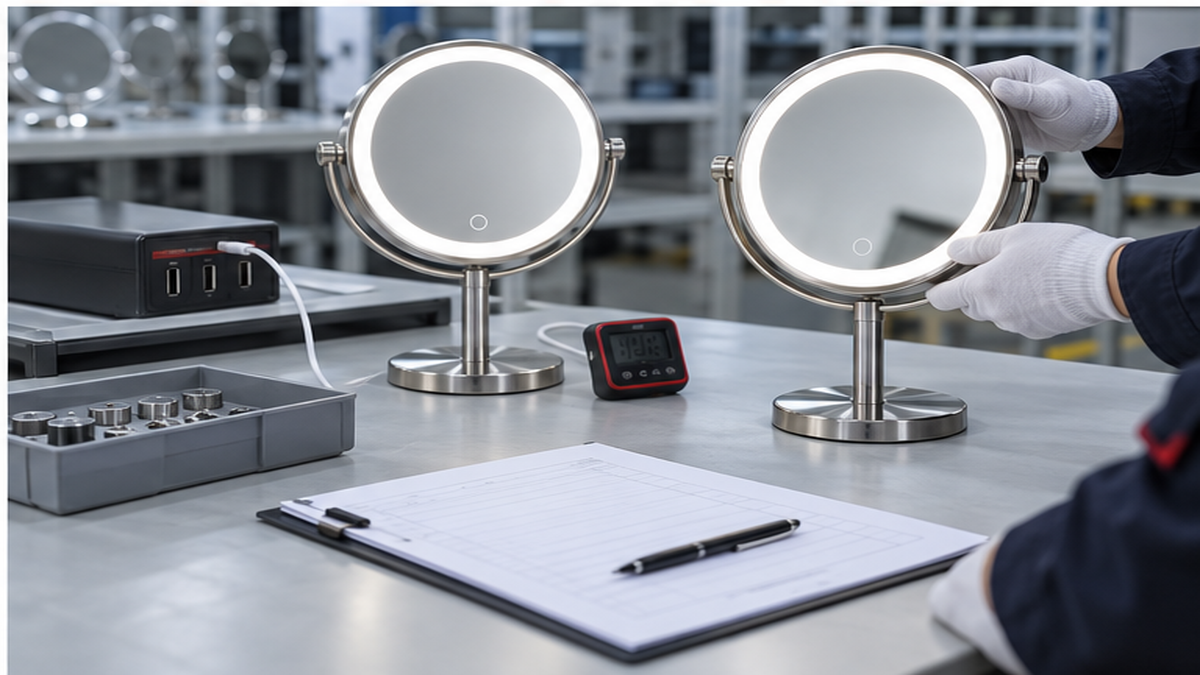
Identify the production lot, total lot quantity, inspected quantity, sample selection method, inspection date, inspector, and specification revision. Agree defect classifications, test methods, and acceptance criteria before inspection. If an acceptance sampling plan is used, record the agreed plan and its acceptance and rejection counts; a passing sample does not establish that every unit is defect-free.
For measured lighting or runtime results, record the instrument, measurement setup, distance where relevant, light mode, brightness setting, power source, and observed value against the agreed limit. Mark unperformed checks as not tested, with an owner and due date, rather than passing them without evidence.
Give each failed check an evidence reference, affected quantity, corrective action, owner, and re-inspection result. Record who may authorize shipment and the date of approval. Keep unresolved exceptions visible; photos alone do not close a failed functional check.
Use the manual and label approval record for document revisions. For extending arms and brackets, add the mechanical checks in the wall-mounted rechargeable mirror guide.
Common Mistakes in LED Makeup Mirror Inspection Reports
The first mistake is accepting a report with no buyer SKU. Factory model numbers are useful internally, but the buyer’s SKU is what connects the goods to listings, purchase orders, warehouse labels, and after-sales records.
The second mistake is checking only loose units. For B2B orders, packed-product inspection is just as important as product-function inspection. The report should confirm what is inside the box, not only what works on the bench.
The third mistake is ignoring document version control. If the product was changed from Micro-USB to USB-C, from touch switch to sensor switch, or from one magnification level to another, the manual, label, box, and carton must change too.
The fourth mistake is not defining rework evidence. When defects are found, the buyer should request photos of corrected goods, updated packing, and a short re-inspection note before release.
How Mingda Supports Inspection-Ready Orders
For LED tabletop makeup mirrors, rechargeable compact mirrors, Hollywood mirrors, and custom private-label mirror programs, Mingda can prepare sample approval records, packed-sample references, QC photos, packaging checks, and shipment documentation for buyer review.
Useful related resources:
- Explore Mingda’s mirror product categories for product-line planning.
- Review quality control process details before confirming an order.
- See OEM/ODM options on the custom mirror services page.
- Send project details through the Contact page for RFQ support.
Reconcile Inspection Findings with Receiving Feedback
At the first receiving review, match reported charging failures, missing accessories and packaging damage to the shipment lot and inspected configuration. Record units received, units actually checked, affected units and the observation cutoff separately. An inspection sample pass rate and a customer complaint rate use different denominators and should not be presented as the same metric.
For charging complaints, use the charging QC test record to reproduce the issue with the delivered cable and adapter. Preserve the original result, corrective action and retest evidence. Assign an owner and due date to open cases, and record whether the correction affects held stock, the next shipment or both. Review repeat findings before authorizing a reorder; do not overwrite initial failures with passing retests.
Bottom-Line Recommendation
For LED makeup mirror importers, the inspection report should prove product identity, lighting performance, charging reliability, accessory completeness, packaging accuracy, and label readiness before shipment. If the report cannot connect the approved sample to the packed carton, request a revised inspection or rework evidence before release.
FAQ
Should every LED makeup mirror order need an inspection report?
For repeat orders with stable specifications, a simplified report may be enough. For first orders, private-label packaging, rechargeable models, new SKUs, or marketplace shipments, a detailed inspection report is strongly recommended.
What photos should buyers require?
Ask for photos of the complete mirror, lighting modes, charging test, product label, manual, accessory set, retail box, molded insert, barcode label, carton mark, and sealed carton.
Can the factory inspection report replace third-party inspection?
It depends on order value, buyer risk tolerance, and product complexity. A factory report is useful for routine control, while third-party inspection can add independent confirmation for large or first-time orders.
Share them before quotation or sample approval, not after mass production. Early requirements help the supplier quote the right packaging, testing time, documentation, and lead time.
What should importers include in the RFQ?
Include product model, quantity, market, plug or charging requirement, lighting modes, logo position, packaging type, barcode rules, manual language, inspection standard, and shipment deadline.
Request an inspection-ready quotation with your SKU, lot quantity, destination, signed specification, sampling scope, required tests, and ship date. Ask for separate inspection, rework, and re-inspection costs and an agreed release owner.
Social Media Content Ideas
LinkedIn angle: A strong LED makeup mirror inspection report should connect the approved sample, packed product, labels, and shipment documents before release.
Facebook angle: Before bulk orders ship, check mirror lighting, charging, accessories, retail box, barcode, and carton mark together.
Instagram angle: Use the QC bench image to show how LED makeup mirrors are tested and documented before packing.
CTA: Read the full checklist and send your RFQ details to Mingda Mirror for inspection-ready private-label mirror orders.