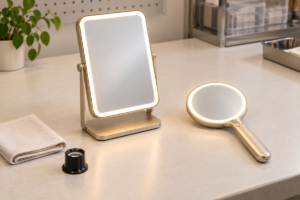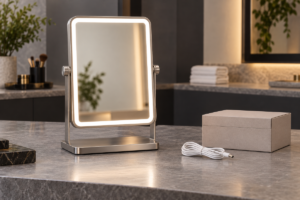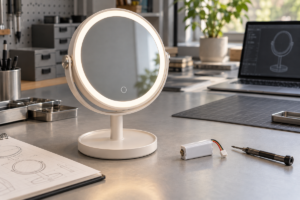

Retail and gift buyers usually get stronger programs when they source LED handheld mirrors around channel fit, lighting function, finish quality, and packaging method instead of buying a generic mirror shape. A lighted compact mirror can work for gifting, travel, beauty retail, and e-commerce, but only when hinge strength, battery design, surface finish, and box presentation are controlled together.
This LED handheld mirror sourcing guide is written for retailers, importers, promo-gift buyers, distributors, and beauty-accessory brands that need a practical decision framework before sample approval or quotation comparison. The goal is to help buyers choose a commercial product line, not just an attractive mirror photo.
Buyer Scenario: Start With the Sales Channel, Not the Decoration Theme
Handheld mirrors look simple, but the right specification changes a lot depending on where the product will be sold. A chain retailer usually needs a stable, easy-to-explain item with clean packaging and consistent replenishment. A promo-gift buyer may accept a smaller mirror if the artwork and presentation are strong. A salon supplier may care more about handle grip, frame rigidity, and whether the mirror can survive repeated daily use.
That is why a sourcing manager should define the target channel before requesting prices. If the supplier is pricing a square salon mirror, a foldable compact mirror, and a decorative gift mirror in the same RFQ without a clear brief, the comparison becomes noisy and commercial decisions slow down.
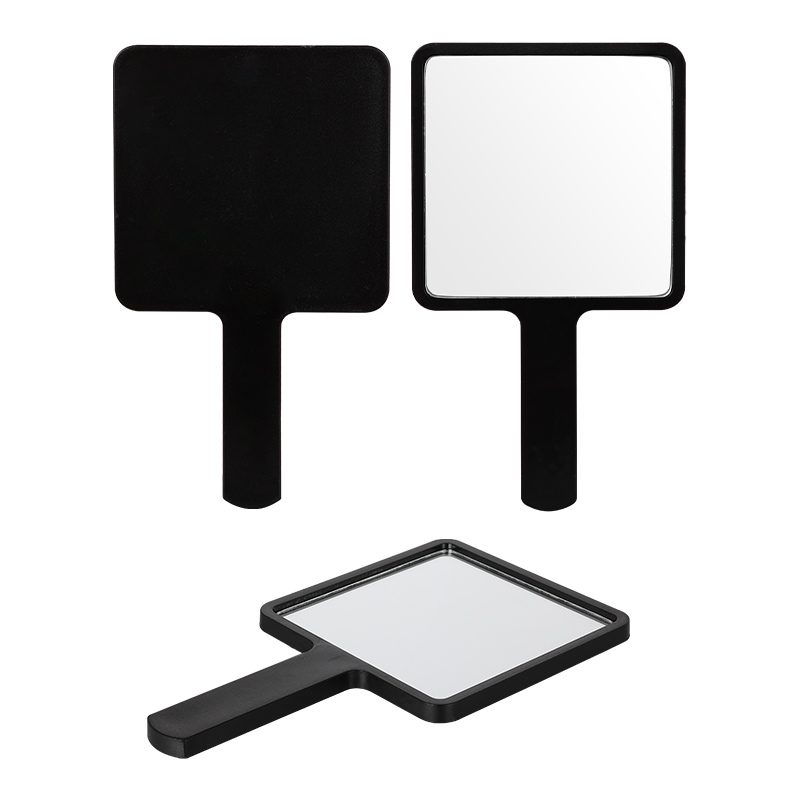
Which Handheld Mirror Format Is Safer for Your Market?
| Buyer type | Safer format | Why it fits | Main risk to control |
|---|---|---|---|
| Retail chain buyer | Basic single-sided handheld mirror | Clear daily-use story and simpler replenishment | Frame scratches and packaging damage on shelf |
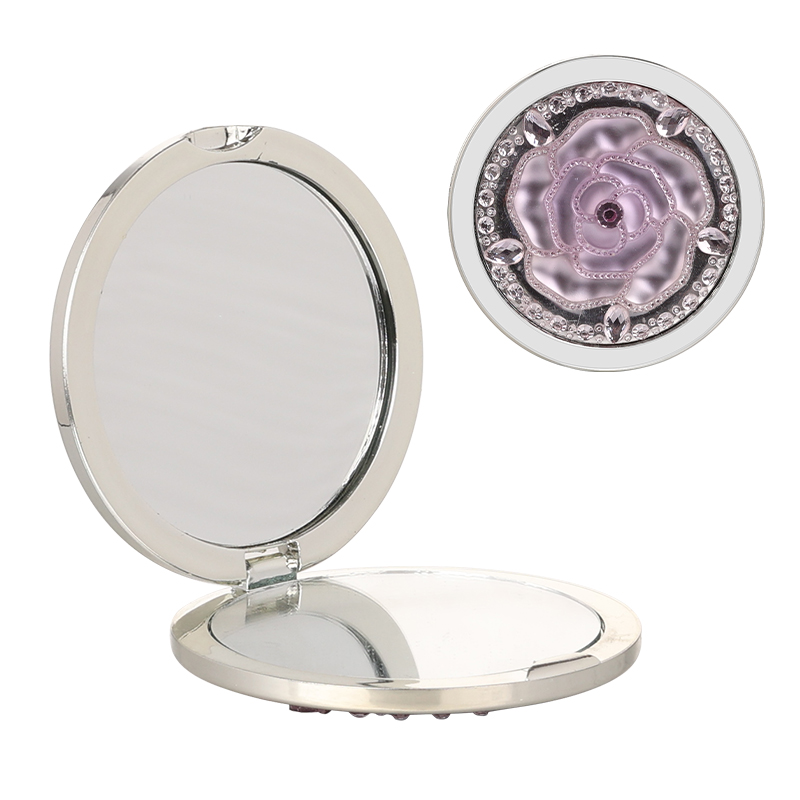
| Promo or gift buyer | Compact or decorative folding mirror | Higher presentation value in a small pack size | Weak hinges and cosmetic finish defects |
| Salon supply distributor | Larger square or round handle mirror | Easier handling during repeated professional use | Handle strength and frame rigidity |
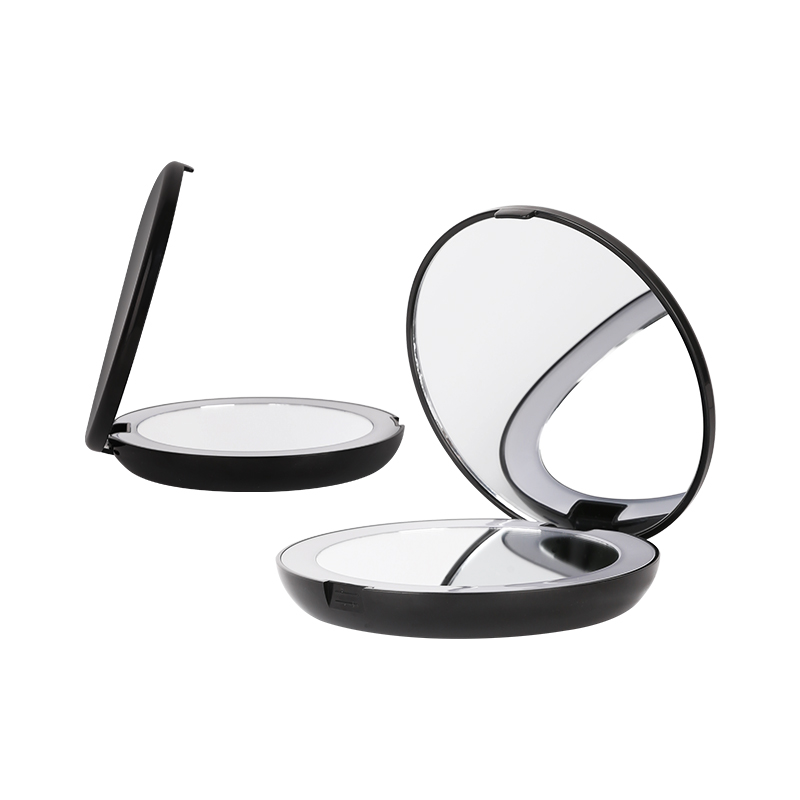
| Travel or beauty accessory brand | Double-sided compact mirror | Portable format with stronger end-user convenience | Magnification mismatch and mirror-surface protection |
The point is not that one format is universally better. It is that each format creates a different combination of margin, breakage risk, display logic, and user expectation. Buyers planning a broader beauty-accessory assortment can also review Mingda’s makeup mirror sourcing guide for beauty brands and retailers for the upstream category logic.
Material Choice Changes Durability and Perceived Value
For handheld mirrors, material selection is one of the fastest ways to change both product feel and claim risk. Plastic frames are usually easier for high-volume retail and lower-cost promotions because they help control unit cost and reduce weight. Metal or metal-look compact mirrors often create a stronger gift impression, but they demand tighter finish control and better scratch protection. PU-covered compact mirrors can add a softer branded look, but they also require consistency in edge wrapping and surface cleanliness.
From a procurement standpoint, the real question is not only “which material looks nicer?” It is “which material still looks acceptable after shipping, shelf handling, and customer use?” If the target market is price-sensitive retail, a robust plastic or simple-coated frame may outperform a decorative finish that attracts complaints after transport.
Single-Sided vs Double-Sided: A Commercial Tradeoff, Not Just a Feature Choice
Single-sided handheld mirrors are easier to explain, easier to pack, and often better for daily retail or salon use. Double-sided mirrors add convenience and can support a stronger product story for travel or beauty gifting, especially when one side uses magnification. But that second mirror surface also increases inspection points, scratch risk, and buyer expectations around optical accuracy.
For gift and travel channels, double-sided is often commercially stronger because it supports portability and perceived value. For professional supply and mass retail, single-sided can be the better commercial decision because it lowers failure points and keeps the product brief clean.
What Buyers Should Confirm Before Asking for MOQ
MOQ on handheld mirrors changes with product structure, decoration complexity, packaging, and whether the buyer wants custom color or logo treatment. The most efficient RFQ sequence is to confirm the base format first, then confirm branding scope, then confirm packaging route, and only then compare MOQ and target price. Asking for MOQ too early usually produces numbers that are not truly comparable.
- Confirm whether the project is standard retail, promo gift, salon supply, or travel accessory.
- Define the mirror format: full-size handheld, compact, foldable, or double-sided.
- List the required materials or finish direction before quotation.
- State whether logo, artwork, barcode, insert card, or gift box changes are needed.
- Clarify if the packaging must survive parcel shipping or only export carton delivery.
This matters to sourcing managers because MOQ is tied to supply-chain reality: print runs, packaging tooling, spare materials, and assembly efficiency. A clean product brief reduces back-and-forth and makes supplier comparison more defensible.
Packaging Is Often the Real Profit-Control Point
Many buyers underestimate how much handheld mirror performance depends on packaging. A compact mirror that looks fine in a sample photo can arrive scratched, misaligned, or cosmetically dirty if the insert, pouch, protective film, and master carton logic are weak. For gift channels, the package must also support presentation value, which means the protective structure and the unboxing story need to work together.
Retail shelf packaging, promo-gift packaging, and e-commerce packaging should not be treated as the same problem. Retail packaging needs visual clarity and barcode discipline. Gift packaging needs presentation and surface protection. E-commerce packaging needs stronger drop and vibration resistance. Buyers managing export programs should involve Mingda’s Packaging & Logistics and QC Process capabilities before they lock the final order.
Common Procurement Mistakes in Handheld Mirror Orders
The first mistake is choosing a decorative design before defining the actual sales environment. The second is mixing too many unrelated mirror concepts in one RFQ, which makes the quotation impossible to compare cleanly. The third is failing to test hinge feel, edge finishing, and surface protection on the real sample. The fourth is approving a compact or decorative mirror without confirming packaging resistance, especially if the order will move through parcel delivery or seasonal gift distribution.
Another common issue is overusing magnification in a product meant for general retail. Magnification can help certain travel and beauty channels, but it also creates faster complaints when the stated power does not match user expectation. Buyers should treat magnification as a claim that needs to be verified, not just a line on the specification sheet.
Pre-Order Checklist for Retail and Gift Buyers
- Match the handheld mirror format to the actual sales channel.
- Approve the frame material and finish against the target price level.
- Test hinge movement, handle strength, and edge finishing on the sample.
- Confirm whether single-sided or double-sided structure is commercially necessary.
- Review logo position, artwork files, and barcode layout before final pricing.
- Check inner protection, scratch prevention, and carton labeling before bulk production.
- Ask for QC checkpoints covering appearance, assembly, accessories, and packaging.
Bottom Line
The best handheld mirror for retail and gift buyers is not the most decorative one. It is the format that matches the channel, survives the packaging route, and delivers acceptable quality at the target price without adding avoidable complaint risk. For most retail programs, simple full-size handheld mirrors are the safer base SKU. For gift, travel, and promo programs, compact or double-sided mirrors can work well, but only when hinge quality, finish protection, and packaging approval are handled early.
FAQ
What is the safest handheld mirror style for general retail?
A simple single-sided handheld mirror is usually the safest because it is easier to explain, easier to pack, and less likely to create hinge-related complaints.
Are compact mirrors better for gift buyers?
Often yes, because they offer stronger presentation value and portability, but the hinge, finish, and packaging need tighter control than basic handheld models.
When should buyers choose double-sided mirrors?
Choose double-sided mirrors when travel convenience, magnification, or premium beauty positioning supports the extra complexity and inspection points.
Why should packaging be discussed before final quotation?
Because packaging changes unit cost, MOQ, surface protection, and shipping performance. It is part of the product decision, not only a finishing detail.
How can Mingda support handheld mirror sourcing?
Mingda can help buyers compare suitable formats, align private label packaging, review QC points, and prepare cleaner RFQs for retail, promo, and gift programs.
Continue the Handheld Mirror Comparison
If your team has already decided that handheld mirrors fit the retail, travel, or gift channel, the next decision is usually structure and channel match. Review single-sided vs double-sided handheld mirrors when you need to compare complexity, price, and packaging. Then read how to choose the right handheld mirror for travel, salon, or retail if you need a faster channel-based SKU decision before RFQ.
CTA
If you are sourcing handheld mirrors for retail, travel, or gift channels, contact Mingda Mirror with your target format, price range, packaging route, and branding scope so the quotation and sample process starts with the right commercial assumptions.
Home | Makeup Mirrors | Square Handheld Mirror | Compact Travel Mirror | Promo & Gift Solution | Single vs Double-Sided Handheld Mirrors | Travel vs Salon vs Retail Handheld Mirror Guide | Contact