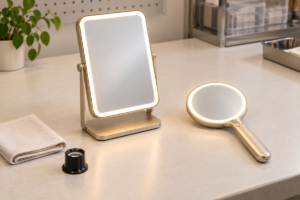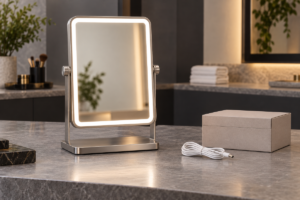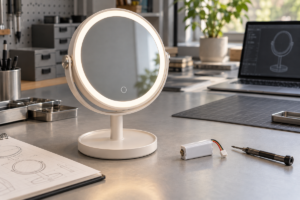

For retail and e-commerce buyers, LED makeup mirror pre-shipment inspection should confirm that the bulk order matches the approved sample before the balance payment and shipment release. The most important checks are appearance, lighting performance, charging function, mirror clarity, stand or hinge stability, accessories, packaging protection, labels, and carton quantity. A good inspection is not only a factory quality step. It protects product reviews, warehouse intake, marketplace compliance files, and reorder confidence.
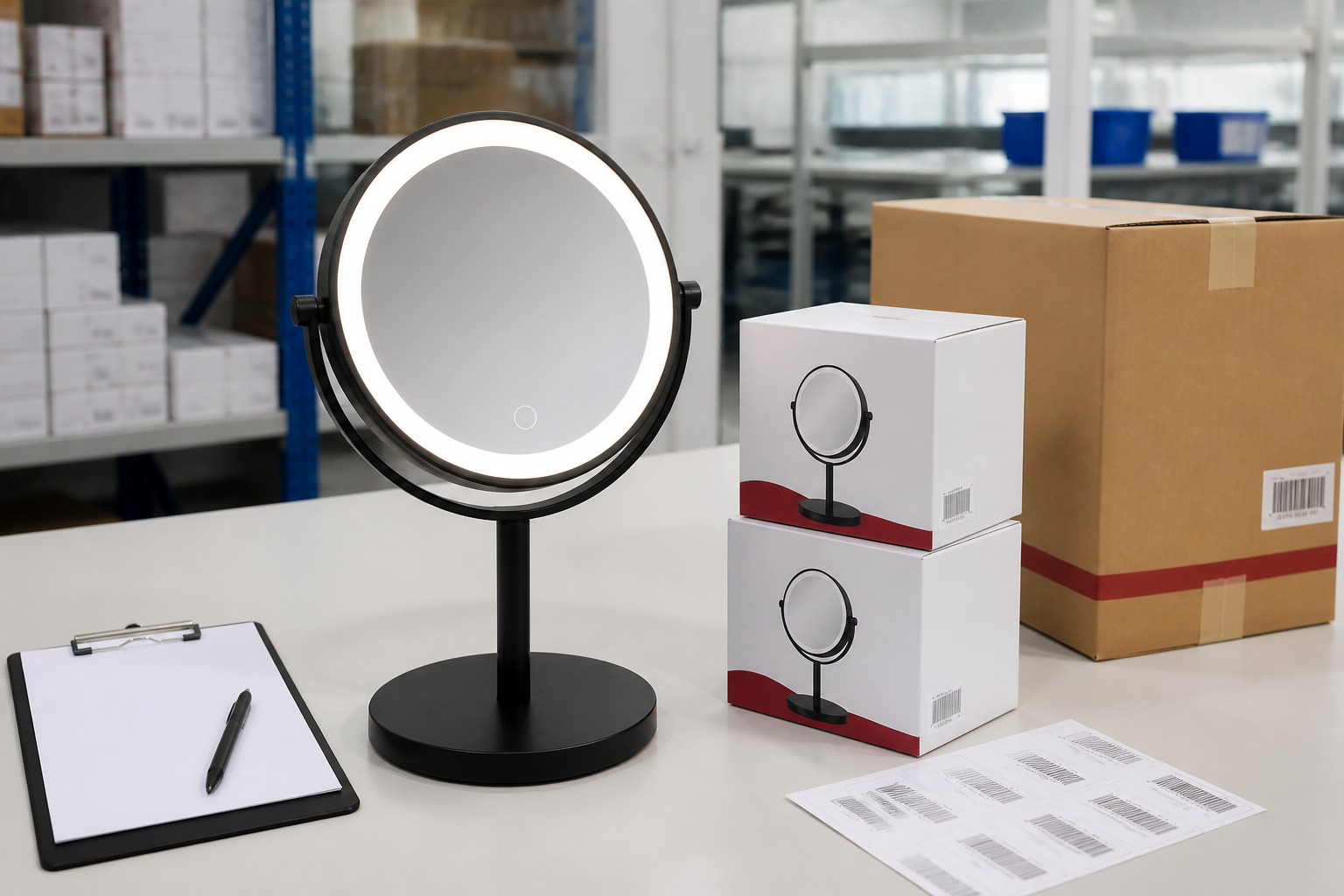
Why Pre-Shipment Inspection Matters for LED Makeup Mirror Orders
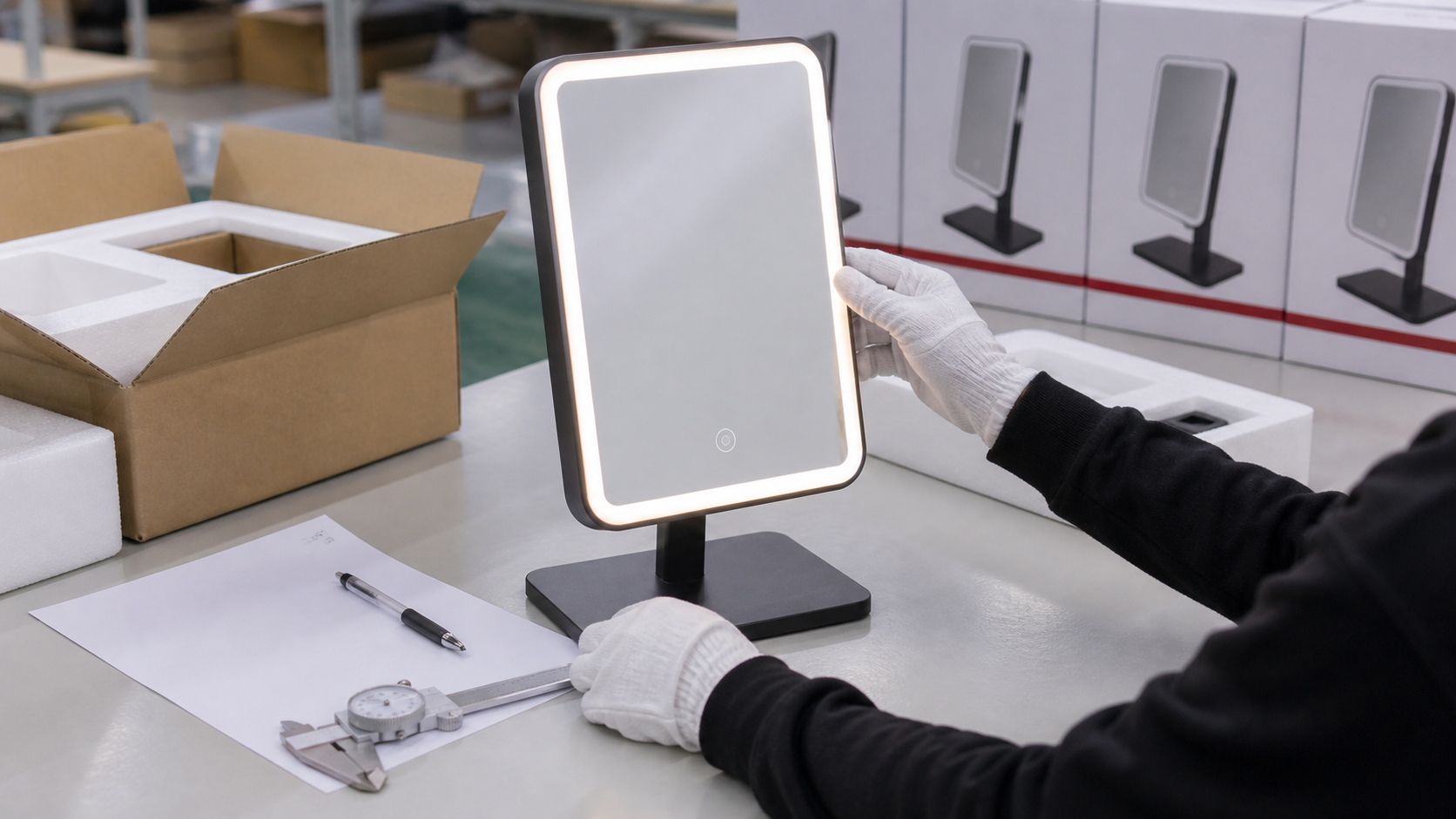
LED makeup mirrors combine glass, lighting, plastic or metal structure, rechargeable electronics, accessories, packaging, and printed labels. That creates more failure points than a simple non-lighted mirror. A shipment can look acceptable in a sample video but still create claims if the bulk goods have uneven light color, loose stands, scratched mirror surfaces, wrong USB-C cables, weak retail boxes, or mixed carton labels.
The risk is higher for Amazon sellers, DTC brands, retail chains, and distributors because the product often moves through several handling stages before reaching the final user. If the buyer only checks appearance and quantity, the inspection may miss the exact problems that drive returns: unstable charging, inconsistent dimming, poor magnification alignment, broken packaging inserts, or accessory shortages.
A buyer-ready inspection standard should connect the approved sample, the purchase order, the product specification sheet, artwork files, packaging drawings, and any market-specific documentation. This helps the supplier, the buyer, and any third-party QC team inspect against the same target.
What Should Be Checked Before Shipment?
The inspection should start with the approved sample and then move through product, function, packaging, and shipment records. For rechargeable LED makeup mirrors, buyers should pay special attention to the power system and product claims because inaccurate runtime, charging, or accessory descriptions can create marketplace disputes.
| Inspection area | What to verify | Buyer risk if missed |
|---|---|---|
| Appearance | Mirror surface, LED ring, frame finish, base, color consistency, scratches | Customer complaints, low retail display quality |
| Lighting | CCT, brightness, dimming, glare, LED uniformity, touch response | Poor makeup experience, negative reviews |
| Charging | USB-C or other port fit, charging indicator, cable quality, battery runtime sample check | Returns, support tickets, inaccurate listing claims |
| Structure | Stand stability, hinge tension, rotation angle, wall or tabletop fit | Breakage, loose product feel, warranty claims |
| Accessories | Cable, adapter if included, manual, pouch, screws, spare parts | Warehouse exceptions and customer-service cost |
| Packaging | Insert fit, gift box, mailer carton, master carton, drop-risk protection | Breakage, FBA or parcel delivery damage |
| Labels | SKU, barcode, carton mark, warning label, country or importer information if required | Receiving errors and compliance file gaps |
Build the Inspection Around the Sales Channel
Retail buyers and e-commerce sellers should not use exactly the same inspection emphasis. The product may be similar, but the commercial failure mode is different.
Retail and Distributor Orders
Retail buyers usually care about shelf presentation, consistent finish, packaging appearance, barcode scan accuracy, and repeated reorder stability. Inspectors should compare several packed units from different cartons, not only the first open sample. Color box surface scratches, weak inserts, loose mirrors inside boxes, and mixed carton marks can create receiving problems even when the mirror itself works.
For distributors, the inspection should also confirm that carton marking and SKU separation are clear enough for warehouse handling. Mixed cartons or unclear item codes can delay downstream delivery and create disputes between the buyer and the supplier.
Amazon and E-Commerce Orders
For e-commerce orders, packaging is part of the product experience. A beautiful LED makeup mirror can still fail commercially if the retail box is crushed after parcel handling or if the customer receives missing cables. Buyers should confirm the packed unit, accessory count, barcode labels, carton protection, and product claims before shipment.
Rechargeable mirror listings also need careful claim control. If the product page promises a runtime, lighting mode, magnification, or charging interface, the inspection should include spot checks that support those claims. Confirm the destination and channel documentation requirements for the actual product, and retain the applicable technical records and inspection evidence before import or launch.
Function Tests That Buyers Should Request
Lighting and charging tests are where many LED makeup mirror inspections become too shallow. Turning the mirror on once is not enough. The inspector should confirm that normal customer use feels stable across the checked samples.
Useful function checks include:
- Power on and power off response
- Touch switch sensitivity and dimming smoothness
- Lighting mode sequence and color temperature consistency
- LED ring uniformity without obvious dark spots
- USB-C or specified cable connection fit
- Charging indicator behavior
- Short charging confirmation on selected samples
- Battery runtime spot check or production test record review
- Mirror clarity, magnification accuracy, and distortion check
- Stand, base, hinge, or rotation stability
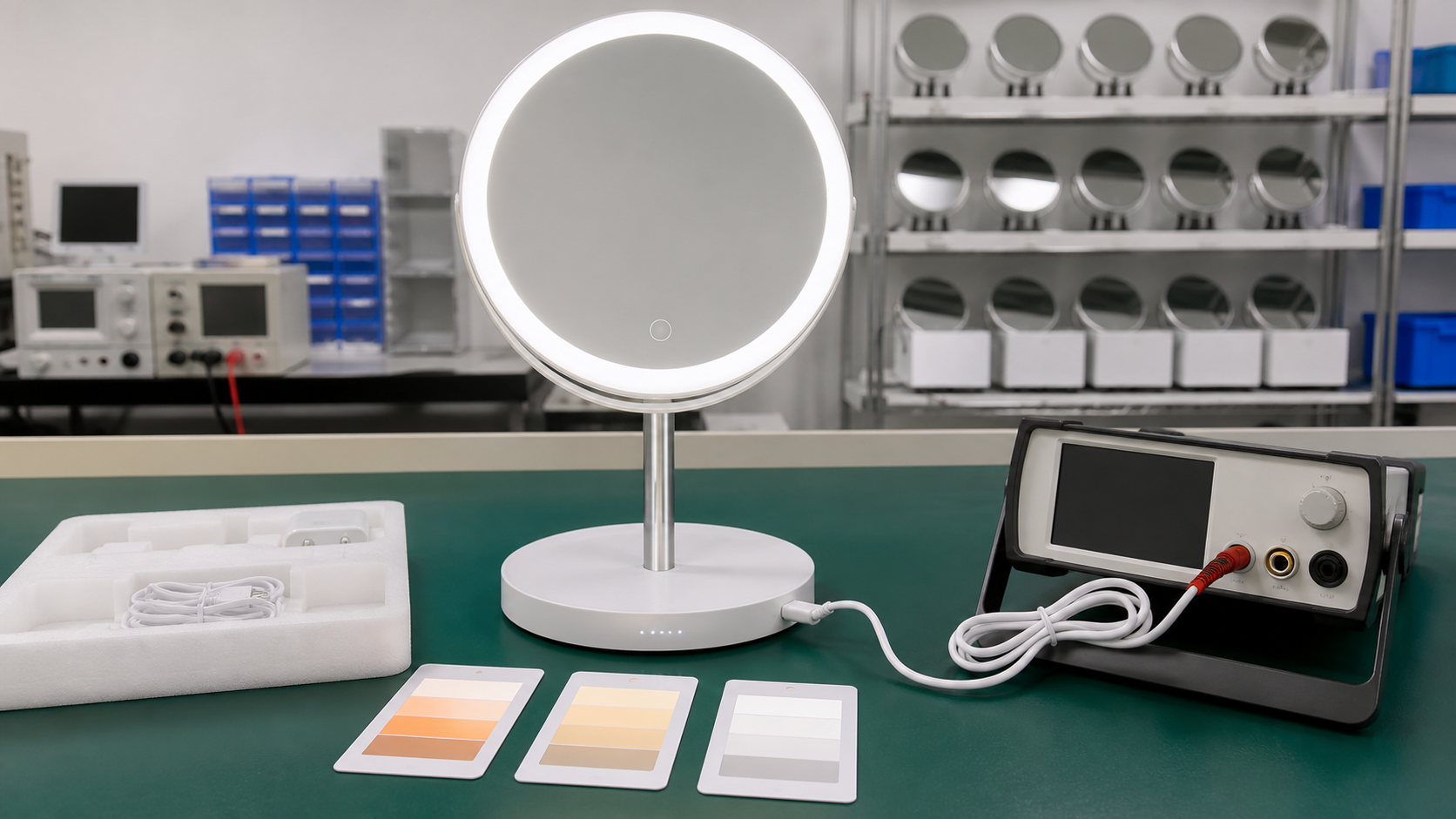
For large orders, buyers can ask the supplier to provide factory test records for charging and runtime, then use final inspection to spot-check whether the records match actual product behavior. For first orders or high-value launches, third-party inspection before balance payment can reduce risk because it gives the buyer independent evidence before goods leave the factory.
How to Define Sampling and Defect Classification
Buyers do not need to inspect every unit, but they do need an agreed sampling method and defect classification. AQL-based sampling is common in export consumer products, but the exact level should match order value, buyer risk tolerance, and channel sensitivity.
The important point is to define defects before inspection starts. For LED makeup mirrors, examples can be classified like this:
| Defect type | Typical examples | Recommended buyer response |
|---|---|---|
| Critical | Electrical safety concern, exposed wire, severe battery swelling, incorrect charger claim | Hold shipment and require root-cause review |
| Major | Mirror does not turn on, unstable charging, broken stand, wrong accessory, failed packaging protection | Rework or reject affected lot depending on frequency |
| Minor | Small cosmetic mark outside visible retail area, slight box scuff within agreed tolerance | Accept only within agreed limit |
| Documentation issue | Missing barcode, wrong carton mark, incomplete product file, mismatched manual | Correct before warehouse or import release |
This prevents a common dispute: the factory treats a problem as cosmetic while the buyer sees it as a marketplace return risk. Written defect rules make the inspection result easier to act on.
Packaging and Label Release Checks
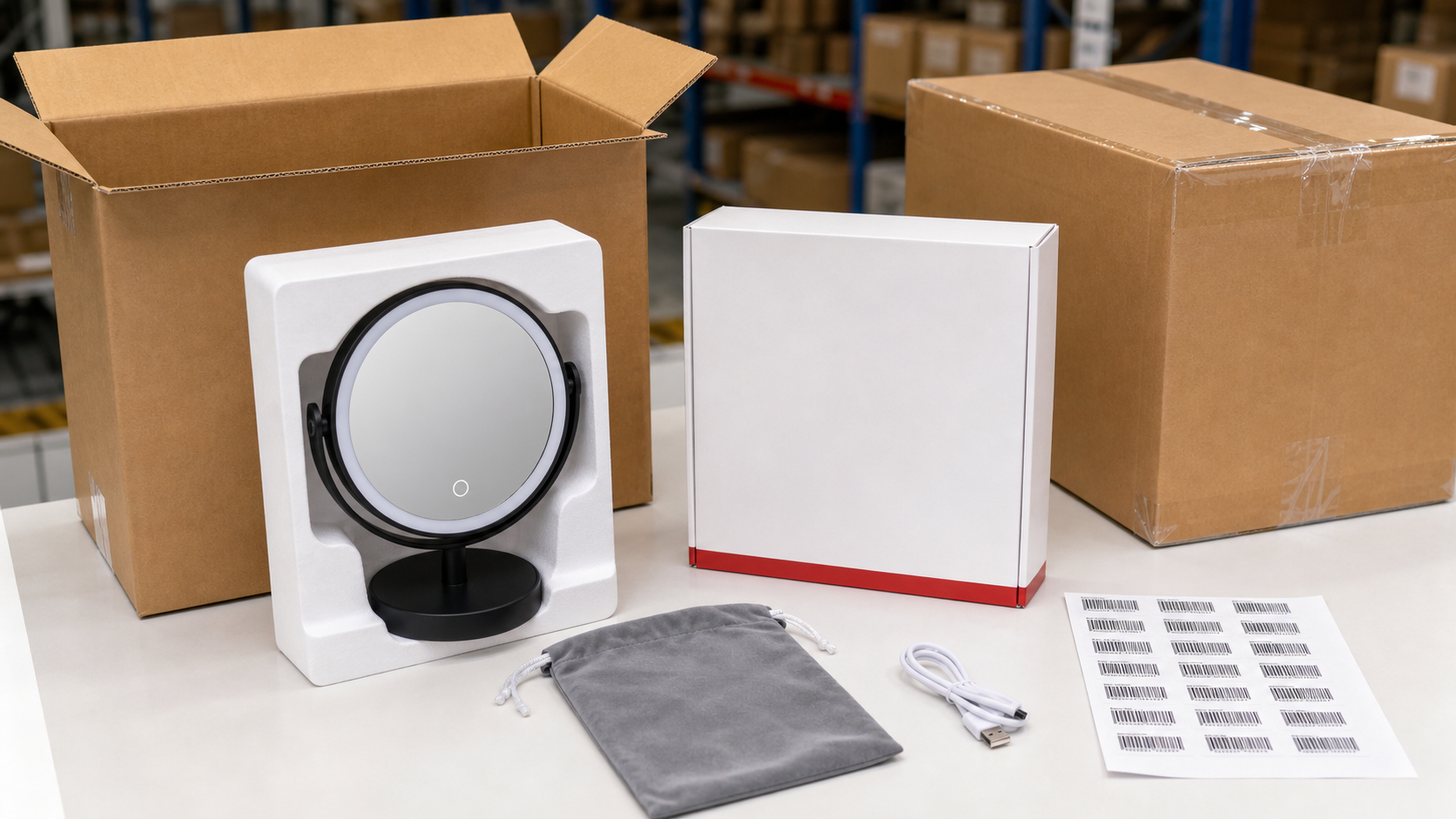
Packaging should be checked as a complete shipped unit, not only as a box design. Inspectors should open packed samples, confirm insert fit, check whether the mirror moves inside the box, verify accessory placement, and review outer carton sealing. For e-commerce shipments, buyers may need stronger protection than a normal retail shelf box because parcel handling is less controlled.
Label checks should include SKU, barcode, carton mark, quantity, color or model variant, and any required warning or importer information for the target market. Exact regulatory obligations depend on the destination and product specification, so buyers should confirm requirements with their compliance team. From a procurement perspective, the practical rule is simple: do not release a shipment when product files, labels, and packed goods do not match.
Pre-RFQ and Pre-Shipment Decision Points
Before placing the order, buyers should decide which inspection evidence they will require at shipment stage. This avoids rushed arguments after production is complete.
- Confirm the approved sample, specification sheet, and packaging standard.
- Define AQL level or agreed sampling method before mass production.
- List critical, major, and minor defects for LED mirror products.
- Require lighting, charging, mirror clarity, structure, and accessory checks.
- Confirm whether runtime and charging claims must be supported by factory records.
- Decide whether a third-party inspection is required before balance payment.
- Approve final packaging, barcode labels, carton marks, and manuals.
- Ask for photos or video records of packed-unit inspection.
- Keep product certificates and technical files organized for the destination market.
Close Inspection Findings Before the Next Shipment
At the first-month review, compare inspection findings with receiving discrepancies and confirmed customer issues for the same SKU and production lot. Record the inspected quantity, delivered quantity, observation period, and test scope. A passing sample is evidence about the checks performed, not proof that every shipped unit is defect-free.
Assign each recurring issue an owner, corrective action, due date, and verification method. Document the revised sample or packaging version, re-inspection result, and authorized shipment-release decision. Mark checks that were not performed explicitly; do not infer a runtime or reliability pass from a short power-on check.
Use the inspection report checklist to retain the sampling and release record. Reconcile the corrected claims, manual, and accessory list with the e-commerce listing kit before the next batch launches.
Bottom-Line Recommendation
For LED makeup mirror orders, buyers should treat pre-shipment inspection as the final commercial risk gate, not only a product quality formality. The safest approach is to inspect against the approved sample, written specification, packaging file, and target sales channel. If the order is rechargeable, private label, marketplace-bound, or the first shipment with a supplier, include lighting, charging, accessory, packaging, and label checks before release.
Mingda Mirror supports beauty brands, retailers, Amazon sellers, wholesalers, and distributors with LED makeup mirror product selection, OEM/ODM coordination, packaging planning, and quality-control alignment. Buyers can explore Makeup Mirrors, review Mingda’s QC Process, compare Packaging & Logistics, or send project details through the Contact page.
FAQ
What is the most important LED makeup mirror inspection point?
The most important point is whether the bulk order matches the approved sample and written specification across lighting, charging, structure, appearance, accessories, packaging, and labels. A single power-on test is not enough for retail or e-commerce orders.
Should buyers inspect rechargeable LED makeup mirrors differently?
Yes. Rechargeable mirrors need extra checks for the charging port, cable fit, charging indicator, battery runtime records, power stability, and product claim accuracy. Buyers should also keep relevant product documentation organized for the target market.
Is packaging part of pre-shipment inspection?
Yes. For mirrors, packaging is part of delivered quality. Weak inserts, loose units inside boxes, wrong labels, or poor master cartons can cause breakage, warehouse delays, and customer complaints even when the mirror itself passes function testing.
When should a buyer use third-party inspection?
Third-party inspection is useful for first orders, high-value launches, marketplace programs, private-label products, mixed-SKU shipments, and any order where the buyer cannot personally check the goods before balance payment.
What should buyers send to Mingda Mirror before RFQ?
Buyers should send target market, sales channel, mirror type, size, lighting requirement, power source, packaging plan, barcode or label needs, expected order quantity, and any inspection or compliance requirements. This helps Mingda quote the correct product and quality-control scope.
Social Media Content Ideas
LinkedIn: Explain why pre-shipment inspection should check LED lighting, charging, packaging, and labels together before a rechargeable makeup mirror order is released.
Facebook: Share a buyer checklist for reducing LED makeup mirror returns before retail or e-commerce shipment.
Instagram: Use the QC bench image to show how lighting and USB-C function checks support better product reviews.
CTA: Read the full checklist and send your mirror specification, packaging plan, and inspection requirements to Mingda Mirror for RFQ support.