
LED makeup mirror model number control means every approved sample, test report, label, manual, packaging file, and bulk shipment must point to the same confirmed product version. For B2B buyers, this is not paperwork detail. It protects marketplace compliance review, customs documents, battery or adapter records, product-page claims, reorders, and after-sales traceability. The practical rule is simple: before approving mass production, buyers should lock the model number, product configuration, electrical rating, packaging version, and change-control process in the RFQ and purchase order.
This guide is written for brands, Amazon and e-commerce sellers, retailers, wholesalers, distributors, and private-label buyers who source LED makeup mirrors and need the final goods to match approved documents.
Why Model Number Control Matters in Mirror Sourcing
Many mirror orders fail documentation review because the physical product and the paperwork are close, but not identical. A supplier may have one report for a similar LED mirror, another packaging file for an older version, and a sample label that uses a factory internal code. That may look harmless during quotation, but it can become a problem when the buyer needs to upload compliance evidence, prepare marketplace listings, pass warehouse receiving, or reorder the same SKU.
For rechargeable LED makeup mirrors, version control is even more important. Battery capacity, USB-C charging board, adapter choice, LED strip, switch design, and packaging marks can affect the document set. Keep the buyer-approved product and document revisions traceable throughout the order. Buyers do not need to become compliance lawyers, but they should make sure the supplier can connect the final commercial SKU to the correct model records.
What Buyers Should Lock Before RFQ
The model number should not be assigned after production starts. It should be part of the buying scope, especially for private-label or multi-channel programs.
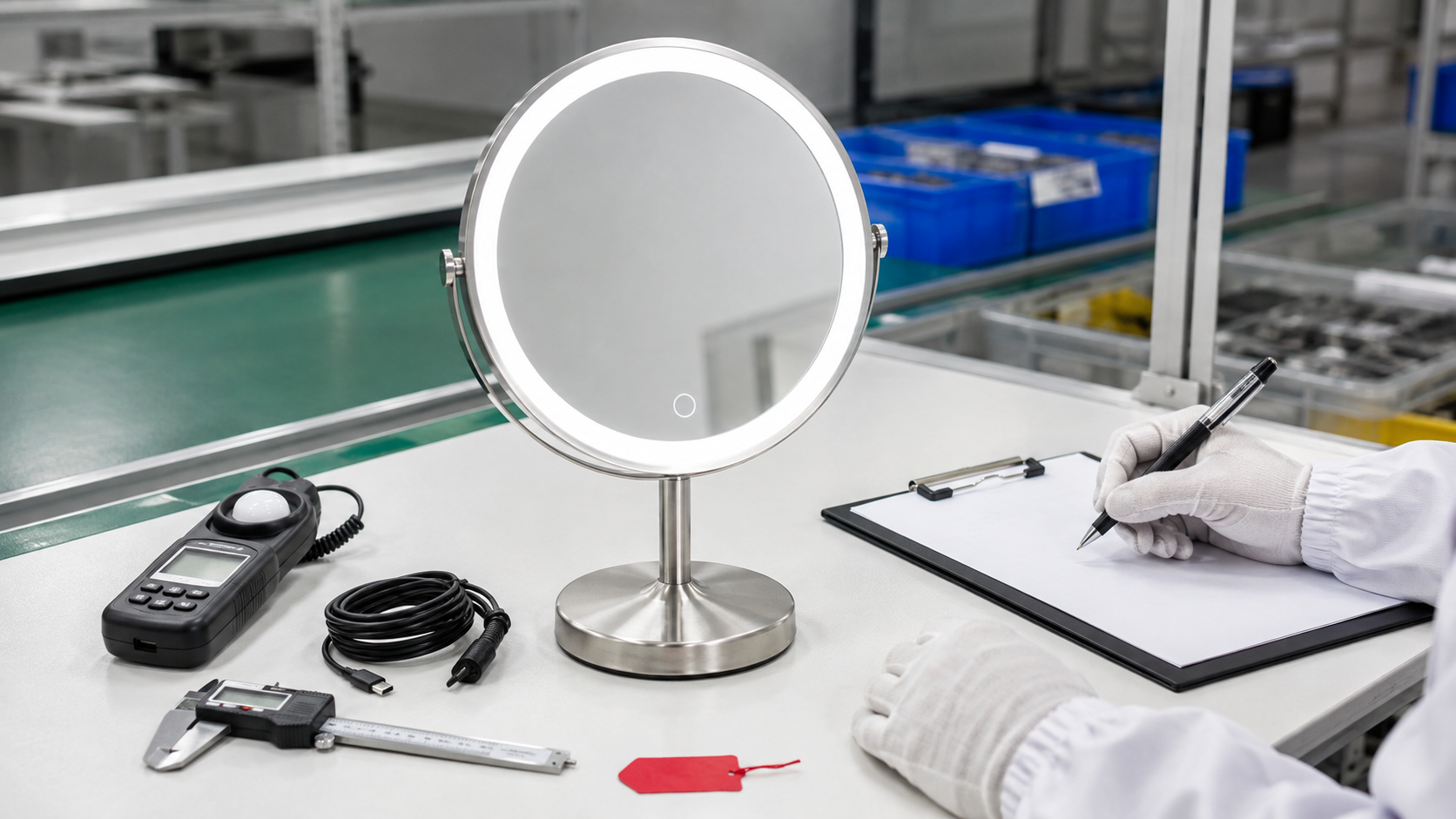
| Item to Lock | Why It Matters | Buyer Check Before Approval |
|---|---|---|
| Factory model number | Connects sample, quotation, reports, and production | Confirm it appears consistently on specification sheet and sample record |
| Buyer SKU or item code | Links the factory product to retail/e-commerce systems | Map buyer SKU to factory model in the purchase order |
| Electrical configuration | Affects reports, labels, manuals, and claims | Confirm battery, USB-C, adapter, voltage, wattage, and LED data |
| Packaging version | Affects barcode, warning text, carton mark, and channel readiness | Approve final box artwork, carton mark, and packed sample together |
| Test report coverage | Prevents use of irrelevant or outdated evidence | Check model coverage, product photos, ratings, issue date, and laboratory details |
| Change-control rule | Prevents silent component changes after sample approval | Require written approval for battery, LED, charging board, mirror glass, hinge, or packaging changes |
The goal is not to create unnecessary administration. The goal is to make sure a buyer can prove what was ordered, what was tested, what was packed, and what was shipped.
Match the Model to the Sales Channel
Different channels use model information differently. Amazon and e-commerce sellers may need item-level attributes, battery details, product photos, warning labels, and compliance documents. Retail chains often need barcode consistency, carton marks, replenishment stability, and product claims that match the shelf label. Distributors need repeatable model references so future reorders do not drift from the first approved shipment.
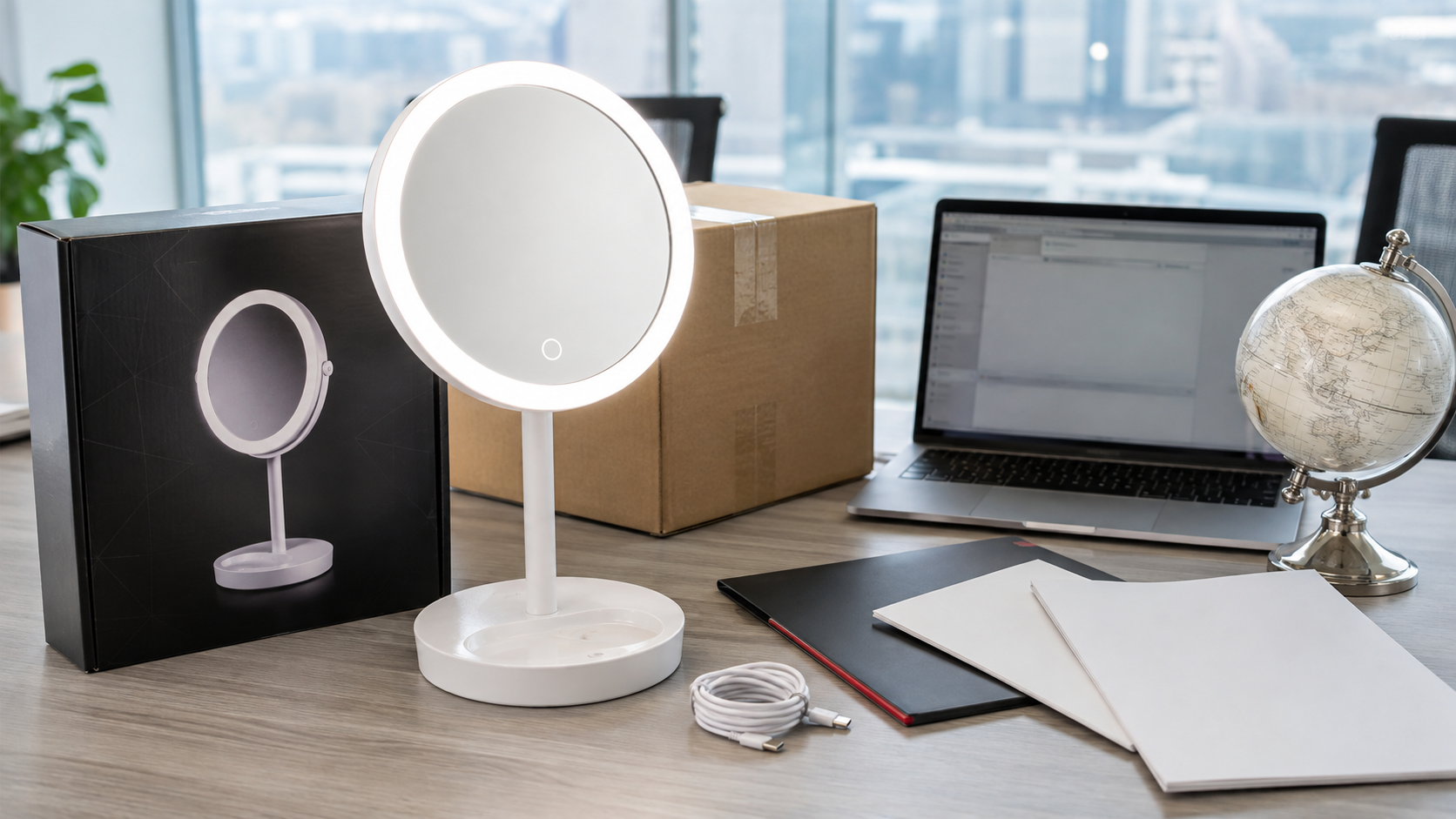
A useful approach is to create a simple buyer-side model matrix:
| Channel | Model Control Priority | Common Risk |
|---|---|---|
| Amazon and e-commerce | Exact SKU, battery details, photos, label, and compliance file match | Listing claims do not match delivered goods |
| Retail chain | Barcode, packaging artwork, carton mark, and replenishment code match | Warehouse or store system rejects inconsistent units |
| Private label brand | Logo version, manual language, packaging version, and supplier records match | Brand approval is based on one version while production uses another |
| Distributor or wholesaler | Stable model number and component standard across reorders | Second order changes lighting, hinge, finish, or packaging |
| Hotel or salon project | Installation, power, replacement, and room-type model records match | Project replacement parts become difficult to identify |
Buyers should ask the supplier to show how the commercial item code, internal factory code, and test-report model name connect. If three different names are used, the link should be documented before deposit payment.
Documents That Should Use the Same Product Version
For LED makeup mirrors, model control should cover both product and packaging files. A strong supplier should be able to keep a clean record of the final approved version.
Key documents normally include:
- Quotation and specification sheet.
- Golden sample approval record.
- Product photos used for listing or sales materials.
- Available electrical, EMC, RoHS, battery, adapter, or market-specific test reports where applicable.
- Battery information and transport-related documents for rechargeable models where needed.
- Product label, rating label, manual, warning label, and packaging artwork.
- Retail box, barcode, carton mark, shipping label area, and packed-sample photos.
- Pre-shipment inspection checklist and defect standard.
For U.S. consumer product workflows, buyers should pay attention to product certificate and item-data expectations where applicable. For EU sales, product safety files, traceability, responsible-party information, labels, and instructions may be part of the buyer’s commercial review. For air shipment of rechargeable mirrors, battery handling and documentation should be checked with the forwarder and supplier before shipment. Requirements depend on product design and destination market, so buyers should treat this section as procurement guidance, not legal advice.
Packaging and Labels Are Part of Model Control
Model number control should not stop at the mirror body. Packaging can create the same level of risk as the product itself.
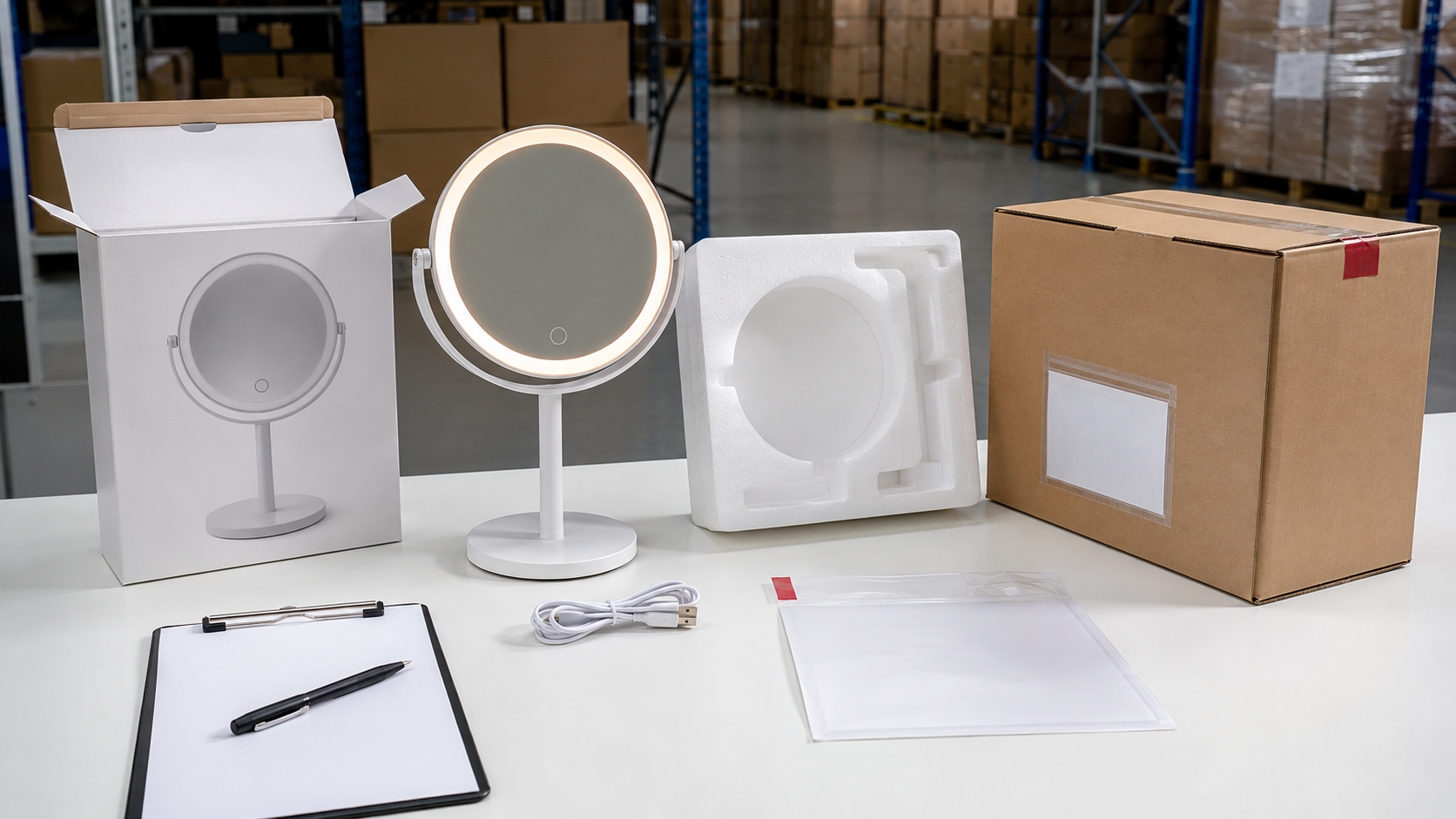
For an e-commerce order, the retail box, barcode, warning label, insert, manual, USB-C cable, carton mark, and product image should match the selected SKU. If an old box file shows a different battery capacity or lighting claim, the buyer may receive complaints even when the mirror works correctly. If a carton mark uses an old item code, warehouse receiving and replenishment can become messy.
For retail and distributor orders, packaging version control also protects repeat orders. When a buyer reorders six months later, the factory should know whether the SKU uses the same mirror body, finish, light color, cable, box size, molded insert, and carton arrangement.
Common Mistakes Buyers Should Avoid
The first mistake is accepting a certificate name without checking whether it covers the exact model. A report for a similar mirror may not be enough if the product uses a different adapter, battery, LED board, housing, or label.
The second mistake is approving product samples and packaging samples separately. For mirror orders, the packed sample should be approved as the final commercial unit because packaging, accessories, labels, and documents all affect shipment readiness.
The third mistake is allowing silent component substitution. A supplier may change an LED strip, battery, hinge, cable, or insert to manage cost or material availability. Buyers should require written notice and approval before any key component changes.
The fourth mistake is using different names in different systems. If the quotation says one model, the artwork says another, and the report says a third, the buyer should ask for a mapping table before production.
RFQ Checklist for Model-Controlled LED Makeup Mirror Orders
Before sending a purchase order, buyers should confirm:
- Target market and sales channel.
- Factory model number and buyer SKU.
- Mirror type, size, magnification, finish, LED specification, CCT, brightness, and dimming method.
- Rechargeable or plug-in configuration, battery capacity, USB-C requirement, adapter requirement, and runtime claim.
- Available test reports and whether they cover the exact model configuration.
- Product label, manual language, warning label, barcode, retail box, and carton mark version.
- Packed-sample approval with accessories, insert, cable, manual, and carton.
- Which components are locked after sample approval.
- Change-control process before mass production and before future reorders.
- MOQ, sample lead time, bulk lead time, inspection scope, and replacement process.
Reconcile Revisions Before the Next Production Release
At the two-week document review, reconcile the buyer SKU, factory model, component list, label file, manual, insert, retail box, and carton mark in one revision register. For each change, record the old and new revision, reason, approval owner, effective purchase order or production lot, and disposition of obsolete stock. Keep pending approvals visible and block release of an affected configuration until the named owner closes them.
Check a physical packed sample against the released register rather than checking filenames alone. Record any mismatch and the corrected sample evidence. Use the manual and label approval checklist for document sign-off and the retail-box and master-carton guide for the packed configuration.
Bottom-Line Recommendation
For LED makeup mirror sourcing, model number control is the bridge between a good sample and a reliable commercial shipment. Buyers should not approve bulk production until the sample, test reports, product labels, packaging files, and purchase order all identify the same final version. The best supplier is not only the one that can make an attractive mirror; it is the one that can keep the product, documents, packaging, and reorders traceable.
Related Mingda Mirror resources include Makeup Mirrors, Product Design Support, QC Process, Packaging & Logistics, and Contact.
FAQ
Is a factory model number the same as a buyer SKU?
Not always. The factory model number identifies the manufacturing version, while the buyer SKU may identify the retail or marketplace item. B2B buyers should map both codes in the purchase order.
What should buyers check on a test report?
Check model coverage, product photos, electrical rating, battery or adapter details, standard, laboratory name, issue date, applicant or manufacturer, and whether the report matches the final approved sample.
When should model numbers be locked?
Lock the model number before bulk production, ideally after the golden sample and packed sample are approved. Any later change should require written buyer approval.
Does packaging need a version number?
For private-label, retail, and e-commerce orders, yes. Packaging artwork, barcode, manual, labels, insert, and carton marks should be tied to the same product version.
What should buyers send Mingda Mirror for a controlled quotation?
Send the target market, buyer SKU, expected quantity, mirror type, power configuration, packaging route, required documents, and any channel-specific label or compliance requirements.
Request a Traceable Mirror Quotation
If you are sourcing LED makeup mirrors for retail, Amazon, wholesale, or private-label channels, send Mingda Mirror your target market, SKU plan, model requirements, packaging route, document needs, and order quantity. Mingda can help prepare a quotation and sample approval process that keeps the mirror, documents, labels, and packaging aligned before production.
Social Media Content Ideas
LinkedIn: explain why model-number control prevents sample, report, label, and shipment mismatches in LED makeup mirror sourcing.
Facebook: share a buyer checklist for keeping packaging, barcode, manual, and product claims consistent before bulk orders.
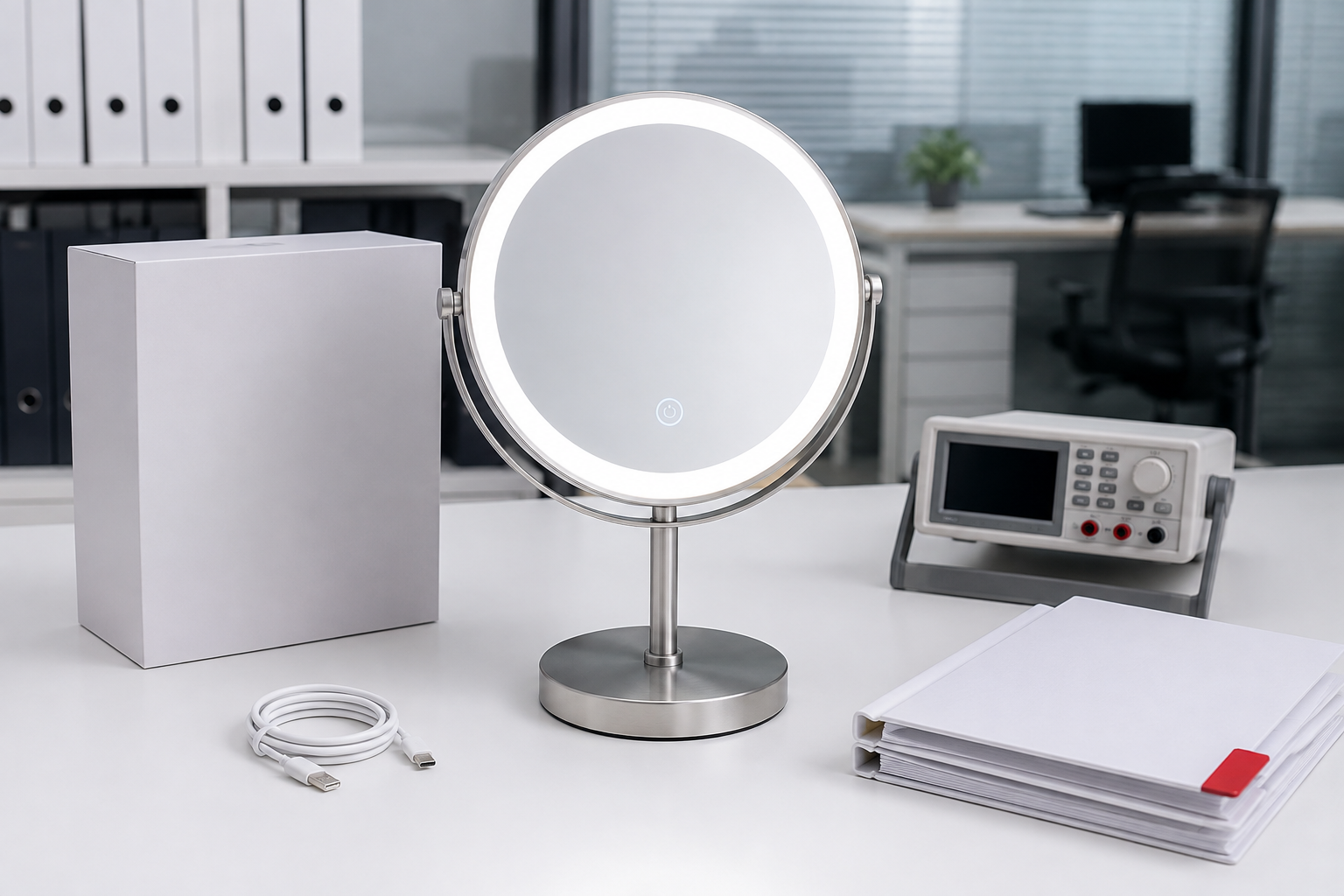
Instagram: use the QC bench image to show how a complete LED makeup mirror sample should be reviewed with documents and packaging.
CTA: link back to this article and invite buyers to send their target market, SKU plan, and document requirements for an RFQ.