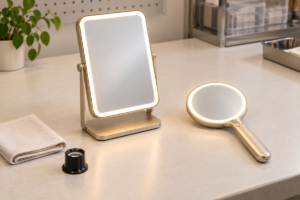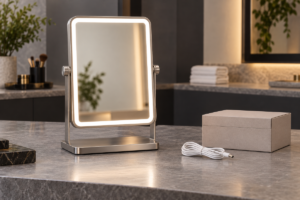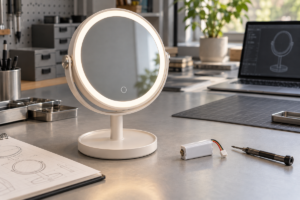

Mirror solutions for beauty brands and private-label buyers should be planned as a product-line decision, not as a single accessory purchase. The right mirror program helps a brand match its target price point, strengthen packaging presentation, reduce quality complaints, and build a more complete beauty or gifting assortment.
For most buyers, the practical question is this: which mirror types, customization options, and packaging standards will support your sales channel without creating avoidable sourcing risk?
1. Start With the Brand Scenario
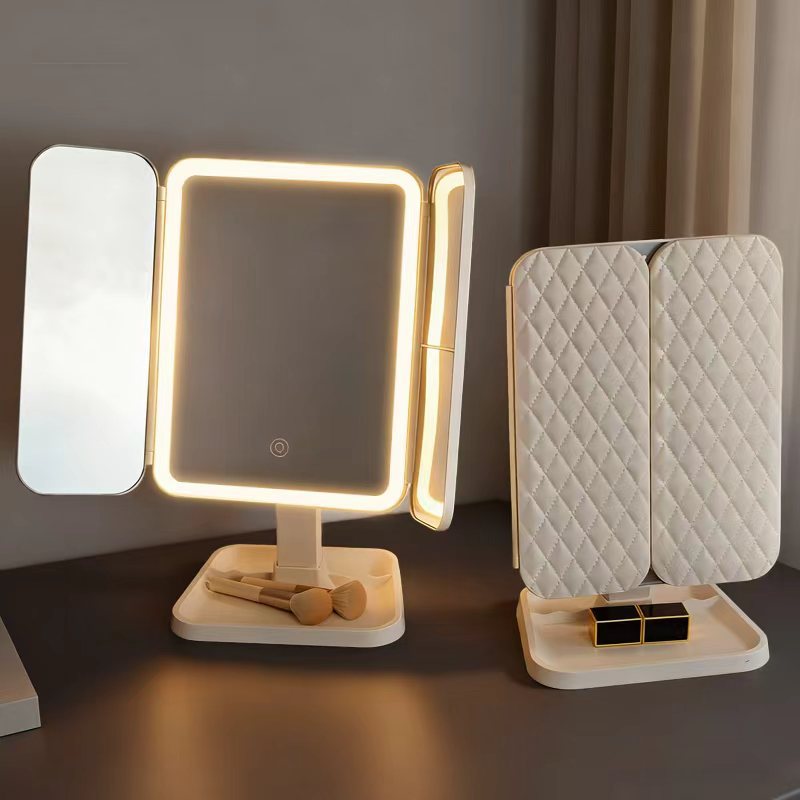
Different beauty brands need different mirror solutions. A gift-focused skincare brand may need compact mirrors for promotional kits, while a premium cosmetics brand may need rechargeable tabletop mirrors with stronger packaging and a more polished unboxing experience.
Before choosing a model, buyers should define the target channel first: retail shelves, e-commerce, subscription boxes, gift-with-purchase campaigns, salon distribution, or private-label collections. That decision affects mirror size, lighting level, packaging cost, MOQ, and customization depth.
2. Choose the Right Mirror Type for the Sales Channel
| Buyer goal | Recommended mirror type | Why it fits |
|---|---|---|
| Entry-level beauty add-on | Compact or simple portable mirror | Easy to bundle, gift, or test in a wider audience. |
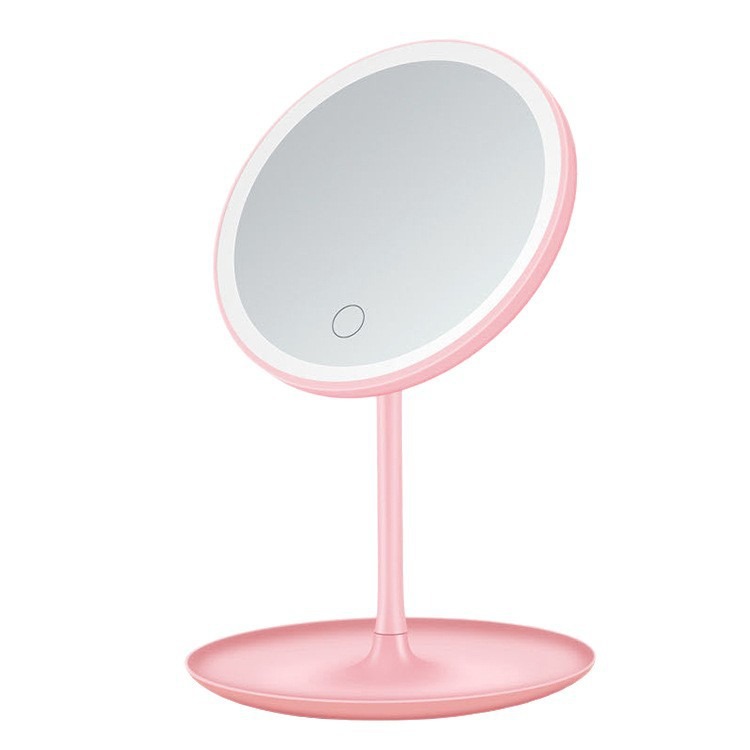
| Premium beauty routine | Rechargeable LED tabletop mirror | Supports stronger daily-use value and higher perceived price. |
| Travel or subscription kit | Foldable or lightweight travel mirror | Keeps shipping weight manageable and matches portable use. |
| Studio or influencer line | Hollywood vanity mirror | Creates stronger visual impact and content-friendly presentation. |
If you are still narrowing the assortment, compare rechargeable vs battery-powered makeup mirrors and browse Makeup Mirrors to align the product family with your market.
3. Clarify Private-Label Customization Scope Early
Many new buyers start with logo printing, but a workable private-label program usually needs more than that. Buyers should confirm logo position, color finish, mirror shape, magnification options, light settings, charging method, user manual language, barcode format, and outer-carton marks before sample approval.
For mature brands, deeper customization can include exclusive finishes, upgraded charging solutions, packaging inserts, or ODM development based on a clear price target and sales plan. If the project needs a higher level of product differentiation, it is worth reviewing what can be customized for LED makeup mirrors before locking the RFQ brief.
4. Treat Packaging as Part of the Brand Experience
Packaging affects both customer perception and actual damage risk. Beauty brands should confirm whether the project needs a simple color box, premium gift box, e-commerce mailer, insert tray, printed manual, barcode label, or retailer-ready carton layout.
For online channels, packaging must protect the mirror through parcel handling. For in-store channels, packaging also needs to communicate the product story clearly. Buyers planning a broader sourcing workflow should also check mirror packaging for shipping and e-commerce delivery.
5. Build Quality Control Into the Product Plan
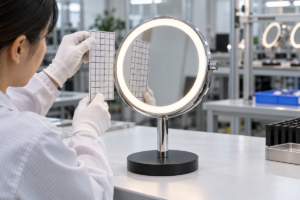
For beauty brands, poor mirror quality quickly turns into review problems and reorder friction. Buyers should confirm lighting consistency, reflection clarity, switch reliability, charging performance, finish quality, logo accuracy, and packaging protection during the sample stage.
It is safer to define inspection checkpoints before mass production than to fix recurring complaints later. Teams preparing a formal approval workflow can use this LED mirror quality control checklist as a starting point.
6. Pre-RFQ Checklist for Beauty Brand Buyers
- Define the target sales channel and expected retail price band.
- Choose the mirror type that matches the customer scenario.
- List required custom points: logo, finish, magnification, charging, packaging, and labeling.
- Confirm MOQ, sample timing, mass-production lead time, and reorder expectations.
- Set packaging and inspection requirements before approving artwork or tooling.
- Prepare reference images or target-brand examples for clearer supplier communication.
How Mingda Mirror Supports Beauty Brand Programs
Mingda Mirror supports beauty brands and private-label buyers with makeup mirrors, portable mirrors, Hollywood vanity mirrors, and OEM/ODM mirror development. Buyers can discuss product selection, customization scope, packaging structure, and sample planning through the Contact page.
FAQ
What mirror type is best for a beauty brand launch?
It depends on the channel. Compact mirrors suit gift and entry-level campaigns, while rechargeable LED tabletop mirrors are stronger for premium positioning and direct retail sales.
Is logo printing enough for a private-label mirror order?
Usually not. Most workable private-label projects also need packaging, labeling, manual language, and quality checkpoints defined before bulk production.
What should buyers send before requesting a quotation?
Send the target product type, preferred size or structure, customization requirements, expected quantity, packaging needs, sales channel, and any reference images that show the intended positioning.
Why does packaging matter so much for beauty-brand mirror programs?
Because packaging influences both brand presentation and transport safety. Weak packaging can erase the value of a good product by creating damage, returns, or inconsistent shelf presentation.
CTA
If you are building a mirror line for a beauty brand or private-label program, contact Mingda Mirror to discuss product fit, customization scope, packaging, and sample planning for your market.
Buyer Decision Framework for Private-Label Mirror Programs
Beauty brands and private-label buyers should treat mirror sourcing as a product-line decision, not only a price comparison. The right mirror solution depends on the sales channel, expected retail price, packaging plan, quality tolerance, and how much customization is needed before launch.
| Buyer need | Recommended mirror direction | Commercial check before RFQ |
|---|---|---|
| Retail beauty line | LED makeup mirrors with stable lighting, clear magnification options, and shelf-ready packaging | Confirm target price, MOQ, packaging artwork, barcode needs, and sample approval timing |
| Gift or travel program | Compact or handheld mirrors with durable frames and practical logo placement | Check finish durability, carton strength, logo method, and mixed-SKU packing rules |
| Premium vanity assortment | Hollywood vanity mirrors or larger lighted mirrors with strong display value | Review bulb layout, installation use, power plug, anti-breakage packaging, and replacement policy |
| OEM/ODM launch | Custom mirror structure, color, lighting, logo, and packaging based on buyer brief | Prepare drawings, reference samples, compliance needs, lead time target, and inspection standard |
For a stronger product path, buyers can compare makeup mirrors, review handheld mirror sourcing, and discuss custom development through the Contact page.
Pre-RFQ Checklist for Beauty Brands
- Define whether the mirror is for retail shelves, e-commerce, salon use, gifting, or project supply.
- Confirm the required lighting, magnification, size, power source, and packaging format.
- Decide which branding details need customization, including logo, color, gift box, insert card, and manual language.
- Ask for sample timing, MOQ, lead time, inspection points, and carton drop-test or packaging protection details.
- Request a clear quote that separates product cost, packaging customization, tooling or setup fees, and shipping assumptions.
FAQ
What mirror products are most suitable for beauty brands?
Most beauty brands start with LED makeup mirrors, compact mirrors, handheld mirrors, or Hollywood vanity mirrors because these products connect naturally with makeup, skincare, salon, and retail beauty use.
Can Mingda Mirror support private-label packaging?
Yes. Private-label programs can usually discuss logo placement, color options, gift box artwork, instruction sheets, barcodes, and carton packing based on MOQ and project requirements.
What should buyers prepare before requesting a quotation?
Buyers should prepare target market, quantity range, preferred mirror type, size, lighting or magnification needs, packaging requirements, certification expectations, and desired delivery schedule.
How can buyers reduce quality and return risk?
They should approve a physical sample, confirm packaging strength, define inspection points, test lighting and charging functions where relevant, and align replacement or after-sales rules before bulk production.
Bottom-Line Recommendation
For beauty brands and private-label buyers, the safest mirror sourcing route is to start with the sales channel and product role, then match the mirror structure, lighting, packaging, MOQ, and QC process to that commercial goal.
If you are building a mirror line for beauty retail, gifting, salon, or private-label channels, contact Mingda Mirror to discuss product selection, samples, packaging, and OEM/ODM support.