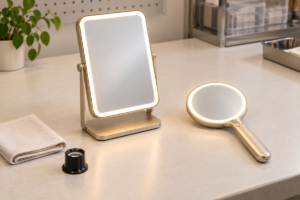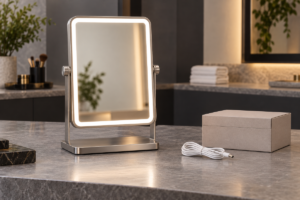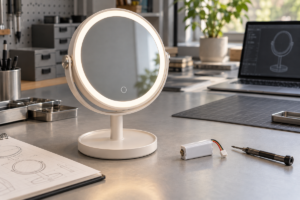

For LED mirrors, packaging is not a secondary logistics detail. It directly affects claim rates, replacement cost, customer reviews, project handover speed, and whether the buyer needs to absorb damage after the goods arrive. That is why serious importers, distributors, retailers, and e-commerce sellers need to understand how to pack LED mirrors for shipping before bulk production is released.
This guide explains the packaging points business buyers should confirm for international shipping, project delivery, and parcel-based e-commerce channels. It focuses on how to reduce breakage, protect mirror surfaces and electronics, and align packaging with the real transport path instead of relying on generic carton claims.
1. Start With the Real Shipping Method, Not a Generic Carton
Packaging for LED mirrors should be built around the actual delivery route. A mirror going into a full container for a project warehouse does not face the same handling risk as a private-label unit that will move through parcel couriers, local fulfillment, and final-mile delivery.
Buyers should first define whether the goods are shipping by container, LCL, pallet delivery, or parcel/e-commerce handling. This affects carton strength, inner support design, label placement, and whether extra drop protection is necessary.
2. Protect the Mirror Surface and Edges First
Glass breakage and visible scratches are still the most common packaging-related complaints in the mirror category. The packing structure should start by protecting the mirror face, edges, and corners before the unit is placed in the export carton.
- Protective film or non-scratch layer on the mirror surface
- Corner protection strong enough to absorb impact on glass edges
- Buffer material that keeps the mirror stable inside the box
- Separation between the mirror and hard accessories that could mark the glass
If the mirror includes lighting, touch controls, or anti-fog components, buyers should also confirm that cables, drivers, and switch areas are not under pressure inside the packaging.
3. Match Inner Packaging to Product Size and Structure
One common sourcing mistake is using a standard inner packing setup for multiple mirror sizes. When the inner support does not fit the actual product, the unit can move during transport and absorb shock unevenly.
For LED bathroom mirrors, makeup mirrors, and dressing mirrors, inner protection should match the actual dimensions, frame structure, and accessory pack. A tight, stable fit matters more than simply adding more filler material.
4. Review Outer Carton Strength for Export Handling
The outer carton should be evaluated based on stacking pressure, loading, unloading, and long-distance transport. For export shipments, the carton is part of the quality system because a weak carton can turn a good product into a claim.
- Carton board strength appropriate for product weight
- Secure sealing and clean edge condition
- Reasonable stacking resistance for pallet or container loading
- Clear carton marks for model, quantity, orientation, and fragile handling
Buyers shipping through LCL or mixed handling routes should usually ask for stricter packaging than buyers shipping full, stable project containers.
5. Treat E-commerce Delivery as a Different Risk Level
For e-commerce sellers, shipping damage risk is usually higher because the packed unit may be handled more times and dropped from different angles. A package that is acceptable for pallet delivery may still fail in parcel distribution.
E-commerce mirror packaging often needs stronger corner protection, tighter inner support, clearer barcode and SKU labeling, and a more careful review of accessories and instruction sheets. Buyers should not assume that export packaging is automatically suitable for parcel delivery.

6. Confirm Accessories, Labels, and Manuals Inside the Carton
Packaging quality is not only about the box. Missing mounting screws, wrong labels, mixed manuals, or incorrect barcodes create warehouse and customer-service problems even if the mirror arrives safely.
- Mounting hardware complete and separated from the mirror face
- User manual language correct for the target market
- Barcode, SKU, fragile marks, and private-label information accurate
- Plug, voltage, and carton labels aligned with the order
This is especially important for Amazon sellers, retail chains, and distributors who rely on smooth receiving and accurate inventory handling.
7. Ask for Packaging Photos and Packed-Unit Checks Before Shipment
Before final release, buyers should request real packed-unit photos or a final inspection report that includes packaging checkpoints. This is a practical way to confirm that the agreed packing method was actually used in production, not only described during quotation.
For first orders, mixed-SKU shipments, or e-commerce programs, a third-party inspection that checks packaging and accessory count can reduce costly claims later.
Release Evidence for Repeat Orders and Packaging Changes
Keep a signed packed sample and an approval record that identifies the buyer SKU, mirror configuration, insert revision, accessory list, carton specification, delivery route, test procedure, and acceptance criteria. Record failures with photos, the corrective action, the responsible person, and the retest decision. Do not carry approval forward automatically after changing the mirror dimensions, protective materials, or carton.
For tabletop and rechargeable makeup mirrors, use the molded insert packaging checklist to check glass clearance, base support, accessory cavities, and version control. Large bathroom mirrors still need a packaging plan matched to their own mounting hardware, dimensions, and handling route.
LED Mirror Packaging Checklist for Buyers
- Confirm whether the goods ship by container, pallet, LCL, or parcel delivery
- Protect mirror face, edges, corners, and electronic components
- Match inner support to the actual mirror size and structure
- Review outer carton strength for export stacking and handling
- Upgrade protection for e-commerce and parcel-delivery channels
- Check labels, manuals, accessories, and carton marks
- Request packed-unit photos or packaging inspection before shipment
How Mingda Mirror Supports Export and E-commerce Packaging
Mingda Mirror supports B2B buyers with mirror manufacturing, OEM/ODM development, packaging coordination, and export-oriented shipment planning. Buyers can review Home, explore Bathroom Mirrors, and send project or private-label requirements through the Contact page.
For related sourcing stages, buyers may also want to review LED Bathroom Mirror Sourcing Guide for Hotels, Apartments and Private Label Projects, Custom LED Bathroom Mirrors: OEM and ODM Options for Business Buyers, and LED Mirror Quality Control Checklist Before Bulk Shipment.
LED Mirror Packaging Risk Table
| Shipping Scenario | Main Risk | Packaging Focus | Buyer Check |
|---|---|---|---|
| Full-container project shipment | Stacking pressure and warehouse handling. | Strong export carton, edge protection, pallet planning, and carton marks. | Ask for packed-unit photos and pallet loading confirmation. |
| Mixed warehouse distribution | Multiple transfers and carton compression. | Corner protection, inner support, stronger outer carton, and accessory separation. | Confirm carton strength and inner packaging layout before shipment. |
| E-commerce parcel delivery | Drop impact, rough handling, and customer-return claims. | Higher protection level, tight inner fit, clear labels, and drop-test thinking. | Request sample-pack testing and check whether the packaging matches parcel delivery risk. |
| Hotel or apartment project delivery | Installation delays caused by broken mirrors or missing accessories. | Organized accessories, project labels, manuals, and batch consistency. | Confirm accessory packs, labels, and installation documentation. |
Common Packaging Mistakes Buyers Should Avoid
The most common mistake is accepting a generic carton design without matching it to the real delivery path. Another risk is checking only the mirror appearance while ignoring packed-unit quality. For LED mirrors, packaging must protect glass, edges, electronic parts, accessories, labels, and manuals. A low-cost carton can become expensive if it creates breakage, replacement shipments, negative reviews, or project delays.
Bottom Line for Buyers
Good LED mirror packaging should be designed around the shipping route, product size, sales channel, and after-sales risk. Buyers should confirm packaging before bulk shipment, not after claims appear. For e-commerce and project orders, packaging deserves the same attention as product quality control.
Social Media Content Ideas
- LinkedIn: Share the packaging risk table and explain how packaging decisions affect claim rates and project delivery.
- Facebook: Educate retailers on why mirror packaging is part of product quality, not only logistics.
- Instagram: Create a visual checklist carousel: corner protection, inner support, outer carton, labels, accessories, packed-unit photos.
FAQ
What is the biggest packaging risk for LED mirrors?
The biggest risk is usually impact damage to the glass or corners during handling. For some buyers, incorrect accessory packing or weak parcel-delivery protection is also a major claim source.
Is export packaging enough for e-commerce delivery?
Not always. Parcel delivery usually needs stronger corner protection, tighter inner support, and stricter accessory and label control than standard pallet or container delivery.
What should buyers ask a mirror supplier about packaging?
Buyers should ask about carton structure, corner protection, inner support, packed-unit photos, labeling, accessory packing, and whether the packaging is designed for container, warehouse, or parcel handling.
Should packaging be checked during final inspection?
Yes. For mirrors, packaging should be part of final quality control because weak packaging directly affects delivered quality and post-shipment claim rates.
Can Mingda Mirror support private-label packaging requirements?
Yes. Mingda Mirror supports private-label and OEM/ODM buyers who need customized labels, manuals, carton marks, and shipment-oriented packaging coordination.
CTA
If you are planning an LED mirror order and want to reduce shipping damage, packaging claims, or e-commerce delivery risk, contact Mingda Mirror with product drawings, packed weight, accessory list, quantity, destination, delivery route, and required shipment date. Ask for a packaging proposal that separates tooling, samples, testing, and unit cost, with written acceptance criteria and responsibility for corrective action.