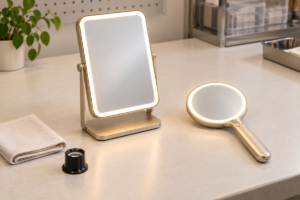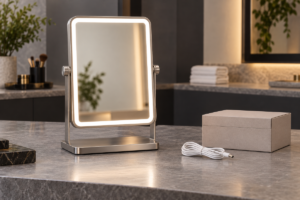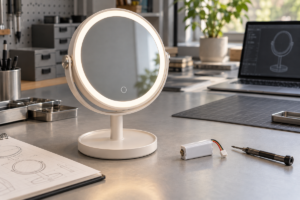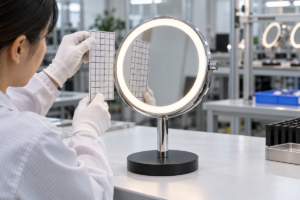

For hotel LED bathroom mirror projects, the mockup room should be approved before mass production because it provides a shared stage where the buyer can confirm the mirror, wall condition, wiring, lighting comfort, anti-fog effect, installation height, packaging logic, and maintenance access in one real room. A drawing or catalog photo cannot reveal every site issue. A controlled mockup room approval helps hotel owners, contractors, distributors, and project buyers reduce installation rework, guest-room complaints, shipment mismatch, and after-sales cost before hundreds of mirrors are produced.
This guide explains what to check when approving LED bathroom mirrors for hotel sample rooms, serviced apartments, resorts, and commercial accommodation projects.
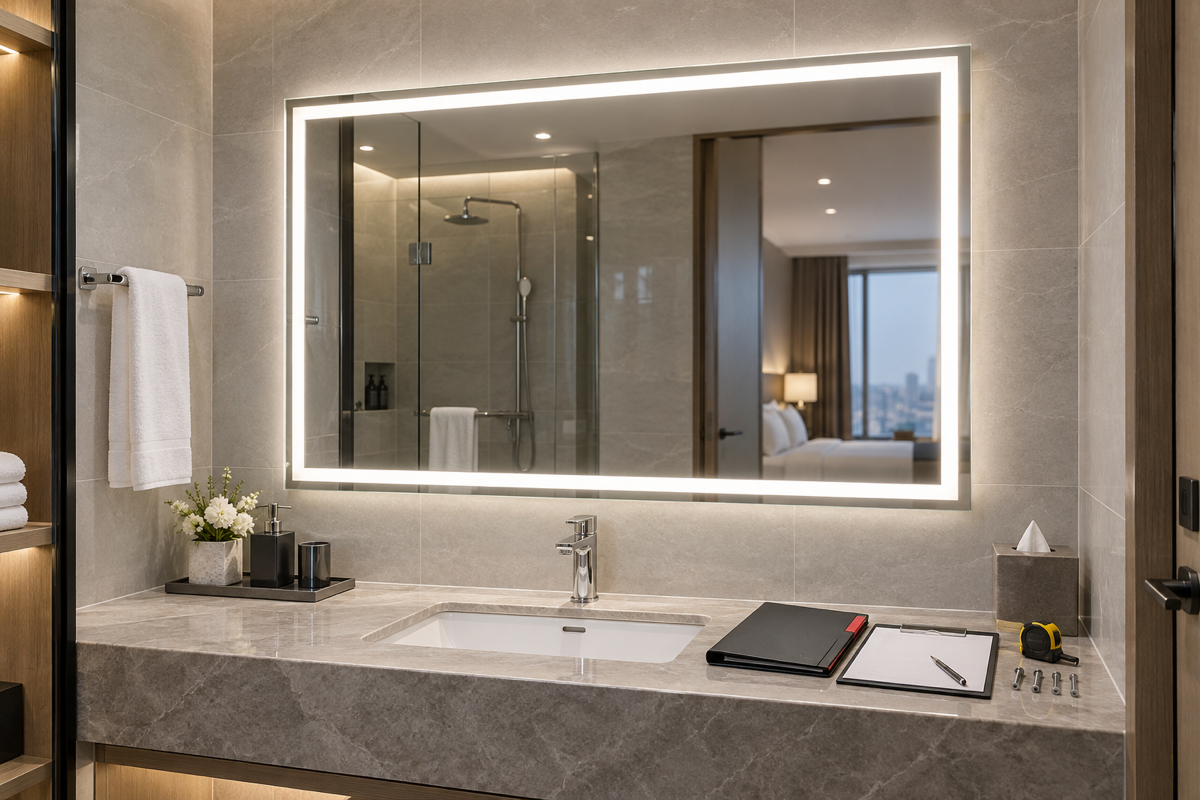
Why the Mockup Room Matters More Than a Drawing
Hotel bathroom mirrors are installed products, not loose retail items. The same LED bathroom mirror can perform differently depending on tile thickness, wall flatness, wire exit position, vanity depth, ceiling lighting, shower humidity, door swing, and the distance between the guest and the mirror. These factors are difficult to judge from a product quote alone.
A mockup room gives the buyer a practical approval point before bulk production. The project team can stand in the room, switch the mirror on, check the reflection, test the anti-fog zone, inspect the mounting height, confirm the driver or transformer position, and decide whether the final product is comfortable for real guest use.
For suppliers, the mockup room also locks the final project version. It connects the approved sample to the shop drawing, wiring plan, bracket position, packing method, spare parts list, and inspection standard. Without this step, small changes can spread across a large project and become expensive to correct on site.
What Should Be Approved in the Sample Room?
The mockup room approval should cover both user experience and installation control. A beautiful mirror is not enough if the wire position is wrong, the light is uncomfortable, or the maintenance team cannot access replaceable parts.
| Approval item | What to check in the room | Why it matters for bulk orders |
|---|---|---|
| Mirror size and placement | Width, height, bottom edge, top edge, vanity alignment, distance from taps and wall lights | Prevents awkward reflection height and inconsistent room appearance |
| Lighting comfort | Front light, backlight, CCT, brightness, glare, reflection on tiles and glass | Reduces guest discomfort and inconsistent bathroom mood |
| Anti-fog performance | Clear zone size, warm-up time, switch logic, humidity exposure | Helps buyers decide whether the defogger area fits real shower use |
| Installation structure | Bracket type, wall fixing, wire exit, driver access, waterproof protection | Reduces contractor rework and unsafe field modification |
| Maintenance plan | Spare driver, sensor, switch, demister pad, access space, room labeling | Supports long-term hotel operation after handover |
| Packing and room allocation | Carton mark, room number logic, hardware kit, instruction sheet | Helps site teams receive and install the right mirror in the right room |
The approval record should be signed by the project buyer, contractor or installer, designer if involved, and the mirror supplier. If the hotel group has multiple room types, each room type should have a separate approval reference.
Installation Details Buyers Should Confirm
Installation problems usually come from details that were treated as “site work” instead of product requirements. The mockup room is the time to define those details clearly.
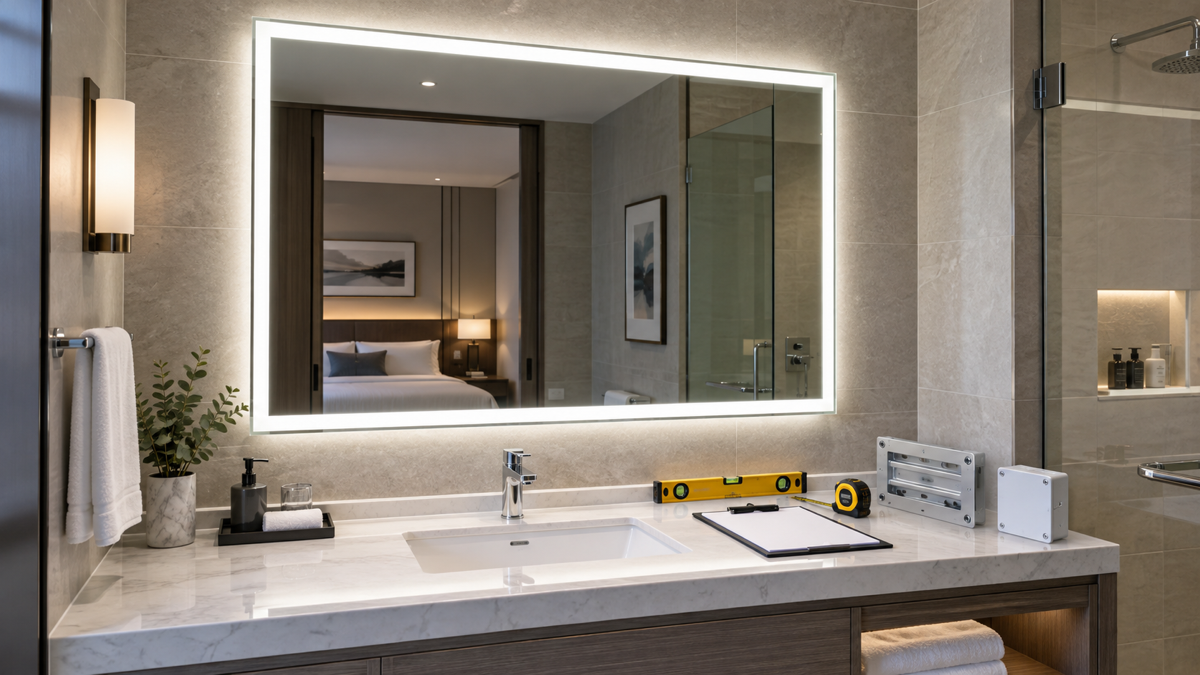
Start with wall and wiring conditions. Confirm whether the mirror uses direct wiring, plug connection, external driver, built-in driver, sensor switch, touch switch, or wall switch control. The wire exit should match the mirror’s connection position, not simply be “near the mirror.” If the wall has a recessed box, cabinet, stone panel, or decorative tile edge, the bracket and wire path must be checked in the actual room.
Next, confirm installation height and alignment. The mirror should align with the vanity, faucet, wall light, cabinet, and tile grid. A few centimeters can change the guest experience, especially in compact bathrooms or rooms with double vanities. For projects with several room layouts, do not assume one drawing works for every room.
Project buyers should also confirm:
- mirror external size and visible lit area
- mounting bracket length, screw type, and wall anchor requirement
- minimum distance from faucet, shelf, cabinet, and shower glass
- wire exit position and cable length tolerance
- IP rating and electrical configuration required for the room
- driver or transformer position and replacement access
- touch, sensor, wall switch, or combined control logic
- installation manual language and diagram clarity
When sending an RFQ, include wall drawings, wire exit drawings, room type photos, target quantity by room type, and any brand standard for lighting color or control method. This lets the supplier quote the correct structure instead of only quoting a mirror size.
Lighting and Anti-Fog Checks in Real Use
LED bathroom mirror lighting should be judged in the room because bathroom materials change the perceived light. Glossy stone, dark tiles, glass shower doors, and warm ceiling lights can all affect comfort. Buyers should test the mirror with the room’s normal lighting scene, not only in a factory sample area.
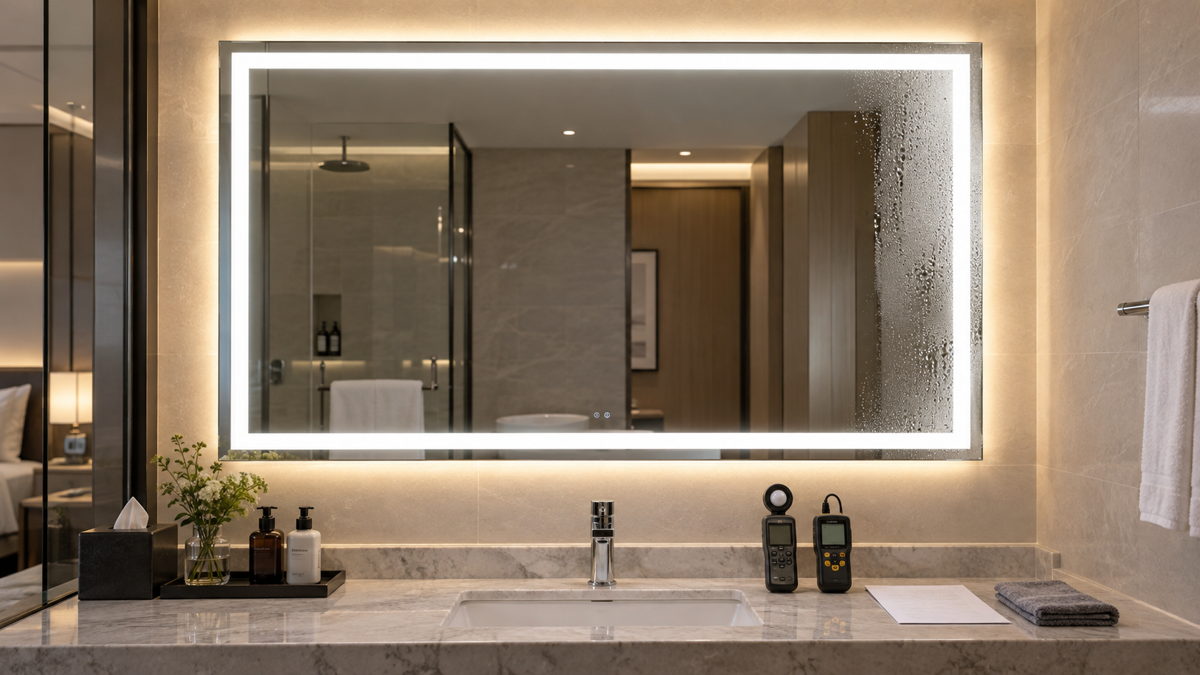
For lighting, check whether the mirror creates enough face illumination without glare. A hotel guest should be able to shave, apply skincare, or prepare makeup without feeling that the LED strip is too sharp or too dim. If the mirror has both front light and backlight, confirm whether they switch together or separately and whether the CCT matches the hotel design intent.
For anti-fog, define a realistic test. Turn on the defogger, expose the bathroom to shower-like humidity, and record the time needed for the clear zone to appear. Buyers should not assume the whole mirror surface will defog unless the demister pad was specified for that coverage. Many projects only need a practical central clear zone, but the size of that zone should be approved before mass production.
Common lighting and anti-fog mistakes include:
- approving CCT from a small LED sample instead of the finished mirror
- ignoring glare from highly reflective tiles
- using a defogger area that is too small for the mirror size
- failing to confirm whether anti-fog is controlled by touch switch, sensor, or wall switch
- not defining whether memory function, dimming, or separate light control is required
- leaving brightness tolerance out of the inspection standard
For higher-end hotel projects, ask for production inspection records covering CCT range, brightness, power consumption, grounding, insulation, anti-fog function, and visual defects. These checks turn the mockup-room approval into a repeatable mass-production standard.
Packaging and Site Handover Should Match the Room Plan
Hotel projects often fail at the receiving stage even when the product itself is correct. Mirrors arrive in many cartons, room types are mixed, installation teams work quickly, and site storage may be limited. The mockup approval should therefore include the packing and handover logic.
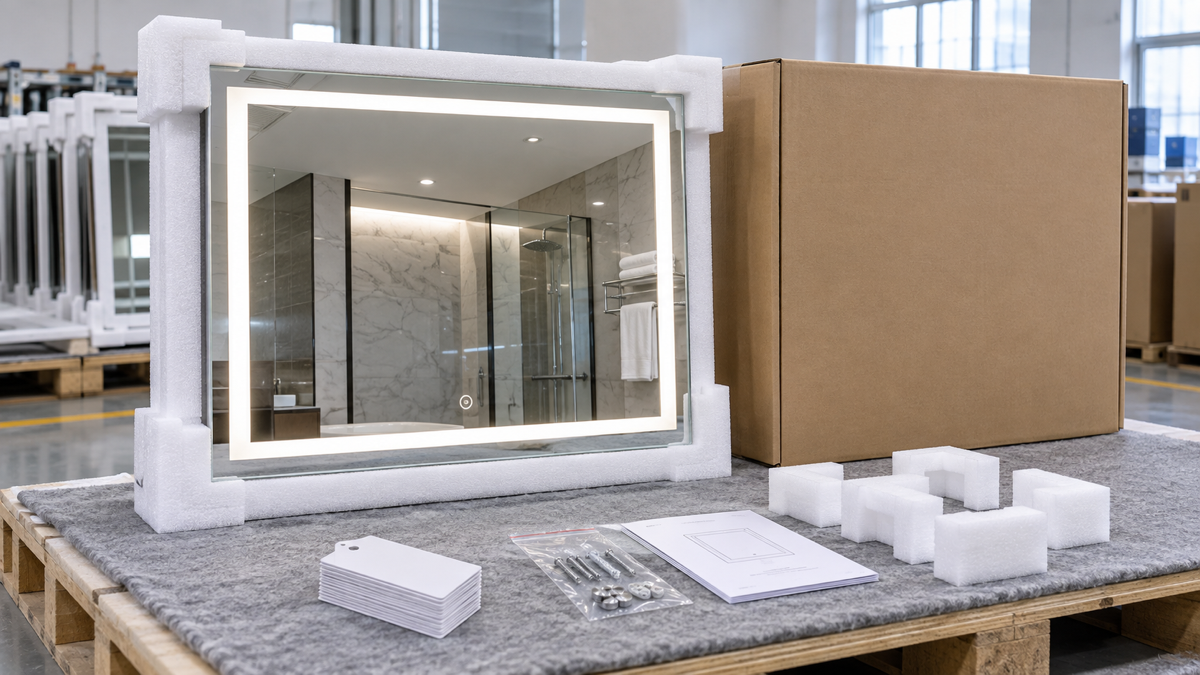
Each carton should connect clearly to the project order. For mixed room types, carton marks should identify mirror model, size, room type, quantity, hardware kit, and destination area. The buyer should decide whether room-number labels are needed at the factory, at the distributor warehouse, or on site.
Packaging must protect the mirror surface, LED edge, corners, driver, cable, and mounting accessories. For large LED bathroom mirrors, buyers should confirm whether the product ships flat, upright, with corner protectors, foam frame, wooden crate, pallet, or export carton. The right choice depends on mirror size, project quantity, shipping distance, and site handling risk.
A practical site handover pack can include:
- approved mockup room photos
- shop drawing and wiring position drawing
- installation manual and bracket diagram
- carton mark sample and room allocation list
- spare parts list for driver, switch, sensor, demister pad, brackets, screws, and cables
- inspection report for lighting, anti-fog, electrical safety, glass, packaging, and accessories
- maintenance notes for hotel engineering teams
This does not only help the first installation. It also helps the hotel maintain the mirror program after opening, especially when rooms are renovated in stages or spare parts are ordered years later.
Turn Mockup Approval into a Release Record
Keep a separate release record for each room type and mirror revision. Agree the acceptance criteria before the trial, then record measured results, photographs, open items, and the person authorized to release production. A successful demonstration does not verify every production unit.
| Approval record | Evidence to retain | Release decision |
|---|---|---|
| Room and product reference | Room type, sample ID, drawing revision, bracket and control configuration | Reapprove changes that affect fit, operation, or service access |
| Lighting and anti-fog trial | Room lighting state, measurement position, instrument reference, ambient conditions, start time, clear-zone dimensions and observations | Compare with agreed criteria; record exceptions instead of assuming a pass |
| Installation and service review | Installer comments, access photographs, approved service instructions and model-to-part mapping | Close access conflicts with the responsible project specialist before release |
| Open-item closure | Issue, owner, due date, revised sample or drawing, recheck result and sign-off date | Keep unresolved items on hold or record the buyer’s explicit conditional approval |
Link the release record to the room handover checklist and maintenance plan. Reopen approval when a proposed change affects the installed configuration, lighting, controls, packaging, or replacement parts. Record the affected room types and first production lot so the signed mockup remains traceable to delivered mirrors.
Pre-RFQ Checklist for Hotel Project Buyers
Before requesting a hotel LED bathroom mirror quotation, prepare a project brief that makes the installation and approval path clear:
- project type: hotel, resort, serviced apartment, student housing, or commercial project
- room types and quantity by mirror size
- mirror dimensions, shape, lighting style, and edge finish
- wiring method, switch logic, voltage, plug or hardwire requirement
- anti-fog coverage and control method
- required IP rating and destination market requirements
- wall material, tile thickness, wire exit drawings, and vanity layout
- sample room deadline, mockup approval date, and bulk delivery window
- packaging method, carton mark format, room allocation plan, and site delivery constraint
- spare parts expectation and maintenance responsibility
If the buyer does not have final drawings yet, send the available room photos, bathroom elevations, and design intent. A good supplier can help identify missing details before quoting, but the buyer still needs to approve the final room-specific standard before mass production.
Reconcile the First Installed Rooms with the Approved Mockup
At the first installation review, compare delivered mirror and hardware revisions with the signed mockup for each room type. Record rooms inspected separately from units delivered, and count unique affected rooms rather than repeat installer messages. Separate shipping damage, missing hardware, drawing mismatch and reproduced product faults; keep the original finding alongside the correction and recheck result.
Where a second magnifying mirror is installed, use the hotel LED makeup mirror specification to check arm travel, guest viewing position and service access against the main bathroom mirror. Assign each discrepancy an owner, due date and affected room list. Close the issue with recorded evidence before releasing the next installation phase; update drawings, spare-part references and carton labels together when the approved configuration changes.
Bottom-Line Recommendation
For hotel LED bathroom mirror projects, do not approve bulk production from catalog photos or drawings alone. Approve the mirror inside a real mockup room, then convert that approval into a controlled production and delivery standard. The buyer should confirm size, placement, wiring, light comfort, anti-fog coverage, installation hardware, packaging, room allocation, and spare parts before the main order starts.
The strongest project workflow is simple: sample mirror, mockup room, signed approval, mass-production inspection, protected packing, room-based handover, and maintenance support. This gives hotel buyers a better chance of receiving mirrors that install smoothly and perform consistently across the whole property.
FAQ
When should a hotel LED bathroom mirror mockup room be approved?
Approve the mockup room before mass production and before final packaging is locked. The approval should happen after the sample mirror, wiring position, bracket, control logic, and anti-fog function can be tested in the real room or a realistic sample room.
Is one mockup room enough for a hotel mirror project?
One mockup room may be enough if all bathrooms use the same mirror size, wall condition, and wiring layout. If the project has different room types, double vanities, accessible rooms, or suite bathrooms, each major layout should have its own approval reference.
What approval mistake should hotel mirror buyers avoid?
One avoidable mistake is approving the mirror as a product but not approving it as an installed system. Buyers need to check wiring, bracket position, light comfort, anti-fog coverage, packing, carton marks, and maintenance access together.
Should hotel LED bathroom mirrors use front light, backlight, or both?
It depends on the design intent and guest-use requirement. Front light supports face illumination, while backlight creates wall ambience. Many hotel projects use both, but the mockup room should confirm glare, brightness, CCT, switch logic, and reflection quality before bulk production.
What should Mingda Mirror receive for an accurate project quotation?
Send mirror size, quantity by room type, bathroom drawings, wall and wiring details, lighting preference, anti-fog requirement, IP rating target, packaging expectation, project timeline, and any sample-room approval deadline. These details help Mingda Mirror quote the correct LED bathroom mirror structure and delivery plan.
Work With Mingda Mirror
Mingda Mirror manufactures LED bathroom mirrors, LED makeup mirrors, Hollywood mirrors, handheld mirrors, and compact mirrors for hotel projects, distributors, brands, and retailers. If you are planning a hotel bathroom mirror project, share your room drawings, sample-room schedule, wiring requirements, anti-fog expectations, packaging plan, and delivery timeline.
Our team can support mirror structure selection, sample-room approval, project packaging, QC inspection, and spare parts planning before bulk production. Explore our LED bathroom mirror products, learn about OEM/ODM services, review the QC process, or contact Mingda Mirror for a project-ready quotation.
Request a project quotation with separate approval costs: send room-type quantities, drawing revisions, sample-room deadline, acceptance criteria, delivery phases and service expectations. Ask for itemized sample, customization, packaging, inspection and spare-part costs, plus the production lead-time trigger after signed approval.
Social Media Content Ideas
LinkedIn angle: explain why hotel LED bathroom mirror buyers should approve the product inside a real mockup room before mass production.
Facebook angle: show how checking wiring, light comfort, anti-fog coverage, and packing early helps avoid installation delays.
Instagram angle: use the hotel sample-room mirror image to show the approved room experience before bulk production.
CTA: Read the full mockup-room approval checklist and send Mingda Mirror your bathroom drawings, room quantities, wiring details, and project timeline for an RFQ-ready review.