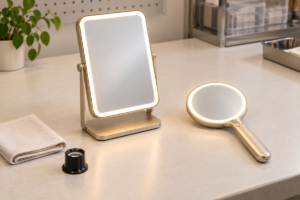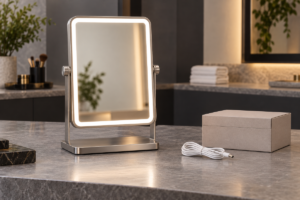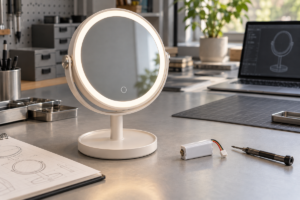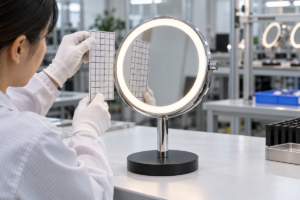

For LED makeup mirror buyers, the safest sample-to-mass-production timeline is not just a calendar. It is a controlled approval path: confirm the specification, freeze the sample, test the pilot run, approve packaging, then release bulk production with clear inspection points. Retailers, beauty brands, Amazon sellers, and distributors should plan this before placing the purchase order, because late changes to lighting, battery, logo, packaging, or carton labels can delay shipment and create review, return, or launch-window risk.
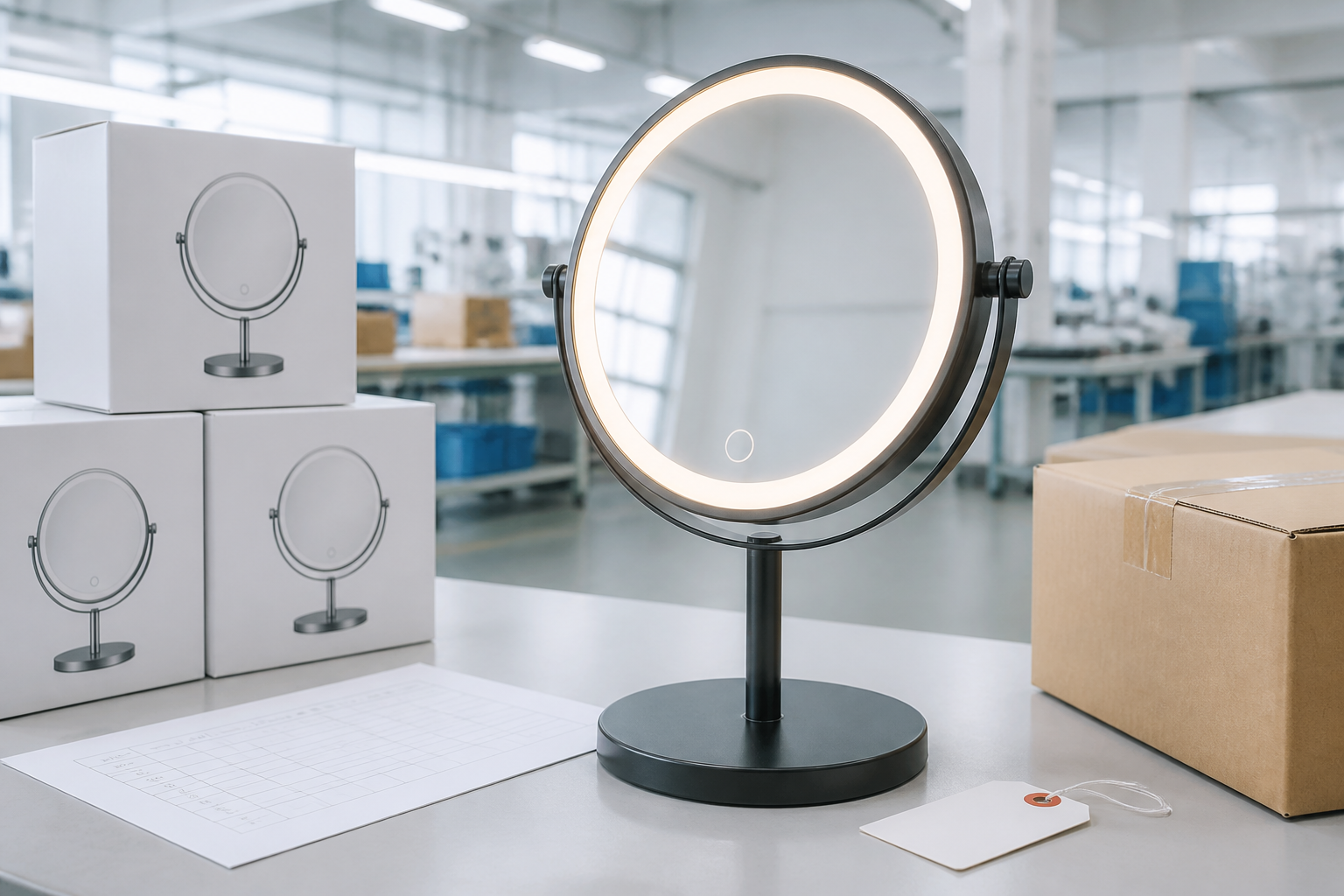
Why Production Timeline Planning Matters in 2026
Beauty and personal-care buyers are under stronger pressure to launch products quickly, keep product pages accurate, and avoid avoidable returns. AI-assisted shopping, social commerce, and retail media all reward clear product information: shoppers compare lighting modes, charging ports, magnification, size, and packaging details before they trust a mirror listing or retail program.
That creates a practical sourcing rule: do not approve bulk LED makeup mirror production until the buyer, supplier, and QC team are working from the same final sample and the same final packaging standard. A mirror that looks good in a video but ships with the wrong color temperature, weak hinge, unclear charging claim, or fragile insert can damage reviews faster than a delayed launch.
For Mingda Mirror projects, the timeline should connect five work streams:
- Product structure and appearance
- LED lighting and electrical performance
- Rechargeable battery or power-source details
- Logo, instruction, barcode, and packaging artwork
- Pre-shipment inspection and carton release
Recommended Timeline for B2B Buyers
The exact schedule depends on customization level, material availability, order quantity, packaging complexity, and destination market requirements. Still, most LED makeup mirror projects can be managed with the following framework.
| Stage | Buyer Decision | Supplier Output | Main Risk If Skipped |
|---|---|---|---|
| RFQ clarification | Target channel, mirror size, power, lighting, packaging | Quotation and feasibility comments | Price looks low but excludes important requirements |
| First sample | Confirm product direction and user experience | Working sample with lighting and charging | Buyer approves appearance but misses function details |
| Golden sample | Freeze size, finish, LED, logo, cable, manual, packaging | Signed sample or documented approval photos/video | Bulk goods differ from what sales team promised |
| Pilot run | Verify assembly repeatability before full quantity | Small batch inspection record | Defects appear only after mass production starts |
| Packaging release | Confirm retail box, insert, labels, carton, accessories | Packed sample and carton test reference | Breakage, barcode errors, or warehouse rejection |
| Pre-shipment inspection | Decide whether goods are ready to ship | Inspection report and defect classification | Shipment leaves with lighting, charging, or packing defects |
For customized LED tabletop makeup mirrors, buyers should normally reserve time for at least one sample revision. If the order includes a new mold, special finish, private-label packaging, or strict marketplace content claims, build extra review time into the launch plan.
Step 1: Clarify the RFQ Before Sampling
Use the custom LED makeup mirror RFQ spec sheet to prepare one specification pack for each supplier. This makes differences in sample scope, packaging, and delivery assumptions easier to identify.
A useful RFQ should tell the factory more than target quantity and target price. For an LED makeup mirror, the supplier needs enough detail to quote the real product, not a simplified version that later becomes more expensive.
Before asking for a sample, send the following:
- Mirror type: tabletop, wall-mounted, compact, travel, or magnifying
- Mirror size, magnification, and placement use
- LED requirements: CCT, brightness, dimming, CRI expectation, glare preference
- Power source: USB-C rechargeable, plug-in, battery, or charging dock
- Target sales channel: retail shelf, Amazon/e-commerce, distributor, salon, hotel, or gift
- Logo and private-label requirement
- Packaging style, barcode, warning labels, and carton handling needs
- Destination market and any required testing or documentation
This step protects both sides. The buyer gets a realistic price and lead time. The supplier avoids building a sample that cannot match the final channel requirement.
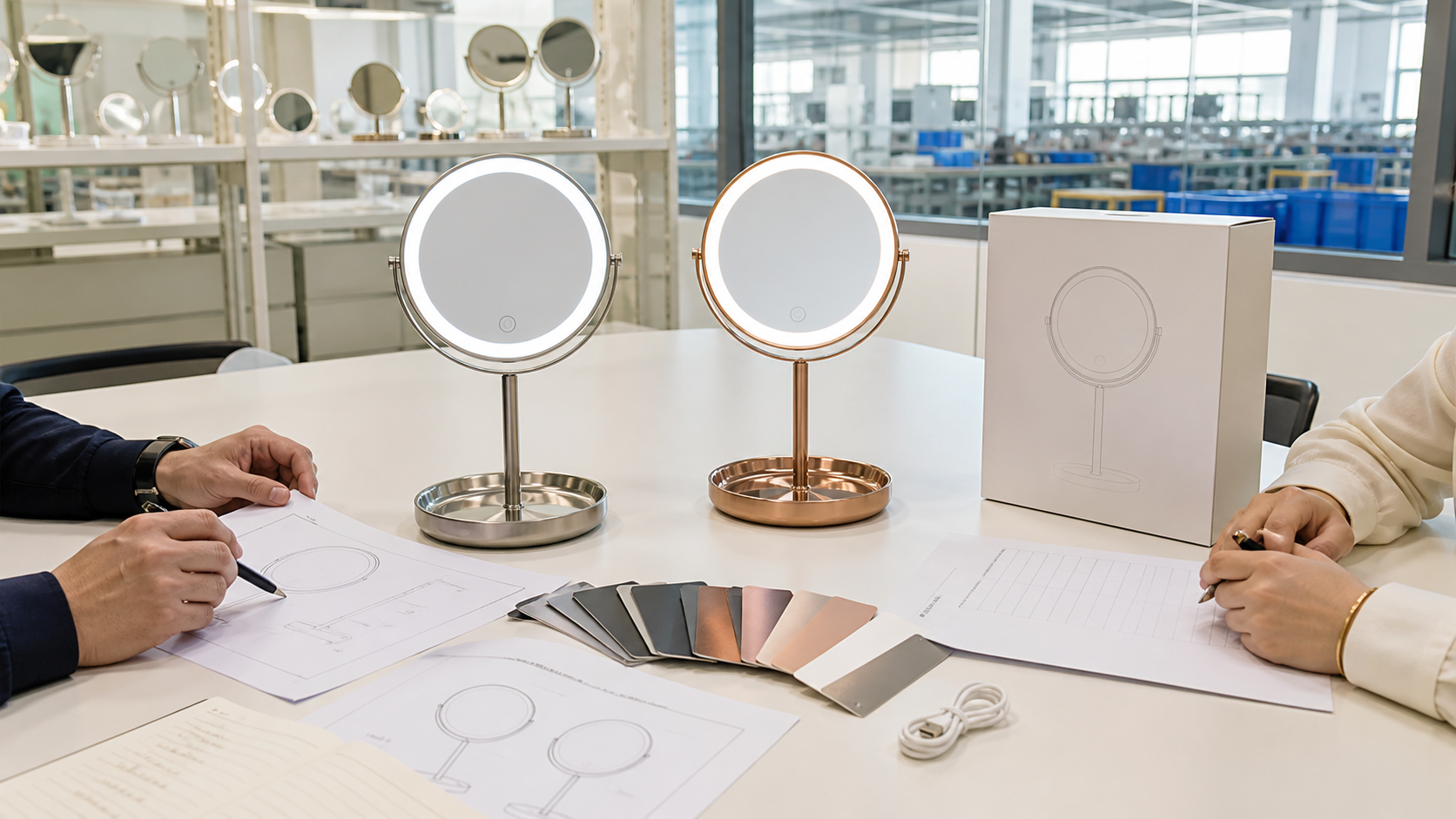
Step 2: Approve a Golden Sample, Not Just a Nice Sample
Document the sign-off with the makeup mirror sample approval checklist, including unresolved defects and the person responsible for closing each item before production release.
A first sample answers the question, “Is this direction right?” A golden sample answers a stricter question: “Can this exact product become the bulk production standard?”
The golden sample should freeze:
- Mirror diameter or shape
- Base, stand, hinge, arm, or folding structure
- Surface finish and color tolerance
- Magnification level and viewing distance
- LED color temperature and brightness range
- Touch switch, dimming memory, and charging behavior
- USB-C cable, adaptor requirement, battery capacity, and runtime claim
- Logo placement, manual, accessories, retail box, and inner protection
For e-commerce sellers, the golden sample should also match product listing copy. Do not claim “three lighting modes,” “10x magnification,” “USB-C rechargeable,” or “long battery runtime” unless the approved sample and QC test method support those claims.
Step 3: Use Pilot Run QC Before Full Production
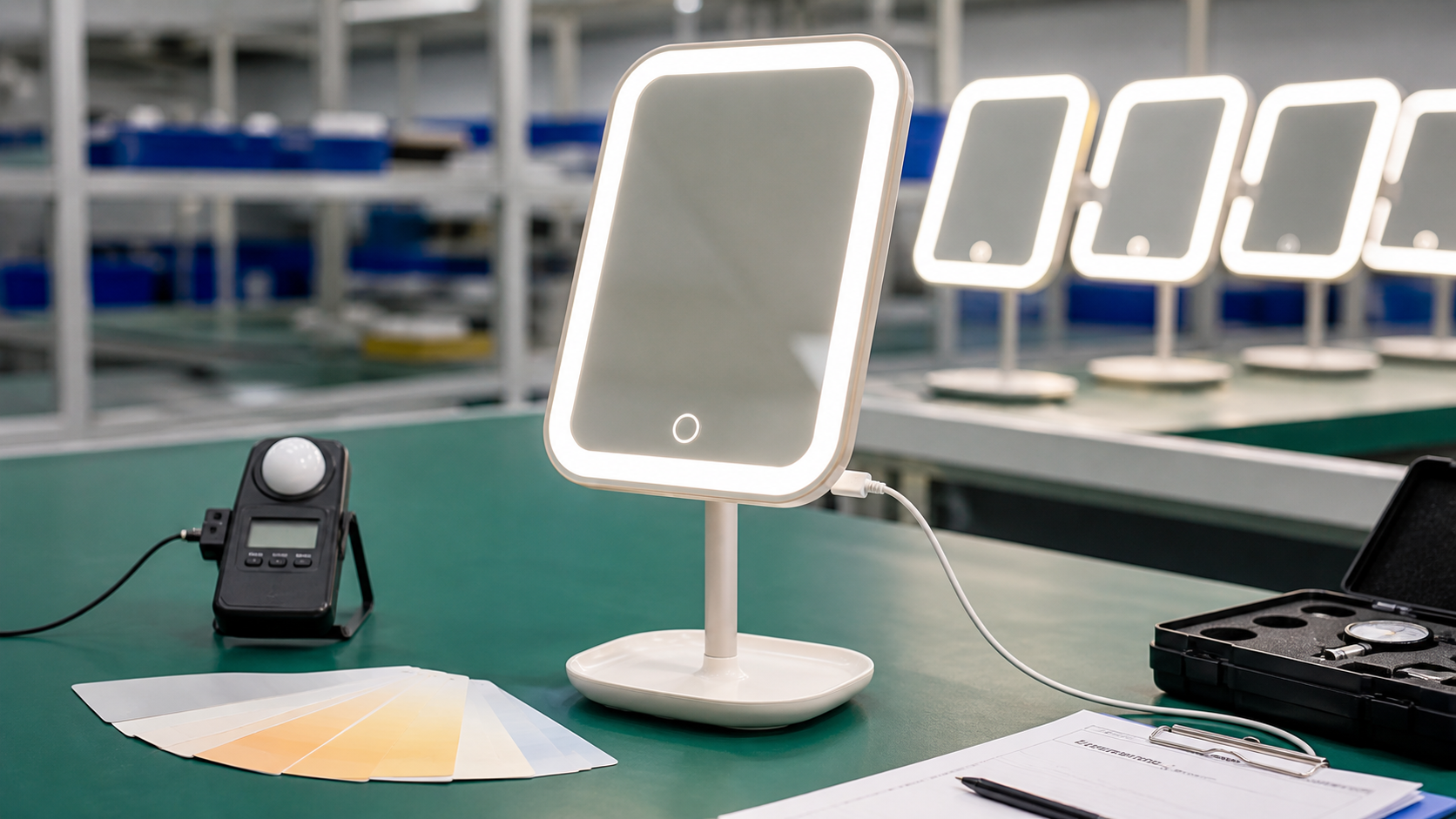
Pilot run QC is especially useful when the product has new lighting settings, a new finish, a new battery supplier, a new hinge, or a new packaging structure. It checks whether the assembly line can repeat the approved sample consistently.
Important pilot-run checks include:
| QC Point | What to Check | Buyer Impact |
|---|---|---|
| LED lighting | CCT consistency, dimming range, glare, diffuser appearance | Reduces complaints about harsh or uneven light |
| Charging | USB-C fit, charging indicator, battery runtime, standby drain | Supports accurate rechargeable product claims |
| Structure | Base stability, hinge resistance, tilt angle, folding feel | Prevents wobble, breakage, and poor user experience |
| Appearance | Finish color, scratches, mirror clarity, touch button position | Protects premium retail and gift presentation |
| Accessories | Cable, pouch, manual, screws, adaptor note if needed | Avoids missing-parts returns |
Step 4: Release Packaging Before Mass Packing
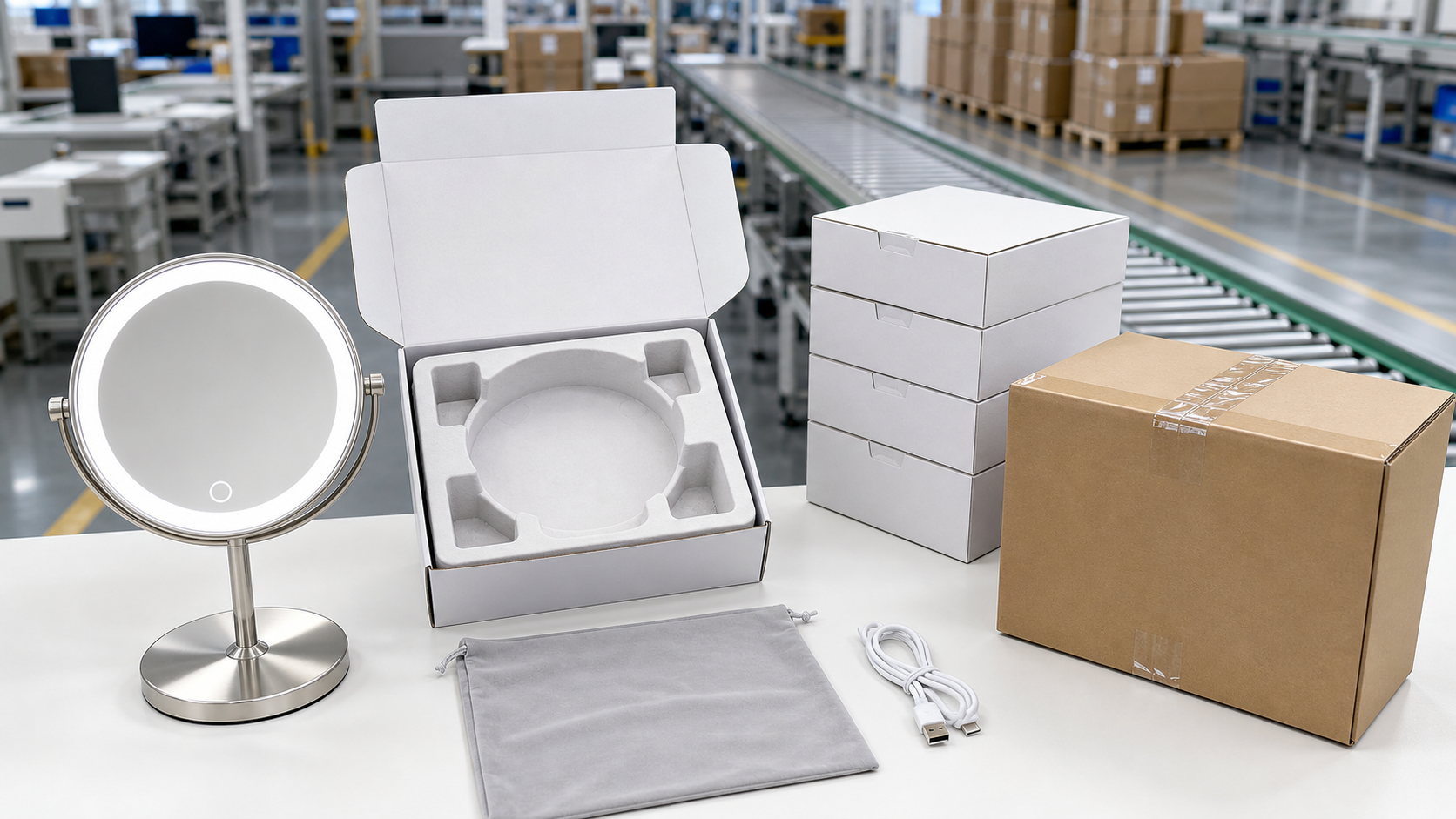
Packaging should not be treated as the last step after production. For LED makeup mirrors, packaging affects damage rate, dimensional weight, barcode readiness, shelf presentation, and customer review quality.
A complete packed sample should show:
- Retail box artwork and blank/brand areas approved by the buyer
- Molded insert, foam, pulp tray, or protective bag fit
- USB-C cable, manual, screws, cleaning cloth, or pouch position
- Barcode and carton label placement
- Master carton quantity and stacking direction
- Drop-test or handling reference for fragile mirror glass
- Pallet, warehouse, or marketplace prep requirements if applicable
For retail buyers, shelf-ready packaging and tester units should be coordinated with the merchandising plan. For Amazon and e-commerce sellers, packed-sample approval should happen before listing photography and before the product claim copy is locked.
Common Timeline Mistakes Buyers Should Avoid
The most common mistake is approving a mirror sample while packaging, labels, and accessories are still uncertain. That creates a false sense of readiness. The product may be technically approved, but the order cannot ship smoothly.
Other high-risk mistakes include:
- Changing logo or packaging artwork after bulk materials are purchased
- Comparing quotes without confirming battery, LED, and packaging details
- Approving product photos before the final sample is confirmed
- Skipping pilot-run checks on a new rechargeable model
- Treating carton dimensions as a warehouse detail instead of a cost factor
- Not defining acceptable defects before pre-shipment inspection
- Launching listing copy that the factory has not verified through testing
These mistakes usually cost more than early planning. A buyer may save a few days before the purchase order, then lose weeks during rework, repacking, relabeling, or complaint handling.
RFQ-Ready Checklist
Before releasing an LED makeup mirror order to bulk production, ask the supplier to confirm:
- Is the golden sample approved by photo, video, or physical sign-off?
- Are lighting mode, CCT, dimming, and brightness tolerance documented?
- Is USB-C charging performance and battery runtime tested?
- Are logo, manual, accessory, retail box, and carton files final?
- Has the packed sample been approved before mass packing?
- Is there a pilot-run or first-article inspection record?
- What are the AQL level, major defects, minor defects, and critical defects?
- What is the production lead time after all materials and artwork are frozen?
- Which changes would reset the delivery schedule?
- What replacement, spare-part, or after-sales support can be agreed before shipment?
Bottom-Line Recommendation
For LED makeup mirror sourcing, buyers should manage the project by approval gates, not by optimistic shipment dates. The best supplier timeline starts with a complete RFQ, moves through a frozen golden sample, verifies a pilot run, approves packaging, and only then releases full production and shipment inspection.
If your launch depends on a retail reset, Amazon promotion, social-commerce campaign, or distributor delivery window, share the target date with Mingda Mirror early. We can help check whether the specification, sample path, packaging approval, and QC plan are realistic before you commit to a bulk order.
Planning a launch? Review the Mingda Mirror product range, then request a sample-to-production plan. Include your target market, sales channel, order quantity, mirror and power specifications, packaging artwork status, and required warehouse arrival date. Ask for separate sample, approval, production, inspection, and shipping milestones so your team can assess the proposed schedule before placing an order.
FAQ
How long does an LED makeup mirror sample usually take?
For an existing model with minor logo or packaging changes, the sample stage is usually faster than a new structure or new finish. Buyers should still allow time for lighting, charging, packaging, and approval feedback, not only courier delivery.
When should packaging be approved?
Packaging should be approved before mass packing and preferably before bulk material purchase. For e-commerce and retail orders, approve a complete packed sample with accessories, insert, retail box, barcode, and carton details.
Is a pilot run necessary for every order?
It is most useful for new models, new materials, rechargeable designs, new lighting settings, new suppliers, or important launch orders. Repeat orders with stable history may use a lighter check, but inspection standards should still be confirmed.
What information helps Mingda Mirror quote more accurately?
Send the target mirror type, size, magnification, LED lighting, power source, order quantity, destination market, packaging type, logo needs, channel requirement, and launch deadline. Clear RFQ details reduce sample revisions and price misunderstandings.
Can Mingda support private-label LED makeup mirror production?
Yes. Mingda Mirror can support private-label LED makeup mirror projects with product selection, logo placement, packaging development, sample approval, production coordination, QC checks, and shipment preparation for brands, retailers, distributors, and e-commerce sellers.
Social Media Content Ideas
- LinkedIn: Explain why LED makeup mirror buyers should manage production by approval gates instead of relying only on quoted lead time.
- Facebook: Share the five steps from RFQ to shipment release for private-label LED makeup mirrors.
- Instagram: Use the sample approval or packaging release image to show what a ready-for-production mirror project looks like.
- CTA: Read the full checklist and send Mingda Mirror your target channel, mirror specification, packaging needs, and launch date for RFQ review.