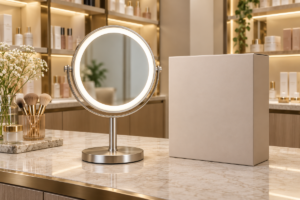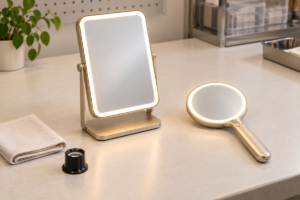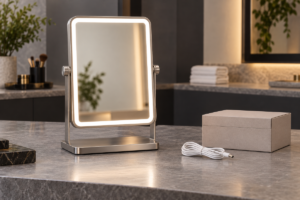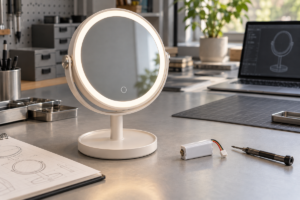

A LED makeup mirror sample should be approved only after the buyer checks lighting performance, mirror clarity, charging or power design, finish quality, packaging protection, and user experience together.
For brand, retail, and e-commerce programs, sample approval is the last practical chance to catch issues that can later become returns, poor reviews, or expensive shipment rework.
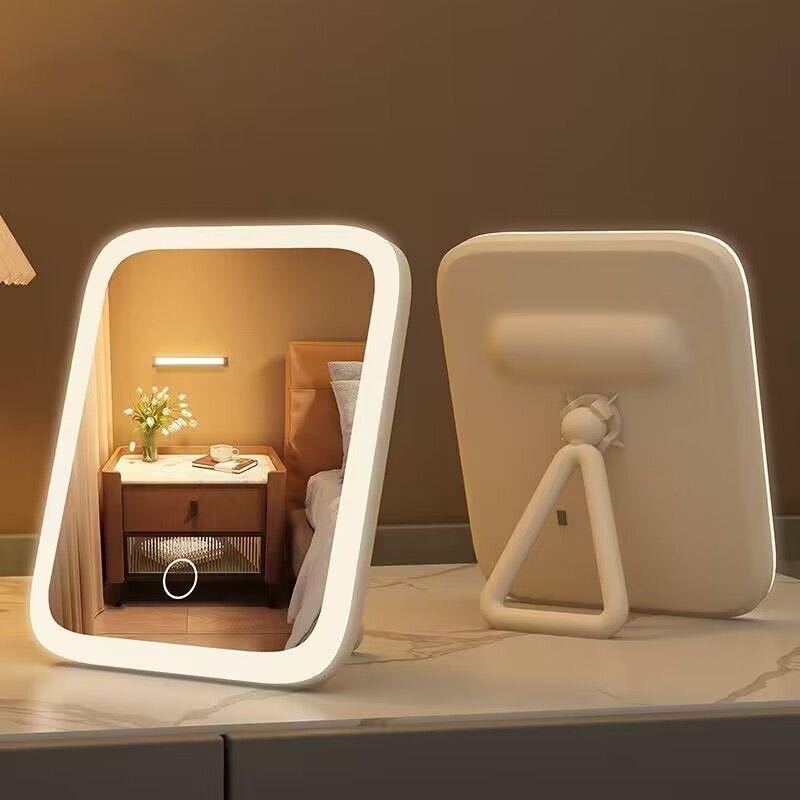
Direct Answer: What Should Buyers Confirm Before Approving a Makeup Mirror Sample?
Buyers should confirm seven areas before approving a makeup mirror sample: the product matches the intended buyer scenario, lighting and magnification claims are accurate, mechanical parts feel stable, power performance is reliable, finish quality is commercially acceptable, packaging protects the product for the planned channel, and the supplier has converted sample feedback into a controlled production standard.
If one of those seven areas is vague, the sample is not ready for bulk approval yet. Approval should mean the supplier, sourcing team, and sales channel all understand exactly what will be mass-produced.
Why Sample Approval Matters More Than a Beautiful First Impression
Many mirror projects go wrong because the first sample is treated like a showroom piece instead of a production-control checkpoint. The mirror may photograph well, but the brightness may be inconsistent, the hinge resistance may loosen after repeated use, or the carton may be too weak for parcel delivery. Those are not small technical details. They directly affect complaint rate, margin, and launch timing.
For B2B buyers, sample approval is where commercial risk becomes visible. It is the moment to align end-user experience with packaging cost, MOQ, delivery schedule, labeling, and quality tolerance before the project becomes expensive to change.
Buyer Scenario First: Approve the Right Mirror for the Right Channel
| Buyer type | What the sample must prove | Main risk if skipped | Commercial effect |
|---|---|---|---|
| Beauty brand | Brand fit, packaging consistency, logo execution | Approved sample does not match retail presentation | Rework on packaging and inserts |
| Amazon seller | Parcel protection, power stability, honest listing claims | Returns and low reviews after launch | Higher after-sales and ad waste |
| Retail chain | Assortment fit, countertop footprint, repeatable finish quality | Store complaints and uneven shelf presentation | Slow replenishment and markdown pressure |
| Wholesaler or distributor | Broad-market usability, carton efficiency, damage control | Mixed downstream complaints across channels | Higher claim handling and replacement cost |
That is why the sample-review standard should start with channel fit, not only product style. Mingda’s makeup mirror sourcing guide for beauty brands and retailers helps with category planning, while this article focuses on the approval gate before production starts.
Check Lighting, Magnification, and Daily-Use Performance
Lighting should be tested in normal indoor conditions, not only under ideal studio light. Buyers should confirm whether the light is even, whether color temperature options behave as promised, and whether the brightness level is comfortable for close-use makeup routines. If the mirror will be sold as a premium LED model, glare, visible hotspots, or unstable dimming should be treated as approval blockers.
Magnification also needs a practical review. A spec sheet may say 5x or 10x, but the user experience can still feel awkward if the mirror area is too small, the viewing distance is uncomfortable, or the claim is presented unclearly. Teams that are still comparing power routes should also review rechargeable vs. plug-in makeup mirrors before freezing the specification.
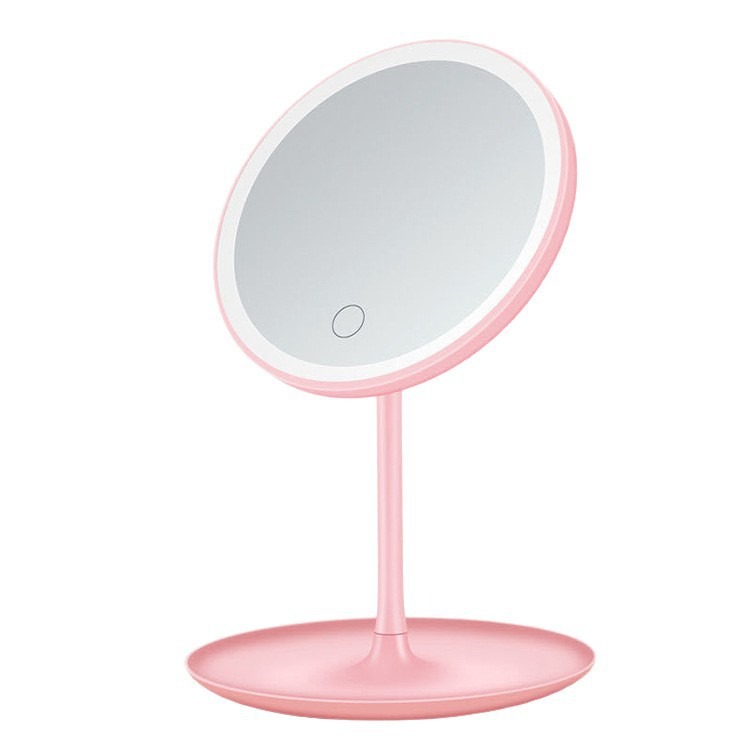
Inspect Mechanical Stability and Cosmetic Finish
A makeup mirror sample should be handled repeatedly during approval. Buyers should open and close foldable parts, adjust the stand angle, press buttons multiple times, and examine whether joints remain stable without creaking, wobble, or uneven resistance. A sample that feels acceptable after one use may still fail under routine repeated handling.
Cosmetic finish matters as much as function. Check the mirror edge, frame coating, plating consistency, seam alignment, glue cleanliness, switch fit, and surface scratch resistance. If the sample already shows visible defects, the production version will usually create even more variation unless the process standard is tightened.
Confirm Charging, Power, and Accessory Consistency
For rechargeable mirrors, buyers should confirm cable fit, charging speed, indicator behavior, battery consistency, and runtime expectations. The key question is whether the approved sample uses the same battery and charging structure planned for mass production. Temporary engineering substitutions should not be approved as if they were final.
For plug-in models, check adapter specification, cord routing, connector security, and whether the installation or countertop use case is clearly supported. If the accessory set includes pouches, cleaning cloths, manuals, or gift-box inserts, those should be reviewed together with the mirror instead of after approval.
Packaging Approval Should Happen Before the PO, Not After It
Packaging is one of the most common failure points in mirror sourcing because buyers sometimes approve the product first and assume the carton can be solved later. That is a mistake. For makeup mirrors, packaging approval should cover internal cushioning logic, accessory placement, drop-risk points, label accuracy, and how easily the product can move inside the box.
Retail and e-commerce channels need different protection logic. A clean-looking gift box may still be too weak for parcel handling, while a stronger e-commerce pack may affect MOQ, carton dimensions, and freight cost. Mingda’s Packaging & Logistics and QC Process pages are useful support references before sign-off.
Makeup Mirror Sample Approval Checklist
- Confirm the mirror format matches the target sales channel and user scenario.
- Test lighting in realistic indoor conditions and check dimming smoothness.
- Verify magnification is comfortable, truthful, and aligned with listing language.
- Check stand, hinge, folding points, and buttons for repeated-use stability.
- Inspect frame finish, seam alignment, coating consistency, and scratch resistance.
- Review charging or plug-in performance with the intended final components.
- Confirm accessories, manuals, labels, and logo treatments match the approved brief.
- Inspect inner packing, movement control, and carton protection for the planned route.
- Ask whether packaging upgrades, logo changes, or insert revisions affect MOQ or lead time.
- Record approval comments in a final production spec so the bulk order follows the same standard.
Common Approval Mistakes Buyers Should Avoid
The first mistake is approving a sample that is visually attractive but not fully representative of production materials. The second is checking the mirror only as a product and not as a shipped commercial unit. The third is letting unresolved packaging or accessory questions remain open after approval. The fourth is failing to convert sample feedback into a written QC standard for the factory.
Another common issue is approving too quickly because the launch calendar feels urgent. That usually saves a day at the sample stage and costs weeks later through rework, replacement requests, and delayed shipment release.
What Sourcing Managers Should Confirm Before Sending Bulk Approval
- What exact sample changes must be locked before mass production begins?
- Does the approved unit use final electronics, hinge hardware, and surface finish?
- What carton test or parcel-protection logic supports the intended channel?
- Do branding, insert cards, and packaging revisions affect MOQ or lead time?
- Which defects are critical, major, or minor during final QC inspection?
- How will the supplier document the approved sample standard for production follow-through?
- Can Mingda support follow-up through Product Design Support, buyer solution support, and the contact team for bulk-order alignment?
Bottom Line
A strong makeup mirror sample approval process protects far more than product appearance. It protects the listing promise, the packaging outcome, the delivery schedule, and the buyer’s margin after launch. Before bulk production, approve the mirror as a complete commercial unit: product, power, finish, accessories, and packaging working together under a clear written standard.
FAQ
What is the most important check in a makeup mirror sample approval?
The most important check is whether the sample truly matches the final production intent across lighting, mechanical stability, power configuration, finish quality, and packaging protection.
Should packaging be approved together with the makeup mirror sample?
Yes. Packaging should be reviewed before bulk approval because breakage risk, accessory placement, and channel fit all affect the real commercial result.
How many samples should a buyer review before bulk production?
That depends on the project complexity, but buyers should review enough iterations to close all functional, cosmetic, and packaging issues rather than approving the first acceptable-looking sample too early.
Why do approved makeup mirror samples still lead to returns later?
Usually because the sample was approved without realistic testing, final-component confirmation, or packaging validation, so the production version behaves differently in the market.
Can Mingda help buyers tighten the sample approval process?
Yes. Mingda can support specification alignment, packaging review, production follow-up, and practical approval checkpoints before bulk orders move forward.
CTA
If you want to reduce launch risk before bulk production, contact Mingda Mirror with your target mirror format, sales channel, packaging route, and approval concerns so the sample plan and production standard can be aligned early.