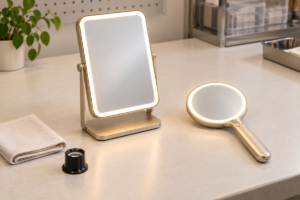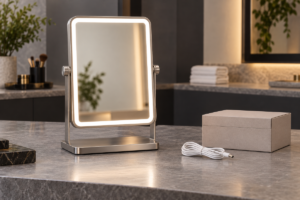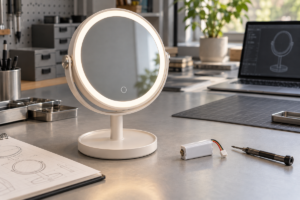

Tabletop vs wall-mounted Hollywood mirrors should be chosen by sales channel, not by appearance alone. Tabletop models usually fit retail, e-commerce, beauty brands, and gift channels because they are easier to display, ship, and use without installation. Wall-mounted Hollywood mirrors fit salons, studios, hotels, dressing rooms, and project buyers because they create a cleaner permanent setup. The best RFQ should define channel, size, lighting, installation, plug or wiring, packaging, MOQ, and replacement support before buyers compare prices.
This guide is written for importers, retailers, Amazon sellers, beauty brands, salon suppliers, hotel project buyers, and distributors deciding which Hollywood vanity mirror format to source.
Start With the Sales Channel
A Hollywood mirror can be a consumer retail SKU, a professional salon fixture, a hotel room feature, or a distributor replenishment item. Those channels create different sourcing risks. A tabletop mirror must feel stable on a vanity, arrive safely through courier handling, and be simple for the consumer to set up. A wall-mounted mirror must fit the room layout, mounting method, electrical plan, and after-sales service expectations.
The first sourcing question is therefore not only “Which style looks better?” It is “How will the buyer sell, install, ship, and service this mirror?” Buyers can compare product direction on Mingda’s Hollywood Mirrors page and review the broader Hollywood iron-framed mirror sourcing guide for frame and lighting context.
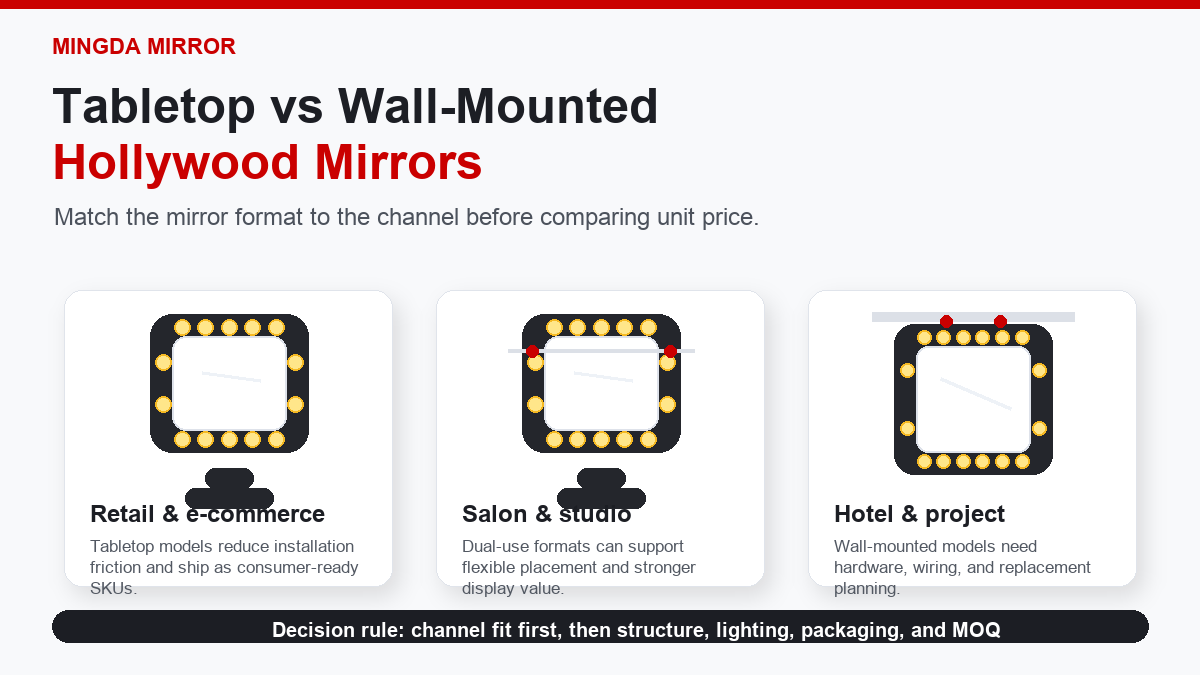
Tabletop vs Wall-Mounted Hollywood Mirrors
| Decision point | Tabletop Hollywood mirror | Wall-mounted Hollywood mirror |
|---|---|---|
| Best-fit buyers | Retailers, e-commerce sellers, beauty brands, gift channels | Salons, studios, hotels, apartments, project buyers |
| Main advantage | Easy setup, faster display, fewer installation questions | Permanent premium look and stronger project value |
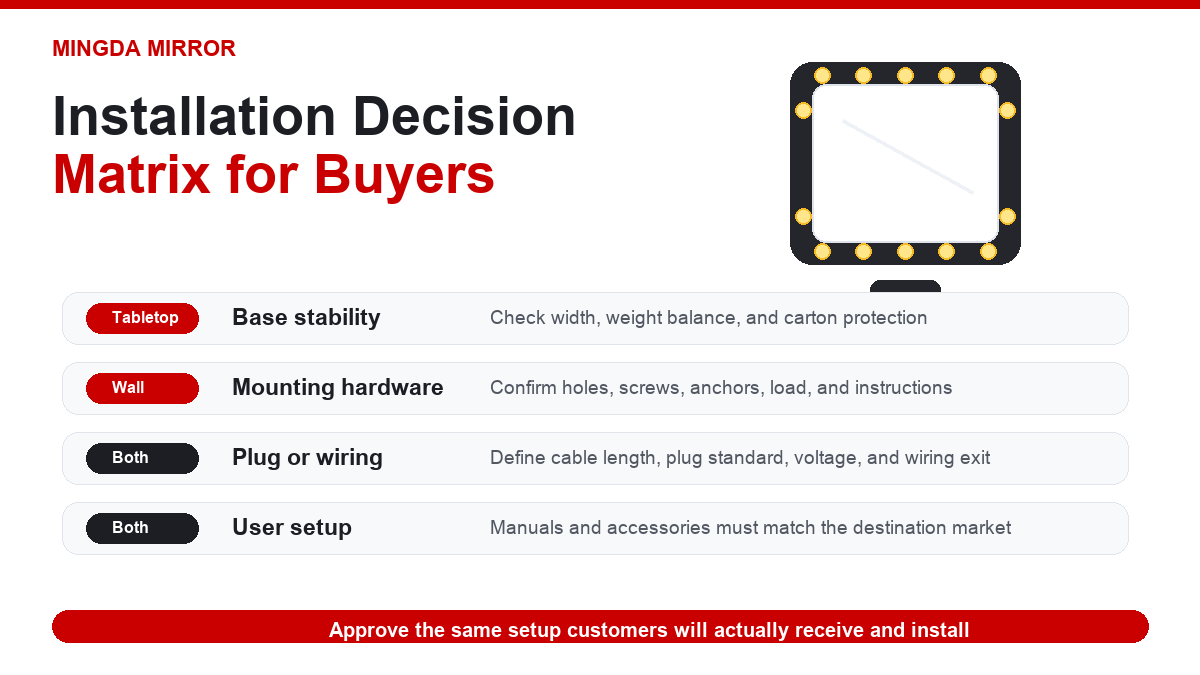
| Key structure check | Base stability, mirror angle, product weight, cable position | Back frame, mounting holes, hardware, wall load, wiring route |
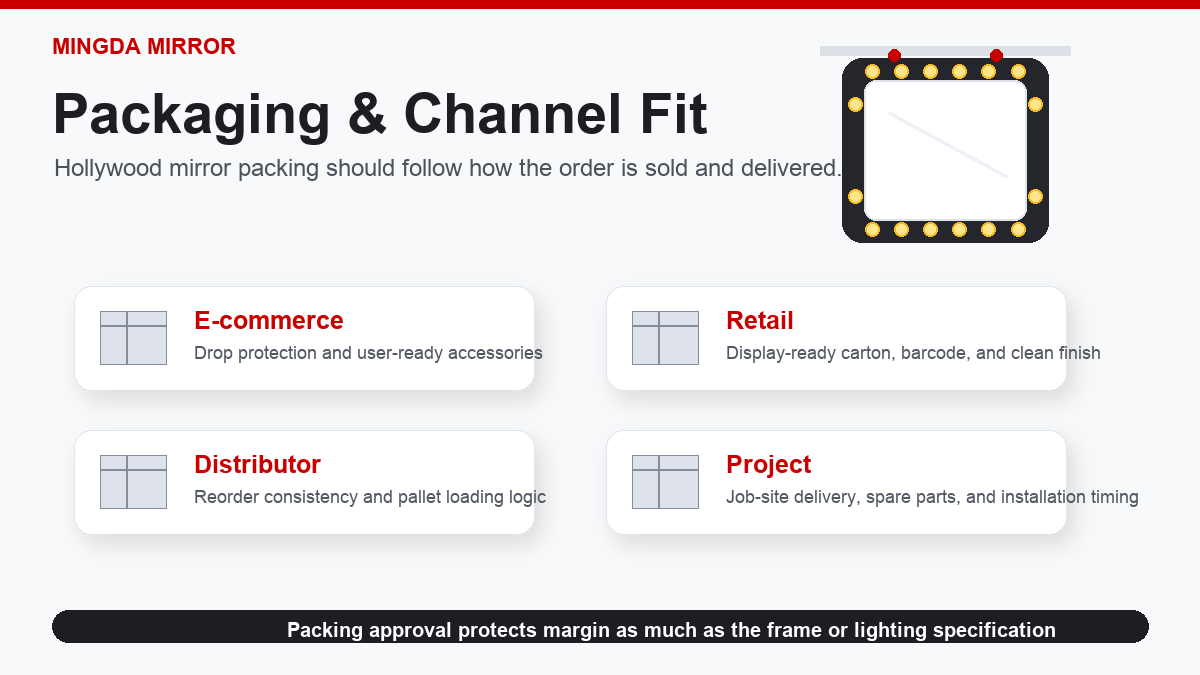
| Packaging priority | Courier/drop protection and consumer unboxing experience | Large-carton strength, corner protection, job-site handling |
| Common risk | Wobbling base, broken glass, missing accessories, return complaints | Installation mismatch, wiring conflict, damaged frame, unclear spare parts |
The tradeoff is straightforward. Tabletop models reduce installation friction and are easier to sell as a boxed product. Wall-mounted models create higher perceived value in professional and project spaces, but they require more precise specifications. A dual-use design can serve both channels, but only when the base, hanging holes, screws, manual, power setup, and packing are all approved together.
When Tabletop Hollywood Mirrors Are the Better Choice
Tabletop Hollywood mirrors are usually the safer starting point for retail chains, Amazon sellers, department stores, beauty brands, and distributors who want a consumer-ready product. The mirror can be photographed, displayed, packed in a color box, and sold without asking the end user to drill into a wall. This reduces pre-sale questions and can improve conversion for online channels.
However, tabletop does not mean low risk. Buyers should check whether the base is wide enough, whether the mirror stands firmly when the switch is touched, whether the cable exits cleanly, and whether the packed unit can survive parcel delivery. If the mirror is large, the base design becomes even more important. A product that looks elegant in photos can still create return risk if it feels unstable on a vanity.
When Wall-Mounted Hollywood Mirrors Are the Better Choice
Wall-mounted Hollywood mirrors are stronger for salons, makeup studios, hotel dressing areas, apartment projects, and commercial vanities where the buyer wants a clean, fixed installation. They can save counter space and create a more professional look. For project buyers, wall-mounted models also make room layouts more consistent across repeated spaces.
The procurement risk is higher because installation variables matter. Buyers should confirm mirror weight, mounting hole positions, screw and anchor package, back frame structure, cable length, wiring exit, plug or hardwire plan, and installation manual language. For hotel or salon projects, replacement logic should also be clear: what happens if glass, bulbs, switches, adapters, or frames are damaged before or after installation?
Lighting and Power Choices by Channel
Lighting decisions should follow the same channel logic. Retail and e-commerce tabletop models often benefit from adjustable CCT, simple touch control, smooth dimming, and a plug that matches the destination market. The end user may use the mirror in a bedroom, bathroom, dressing table, or small studio, so flexibility is valuable.
Salon, studio, and project buyers may place more value on consistent neutral light, stable brightness, longer daily operating time, and repeated product consistency. A wall-mounted mirror installed in a row of dressing stations makes CCT mismatch easy to notice. Buyers should review Mingda’s Hollywood mirror lighting specifications guide when confirming bulb layout, brightness, CCT, dimming, glare, and CRI.
Packaging Requirements Are Different
Packaging is often where channel strategy becomes visible. A tabletop retail mirror may need an attractive color box, barcode, user manual, inner foam, cable compartment, and outer carton strong enough for e-commerce delivery. A wall-mounted project mirror may need stronger corner protection, glass surface protection, accessory bags, installation hardware labeling, and pallet-loading planning.
Buyers should approve the packed sample, not only the loose mirror. For e-commerce orders, carton drop risk can directly affect return rates and reviews. For projects, job-site delivery can involve storage, movement between floors, and delayed installation. Mingda’s Packaging & Logistics and QC Process pages are useful internal references for defining export packing and inspection standards.
RFQ Details Buyers Should Send
- Target channel: retail, Amazon/e-commerce, salon, studio, hotel, project, or distributor.
- Mirror format: tabletop, wall-mounted, or dual-use tabletop/wall-mounted design.
- Target size, frame finish, bulb layout, CCT, brightness, dimming, switch, and CRI expectations.
- Power setup: destination voltage, plug type, adapter requirement, cable length, or wiring position.
- Installation details: base design, mounting holes, screws, anchors, manuals, and accessory package.
- Branding needs: logo, color box, barcode, carton mark, instruction language, and private-label packaging.
- Commercial details: estimated quantity, MOQ target, sample deadline, bulk lead time, inspection requirements, and replacement terms.
MOQ and lead time can change when buyers customize frame color, bulb type, CCT function, plug standard, adapter, packaging, logo, manuals, or cartons. A clear RFQ helps the supplier quote the real product instead of a cheaper version that does not match the selling channel.
Common Mistakes Buyers Should Avoid
The first mistake is buying a tabletop mirror that is too large for the base design. This can create wobbling, poor reviews, and higher return rates. The second mistake is selecting a wall-mounted model without checking mounting hardware and wiring position. This can create project delays even when the mirror itself is acceptable. The third mistake is comparing quotations without matching the same packaging and accessory list.
Buyers should also avoid treating dual-use models as automatic risk-free choices. Dual-use can be commercially useful, but the supplier must design and pack the product for both scenarios. If the wall-hanging hardware is weak or the tabletop base is unstable, the SKU may satisfy neither channel well.
Sample Approval Checklist
| Check item | Why it matters | Buyer action |
|---|---|---|
| Complete setup | Confirms how customers will actually use the mirror | Approve with base, screws, plug, cable, manual, and packing |
| Stability or mounting | Reduces wobble, installation complaints, and safety risk | Test tabletop touch use or wall mounting points before bulk order |
| Lighting comfort | Affects reviews, salon use, and project consistency | Check CCT, dimming, glare, CRI, and switch response |
| Packaging | Protects margin from breakage and replacement claims | Review inner protection, outer carton, accessories, and drop risk |
| After-sales terms | Clarifies responsibility for damaged glass or electrical parts | Confirm spare parts, replacement process, and inspection standard |
Bottom Line
Choose tabletop Hollywood mirrors when the buyer needs easy retail display, e-commerce shipping, consumer setup, and flexible vanity placement. Choose wall-mounted Hollywood mirrors when the buyer needs a cleaner permanent installation for salons, studios, hotels, or projects. For importers and distributors, a dual-use model can be efficient only when the base, mounting hardware, lighting, packaging, and instructions are all designed as one complete SKU.
FAQ
Are tabletop Hollywood mirrors better for Amazon and retail sellers?
Usually yes. Tabletop models are easier to display, photograph, ship, and set up without installation, which reduces consumer questions and return risk.
When should buyers choose wall-mounted Hollywood mirrors?
Wall-mounted models are better for salons, studios, hotels, apartments, dressing rooms, and projects where a permanent installation and premium room presentation are more important than simple consumer setup.
Can one Hollywood mirror be both tabletop and wall-mounted?
Yes, but buyers should approve the base, hanging holes, screws, manual, cable route, packaging, and safety instructions. A dual-use SKU must perform well in both setups.
What packaging should buyers request for Hollywood mirrors?
Buyers should request mirror surface protection, corner protection, accessory separation, strong outer cartons, and packed-sample approval. E-commerce orders may need stricter drop protection.
Do custom plugs, packaging, or logos affect MOQ?
They can. Plug standards, adapters, frame finishes, logo printing, color boxes, manuals, and carton marks may change MOQ, sample timing, and bulk lead time.
CTA
If you are deciding between tabletop and wall-mounted Hollywood mirrors for retail, e-commerce, salon, hotel, or project channels, contact Mingda Mirror with your target market, size, lighting, plug standard, packaging requirement, and order quantity. Mingda can help compare product formats and prepare samples before bulk production.
Home | Hollywood Mirrors | Tabletop or Wall-Mounted Hollywood Mirror | Big Metal Hollywood Mirror | Hollywood Mirror Lighting Specifications | Contact