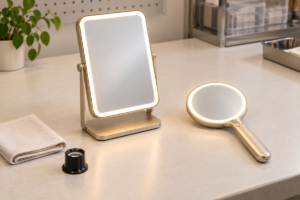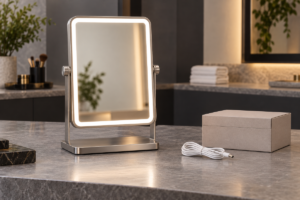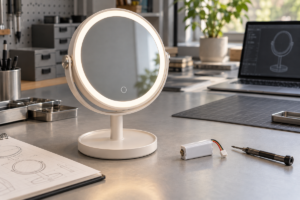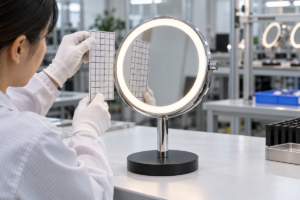

Hollywood mirror lighting specifications should be approved by real-use comfort, not by bulb count or maximum brightness claims alone. For retail, e-commerce, salon, and project buyers, the practical decision is whether the bulb layout, CCT, brightness, dimming, glare control, and switch reliability fit the target user and sales channel. A good sample should give even facial lighting, stable color temperature, smooth dimming, and safe electrical performance while still fitting the buyer’s packaging, MOQ, and after-sales plan.
This guide helps importers, beauty brands, retailers, salon suppliers, hotel project buyers, and distributors evaluate Hollywood mirror lighting before sample approval or bulk production.
Why Lighting Specifications Affect Procurement Risk
A Hollywood vanity mirror is often purchased for its visual impact, but the lighting system decides whether end users keep it, review it well, and reorder it. If bulbs create shadows, the CCT feels too cold, or the dimming is unstable, buyers may face returns even when the frame looks attractive. For project buyers, poor lighting consistency can also create installation complaints across multiple rooms or dressing stations.
Lighting checks should be connected to the buyer scenario. A retail tabletop model may prioritize comfortable adjustable light and simple plug-in use. A salon or studio mirror may need stronger illumination, longer daily operating time, and consistent CCT across repeat orders. A hotel or dressing-room project may need a quieter visual effect, reliable wall installation, and clearer spare-part support. Buyers can compare related product structures in Mingda’s Hollywood Mirrors category and the Hollywood iron-framed mirror sourcing guide.
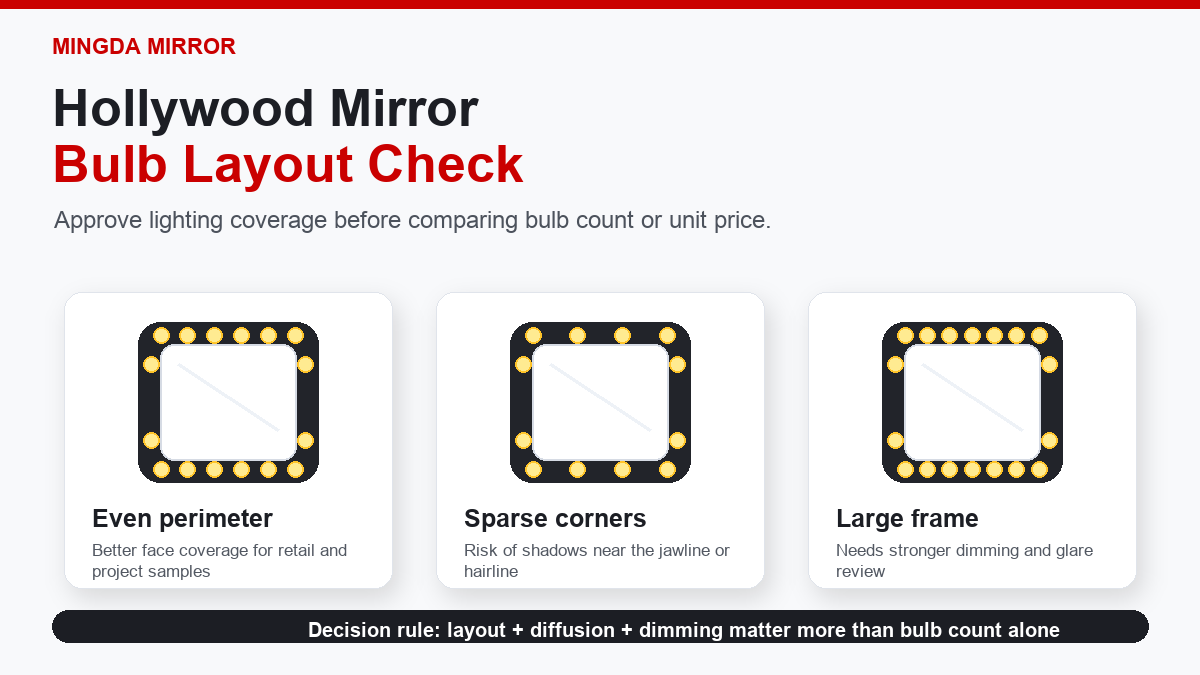
Bulb Layout: What Buyers Should Compare
| Layout factor | What to check | Procurement risk if ignored |
|---|---|---|
| Bulb spacing | Even distance around the frame, especially near corners | Dark zones around the face or uneven product appearance |
| Bulb count | Count should match mirror size and lighting target | Too few bulbs may look weak; too many may increase glare and cost |
| Frame size | Larger mirrors need wider coverage and better dimming | Brightness may look strong in one area but uneven across the mirror |
| Diffusion | Bulb lens, cover, and light spread should reduce harsh points | Users may complain that the mirror is bright but uncomfortable |
The tradeoff is that more bulbs can improve the premium look, but they also affect cost, heat, packing space, electrical design, and glare. Buyers should approve the visual result at normal use distance instead of asking only for a higher bulb count. For tabletop retail models, balanced lighting and stable dimming usually matter more than the largest possible bulb quantity.
CCT: Warm, Neutral, Daylight, or Adjustable?
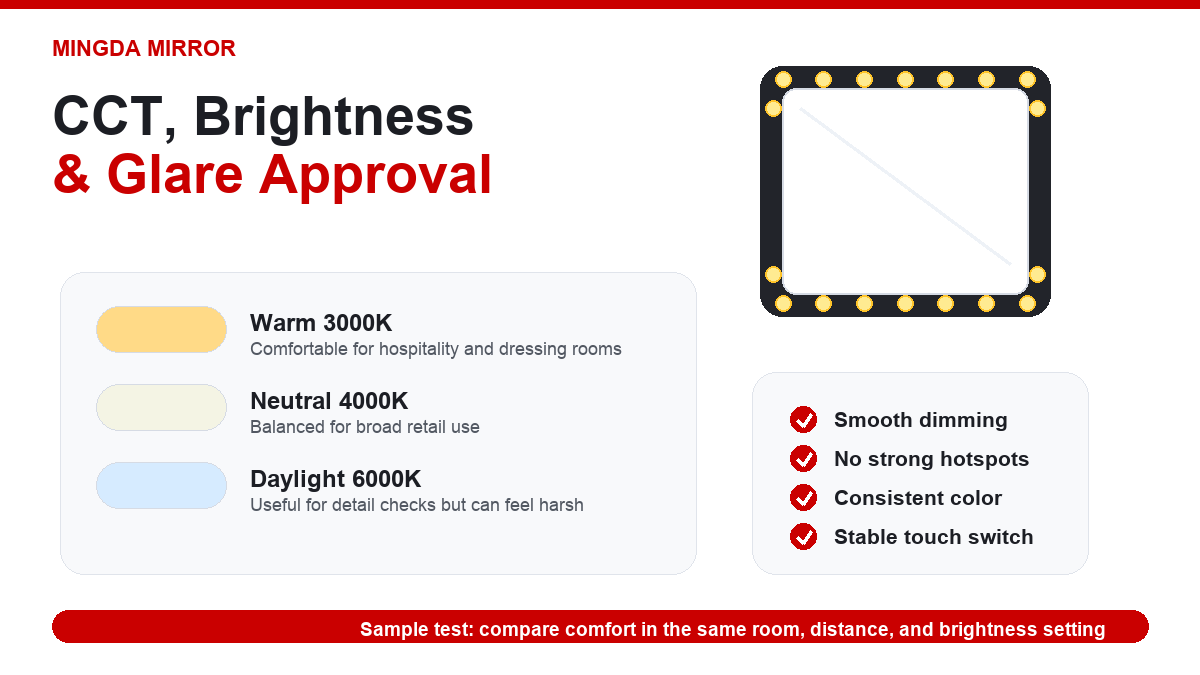
CCT, or correlated color temperature, defines whether the light looks warm, neutral, or cool. For Hollywood mirrors, buyers commonly review warm light around 3000K, neutral light around 4000K, and daylight or cool white around 6000K. Adjustable CCT can improve user flexibility, but it also requires a reliable switch system and clearer instructions.
Beauty retail and e-commerce sellers often prefer adjustable CCT because end users can use the mirror in different room conditions. Salons and studios may prefer consistent neutral or daylight settings so the mirror supports makeup detail work. Hotel and project buyers may prefer warmer or neutral lighting to fit interior design and guest comfort. The best choice depends on channel fit, not on one universal color temperature.
Brightness and Dimming Checks
Brightness should be reviewed together with dimming range and glare. A mirror that looks impressive at full brightness may feel uncomfortable during daily makeup use. Buyers should test the sample in a normal room, at typical face distance, and at several dimming levels. The light should remain stable without flicker, sudden jumps, or weak low-brightness performance.
For retail and Amazon-style channels, smooth dimming can reduce return risk because consumers use mirrors in bedrooms, bathrooms, and dressing areas with different ambient light. For salon and project buyers, brightness consistency across multiple units matters because inconsistent mirrors are easy to notice when installed side by side. If the mirror has memory function, the buyer should check whether the last lighting setting remains after power is turned off and on.
CRI, Glare, and Real Makeup Use
CRI, or color rendering index, affects whether skin tone and makeup colors look natural. Buyers should ask suppliers what CRI level the LED bulbs or strips support and whether that claim is tied to the supplied component. High brightness without acceptable color rendering can create a poor user experience, especially for beauty, salon, and dressing-room applications.
Glare is another common failure point. Buyers should look directly toward the mirror from normal use distance and check whether bulbs cause harsh hotspots. Diffused bulbs, suitable spacing, and proper dimming can help. A practical rule is: if the sample feels uncomfortable after several minutes of use, the mass-production order may create review or return problems even if the product photos look strong.
Lighting Sample Approval Checklist
- Confirm target buyer: retail, e-commerce, salon, studio, hotel, project, or distributor.
- Check bulb count, spacing, lens quality, and frame coverage on the complete mirror.
- Test CCT settings under normal room lighting, not only in a bright showroom.
- Review brightness at low, medium, and full settings to confirm smooth dimming.
- Check glare comfort from real face distance and from seated or standing positions.
- Test touch switch response, memory function, adapter, plug type, voltage, and cable length.
- Confirm whether customized logos, color boxes, manuals, and barcodes affect MOQ or lead time.
- Approve packed samples so bulbs, glass, frame corners, and electrical parts are protected in transit.
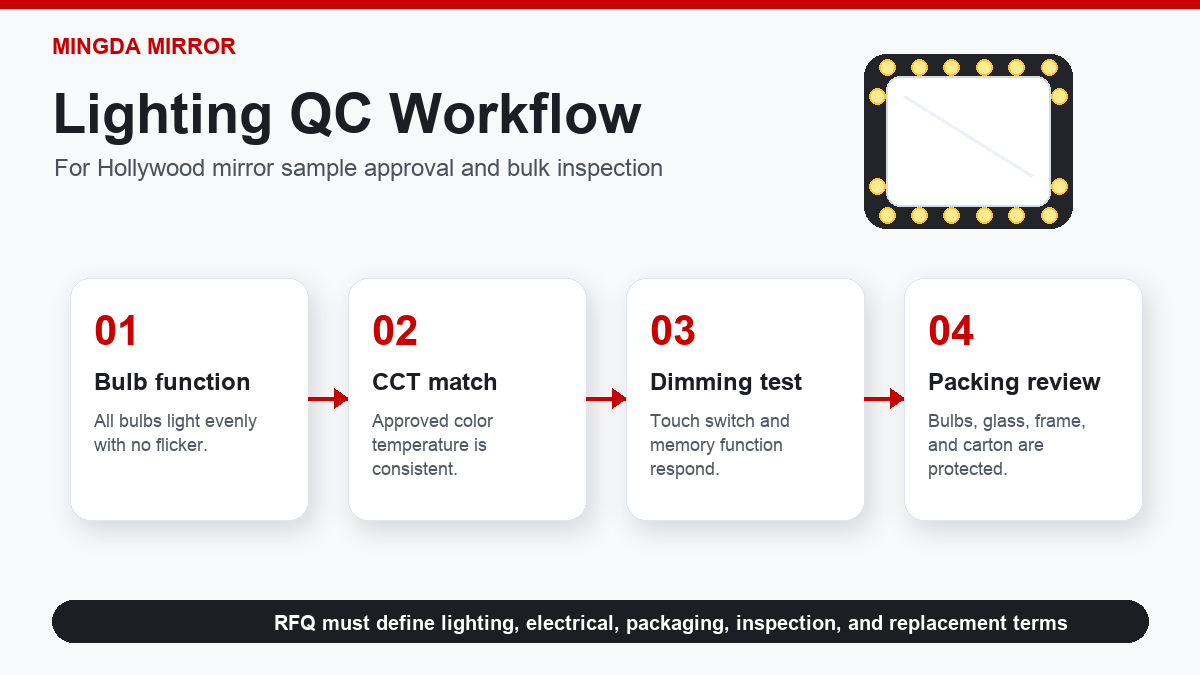
Commercial Details to Include in the RFQ
A serious RFQ for Hollywood mirror lighting should include target mirror size, tabletop or wall-mounted use, bulb layout, preferred CCT or adjustable CCT, dimming type, plug standard, destination voltage, cable length, packaging expectation, order quantity, and inspection requirements. If the buyer wants private label packaging, the RFQ should also include logo placement, user manual language, barcode requirements, color box style, and carton marks.
MOQ and lead time can change when buyers customize bulb type, frame finish, switch function, plug, adapter, packaging, or instruction manuals. Sample approval should therefore cover both the lighting system and the final commercial package. Mingda’s QC Process, Packaging & Logistics, and OEM/ODM pages are useful internal references when defining these checks before order confirmation.
Common Mistakes Buyers Should Avoid
The first mistake is approving a sample only by appearance. Hollywood mirrors can look attractive in photos while still having uneven light, harsh glare, unstable dimming, or weak switch response. The second mistake is comparing quotations without matching the same bulb type, plug, adapter, switch function, CRI expectation, packaging, and inspection standard. The third mistake is ignoring after-sales replacement terms for bulbs, adapters, switches, or broken mirrors.
Buyers should also avoid choosing a lighting setup that fits only one showroom condition. A product sold through retail or e-commerce may be used in many different rooms. A project mirror may be installed in repeated spaces where lighting inconsistency becomes visible. The safest approach is to approve lighting comfort, electrical function, and packaging at the same time.
Bottom Line
For Hollywood mirror orders, the best lighting specification is the one that fits the buyer’s channel, user scenario, installation method, and service plan. Bulb count is only one detail. Buyers should confirm layout, CCT, brightness, dimming, glare, CRI, switch reliability, plug requirements, packaging, and replacement terms before bulk production. This reduces return risk and makes the quotation comparison more accurate.
FAQ
What CCT is best for Hollywood mirrors?
There is no single best CCT for every order. Warm light can suit hospitality and dressing rooms, neutral light fits broad retail use, daylight supports detail work, and adjustable CCT gives consumers more flexibility.
Is a higher bulb count always better?
No. Higher bulb count can improve visual impact, but layout, diffusion, dimming, and glare comfort decide whether the mirror performs well in real use.
What should buyers test in a Hollywood mirror sample?
Buyers should test bulb function, CCT, brightness, dimming, glare, switch response, plug type, adapter, cable length, packaging protection, and finished appearance.
Can lighting specifications affect MOQ or lead time?
Yes. Customized bulbs, switch functions, plug standards, adapters, packaging, manuals, or frame finishes can affect MOQ, sample timing, and bulk-production lead time.
How can buyers reduce return risk for lighted Hollywood mirrors?
Approve a complete packed sample, define lighting and electrical inspection points, confirm carton protection, and agree on replacement terms for damaged units or electrical parts.
CTA
If you are planning Hollywood mirror orders for retail, e-commerce, salon, hotel, studio, or project use, contact Mingda Mirror with your target size, bulb layout, CCT, plug standard, packaging requirement, and order quantity. Mingda can help prepare samples and compare lighting options before mass production.
Home | Hollywood Mirrors | Tabletop or Wall-Mounted Hollywood Mirror | Big Metal Hollywood Mirror | Hollywood Iron-Framed Mirror Sourcing Guide | Contact