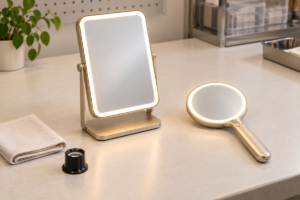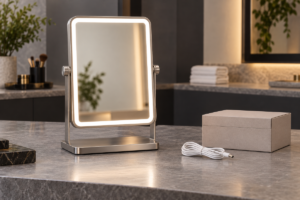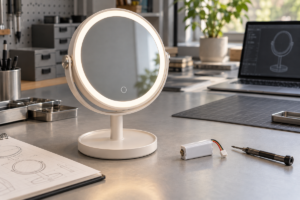

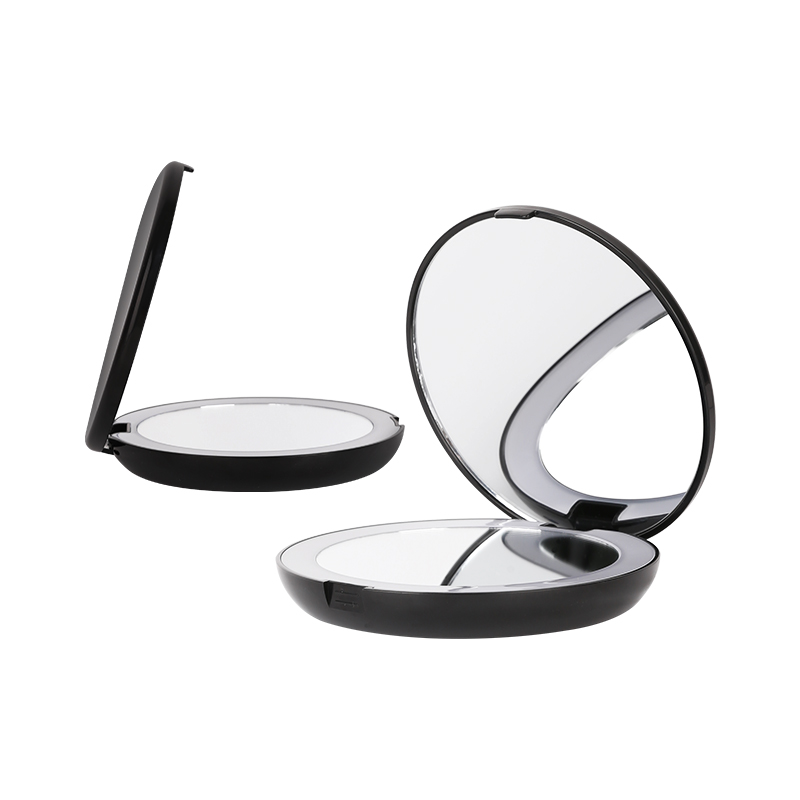
LED handheld mirror buyers should evaluate materials and finishes as a complete product system: frame material, plated or painted finish, hinge design, LED light ring, battery position, charging port, and mirror glass all affect the final return risk. A beautiful finish is not enough if the hinge loosens, the coating scratches, or the lighted structure fails after repeated travel use.
This checklist is for beauty brands, retailers, importers, and private-label teams comparing LED compact mirrors and lighted handheld mirrors before sample approval. The goal is to help buyers choose finishes that look premium on shelf while still surviving packaging, shipping, daily handling, and customer use.
Start With the Job the Mirror Must Do
Material evaluation becomes clearer when the buyer starts with the commercial use case. A salon handheld mirror needs repeat-use durability, grip comfort, and straightforward replacement logic. A travel compact needs better hinge consistency and face protection because it opens and closes repeatedly inside bags. A gift or promo compact needs stronger cosmetic execution because shoppers judge it first by presentation value. If all three channels are quoted the same way, buyers usually end up comparing numbers that do not reflect the real risk profile.
That is why Mingda's handheld mirror sourcing guide and travel, salon, or retail handheld mirror guide both begin with channel logic. Material and finish should sit inside that framework, not replace it.
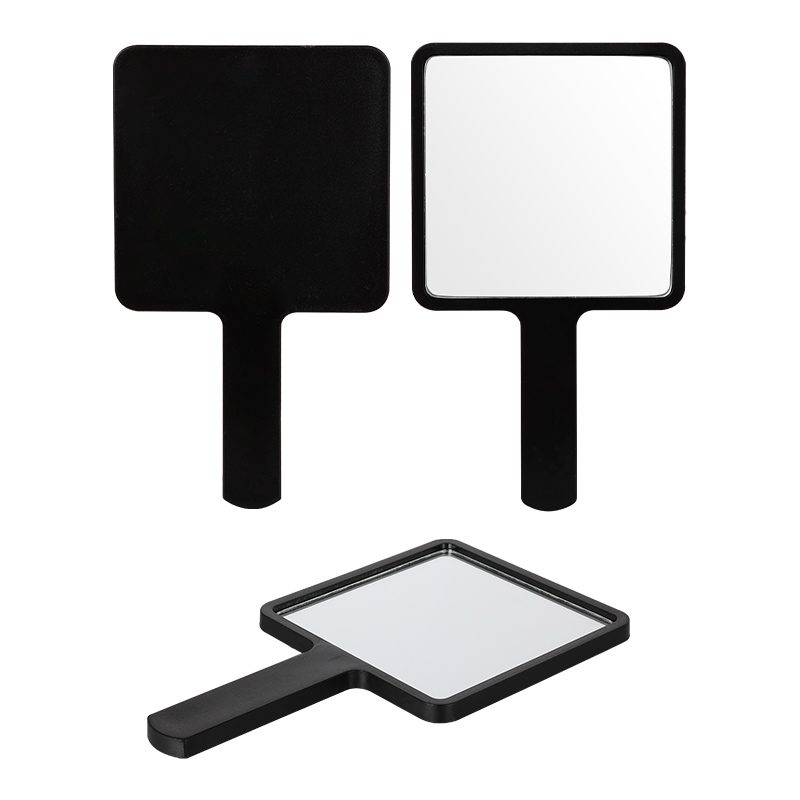
Quick Comparison: Material and Finish Tradeoffs
| Option | Where it usually fits | Main strength | Main risk |
|---|---|---|---|
| Basic molded plastic or ABS handheld frame | Salon supply, value retail, mass replenishment | Lower structural complexity, easier cost control, safer repeat ordering | Can feel too basic if the retail story needs gifting or premium appeal |
| Painted or coated compact shell | Beauty retail, travel programs, entry gift sets | Better appearance with manageable cost | Scratch marks, coating inconsistency, visible rub during transit |
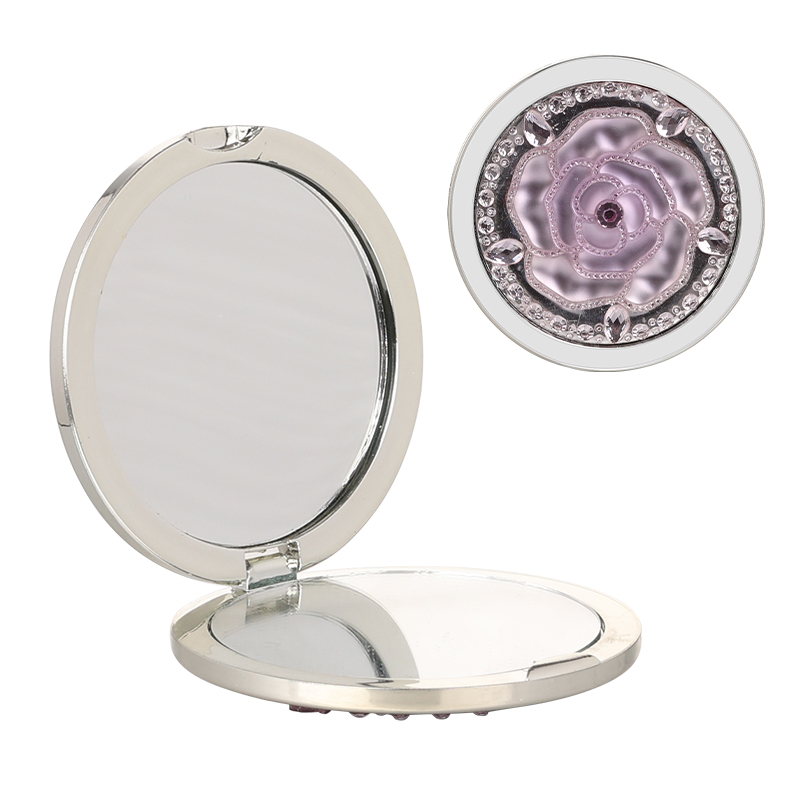
| Plated metal-look compact or decorative compact | Gift, promo, beauty accessory, premium private label | Higher perceived value and stronger shelf presentation | Fingerprints, plating defects, ornament looseness, hinge complaint risk |
| Mixed-material decorative compact with stones or artwork | Seasonal gift or branded promo programs | Distinctive visual identity and brand story | Higher cosmetic reject rate, more packing protection, slower sample approval |
For many B2B buyers, the safest commercial question is not which material is best overall, but which material gives acceptable appearance at the lowest claim risk for the intended sales channel. Buyers who are still deciding between compact and single-sided structures should also review Mingda's single-sided vs double-sided handheld mirror comparison.
What Buyers Should Check in Basic Handheld Frames
Simple handheld frames usually win on durability because there are fewer moving parts and fewer decorative surfaces to protect. That makes them a strong choice for salon supply, utility retail, and bulk replenishment programs. In these projects, buyers should focus on handle rigidity, edge finishing, frame thickness, and how easily the mirror face stays aligned within the frame.
Even a simple handheld mirror can create returns if the handle flexes too much, the painted edge chips, or the reflective surface shifts after transport. These products often look easy to source, which can lead buyers to skip a proper durability checklist. In practice, the structural simplicity is exactly why these mirrors are useful: if the QC points are defined clearly, repeat ordering becomes easier and more stable.
Compact Mirrors Need Finish Control as Much as Structure Control
Compact mirrors carry more sourcing risk because the buyer is managing two product systems at once: the mirror itself and the opening-closing mechanism. Once the compact also includes plating, color coating, printed artwork, or decorative ornaments, cosmetic control becomes part of the commercial decision. The issue is not whether the finish looks good in one sample. The issue is whether the same look can survive handling, packaging, and retail movement at scale.
For travel and beauty-accessory programs, buyers should check hinge resistance, closing alignment, reflective clarity on both mirror faces, gap consistency, and whether the finish picks up scratches or fingerprints too easily. A compact that feels premium in a hand sample but marks easily in the carton can become an expensive mistake after launch.
How Decorative Finishes Change MOQ, Packaging, and Lead Time
Decorative compact mirrors can be commercially attractive because they offer stronger gifting value and better shelf differentiation. But decoration is not free value. It usually adds inspection points, protection requirements, and sometimes a different MOQ or production schedule. Plated rims, rhinestones, printed inserts, or raised artwork often need additional sample confirmation because buyers are approving both function and appearance.
This is where supply-chain discipline matters. If the finish direction is still vague, the quotation is probably incomplete. Buyers should confirm whether protective film, pouch packing, insert trays, or gift boxes are required, because packaging changes the real landed cost and can affect carton efficiency. Mingda's Packaging & Logistics and QC Process pages are useful reference points when those tradeoffs are being reviewed.
Durability Checklist Before Sample Approval
- Confirm the real sales channel: salon, travel, value retail, beauty accessory, promo, or gift.
- Define the base structure first: single-sided handheld, double-sided compact, or decorative compact.
- Specify frame material and finish direction before asking for final pricing.
- Check hinge opening feel, closing alignment, and mirror-face protection on compact models.
- Review scratch resistance, plating consistency, paint uniformity, and edge finishing under normal handling light.
- Ask what protective packing is needed and whether it changes MOQ, lead time, or carton count.
- Confirm the QC standard for cosmetic defects, loose ornaments, mirror clarity, and transit damage.
This checklist is useful because many handheld mirror projects fail between sample approval and bulk delivery, not during the first visual review. A structured sample checklist keeps the buyer from approving a surface look without approving the real durability package behind it.
Common Buyer Mistakes
The first mistake is choosing a decorative finish for a price-sensitive retail program where repeat ordering and low claims matter more than presentation. The second is quoting a compact mirror without asking how it will be packed, displayed, or shipped. The third is approving a plated or ornamented sample without defining an acceptable cosmetic defect standard. The fourth is assuming a simple-looking mirror does not need structural testing because the product is small.
Another repeated problem is mixing premium appearance with low-cost protection. If the channel expects a polished gift compact, the packaging and QC route must support that expectation. Otherwise the buyer is effectively paying for decoration and then losing the margin to scratch complaints and rework.
Bottom Line
Choose basic handheld materials when the project needs durability, cleaner replenishment, and lower sourcing complexity. Choose painted or plated compact formats when the channel needs more shelf value and the buyer is prepared to manage tighter cosmetic control. Treat decorative finishes as a full sourcing decision, not a styling detail, because they affect packaging, MOQ, QC, and complaint risk together. The best handheld mirror material is the one that keeps the product commercially viable after shipping, display, and repeated use.
FAQ
Which handheld mirror material is safest for daily-use retail or salon programs?
Usually a basic molded handheld frame, because it has fewer moving parts, lower cosmetic sensitivity, and easier repeat-order consistency.
Why do decorative compact mirrors create more sourcing risk?
Because buyers must control both function and appearance, including hinge behavior, plating or coating quality, ornament stability, and protective packaging.
Does finish choice really affect MOQ and lead time?
Yes. More complex finishes often need extra sample approvals, more protective packing, and sometimes different production or printing minimums.
What should buyers inspect first when testing compact mirror durability?
Start with hinge feel, closing alignment, scratch resistance, mirror clarity, and whether the inner faces are protected well enough for transport.
Can Mingda help compare handheld mirror options before RFQ?
Yes. Mingda can help narrow structure, finish, packaging, and QC checkpoints so the buyer can move into quotation and sample review with clearer commercial assumptions.
CTA
If you are comparing handheld mirror materials or finishes for a retail, travel, or gift program, contact Mingda Mirror with your target channel, finish direction, packaging route, and branding requirements so the RFQ and sample process can focus on the right durability standard from the start.
Home | Handheld Mirror Guide | Single vs Double-Sided Comparison | Square Handheld Mirror | Compact Travel Mirror | Contact