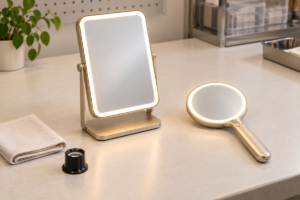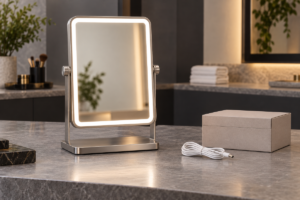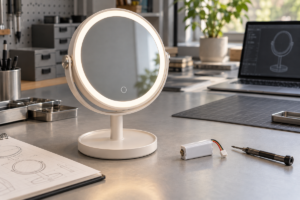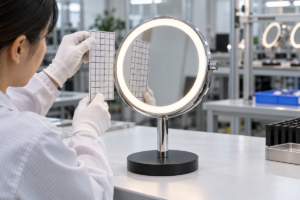

Hotel LED bathroom mirror sample approval should confirm five things before bulk production: lighting comfort, anti-fog performance, IP and electrical safety, installation compatibility, and project-safe packaging. A sample that only looks attractive in a showroom can still create site problems if the power exit, bracket, CCT, anti-fog area, carton strength, or spare-parts plan is not checked against the real hotel room design.
For hotel developers, contractors, distributors, and project procurement teams, the approved sample should become the control standard for mass production. Treat it as a technical, installation, and logistics benchmark, not only a design sign-off.
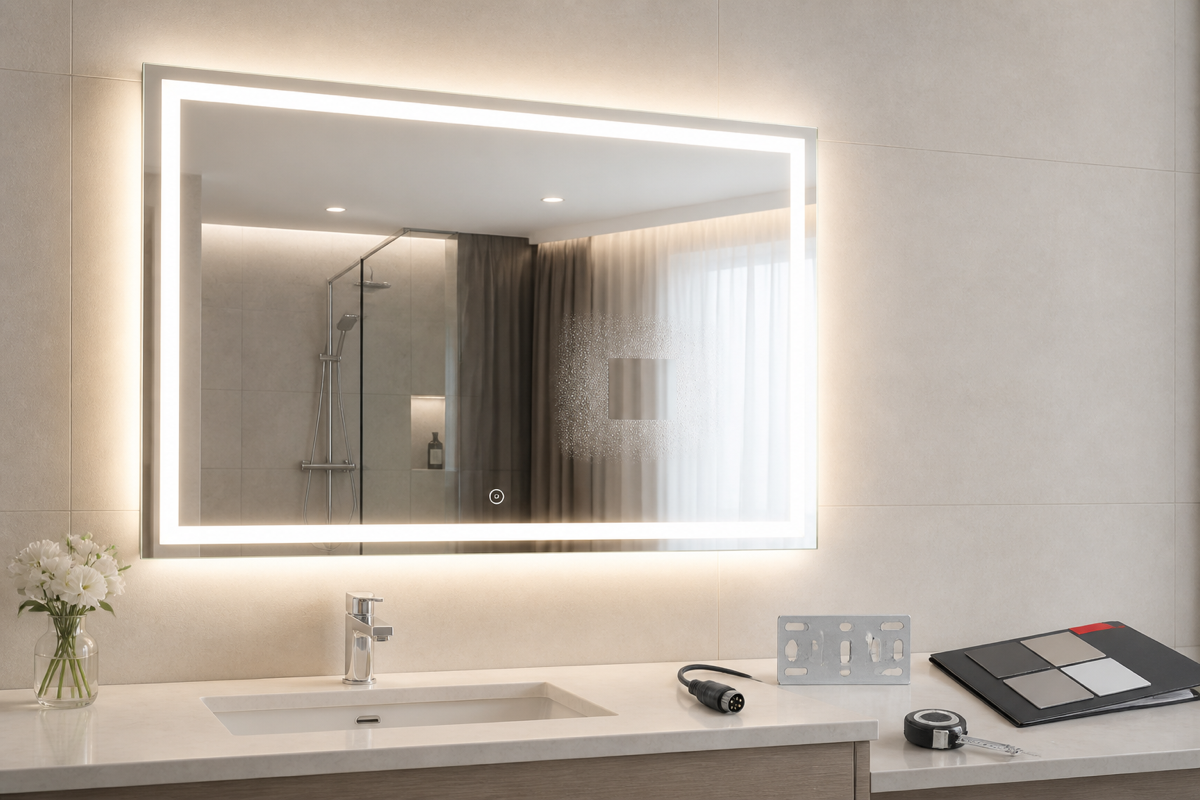
Why Sample Approval Matters More in Hotel Projects
Hotel mirror orders are different from retail mirror orders. The same model may be installed in dozens, hundreds, or thousands of rooms, so a small mismatch can become expensive after containers arrive.
Common project risks include the mirror being too bright for guest comfort, the anti-fog pad covering too small an area, the rear bracket not matching the wall structure, the power cable exiting in the wrong position, the driver not matching local installation practice, or packaging failing during long-distance shipment. These are not minor cosmetic issues. They affect opening schedules, replacement cost, and guest experience.
Sample approval reduces that risk by connecting the product specification with the room drawing, wiring plan, installation method, carton design, and final inspection standard.
Start With Room Type, Not Only Mirror Size
Before approving a mirror sample, buyers should map the product to each room type. A compact room, accessible room, suite, apartment hotel, and public washroom may need different dimensions, mounting heights, cable locations, or lighting levels.
For the first sample review, confirm:
- Mirror width, height, mounting height, and centerline from the floor.
- Front-lit, backlit, or combined lighting style and CCT requirement.
- Anti-fog size, switch type, sensor position, and guest visibility.
- Power input, driver location, cable length, and exit position.
- Bracket type, screw kit, wall compatibility, carton size, and gross weight.
If the hotel uses more than one room type, approve either separate samples or a written matrix that lists every approved variation.
Sample Approval Decision Matrix
Use a structured checklist so the same standard can be repeated during mass production and incoming inspection.
| Approval item | What to check on the sample | Buyer risk if ignored | RFQ detail to confirm |
|---|---|---|---|
| Mirror size and edge finish | Full dimensions, corner radius, edge polish, frame finish | Poor fit with vanity, wall tile, or hotel design standard | Final drawing with tolerance |
| Lighting comfort | CCT, brightness, diffusion, glare from guest standing position | Harsh bathroom lighting or weak task lighting | CCT range, lumen target, dimming option |
| Anti-fog function | Heating area, warm-up time, switch logic, coverage on glass | Guest complaints after shower use | Anti-fog pad size and control method |
| IP and electrical design | Wet-area suitability, sealed connector, driver position, cable exit | Installation rejection or safety concern | Destination market and installation method |
| Bracket and installation | Rear bracket, screw kit, wall template, cable routing | Slow installation and rework on site | Wall material and mounting drawing |
| Packaging | Foam fit, corner protection, carton strength, accessory separation | Breakage, scratches, missing kits, delayed opening | Drop-test expectation and carton marks |
The best sample file includes photos, measurements, test notes, and signed comments.
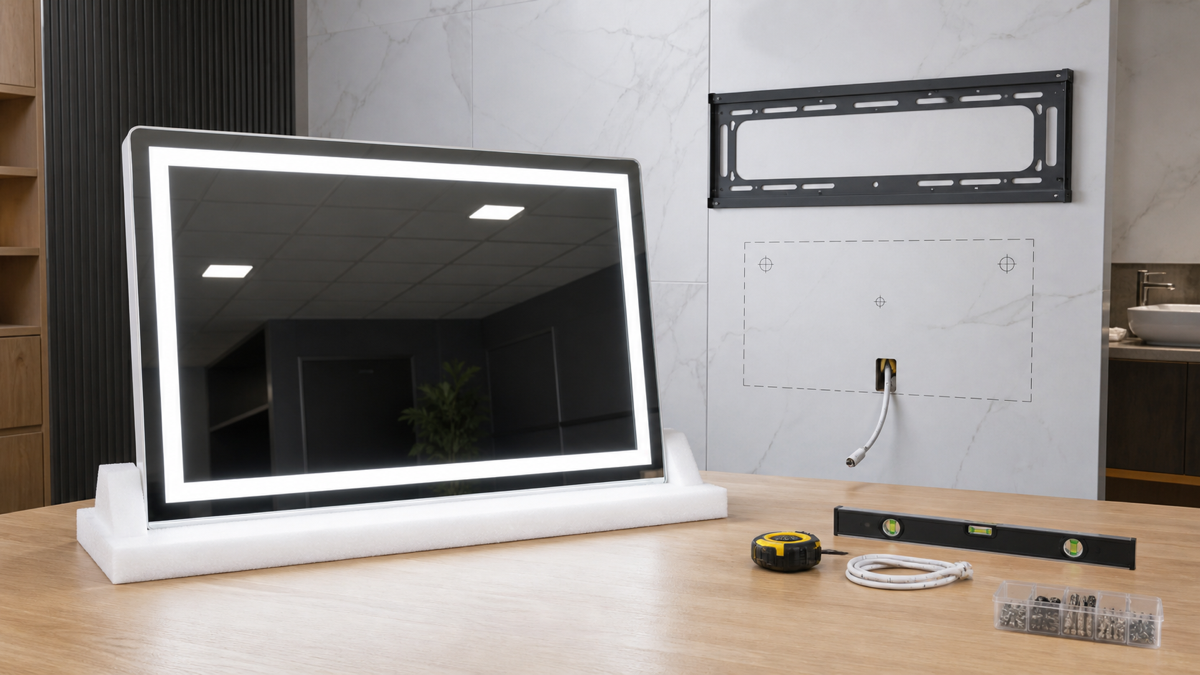
Lighting: Check CCT, Diffusion, and Guest Comfort
LED bathroom mirror lighting should support grooming without making the room feel cold or clinical. Many hotel projects choose a warm-neutral or neutral CCT depending on the brand concept, wall color, and bathroom lighting plan. Buyers should test the sample in conditions close to the finished bathroom, not only under factory lights.
Important checks include glare from the guest standing position, whether the backlight is decorative or functional, CCT match with other fixtures, dimming memory, touch-control behavior, visible hotspots, and reflection comfort for makeup, shaving, and skincare.
For large projects, ask the supplier to keep the approved LED specification, diffuser material, driver, and control board locked unless a written change is approved.
Anti-Fog and IP Checks Should Be Practical
Anti-fog function is valuable only when the clear area matches real guest use. A small pad may pass a simple demo but fail when guests expect the central face area to clear quickly after a shower.
Buyers should define the anti-fog pad size, position, warm-up time, control logic, and whether the function is separate from the mirror light. For project orders, also confirm how the anti-fog component is fixed behind the glass.
IP and electrical checks should reflect the destination market, room layout, and installation zone. Do not treat an IP label as the whole safety review. Confirm cable sealing, driver position, connector protection, grounding or low-voltage design where applicable, and installation instructions.
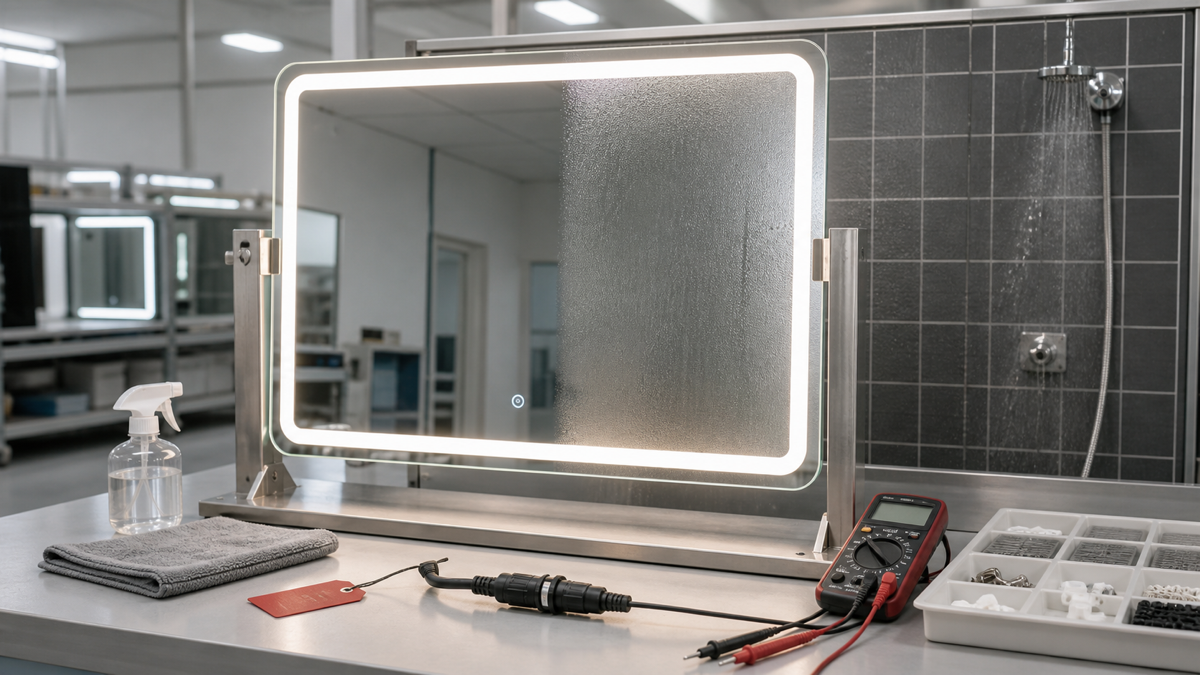
Installation Approval: The Hidden Cost Control
Installation problems often appear after the product is already approved visually. A hotel contractor needs repeatable mounting, clear cable routing, predictable weight, and a complete kit.
During sample approval, check whether the rear bracket matches the wall type, whether one or two installers are needed, whether the cable exit aligns with the planned power point, whether screws and templates are included, and whether the switch and mirror clearance fit the vanity design.
For multi-room projects, request an installation mockup before mass production. It can reveal bracket height, cable conflict, wall tolerance, or guest-use issues that a table review cannot show.
Packaging Approval for Project Shipments
Hotel mirrors face long logistics chains: factory handling, container loading, port movement, inland transport, site storage, elevator movement, and room-by-room installation. Packaging must protect the glass, LED frame, corners, driver, brackets, and accessories throughout that chain.
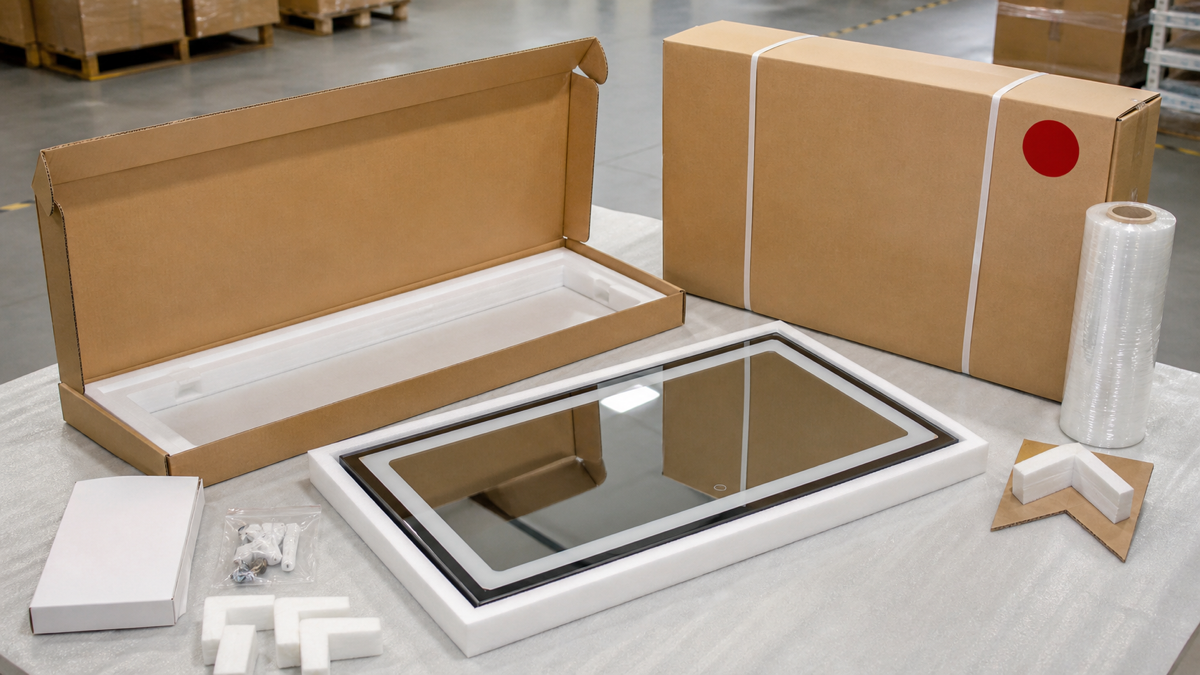
The approved packing sample should show secure shaped foam, corner and edge protection, separated accessories, carton strength matched to gross weight, carton marks for room type and SKU, loading method, and replacement-unit or spare-parts allowance.
If the order will be delivered to a hotel site, discuss room grouping, pallet sequence, and accessory control to reduce installation delays.
Commercial Terms to Align Before Bulk Production
Sample approval should connect to quotation and contract terms. Buyers should confirm MOQ for custom sizes, sample cost, sample lead time, bulk lead time, payment milestone, spare-parts policy, inspection method, warranty responsibility, and packaging test expectation.
For OEM or ODM hotel mirror projects, ask whether the supplier can maintain the approved component revision. A driver, LED strip, anti-fog pad, or bracket change can affect installation or guest experience even when the front view looks similar.
If the hotel designer changes the mirror size after sample approval, the packaging, bracket, cable, and carton should be reviewed again.
Pre-Production Sample Approval Checklist
Before releasing the purchase order, confirm final drawings, lighting specification, anti-fog design, IP/electrical plan, cable exit, bracket, screw kit, installation clearance, packaging structure, carton dimensions, room-type matrix, retained sample, spare parts, warranty process, approved photos, and signed sample comments.
This checklist should be shared with procurement, design, engineering, site installation, and the supplier before production begins.
Common Buyer Mistakes
The first mistake is approving only the front appearance. A hotel LED bathroom mirror is also an electrical product, installation product, and fragile logistics product.
The second is approving one sample while allowing undocumented component changes. For project orders, the approved LED, driver, switch, anti-fog pad, bracket, and packaging should stay controlled.
The third is ignoring installation drawings until the product arrives. Cable exit and bracket position should be checked against the wall plan before bulk production.
The fourth is treating packaging as a supplier detail. Broken mirrors and missing mounting kits can delay a hotel opening even if the mirror design is correct.
Bottom-Line Recommendation
For hotel LED bathroom mirror projects, approve the sample as a full project system: mirror size, lighting, anti-fog, IP/electrical design, bracket, installation method, packaging, spare parts, and inspection standard. If the sample cannot answer these questions, it is not ready for bulk production.
Mingda Mirror can support hotel and project buyers with LED bathroom mirror sample planning, OEM/ODM customization, packaging review, and quality-control alignment. Review Mingda Mirror products, OEM/ODM services, and the quality control process, then send room quantity, mirror size, destination market, installation drawing, and packaging requirement through the Contact page.
Social Media Content Ideas
LinkedIn angle: explain why hotel mirror sample approval should include installation and packaging, not only appearance.
Facebook angle: share the five checks project buyers should finish before approving LED bathroom mirror bulk production.
Instagram angle: use the hotel vanity sample scene or packaging approval photo to show how project mirrors are checked before shipment.
CTA: read the full checklist and send room type, mirror size, and installation plan for a project RFQ.
FAQ: Hotel LED Bathroom Mirror Sample Approval
How many samples should a hotel project approve?
Approve at least one full functional sample for each major room type or mirror size. If variations are small, use one main sample plus a written variation matrix for size, bracket, lighting, and packaging.
Should anti-fog function be tested before the purchase order?
Yes. Confirm anti-fog area, position, warm-up time, switch logic, and performance in realistic bathroom conditions before bulk production. A visual mirror sample alone is not enough.
What installation details should be included in the RFQ?
Send mirror size, wall material, power point position, mounting height, cable routing preference, required bracket type, destination market, and any hotel brand installation standard.
What packaging is suitable for hotel LED bathroom mirrors?
Use secure glass and corner protection, accessory separation, export carton strength, clear carton marking, and a loading plan that matches the project delivery route. The exact structure depends on mirror size, weight, and destination.
Can Mingda customize LED bathroom mirrors for hotel projects?
Yes. Mingda can discuss mirror size, lighting style, anti-fog function, installation hardware, packaging, inspection points, and project RFQ details for hotel and contractor buyers.