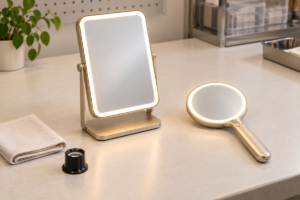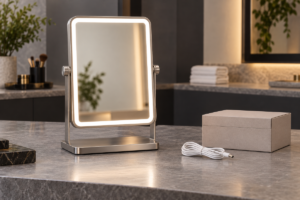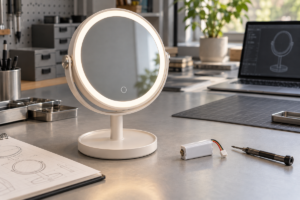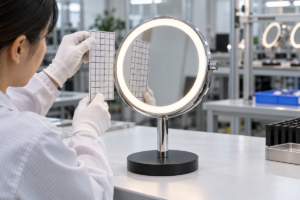

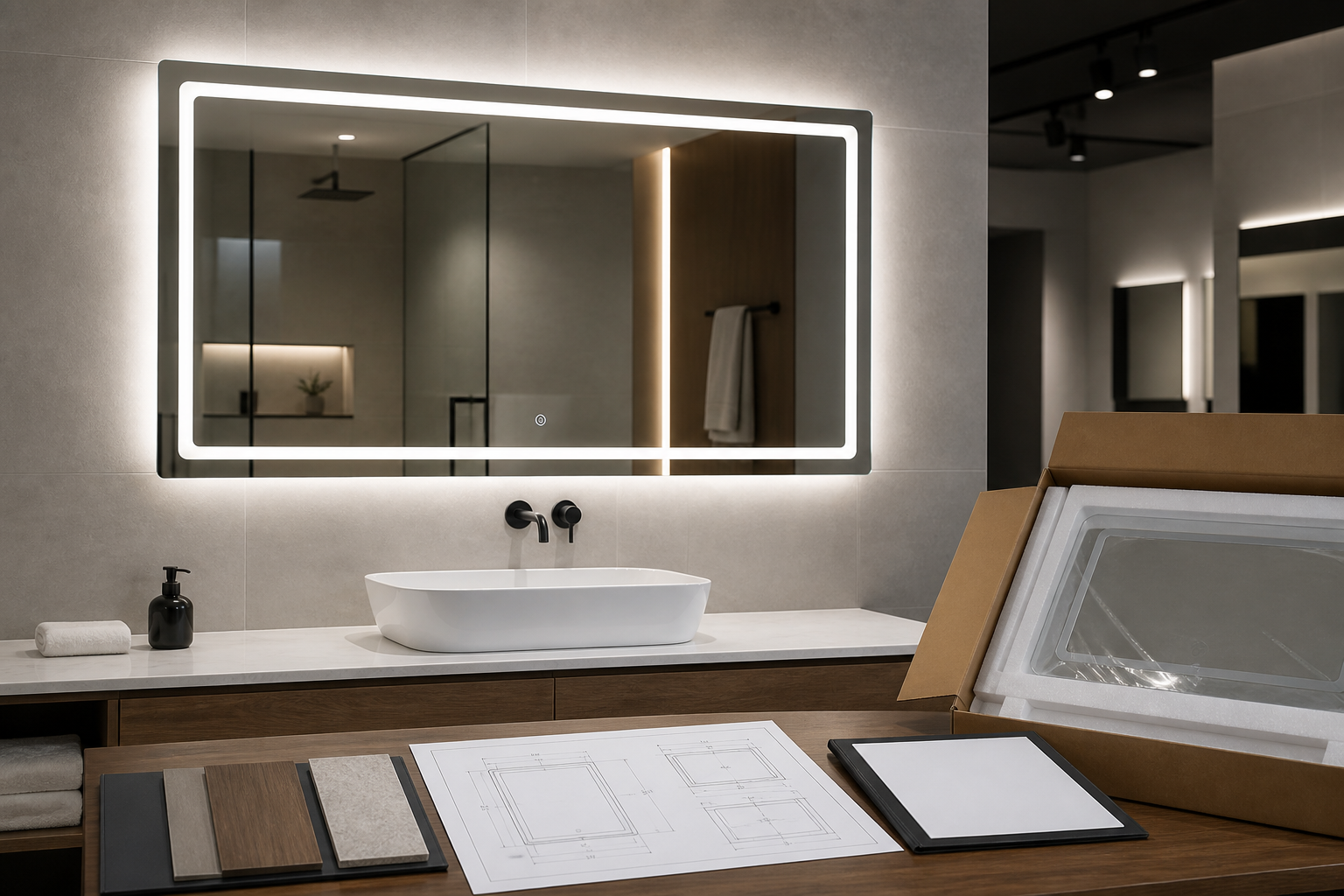
Hotel project buyers should approve an LED bathroom mirror by anti-fog performance, IP rating, installation method, electrical layout, packaging protection, and repeat-batch consistency before signing off the bulk order. A good hotel LED bathroom mirror is not only a decorative vanity feature. It must stay clear after showers, fit the wall and cabinet plan, meet wet-area expectations, survive project delivery, and remain serviceable across many rooms. The safest sourcing approach is to approve one complete installed sample, one packed sample, and one written specification sheet before mass production.
Why Hotel LED Bathroom Mirrors Need Project-Level Approval
Hotel, apartment, resort, and serviced-apartment buyers face a different risk profile from ordinary retail buyers. A retail customer may return one mirror if the light color or anti-fog function disappoints. A hotel project may install the same issue in 80, 200, or 800 rooms before the problem becomes visible.
For project buyers, the mirror is connected to the room design, electrical plan, installation schedule, maintenance policy, and guest experience. A mirror that looks attractive in a catalog can still fail if the anti-fog area is too small, the IP rating does not match the bathroom zone, the mounting system conflicts with the wall, or the carton does not protect glass during multi-site delivery.
The buyer’s goal should be simple: approve the mirror as a complete project system, not as a loose product sample.
Start With Bathroom Zone and IP Rating
IP rating should be discussed early because it affects electrical safety expectations, component choice, and quotation. Many commercial LED bathroom mirrors for ordinary vanity areas are specified around splash-resistant performance such as IP44, while wetter layouts, open showers, humid climates, or closer spray exposure may require a higher protection strategy. The exact requirement depends on the market, project drawings, and local electrical rules, so project buyers should confirm the intended installation zone before requesting a quotation.
| Installation situation | Common buyer concern | Specification to confirm | Procurement risk |
|---|---|---|---|
| Standard vanity above basin | Splash, humidity, guest use | IP rating, sealed LED driver position, cable outlet | Choosing a mirror only by size and ignoring wet-area suitability |
| Open-shower hotel bathroom | Higher moisture and possible spray | Higher water-protection requirement, installation distance, local code check | Using a dry-zone mirror in a wet layout |
| Resort or humid-climate project | Long-term humidity and corrosion | Sealed structure, copper-free mirror option, backing material | Edge corrosion or electrical service calls after installation |
| Renovation project | Existing wiring and wall limits | Back box depth, cable position, mounting bracket, orientation | On-site rework delays and inconsistent room installation |
Buyers should not treat the IP number as a marketing claim. Ask for the rated product structure, driver information, installation instructions, and test or certification documents that apply to the exact model being quoted.
Anti-Fog Performance Should Match Guest Use
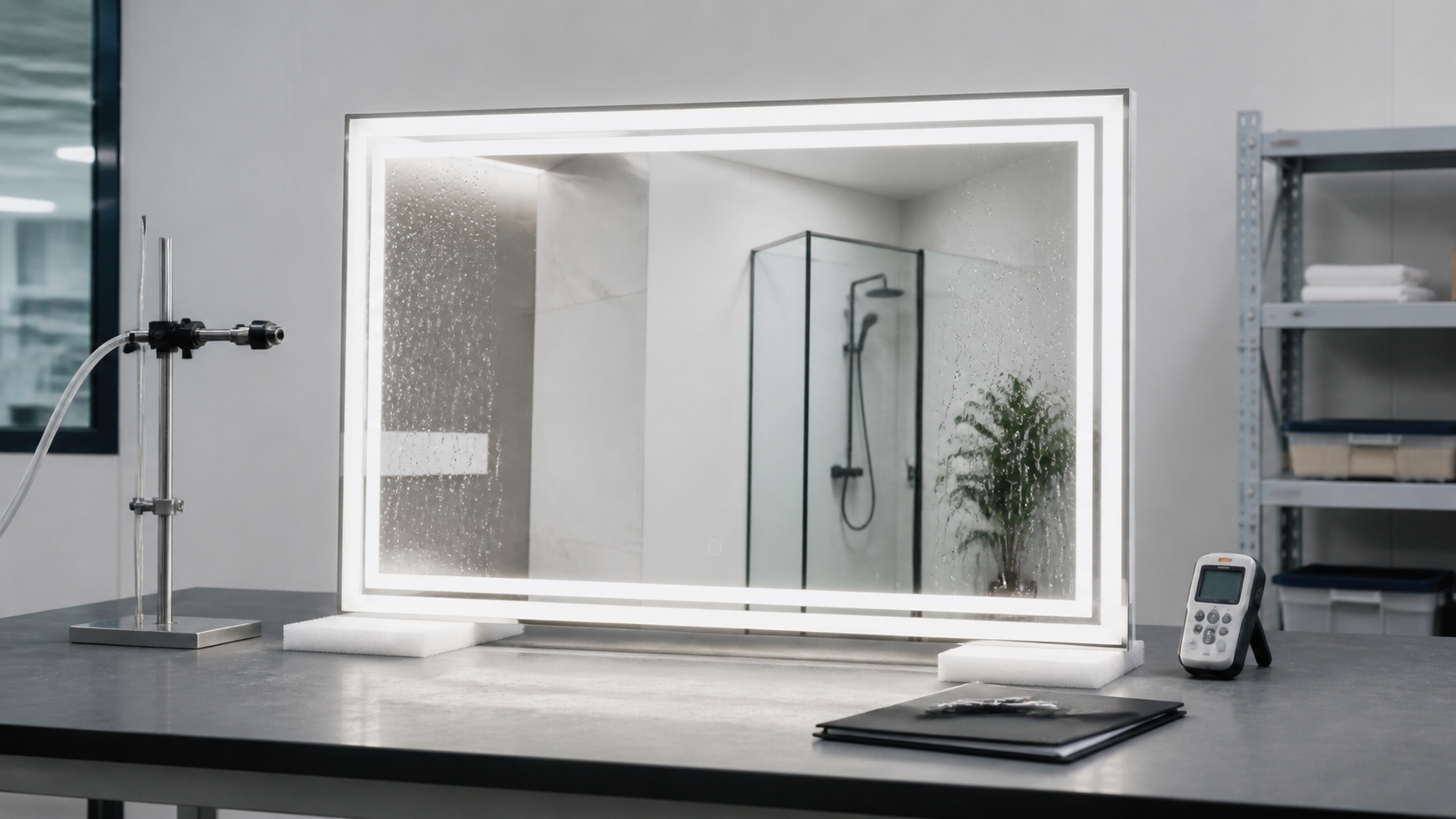
Anti-fog function is one of the most common reasons hotels choose LED bathroom mirrors, but the phrase can hide very different performance levels. The buyer should check the heating pad size, location, warm-up time, control method, and whether the clear area matches how guests actually use the mirror.
For a single vanity, the anti-fog zone should usually cover the main face-viewing area rather than only a small patch near the center. For a wide double vanity, the clear area may need to support two users or a larger heating layout. In colder bathrooms or humid resorts, the factory should explain realistic warm-up timing and power behavior instead of promising instant full-surface clearing.
Ask these anti-fog questions before sample approval:
- What percentage or exact dimensions of the mirror surface does the anti-fog pad cover?
- Is anti-fog controlled together with the light, by a separate touch switch, or by a timed function?
- How long does the approved sample take to clear the main viewing area after steam exposure?
- Is there thermal protection or timer control to avoid unnecessary heating?
- Will the same pad size and placement be used in mass production?
These details matter because hotel guests judge the result visually. If the mirror clears only a small area, the feature may technically exist but still disappoint in daily use.
Lighting and Controls Affect Guest Experience
Hotel LED bathroom mirrors should support grooming and room atmosphere without creating glare. Front-lit mirrors give stronger face illumination. Backlit mirrors create a softer architectural effect. Some projects need both, especially in higher-end rooms where the mirror is part of the lighting design.
Confirm color temperature, CRI target, brightness range, dimming method, memory function, and whether the switch icons or controls are intuitive for guests. For hotel programs, consistency is important: the same room type should not have visible differences in LED tone from one batch to another.
If the project includes multiple room grades, do not assume one lighting specification is best for every room. Standard rooms may need durable and simple controls, while suites may justify dual lighting, warmer dimming, or a larger mirror format.
Installation Details Decide Whether the Project Runs Smoothly
Installation approval should happen before the purchase order, not after cartons arrive at the site. A project buyer should request drawings that show mirror size, glass thickness, back box depth, bracket position, cable exit, recommended wall fixing method, and whether horizontal or vertical mounting is supported.
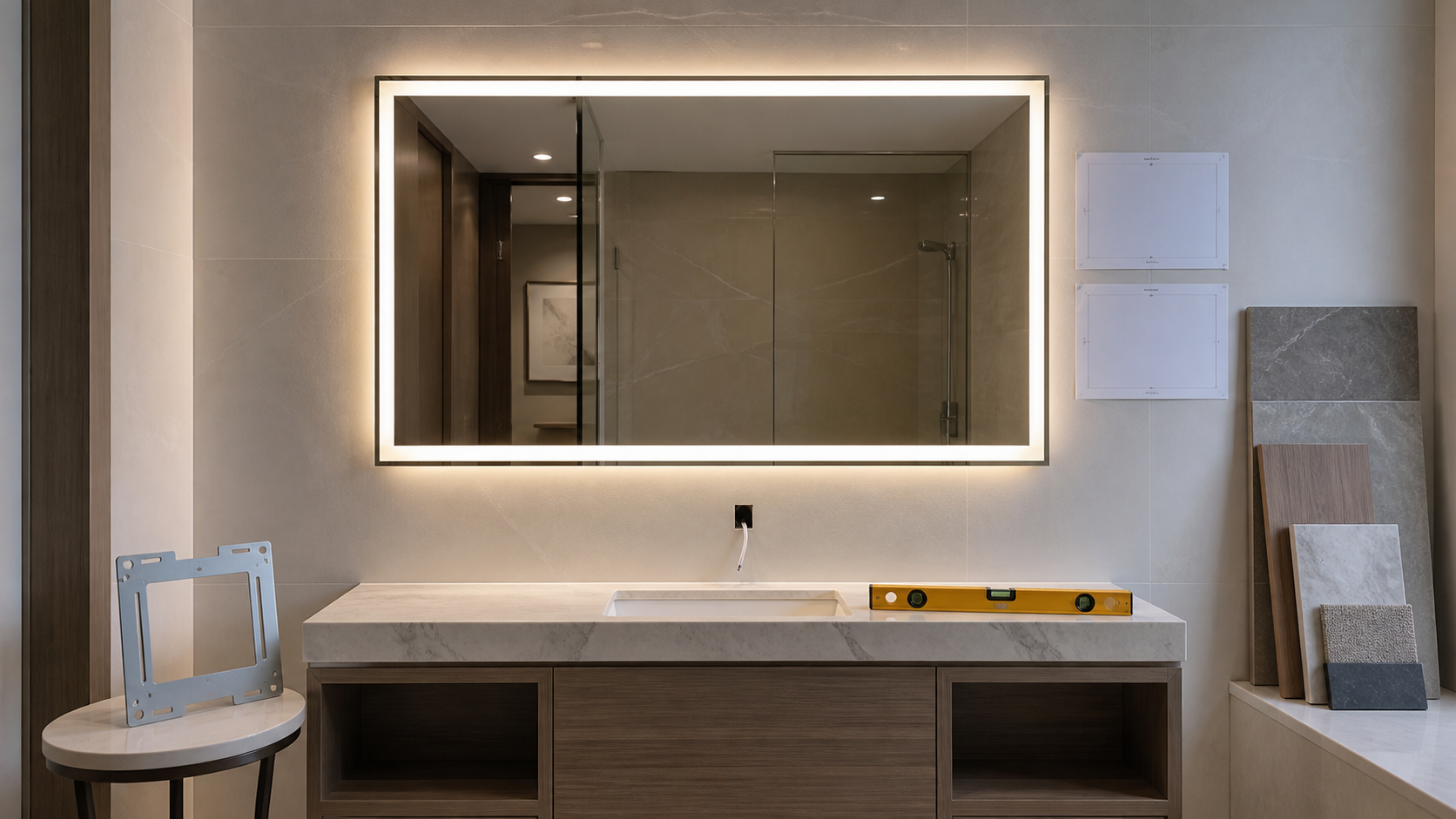
The sample should be checked against the real vanity height, basin width, faucet location, wall tile layout, and electrical outlet position. For renovation projects, existing conduits and wall strength may limit what can be installed without rework.
Key installation checks include:
- Overall mirror size and tolerance.
- Mounting bracket type and screw position.
- Back clearance for driver, cable, and anti-fog pad.
- Cable outlet location and wiring method.
- Vertical or horizontal mounting option, if needed.
- Distance from basin, shower, side wall, and cabinet.
- Access plan for maintenance or replacement.
For project buyers, installation mistakes become schedule mistakes. A slightly wrong cable position or bracket layout can delay many rooms.
Packaging Must Protect Glass Through Project Delivery
LED bathroom mirrors are fragile, large, and often delivered through several handling points before installation. Project packaging should protect the glass, LED system, corners, backing, cable, switch area, and accessories.
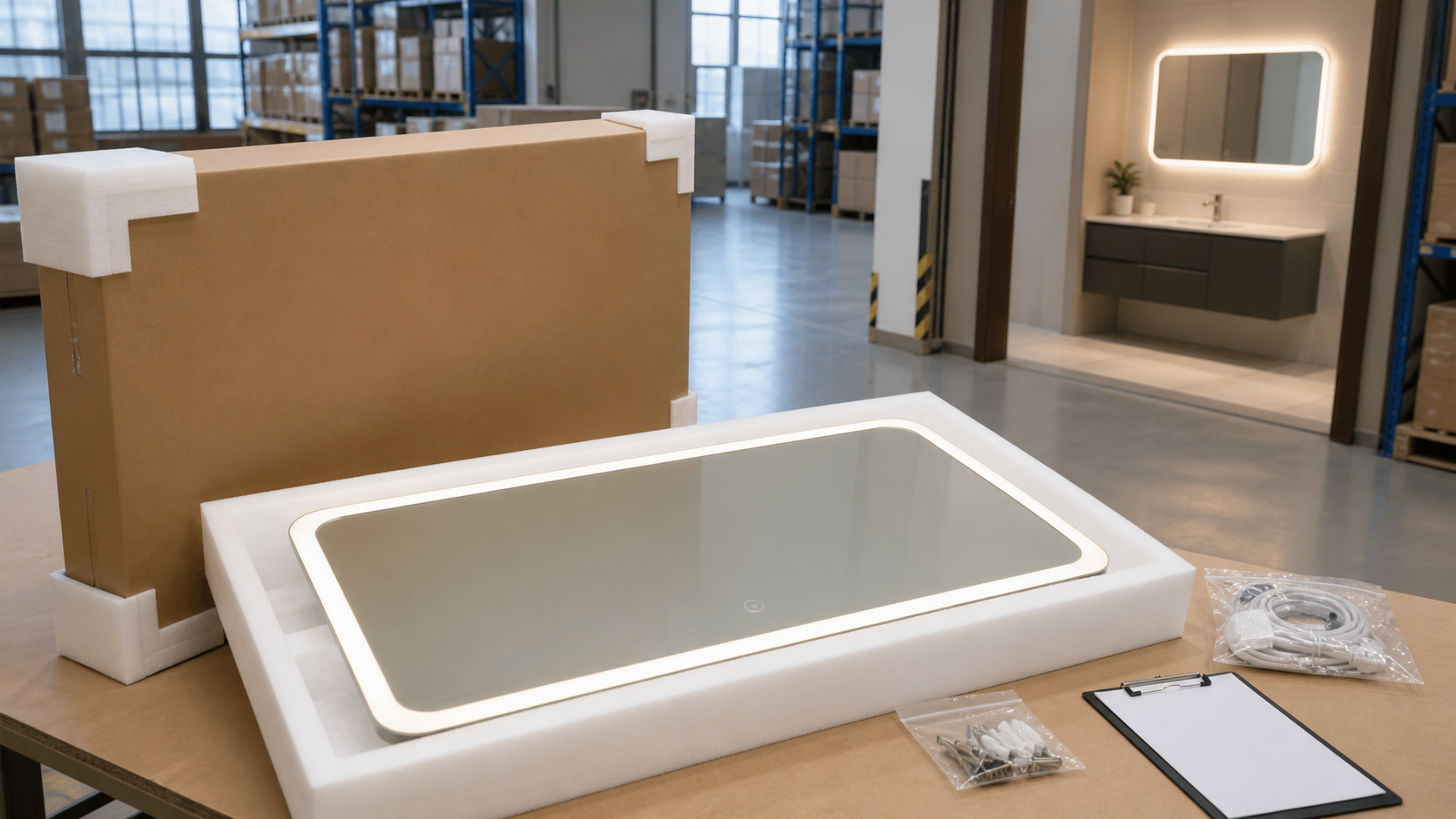
A packed-sample approval should include the mirror, foam or molded insert, corner protection, accessory bag, mounting hardware, manual, inner box if used, export carton, pallet plan, and carton labels. Buyers should also confirm whether cartons are designed for container shipment, warehouse stacking, or direct project-site delivery.
| Packaging item | What to check | Why it matters |
|---|---|---|
| Corner protection | Foam density, coverage, no pressure on glass edge | Reduces edge chips and breakage |
| Mirror support | Full-surface support without hard pressure points | Prevents cracks and LED/backing damage |
| Accessory packing | Hardware and cable separated from glass | Avoids scratches and missing parts |
| Carton strength | Board grade, sealing method, pallet plan | Supports long-distance delivery and site handling |
| Labeling | Model, room type, orientation, quantity, barcode if needed | Speeds receiving and room allocation |
For hotels, packaging is part of installation efficiency. Clear labels and complete hardware reduce confusion when many rooms are being fitted at once.
Sample Approval Should Include Three Evidence Layers
Before mass production, approve three connected evidence layers.
First, approve the functional sample. Check mirror clarity, LED brightness, color temperature, dimming, switch response, anti-fog clearing, and electrical structure.
Second, approve the installed sample. Mount the mirror in the actual or simulated room condition and confirm height, wall fit, cable position, bracket strength, and visual proportion.
Third, approve the packed sample. Inspect the carton, insert, accessories, labeling, and delivery plan. Do not approve only the naked mirror.
This process may feel slower at the beginning, but it prevents larger problems during installation and guest operation.
RFQ Details to Send Mingda Mirror
For a hotel LED bathroom mirror RFQ, send:
- Project type: hotel, apartment, resort, villa, gym, salon, or commercial bathroom.
- Market and required certification or electrical expectations.
- Room types, quantity per room type, and expected rollout schedule.
- Mirror size, shape, lighting type, and anti-fog requirement.
- Target IP rating or installation-zone description.
- Wall structure, wiring method, cable outlet position, and mounting orientation.
- Preferred switch type: touch, sensor, mechanical, or wall-switch control.
- Packaging route: container shipment, warehouse delivery, project-site delivery, or mixed handling.
- Branding, manual, label, carton mark, and spare-part requirements.
Clear information helps Mingda Mirror recommend whether an existing LED bathroom mirror platform can be adapted or whether a custom project specification is needed.
Common Mistakes to Avoid
The first mistake is approving the mirror only by appearance. Hotel mirrors must be checked as electrical, installation, packaging, and maintenance products.
The second mistake is using a general bathroom mirror specification for a wet or humid project without confirming the installation zone. This can create compliance, safety, and warranty risk.
The third mistake is under-specifying anti-fog coverage. A small heating area may pass a basic sample check but fail the guest-use expectation.
The fourth mistake is separating packaging approval from product approval. A correct mirror in weak packaging can still become a project failure if breakage or missing hardware delays installation.
Bottom-Line Recommendation
For hotel projects, LED bathroom mirrors should be sourced through a complete approval gate: IP/wet-area suitability, anti-fog coverage, lighting comfort, installation drawing, packed-sample protection, and batch consistency. Approve one functional sample, one installed sample, and one packed sample before mass production. This gives buyers a clearer basis for price comparison and reduces the risk of site delays, breakage, and guest complaints.
FAQ
What IP rating should hotel LED bathroom mirrors use?
It depends on the bathroom zone and local electrical rules. Many vanity-area LED bathroom mirrors are specified around splash-resistant ratings such as IP44, while wetter layouts or closer spray exposure may require a higher protection strategy. Buyers should confirm the project location and request matching documentation.
How large should the anti-fog area be?
The anti-fog area should cover the main guest viewing zone, not only a small center patch. For wide mirrors or double vanities, ask for the actual heating pad size and approve the clearing performance on a sample.
Should hotel buyers choose front-lit or backlit mirrors?
Front-lit mirrors are stronger for face illumination, while backlit mirrors provide softer room atmosphere. Many hotel projects choose both when grooming performance and premium design are both important.
What should be included in a packed sample?
The packed sample should include the mirror, protective insert, corner protection, accessory bag, mounting hardware, manual, retail or inner box if used, export carton, and labels. It should represent the mass-production packing method.
Can Mingda Mirror customize LED bathroom mirrors for hotel projects?
Yes. Mingda Mirror can discuss size, shape, lighting type, anti-fog function, switch control, mounting method, packaging, labels, and project delivery requirements based on the buyer’s room plan and quantity.
Work With Mingda Mirror
Mingda Mirror supports hotel, apartment, resort, and commercial project buyers with LED bathroom mirror specification planning, sample approval, anti-fog and lighting checks, packaging confirmation, and OEM/ODM customization. Review our LED mirror products, learn about OEM/ODM services, see our quality-control process, and contact Mingda Mirror with your project quantity, room drawings, target market, and installation requirements.
Social Media Content Ideas
LinkedIn angle: explain why hotel LED bathroom mirrors should be approved as a project system covering anti-fog, IP rating, installation, and packaging.
Facebook angle: share a hotel bathroom mirror sample approval checklist for developers, contractors, and hospitality buyers.
Instagram angle: use the hotel vanity installation image to show how mirror lighting, wall fit, and project materials come together.
CTA: Read the full blog and send Mingda Mirror your room drawings, quantity, IP expectation, and packaging route for an RFQ-ready recommendation.