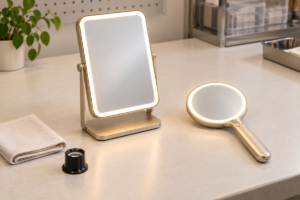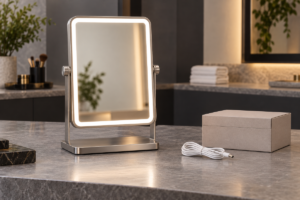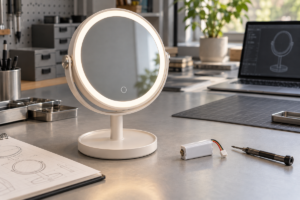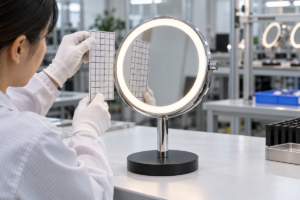

For hotel and serviced-apartment projects, backlit LED bathroom mirrors are best when the design goal is soft ambience, wall glow, and a premium guest-room mood. Front-lit LED bathroom mirrors are better when the mirror must support shaving, makeup, grooming, and consistent face illumination. Many project buyers choose a combined backlit + front-lit structure for higher-end rooms, but only when the wiring plan, IP rating, driver quality, packaging, and replacement policy are confirmed before bulk production.
The right choice is not only a design decision. It affects electrical planning, wall preparation, room lighting comfort, installation speed, defect risk, and long-term maintenance cost. This guide explains how hotel developers, procurement teams, contractors, and FF&E buyers should compare backlit and front-lit LED bathroom mirrors before approving samples or issuing an RFQ.
Why This Decision Matters for Hotel Buyers
In retail or residential sales, a bathroom mirror may be selected mainly by size, style, and price. In a hotel project, the mirror becomes part of the room specification. It must match the wall finish, electrical layout, vanity depth, guest lighting experience, housekeeping routine, and replacement plan.
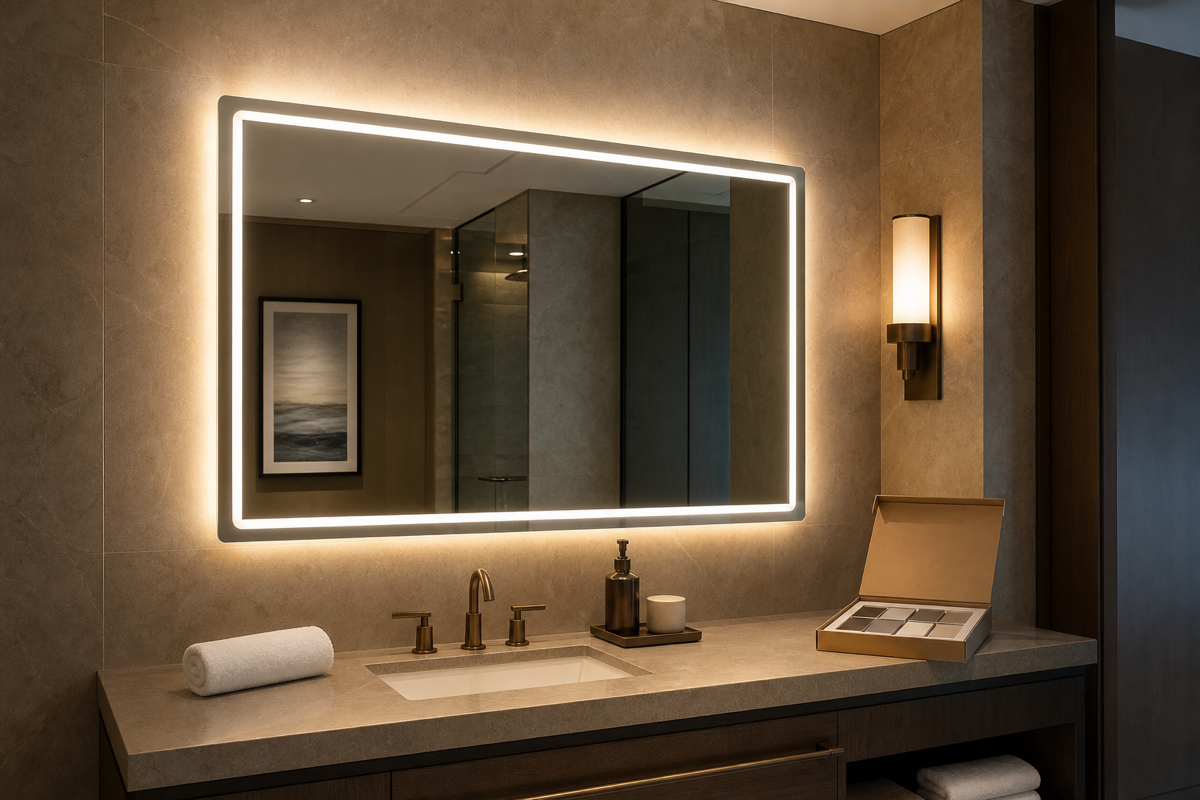
Backlit mirrors and front-lit mirrors create different guest experiences. Backlit mirrors make the bathroom feel warmer and more architectural. The light washes the wall behind the glass and helps the vanity area look more premium in photos. Front-lit mirrors put more light toward the user’s face. That can reduce shadows from ceiling downlights and improve daily usability.
The procurement problem is that both options can look attractive in a sample room, while only one may fit the final room type, installation budget, or after-sales model. Buyers should compare lighting output, wiring position, anti-fog needs, mounting method, safety certification, carton protection, and spare-part support before confirming a project order.
Backlit vs Front-Lit LED Bathroom Mirrors: Project Comparison
| Decision point | Backlit LED bathroom mirror | Front-lit LED bathroom mirror | Best buying decision |
|---|---|---|---|
| Main effect | Soft wall glow and premium ambience | Brighter face-level task lighting | Use backlit for mood-led rooms and front-lit for function-led rooms |
| Guest usability | Comfortable but may not fully light the face | Better for shaving, makeup, and grooming | Choose front-lit or combined lighting for business hotels and long-stay apartments |
| Wall requirement | Needs suitable wall surface for even halo effect | Less dependent on wall reflectance | Confirm wall tile color and mirror gap before sample approval |
| Electrical planning | Driver and cable must support rear clearance | Driver, diffuser, and frame structure need closer QC | Ask for wiring drawings before production |
| Cost impact | Often simpler if only backlit | Usually higher if diffuser and front light are premium | Compare total installed cost, not only unit price |
| Maintenance | Driver access and bracket design matter | LED strip, diffuser, and driver serviceability matter | Request spare drivers and replacement instructions |
When Backlit LED Bathroom Mirrors Are the Better Choice
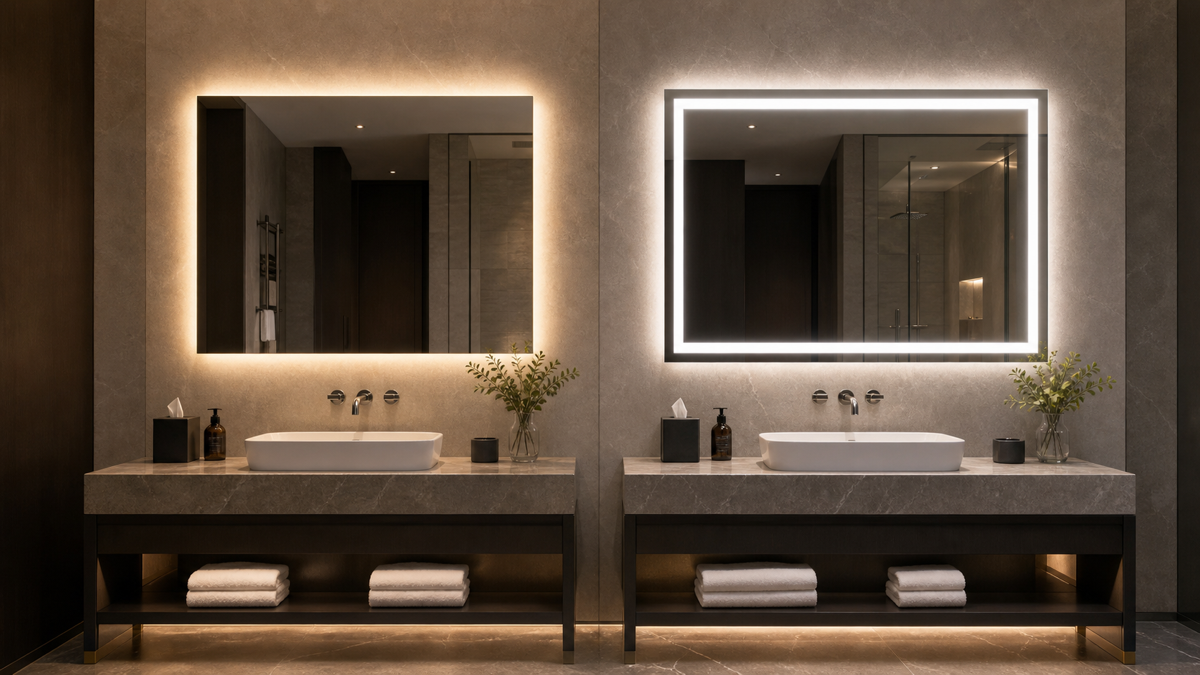
Backlit LED bathroom mirrors work well for hotels that want a calm, high-end bathroom atmosphere without making the mirror the only task-lighting source. They are especially suitable when the room already has good ceiling lights, vanity wall lights, or indirect lighting.
For design-led hotel rooms, backlit mirrors can make stone, ceramic, or textured wall surfaces look richer. They also help the vanity area photograph better for booking platforms and brand presentation. If the wall finish is light, matte, and evenly installed, the halo effect can look clean and consistent.
Buyers should still check the technical details. A backlit mirror needs the correct wall distance, stable mounting brackets, and a clean rear structure. If the mirror sits too close to an uneven wall, the glow may look patchy. If the driver is hard to access after installation, a simple replacement can become a room-out-of-service problem.
Backlit mirrors are usually a practical choice for:
- Boutique hotels that prioritize bathroom atmosphere
- Guest bathrooms with additional ceiling or wall task lighting
- Apartment projects where soft night lighting is valued
- Projects where the mirror should look premium but not too bright
- Rooms with wall materials that reflect light evenly
When Front-Lit LED Bathroom Mirrors Are the Better Choice
Front-lit LED bathroom mirrors are better when the mirror must solve a direct user problem: face lighting. In many hotel bathrooms, ceiling downlights are placed behind or above the guest, which can create shadows on the face. A front-lit mirror helps fill those shadows and makes the bathroom more practical.
This is important for business hotels, serviced apartments, long-stay rooms, and premium rental projects. Guests use the mirror for shaving, skincare, makeup, and contact lens handling. If the room has limited side lighting, front-lit mirrors can reduce complaints about poor bathroom lighting.
The buyer should pay close attention to diffuser quality. A cheap front-lit mirror can create glare, visible LED dots, uneven corners, or an overly cold light. For hotel use, the front lighting should feel soft, continuous, and comfortable at face level. CCT selection should match the room design. Many buyers choose 3000K to 4000K depending on the hotel brand standard, with higher CRI preferred when facial color accuracy matters.
Front-lit mirrors are usually a stronger option for:
- Business hotels where grooming comfort is important
- Serviced apartments and long-stay units
- Rooms without side vanity lights
- Projects that need a clear functional upgrade over standard mirrors
- Buyers willing to pay more for better guest experience and fewer lighting complaints
When a Combined Backlit + Front-Lit Mirror Makes Sense
A combined backlit + front-lit LED bathroom mirror is often the best specification for upscale hotel rooms, but it should not be chosen automatically. The combined structure adds design value and usability, but it also increases the need for better driver selection, heat control, diffuser consistency, packaging protection, and inspection.
For project buyers, the combined option makes sense when the mirror is a visible part of the room upgrade and the project budget allows better components. It can help standardize the room experience: the backlight supports ambience while the front light supports grooming.
The commercial question is whether the additional cost improves the room value enough. For flagship room types, suites, premium serviced apartments, and brand-standard bathrooms, the answer is often yes. For economy hotels or projects with strong side lighting already installed, a simpler backlit or non-front-lit option may be more cost-effective.
Before ordering a combined model, ask the supplier to confirm:
- Separate or shared control for backlight and front light
- CCT and brightness range for each lighting zone
- Driver position and replacement method
- Heat dissipation plan for long operating hours
- Anti-fog pad size and safe wiring layout
- Carton structure for protecting the mirror edge and LED frame
Specification Points to Confirm Before RFQ
Project buyers should not send only a size and target price. A useful RFQ for LED bathroom mirrors should define the room use, installation method, electrical standard, lighting target, and packaging requirement.
Confirm these points before quotation:
- Mirror size, shape, glass thickness, and edge finish
- Backlit, front-lit, or combined lighting structure
- CCT requirement, such as 3000K, 4000K, or adjustable CCT
- Dimming method, touch switch, sensor switch, or wall-switch control
- Anti-fog pad requirement and coverage area
- IP rating and applicable electrical certification
- Plug, hardwire, driver, cable exit position, and wall-box location
- Mounting bracket type and installation clearance
- Carton, foam, corner protection, pallet plan, and drop-test expectation
- Sample approval quantity and project delivery schedule
For bulk hotel orders, Mingda Mirror can support mirror specification discussion, OEM/ODM customization, sample approval, and packaging planning through the OEM/ODM customization service, QC process, and contact/RFQ page.
Common Procurement Mistakes
The first mistake is choosing a backlit mirror after reviewing only a showroom photo. A showroom wall may be cleaner, lighter, and flatter than the actual hotel bathroom wall. If the project wall is dark, glossy, or uneven, the backlit halo may look different after installation.
The second mistake is choosing front-lit mirrors only by brightness. More brightness is not always better. If the diffuser is poor or the CCT is too cold, the mirror can feel harsh. Buyers should evaluate light uniformity, glare, LED dot visibility, and guest comfort.
The third mistake is ignoring installation access. A beautiful mirror can become expensive to maintain if the driver cannot be replaced without removing tile, damaging brackets, or calling a specialist for every service issue.
The fourth mistake is under-specifying packaging. LED bathroom mirrors are larger and heavier than many tabletop makeup mirrors. Edge protection, foam density, carton strength, pallet loading, and container handling should be checked before mass production.
Sample Approval and Pre-Shipment QC
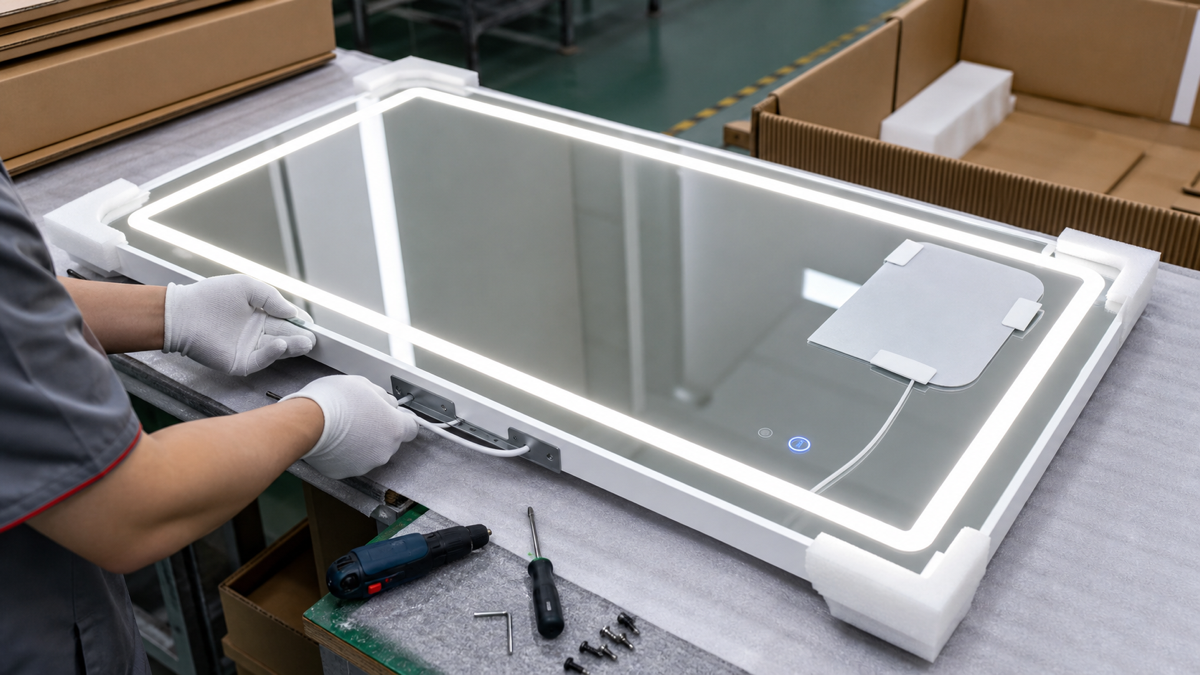
Sample approval should include both appearance and installation checks. Buyers should power on the mirror for a continuous test, check the lighting under realistic bathroom conditions, verify the switch function, inspect the anti-fog area, and confirm that the cable exit matches the wall drawing.
For pre-shipment inspection, do not review only the mirror surface. Check the rear structure, bracket strength, driver labeling, wiring security, foam placement, carton fit, and pallet plan. A project order can pass visual inspection but still create site-level problems if the cable position or mounting bracket is inconsistent.
RFQ-Ready Checklist for Hotel Project Buyers
- Define room type: economy, business, boutique, suite, apartment, or public bathroom.
- Confirm lighting goal: ambience, face lighting, or both.
- Match mirror lighting with the room’s ceiling and vanity lighting plan.
- Request a wiring and mounting drawing before sample approval.
- Confirm CCT, CRI expectation, dimming, anti-fog, and switch type.
- Ask for IP rating, electrical test reports, and market-specific compliance support.
- Review packaging by real shipment risk, not only carton appearance.
- Confirm spare driver, replacement mirror, and after-sales response plan.
- Approve one golden sample before mass production.
- Keep signed records of size, lighting, wiring, packaging, and label requirements.
Bottom-Line Recommendation
Choose backlit LED bathroom mirrors when the project goal is atmosphere and the room already has enough task lighting. Choose front-lit LED bathroom mirrors when guest grooming comfort is the priority or when ceiling lighting creates face shadows. For premium hotel rooms, a combined backlit + front-lit mirror can deliver the best user experience, but only if the buyer confirms wiring, driver access, diffuser quality, anti-fog safety, and packaging protection before mass production.
FAQ
Are front-lit LED bathroom mirrors always better for hotels?
No. Front-lit mirrors are better for face lighting, but backlit mirrors may be enough when the bathroom already has strong vanity or ceiling lighting. The best choice depends on room type, lighting layout, guest expectation, and budget.
What CCT should hotel buyers choose for LED bathroom mirrors?
Many hotel projects choose 3000K for warmer ambience or 4000K for cleaner grooming light. Buyers should test the mirror together with the room’s wall tile, ceiling light, and vanity materials before approving bulk production.
Should hotel LED bathroom mirrors include anti-fog pads?
Anti-fog is useful for hotel bathrooms and serviced apartments, especially in humid rooms. Buyers should confirm pad size, switch control, wiring safety, and whether the anti-fog area matches the main user position.
What should buyers check before approving a project sample?
Check mirror size, lighting uniformity, glare, CCT, anti-fog function, cable exit, bracket strength, driver access, wall clearance, packaging structure, and carton drop-test plan. The sample should match the real installation condition as closely as possible.
Can Mingda Mirror customize backlit or front-lit LED bathroom mirrors for hotel projects?
Yes. Mingda Mirror supports LED bathroom mirror customization for size, lighting structure, CCT, switch function, anti-fog, packaging, and project delivery planning. Buyers can share drawings, room photos, target market, and quantity through the contact page for an RFQ-ready discussion.
Social Media Content Ideas
LinkedIn angle: Explain why hotel buyers should compare backlit and front-lit LED bathroom mirrors by guest experience, wiring, and replacement risk, not only by sample-room appearance.
Facebook angle: Show how the right bathroom mirror lighting improves hotel guest comfort and reduces project mistakes.
Instagram angle: Use the hotel vanity cover image to show the difference between ambience lighting and face-level task lighting.
CTA: Read the full procurement guide and contact Mingda Mirror to discuss LED bathroom mirror specifications for hotel and apartment projects.