
For B2B buyers, LED mirror quality control is not only a factory-side formality. It directly affects shipment approval, installation success, customer claims, online reviews, and long-term cooperation with the supplier. A clear LED mirror quality control checklist helps buyers confirm whether the mirror is ready before bulk shipment.
This guide explains what brands, importers, distributors, hotel buyers, and e-commerce sellers should check before releasing an LED mirror order. It focuses on practical inspection points rather than generic quality promises.
1. Check Appearance, Glass, and Mirror Edge Quality
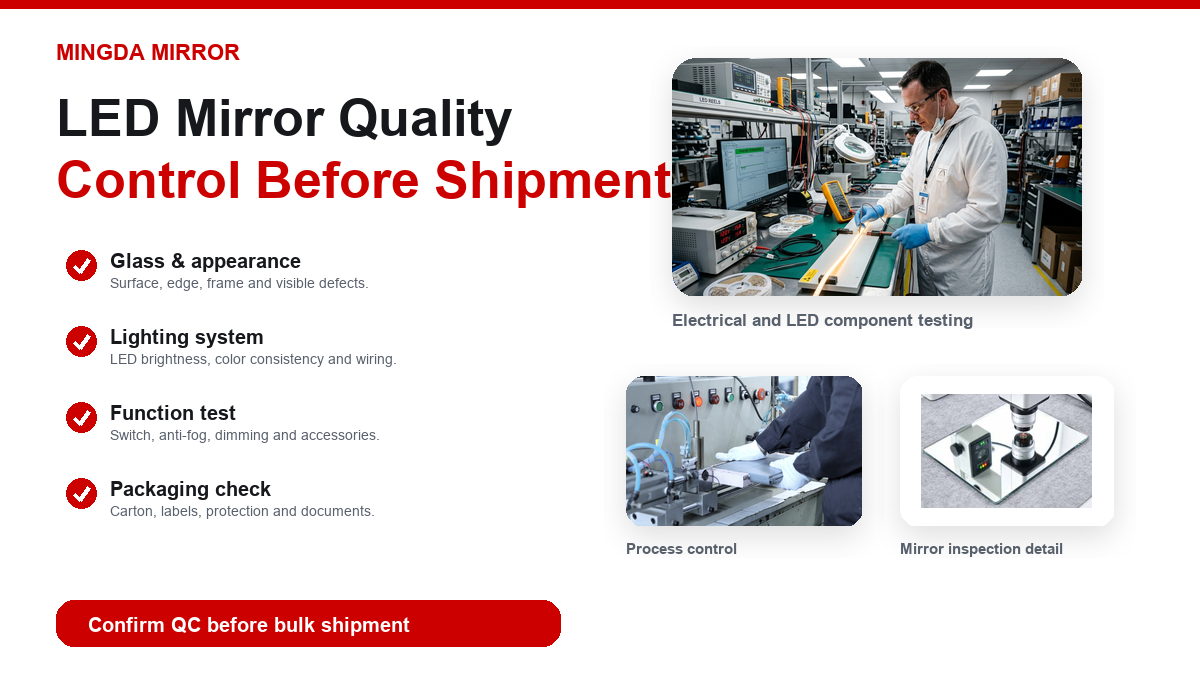
The first inspection layer should cover visible quality. Buyers should confirm that the mirror surface is clean, the reflective area has no obvious defects, edges are finished correctly, and the frame or back structure matches the approved sample.
For project and retail orders, small appearance defects can create high replacement costs because mirrors are difficult to repair after delivery.
2. Test Lighting Performance and Color Consistency
LED brightness, color temperature, and light consistency should be checked before shipment. Buyers should compare production units against the approved sample and confirm that dimming, touch control, and lighting mode changes work smoothly.
3. Confirm Electrical Safety and Function Operation
Electrical inspection should include wiring condition, adapter or driver matching, switch function, anti-fog operation, and the correct voltage requirement for the destination market. If the mirror includes multiple functions, each function should be tested separately.
4. Review Structure, Mounting Accessories, and Labels
Buyers should check the backboard, hanging hardware, mounting holes, screws, instruction manuals, labels, and plug or wiring configuration. Missing accessories can delay installation even when the mirror itself is acceptable.
5. Inspect Packaging Before Shipment Release
Packaging should be part of QC because LED mirrors combine glass and electrical parts. Inspect carton condition, corner protection, inner support, SKU labels, barcode labels, fragile marks, and accessory placement.
LED Mirror QC Checklist Before Bulk Shipment
- Mirror surface, edge, frame, and back structure
- LED brightness, color temperature, and light consistency
- Touch switch, dimming, anti-fog, and electrical function
- Voltage, plug type, labels, manuals, and accessories
- Carton strength, inner protection, barcode, and fragile marks
- Final inspection photos or inspection report before shipment
How Mingda Mirror Supports Quality Control
Mingda Mirror supports B2B buyers with production control, product inspection, packaging checks, and OEM/ODM communication. Buyers can also review how to choose a reliable LED mirror manufacturer and explore Bathroom Mirrors.
LED Mirror QC Decision Table
| Inspection Area | What To Check | Why It Matters | Buyer Action |
|---|---|---|---|
| Appearance and glass | Scratches, black spots, edge chips, stains, and mirror clarity. | Visible defects lead to returns, project rejection, or customer complaints. | Approve clear inspection photos or third-party inspection standards. |
| Lighting and functions | Brightness, color temperature, dimming, touch switch, memory, and anti-fog. | Function inconsistency damages brand trust and installation success. | Test all functions on sampled units and confirm production consistency. |
| Electrical and structure | Wiring, driver, plug/hardwire setup, bracket, labels, and safety markings. | Electrical issues create compliance and after-sales risk. | Confirm market requirements before production and inspect before shipment. |
| Packaging | Inner support, carton strength, accessories, manuals, labels, and carton marks. | Weak packaging can destroy otherwise qualified products in transit. | Include packaging in the final QC checklist. |
Common QC Mistakes Before LED Mirror Shipment
Some buyers only check product photos and ignore function testing, accessory completeness, labeling, and packaging. Another common mistake is approving mass production based on a good sample without confirming whether the same LED, driver, switch, mirror glass, and carton structure are used in bulk. A practical QC process should compare the approved sample against actual production units before shipment release.
What Sourcing Managers Should Confirm With the Factory
Before final shipment approval, sourcing managers should ask the supplier to connect the QC result with the original quotation and approved sample. Confirm whether the same LED strip, driver, switch, mirror glass, carton structure, plug type, and accessory pack are used in mass production. If any component changed after sampling, the buyer should request updated photos, function videos, or a short inspection record before releasing the balance payment.
For buyers building a wider mirror program, QC should also connect with product-line planning. Makeup and vanity mirror buyers can compare related risks in the makeup mirror sample approval checklist, while retail and gift buyers can review handheld mirror materials, finishes, and durability to keep inspection standards consistent across categories.
Close Inspection Failures Before Authorizing Shipment
Ask for an open-item register that identifies the purchase order, SKU, lot, inspected quantity, failed check, supporting evidence, corrective-action owner, and reinspection result. Agree who can release each lot and how any accepted deviation will be recorded. An unsigned report or a supplier promise to fix a defect later should remain an open item in the buyer’s release checklist.
For LED makeup mirror orders, add the LED makeup mirror aging test checklist to document operating conditions and failure handling. Apply it to the relevant product configuration; bathroom and hardwired project mirrors require their own agreed inspection scope.
Bottom Line for Buyers
LED mirror quality control should cover appearance, lighting, electrical function, structure, accessories, labeling, and packaging. Buyers should not release shipment based only on finished-product photos. A clear QC checklist helps reduce claims, project delays, and supplier disputes.
Social Media Content Ideas
- LinkedIn: Share the QC decision table for importers and project buyers preparing pre-shipment inspections.
- Facebook: Explain why LED mirror quality control includes packaging and accessories, not only the mirror surface.
- Instagram: Make a checklist carousel: glass, lighting, switch, anti-fog, labels, accessories, packaging.
FAQ
Why should LED mirrors be inspected before shipment?
Inspection helps buyers identify appearance, function, accessory, and packaging issues before goods leave the factory.
What functions should be tested on LED mirrors?
Buyers should test lighting, dimming, touch switch, anti-fog, wiring, and any market-specific electrical configuration.
Should packaging be included in quality control?
Yes. Weak packaging can cause glass breakage and after-sales claims even when the mirror passes product inspection.
Can Mingda Mirror provide inspection support?
Yes. Mingda Mirror can support buyers with quality-control communication, sample confirmation, production checks, and shipment preparation.
CTA
If you are preparing an LED mirror order and need clearer QC expectations before shipment, contact Mingda Mirror with your SKU list, order quantity, destination, approved sample reference, packaging revision, inspection deadline, and unresolved quality points. Request a written test scope, record format, reinspection cost, and shipment-release responsibility with the quotation.