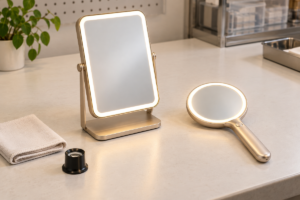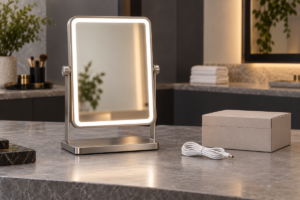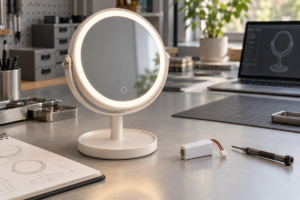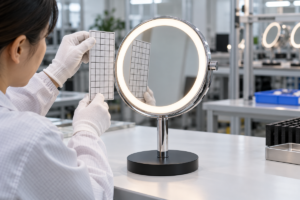

For LED makeup mirror buyers, the pre-production (PP) sample is the last practical point to stop a costly mismatch before mass production. Approve a PP sample only when the complete product, packaging, branding, electronics, and inspection criteria match the purchase order—not when a nice-looking mirror arrives on its own. This checklist helps beauty brands, retailers, distributors, Amazon sellers, and hotel-project buyers turn a sample into a clear production release.
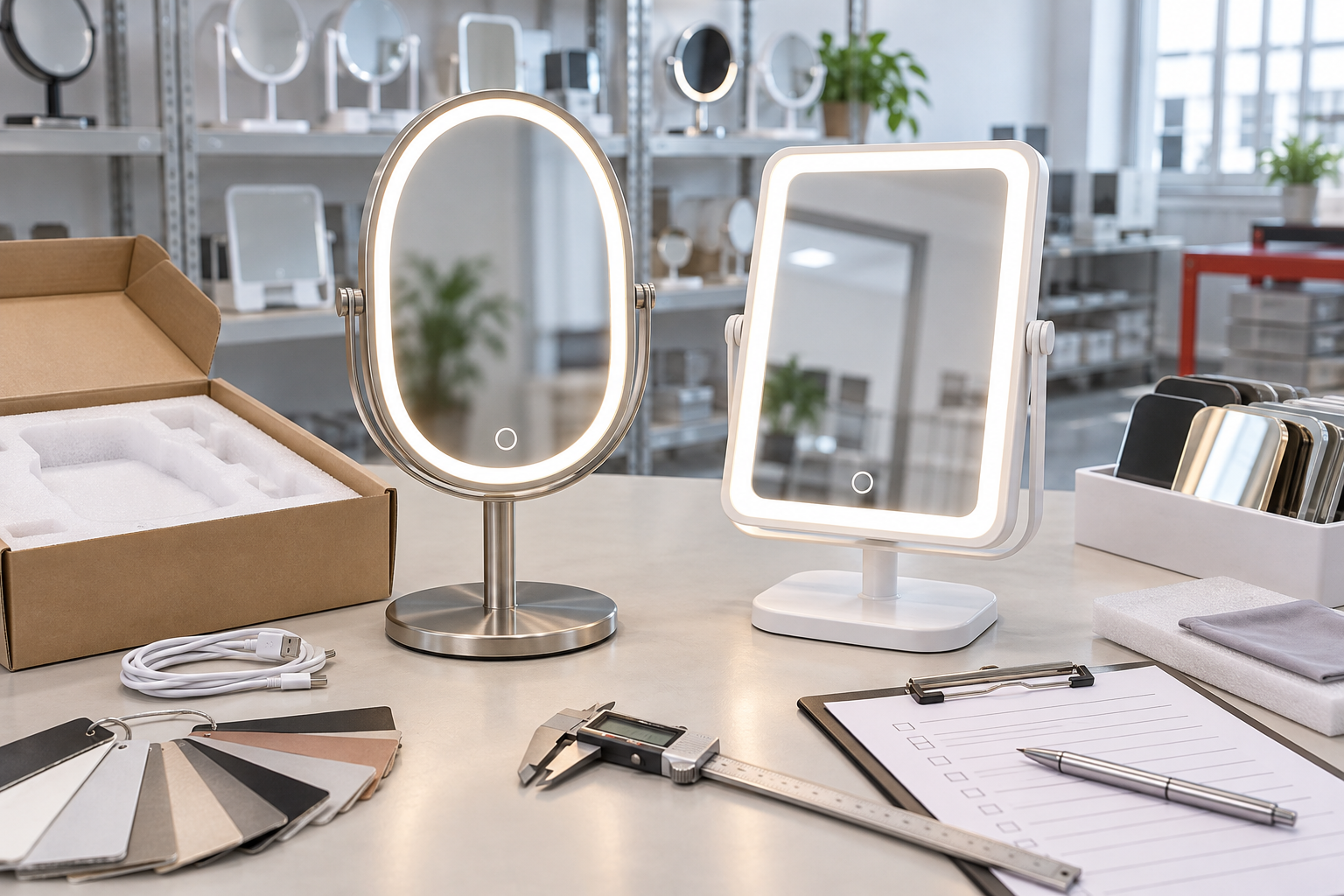
Why a PP Sample Needs More Than a Visual Approval
A development sample proves that a concept can be made. A PP sample proves what the factory will repeat. The difference matters when a buyer has agreed a specific mirror size, frame finish, LED performance, battery, charging cable, logo, carton, insert, manual, and accessory pack. If any of those remain open, the final production can drift while both sides believe the sample was approved.
Before signing off, ask the supplier to label the sample with the PO number, model number, revision, and approval date. Keep a dated photo set and a signed specification sheet. This creates one reference point for the factory, third-party inspector, merchandising team, and freight forwarder.
PP Sample Approval at a Glance
| Approval area | What to check | Release evidence |
|---|---|---|
| Product identity | Model, dimensions, magnification, frame, base and color | Signed specification and sample photos |
| Lighting and power | Brightness, CCT modes, dimming, switch, charging and runtime | Test record with pass/fail limits |
| Structure | Stand stability, hinge/tilt movement, glass fit and sharp edges | Functional test and visual sign-off |
| Branding | Logo artwork, label position, manual, barcode and carton marks | Approved artwork proof |
| Packaging | Inner protection, accessory separation, master carton and drop-test plan | Packed sample and packing photos |
| Production control | AQL, defect examples, lead time, spares and change control | Written production release |
Product and Appearance Checks
Start with the commercial configuration. Measure the mirror head, base, stand, carton, and key clearances against the approved drawing. Compare the actual color and finish under neutral light, not only a phone photo. For metal frames, examine coating consistency, scratches, welds, and corrosion-risk points. For ABS frames, look for sink marks, color variation, stress whitening, weak clips, and uneven seams.
Buyers should also confirm the customer-facing experience: the mirror must stand securely, the tilt mechanism must hold position, the reflection must be clear, and the product must not rock on a flat surface. A compact change in base weight or hinge torque can create return risk even when the model still looks correct.
Lighting, Charging, and Functional Checks
Write measurable acceptance limits before testing. Record the result for every mode and do not accept a vague statement that the light is “bright enough.” For a rechargeable LED makeup mirror, test the switch response, dimming range, CCT sequence, charging indicator, charging duration, battery runtime, and automatic protection behavior. For plug-in models, confirm adapter specification, plug type, cable length, and safe strain relief.
Ask the factory to run the mirror long enough to reveal flicker, heat, unstable dimming, or a loose charging port. When the target market has specific requirements, retain the applicable test report and confirm the production lot will use the same LED board, battery cell, driver, and adapter version.
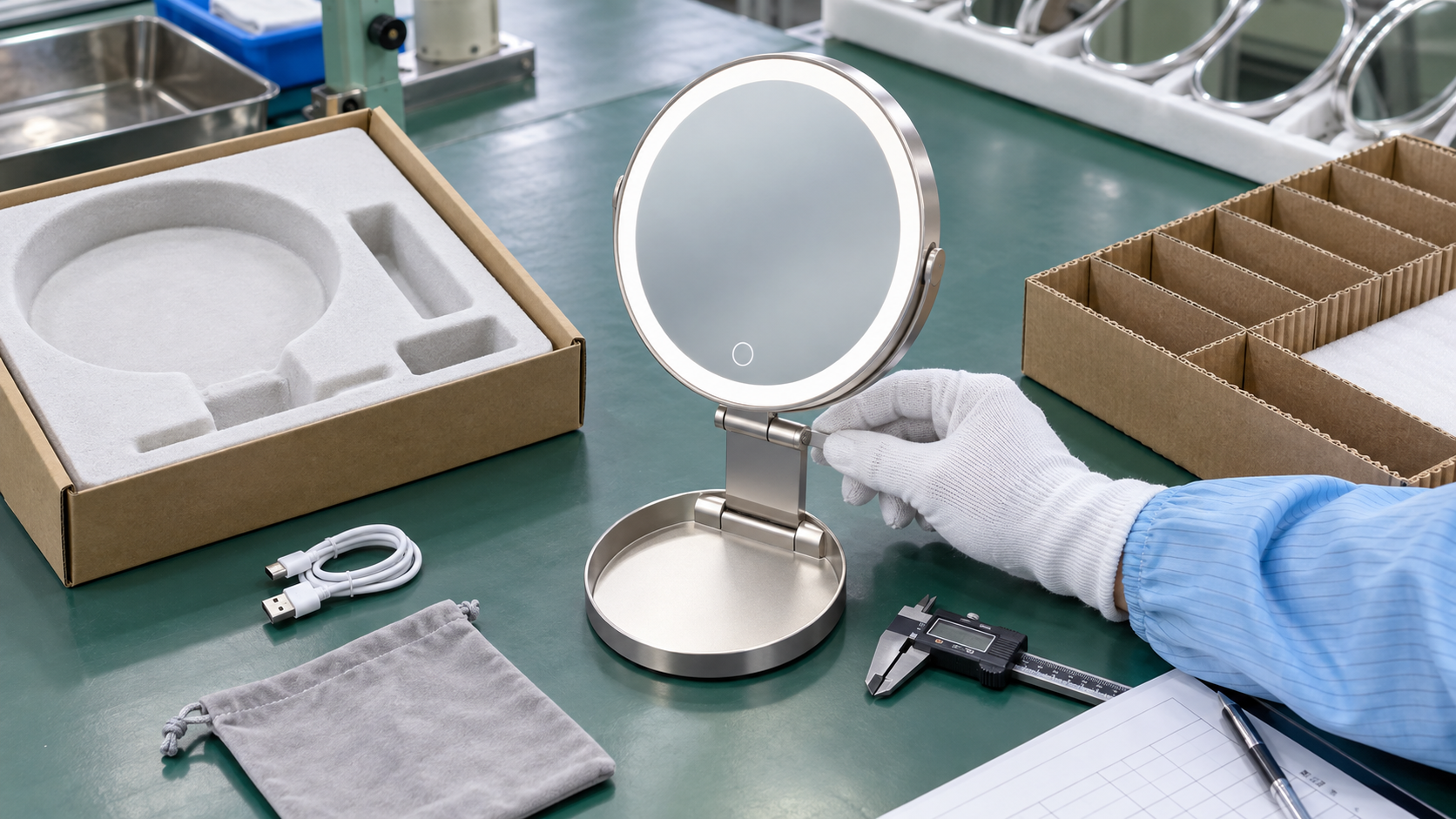
Packaging and E-commerce Return-Risk Checks
Approve the product in its final packed condition. The cable, manual, cleaning cloth, screws, and adapter should not touch the mirror surface or scratch the frame. Confirm the foam, pulp tray, or carton divider locks the mirror head and base without crushing the switch or hinge.
For parcel-delivery channels, request a documented drop-test method and photos of the sample after testing. For wholesale or project shipments, confirm carton quantity, pallet pattern, gross weight, and humidity protection. A premium mirror with weak packaging becomes an expensive after-sales problem before a retailer can display it.
Buyer Checklist Before the Production Release
- Confirm the PO number, model number, revision, SKU, market, and approved color.
- Measure mirror size, glass thickness, stand/base dimensions, and carton dimensions.
- Test lighting modes, dimming, switch response, charging, runtime, and plug compatibility.
- Check stability, tilt/hinge torque, sharp edges, assembly gaps, scratches, and reflection quality.
- Compare logo, rating label, barcode, manual, warning labels, and carton artwork with approved files.
- Inspect the final inner pack, accessory separation, master carton marks, and pallet/load plan.
- Set AQL levels, critical defects, major defects, cosmetic limits, and inspection sampling plan.
- Confirm mass-production lead time, balance-payment trigger, spare parts, and replacement responsibility.
- Require written approval before the factory purchases final custom materials or starts bulk assembly.
Common Mistakes That Create Expensive Rework
The first mistake is approving photographs instead of the complete physical PP sample. Photos rarely reveal wobble, rough edges, cable fit, or carton movement. The second is approving a sample with temporary parts, then assuming the production version will be identical. Ask directly whether the LED board, battery, adapter, paint, logo process, and packaging are production-intent.
The third mistake is leaving revision control informal. Any material, color, LED, charger, packaging, or artwork change after PP approval should carry a new revision code and buyer confirmation. The fourth is separating product approval from packaging approval; e-commerce buyers should treat both as one release gate.
Bottom-Line Recommendation
Use the PP sample as a written production-release checkpoint, not a courtesy sample. A buyer should sign off only after the final product, electronics, branding, packing, and inspection standards line up with the PO. This prevents avoidable disputes over appearance, performance, breakage, and return responsibility once bulk production starts.
For a new LED makeup mirror program, Mingda Mirror can prepare a sample-approval pack covering configuration, lighting, packaging, QC points, and production timing before you release a bulk order.
FAQ
What is the difference between a development sample and a PP sample?
A development sample is used to refine the concept. A PP sample is the production-intent reference used to approve bulk manufacturing, packing, and inspection standards.
Should buyers approve packaging separately?
Yes. Approve the final packed product, including inner protection, accessories, carton marks, and test method. This is essential for e-commerce and export shipments.
What should be written in a PP sample approval?
Include the PO and model, revision, product configuration, test results, packaging specification, approved artwork, AQL/defect limits, date, and named approver.
Can the factory change components after PP approval?
Only through documented change control. Any change to electronics, finish, packaging, or branding should be identified by revision and approved before it enters bulk production.
Request a Sample-Approval Plan
Share your target market, mirror type, size, magnification, lighting, power source, packaging channel, branding files, and expected quantity. Mingda Mirror can help define a PP sample checklist before production starts.
Related resources: Makeup Mirrors, OEM/ODM Services, QC Process, and Contact Mingda Mirror.