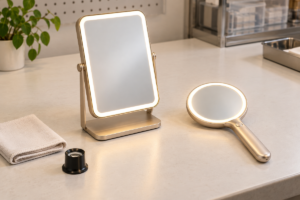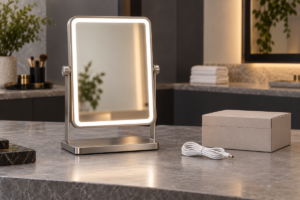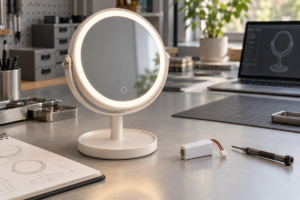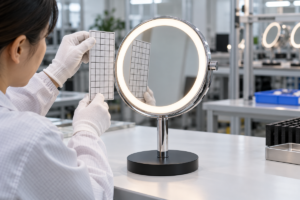

For LED makeup mirror buyers, sample cost and tooling fee should be approved only after the supplier explains what is included, what is refundable, and what changes will trigger extra cost. A low sample fee can become expensive if the mirror structure, LED function, packaging insert, logo position, or mold detail is not confirmed before the first prototype. The safest approach is to separate standard-sample cost, customized-sample cost, tooling fee, packaging proofing, and refund conditions before comparing quotations.
Why Sample Cost Matters Before Bulk Orders
Sample cost is not only a small pre-order expense. For beauty brands, online retailers, distributors, and private-label buyers, it is the first test of how clearly the supplier understands the target product. A buyer may request a rechargeable tabletop LED makeup mirror with 3-color lighting, 5x magnification, logo printing, retail packaging, and a custom insert. Each detail can affect sample preparation, component sourcing, printing setup, and approval time.
The commercial risk is simple: if the buyer approves a vague sample quote, the supplier may later add charges for mold adjustment, packaging proofing, logo setup, accessory replacement, or re-sampling. That slows the project and makes it harder to compare suppliers fairly.
Mingda Mirror recommends treating the sample stage as a controlled specification checkpoint, not as a quick product photo request. Before paying sample cost, confirm the mirror format, LED function, power design, packaging goal, customization level, and what will happen if the sample needs revision.
Standard Sample vs Customized Sample
Standard samples are usually existing models with available finish, existing lighting function, and normal packaging. Customized samples involve a buyer-specific change such as color, logo, magnification, lighting mode, charging port, accessory set, retail box, molded insert, or structure adjustment.
| Sample type | Typical use case | Buyer should confirm | Main cost risk |
|---|---|---|---|
| Standard sample | Fast model evaluation or first supplier screening | Existing specification, available color, power source, packaging type | Buyer assumes it represents the final private-label version |
| Customized sample | Brand, retail, Amazon, or distributor program | Logo, color, LED function, magnification, packaging, accessory set | Extra setup or re-sampling cost if details change |
| Function prototype | New lighting, battery, hinge, charging, or structure test | Technical target, tolerance, test plan, revision scope | Prototype may not equal mass-production cost |
| Packaging proof | Retail box, insert, label, manual, barcode check | Artwork file, material, insert fit, carton logic | Printing and insert changes can create repeated proofing fees |
For an early comparison, a standard sample may be enough. For a serious RFQ, buyers should request a customized sample plan that matches the final selling channel.
What Should Be Included in the Sample Quote
A clear sample quote should list more than one total price. Buyers should ask for a cost breakdown that explains what the fee covers and what it does not cover.
Important items include:
- Mirror model number, size, shape, and finish.
- LED specification, including CCT, dimming, brightness, and charging design.
- Magnification level if the mirror includes a magnifying side or detail lens.
- Battery capacity, adapter or cable, and accessory packing.
- Logo method, position, color, and setup cost.
- Retail box, color box, plain box, mailer, or molded insert sample.
- Sample lead time and whether it starts after payment, artwork approval, or component confirmation.
- Shipping method and whether sample freight is included.
- Revision policy if the first sample does not match agreed details.
This breakdown protects both sides. The buyer knows what is being approved; the supplier can prepare the correct sample instead of guessing from a general product link.
For lighting approval, record CCT, CRI, brightness, dimming range and glare or diffusion observations at an agreed working distance and ambient-light setting. Check flicker at the intended dimming levels and power mode. Comparing samples at different brightness settings can hide a poor diffuser or uncomfortable LED ring; retain a signed reference sample and the agreed test conditions.
When Tooling Fee Is Required
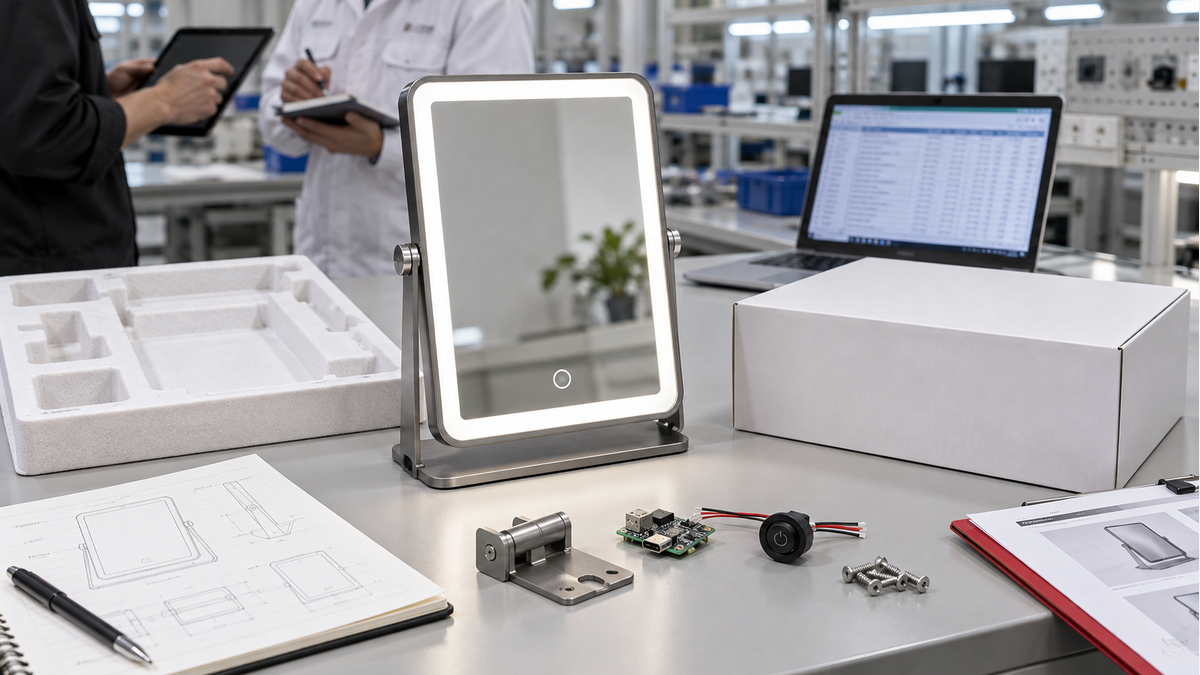
Tooling fee becomes relevant when the buyer requests a part, shape, frame, base, hinge, handle, insert, or structural component that does not already exist. In LED makeup mirrors, tooling may apply to the mirror shell, base, bracket, wall plate, magnifying lens holder, button area, charging port location, packaging insert, or custom accessory tray.
Tooling is not always necessary. Many private-label orders can use an existing Mingda Mirror model with customized logo, finish, lighting, cable, manual, and packaging. This is usually faster and safer for first orders.
Tooling may make sense when the buyer has a long-term SKU, protected design direction, strong order forecast, or channel requirement that cannot be met by existing models. It is less suitable for a small trial order unless the product has clear commercial value.
Tooling Fee Questions Buyers Should Ask
Before approving tooling fee, buyers should ask whether the fee covers design review, mold creation, mold modification, first article sample, and future maintenance. They should also confirm ownership and usage rights in writing.
| Tooling question | Why it matters before payment |
|---|---|
| Is this a new mold, mold modification, or packaging insert tool? | These have different costs, timelines, and revision rules. |
| What files or drawings are required before tooling starts? | Missing drawings can delay the first sample and create interpretation risk. |
| How many sample revisions are included? | Buyers need to know whether one adjustment is covered or charged separately. |
| Is tooling fee refundable after bulk order? | Some suppliers refund after a defined order quantity; others do not. |
| Who can use the mold after payment? | Private-label buyers may need exclusivity or restricted use. |
| What happens if the first tool sample fails QC? | The correction responsibility should be clear before production pressure begins. |
If the supplier cannot answer these questions, the tooling plan is not ready for approval.
Separate supplier corrections for a sample that misses the signed specification from buyer-requested design changes. List the included revision rounds, re-sample freight responsibility and the written approval that triggers each payment milestone. If a fee can be credited, specify the qualifying order quantity, credit amount, eligible SKU, deadline and invoice where the credit will appear; do not assume a verbal refund promise covers tooling and packaging too.
Packaging Proofing and Insert Cost
Packaging is a common hidden cost in LED makeup mirror projects. A mirror may be approved technically, but the retail box, foam insert, molded pulp tray, accessory bag, barcode, warning label, or master carton still needs proofing.
For e-commerce sellers, packaging cost is tied directly to damage and return risk. A low-cost insert may allow the mirror stand, glass, hinge, or USB-C cable to move during transit. For retail chains, packaging also affects shelf presentation, barcode readability, and local labeling compliance.
Before paying sample or packaging proofing cost, buyers should confirm whether the supplier will prepare a plain structural sample, printed color box proof, master carton sample, or full drop-test-ready package. These are different tasks.
Related packaging checks can be planned with Mingda’s guides to LED makeup mirror retail box and master carton packaging and LED makeup mirror e-commerce packaging.
Common Mistakes Buyers Should Avoid
One common mistake is comparing sample fees without comparing sample content. A cheaper quote may exclude logo, packaging, adapter, cable, or the exact LED function needed for the final order.
Another mistake is asking for tooling too early. If the buyer has not confirmed channel, target price, MOQ, lighting requirements, packaging format, and expected order volume, a new mold may lock the project into the wrong direction.
A third mistake is changing too many details after the first sample. Color, logo, battery capacity, mirror size, hinge torque, and box structure can all affect cost. Buyers should finalize the highest-impact decisions before asking the supplier to produce a paid customized sample.
Pre-RFQ Checklist for Sample Cost and Tooling Fee
Before requesting a sample quote, send a short but complete RFQ. This helps the supplier separate standard cost from custom cost and avoids vague answers.
Request MOQ by finish, lighting configuration and packaging version, plus separate lead times for samples, tooling, packaging proofs and bulk production. A prototype approval should identify which parts are production-intent and which still need validation. Use the approved drawing and bill-of-material revision to release production, and confirm that later component substitutions require buyer review.
| RFQ item | What to send Mingda Mirror |
|---|---|
| Target channel | Retail chain, Amazon, independent e-commerce, distributor, salon, hotel, or gift program |
| Product format | Tabletop, compact, wall-mounted, travel, rechargeable, plug-in, or dual-sided |
| Core specification | Size, magnification, LED colors, dimming, CRI, battery, charging port, finish |
| Customization | Logo, color, packaging artwork, manual, label, accessory set, barcode |
| Sample purpose | Visual approval, function test, packaging fit, buyer presentation, or pre-production approval |
| Tooling expectation | Existing model, modified part, new mold, custom packaging insert, or undecided |
| Quantity plan | Trial order quantity, target MOQ, reorder expectation, and launch timing |
Match Each Fee to a Deliverable and Release Decision
Compare quotations against the same drawing revision and sample purpose. Record currency, quote validity, included quantities and exclusions for every line. Keep one-time development charges separate from recurring unit costs so a low unit price does not hide the amount committed before launch.
| Cost line | Evidence before the next payment | Buyer decision |
|---|---|---|
| Customized sample | Sample ID, signed specification, included accessories and inspection results | Accept the agreed scope or record the correction and recheck owner |
| New or modified tool | Tool ID, approved drawing revision, first-article results and list of open deviations | Record the agreed milestone; do not treat a prototype photograph as production approval |
| Packaging proof | Artwork revision, physical fit check, packed dimensions and agreed transport-test evidence | Approve that packaging version or hold it for correction |
| Fee credit | Written eligibility, qualifying SKU and quantity, credit amount and identified invoice | Track the credit separately until it actually appears on the invoice |
Evaluate the proposed trial order both with and without any conditional fee credit. Link this exposure to the LED makeup mirror MOQ planning guide, including unused custom materials and delivery commitments. If demand does not justify those commitments, revise the scope before authorizing additional development.
Bottom-Line Recommendation
For most first orders, start with an existing LED makeup mirror model and customize the finish, logo, lighting option, accessory set, and packaging. Approve tooling fee only when the buyer has a stable specification, realistic quantity plan, and a written agreement for revision scope, refund rules, and mold usage.
A good sample-cost plan should make the bulk order easier, not create new uncertainty. The buyer should know exactly what is being paid for, what will be checked, and what decision comes next.
FAQ
Is LED makeup mirror sample cost refundable?
Sometimes. Refund rules depend on the supplier, sample type, and bulk order quantity. Buyers should confirm whether sample cost, tooling fee, or packaging proofing cost can be credited after an order.
Do buyers always need to pay tooling fee for private-label mirrors?
No. Many private-label LED makeup mirror projects use existing models with custom logo, color, packaging, manual, and accessories. Tooling is usually needed only for new shapes, structures, parts, or custom inserts.
What affects customized sample lead time?
Artwork approval, component availability, finish treatment, LED function, battery or charging design, packaging proofing, and internal QC can all affect lead time. Confirm when the lead time starts.
Should packaging samples be checked before bulk production?
Yes. Packaging samples help buyers confirm product fit, accessory placement, barcode area, printed artwork, carton marking, and breakage protection before mass production.
What should buyers send before asking for a quote?
Send target market, product type, size, lighting requirements, power source, magnification, logo needs, packaging format, quantity plan, and launch schedule. A clearer RFQ creates a more reliable quote.
Start the specification brief with the mirror product range and align the customization scope with OEM/ODM services before requesting a paid prototype.
Work With Mingda Mirror
Mingda Mirror supports B2B buyers with LED makeup mirror sample planning, OEM/ODM customization, packaging proofing, tooling review, QC checks, and bulk-order preparation. If you are comparing sample cost and tooling fee for a new LED makeup mirror program, send your target channel, drawing revision, required specification, artwork status, sample quantity, trial-order quantity and launch date through the Contact page and request separate sample, tooling, proofing and freight lines with payment milestones, revision scope and any conditional credits.
Social Media Content Ideas
LinkedIn angle: Explain why sample cost should be reviewed together with tooling, packaging proofing, and refund rules before choosing a mirror supplier.
Facebook angle: Share a buyer tip: a cheap sample is not always cheaper if it excludes logo, packaging, or the final LED function.
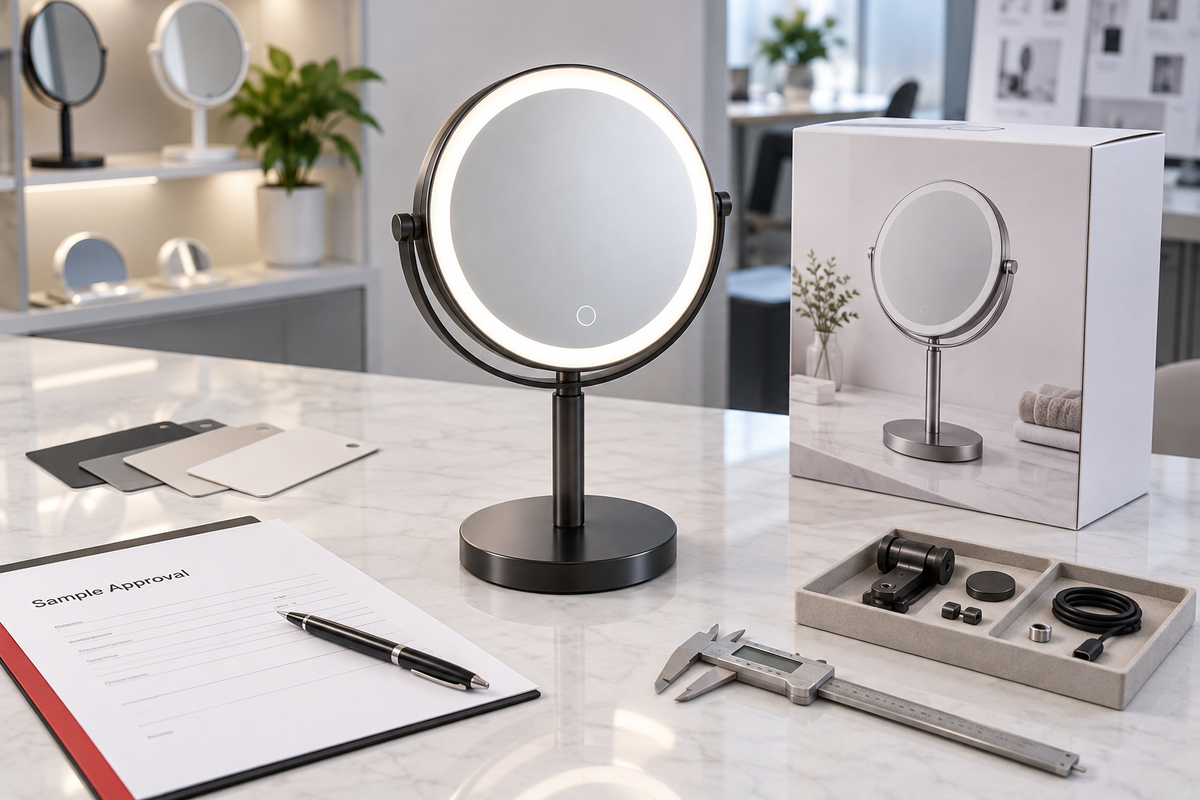
Instagram angle: Use the sample approval image to show how product, packaging, components, and cost approval connect before bulk orders.
Short CTA: Read the full sample cost and tooling fee guide, then contact Mingda Mirror for LED makeup mirror RFQ support.