
Private label LED makeup mirror packaging artwork should be approved only after the buyer confirms the box structure, product image accuracy, power and charging claims, barcode placement, warning labels, instruction-sheet consistency, and master-carton marks. For brand buyers, the packaging file is not only decoration. It affects customs checks, retail acceptance, Amazon returns, accessory complaints, and whether the factory can repeat the same standard in every production batch.
For Mingda Mirror buyers, the best approval workflow is simple: approve the mirror sample first, then approve the packaging dieline, then approve printed box samples and label files before bulk production starts. This prevents a common private-label mistake: the product is acceptable, but the retail box, barcode, or safety wording is not ready for sale.
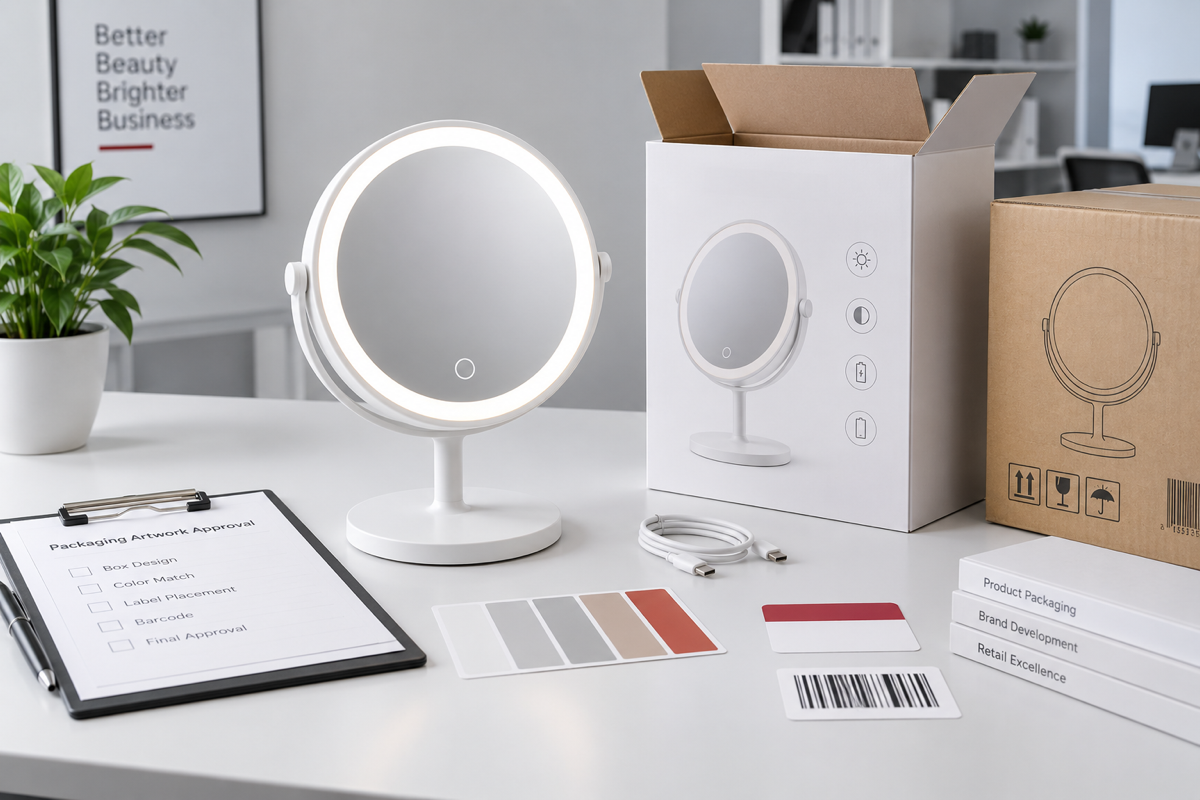
Why Packaging Artwork Approval Matters for Private Label LED Makeup Mirrors
LED makeup mirrors combine beauty presentation with electrical details. A buyer may focus on mirror shape, magnification, lighting, and charging performance, but packaging mistakes can create the same level of commercial risk as product defects.
For example, a rechargeable mirror box should not claim a runtime, adapter input, battery capacity, CCT range, or certification mark unless that claim matches the approved product specification and test record. A 3-color mirror box should make the lighting modes clear without promising professional color accuracy unless the buyer has confirmed the LED specification. A retail chain may also require carton marks, item numbers, vendor codes, and barcode positions to match its warehouse system.
This is why private label packaging approval should be treated as a sourcing checkpoint, not as a last-minute graphic-design task.
What Buyers Should Approve Before Mass Production
The approval package should include the retail box artwork, box structure, insert or tray, label files, instruction manual, barcode file, carton marks, and any country-specific warning label. If the order includes several mirror sizes or packaging languages, each version should be checked separately.
| Approval item | What to confirm | Why it affects the order |
|---|---|---|
| Box dieline | Size, fold lines, bleed, glue flap, display orientation | Prevents print misalignment and box assembly problems |
| Product image | Correct mirror model, color, stand, charging port, accessory set | Avoids customer complaints about mismatched product expectations |
| Feature claims | CCT modes, dimming, magnification, rechargeable or plug-in wording | Reduces false-claim and review risk |
| Barcode and SKU | UPC/EAN, item number, color code, market version | Supports retail receiving and e-commerce listing accuracy |
| Warning labels | Battery, adapter, glass, age, recycling, country rules | Helps compliance and customs review |
| Instruction sheet | Same product version, same accessories, clear charging guidance | Reduces after-sales questions |
| Master carton marks | Quantity, gross weight, carton size, destination marks | Improves warehouse handling and shipment checking |
Mingda buyers should also confirm whether the box needs a hanging hole, window, sleeve, gift-box structure, or plain mailer. Each structure changes packing efficiency, drop-test behavior, cost, and the final carton quantity.
Box Artwork Should Match the Real Product Specification
The most important rule is that packaging must describe the real approved product, not the ideal marketing version. For LED makeup mirrors, buyers should compare artwork against the final sample approval sheet.
Check the mirror shape, frame color, stand type, button position, USB-C or other charging port, magnification label, accessory list, and cable type. If the mirror is rechargeable, the box should not show a plug-in-only setup. If the mirror uses single-color light, the box should not show 3-color mode icons. If a retail box says the mirror includes a storage tray, the actual packing list must include it.
This sounds basic, but mismatches often happen when the buyer changes the sample after the first packaging file is created. The safe workflow is to freeze the product specification first, then freeze packaging artwork.
Label Files Need More Than a Logo
Private label packaging often starts with a logo placement request, but professional buyers should check the full label system. This includes the logo, product name, model number, SKU, barcode, country of origin, importer information if required, warnings, recycling marks, and charging or battery information.
For e-commerce sellers, the barcode and FNSKU or marketplace label must remain scannable after packing. For retail buyers, item numbers and color codes should match the purchase order. For distributors, carton labels should support warehouse sorting by model, finish, plug type, language version, and sales channel.
If a buyer plans to use the same mirror in several markets, Mingda recommends separating universal packaging artwork from market-specific stickers. This can reduce MOQ pressure and avoid reprinting full boxes when only the language, barcode, or importer label changes.
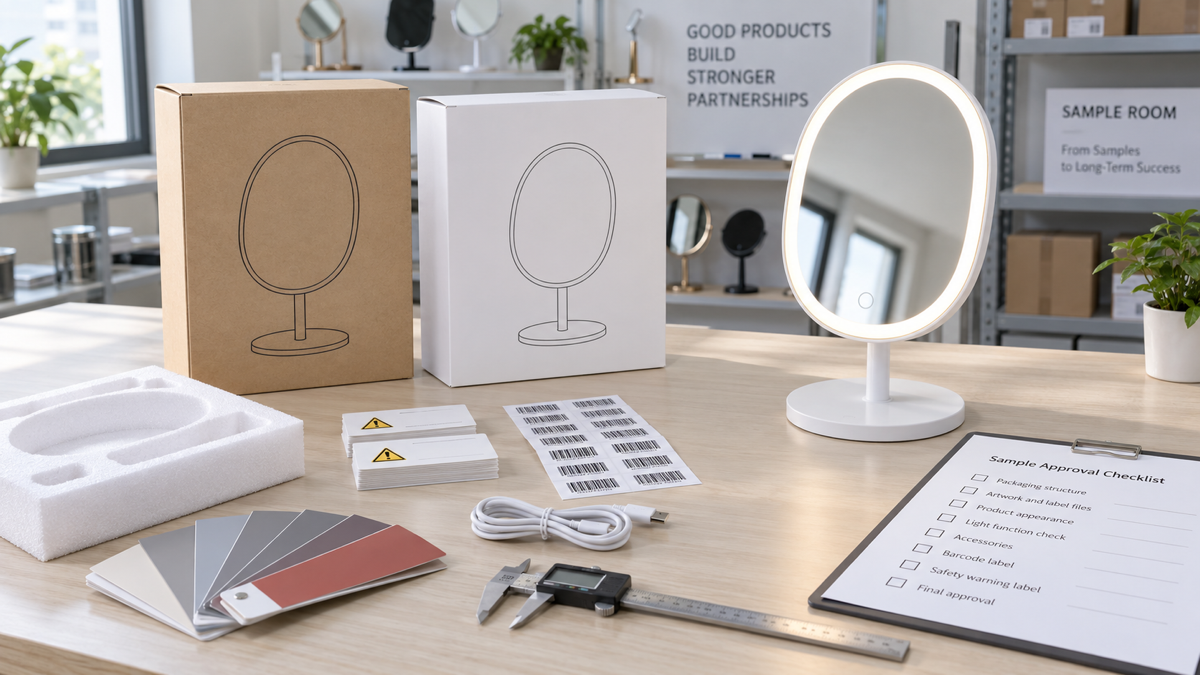
How Packaging Choices Affect MOQ, Lead Time, and Cost
Custom packaging creates stronger brand value, but it also affects order planning. Printed retail boxes normally have their own MOQ, proofing time, and material preparation schedule. If the buyer changes artwork after print approval, the delay may be longer than changing a small product component.
For trial orders, buyers can often start with a standard box plus private-label sticker or sleeve. For mature retail programs, a fully printed gift box, custom insert, and branded manual may be more suitable. For Amazon or other e-commerce channels, stronger inner protection may matter more than a luxury finish because damage and accessory loss can hurt reviews.
Buyers should ask the supplier to quote packaging as a separate decision, not only as a bundled product price. A clear quotation should state retail box structure, material, printing method, carton quantity, insert type, barcode handling, manual language, and whether artwork proofing is included.
Common Packaging Artwork Mistakes Buyers Should Avoid
The first mistake is approving a beautiful box without checking the actual mirror sample. A product photo that shows the wrong lighting mode, magnification, or accessory set can create avoidable complaints.
The second mistake is leaving barcode, warning label, and carton mark confirmation until the end. These details look small, but they affect warehouse receiving and compliance review.
The third mistake is asking for too many packaging versions too early. Multiple colors, languages, and retailer-specific labels can increase MOQ and inventory risk. If sales volume is still uncertain, a modular sticker strategy may be smarter.
The fourth mistake is approving flat artwork only. Buyers should request a pre-production packaging sample or printed proof when the order value is meaningful, especially for retail display boxes and gift packaging.
For related sourcing decisions, review MOQ planning by SKU and packaging version, single-color versus 3-color lighting claims, e-commerce packaging damage controls. Use these checks to align the printed claims, packaging budget and protection standard with the approved mirror sample.
Freeze One Print-Release Record per SKU
Create a release record linking the buyer SKU to the signed mirror sample, dieline revision, artwork filename, manual version and printed proof. Record the approver and approval date. Check a physically assembled pack: scan its barcode against the intended SKU, inspect fold and seam placement, and compare printed colors with the agreed reference under the same viewing conditions.
After a change, identify affected SKUs and unprinted or printed stock, withdraw obsolete files, and ask the supplier to confirm reproof cost and the revised production date. Keep the affected print run on hold until the buyer approves the revised proof. A messaging-app preview alone should not replace the controlled release file.
For magnifying variants, use the custom magnification approval record to check the lens claim and working-distance instructions. Compare the mirror product options and send the chosen model with quantity per packaging version when requesting a quote.
RFQ Checklist for Private Label LED Makeup Mirror Packaging
Before sending an RFQ, prepare the information the factory needs to judge cost and feasibility:
- Mirror model, size, color, magnification, lighting mode, and power source
- Target sales channel: retail shelf, Amazon/e-commerce, beauty brand set, distributor, or hotel project
- Retail box type: printed box, sleeve, mailer, window box, gift box, or standard box with sticker
- Required barcode format, SKU naming, warning labels, and market language
- Manual language, adapter requirement, cable type, and accessory list
- Expected order quantity by SKU and whether packaging versions can be shared
- Drop-test or retail packaging requirements from the buyer’s channel
- Deadline for artwork approval, printed proof, and mass production
This checklist helps Mingda Mirror confirm whether the buyer needs full custom packaging, a lower-risk trial solution, or a phased approach from sample order to bulk packaging.
Bottom-Line Recommendation
For private label LED makeup mirrors, approve packaging artwork as part of the product quality system. The box should match the final sample, the labels should match the selling market, and the carton marks should match the buyer’s warehouse process. If the project is new, start with fewer packaging versions and make barcode, warning label, and manual approval mandatory before mass production.
Mingda Mirror can support buyers with LED makeup mirror sampling, packaging structure suggestions, logo placement, retail box files, manual coordination, and pre-shipment packaging checks. To prepare a quote, send your target mirror type, sales channel, quantity plan, and any existing brand artwork or barcode requirements through the Contact page.
FAQ
Should private label buyers approve packaging before or after the mirror sample?
Approve the mirror sample first, then approve packaging artwork and label files. Packaging should describe the confirmed product specification, accessory list, lighting mode, charging method, and retail claims.
Can buyers use one retail box for several LED makeup mirror versions?
Sometimes yes, but only if the shared box does not create wrong feature claims. Buyers can use market-specific stickers for barcode, language, importer information, or color code when the base product and packaging structure are the same.
What packaging files should a buyer send to Mingda Mirror?
Useful files include logo artwork, preferred box style, barcode list, SKU table, warning-label requirements, instruction manual language, brand color references, and any retailer packaging guide.
Is custom packaging suitable for small trial orders?
For small trial orders, a standard box with private-label sticker, sleeve, or simple printed card may be more practical. Fully printed boxes are usually better for stable bulk orders because they require more proofing and material planning.
What is the biggest risk in LED makeup mirror packaging artwork?
The biggest risk is mismatch between the packaging claim and the actual mirror. Buyers should verify lighting modes, magnification, rechargeable or plug-in wording, accessory list, barcode, and warning labels before approving print production.
Social Media Content Ideas
LinkedIn angle: explain why packaging artwork approval should be part of the sourcing checklist for LED makeup mirror private-label orders.
Facebook angle: show how retail packaging choices affect customer expectations, returns, and brand presentation.
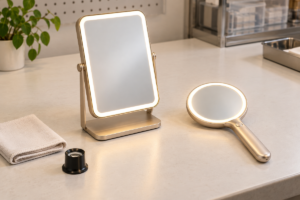
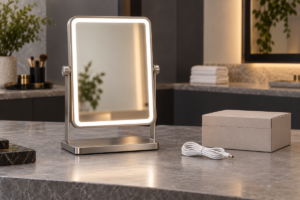
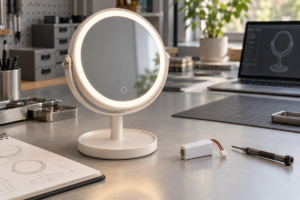
Instagram angle: use the packaging approval workbench image to highlight mirror samples, box versions, labels, and QC tools.
CTA: Read the full packaging approval guide and send Mingda Mirror your mirror model, sales channel, artwork files, and quantity plan for a practical OEM/ODM quote.