
For OEM LED makeup mirror orders, color matching should be approved as a controlled specification, not as a quick visual preference. Buyers need to define the target color, surface finish, acceptable tolerance, sample reference, packaging match, and production inspection method before bulk manufacturing starts. This is especially important for private-label beauty brands, Amazon sellers, retail chains, distributors, and gift programs where the mirror frame, base, box, accessories, and online images must feel like one consistent product line.
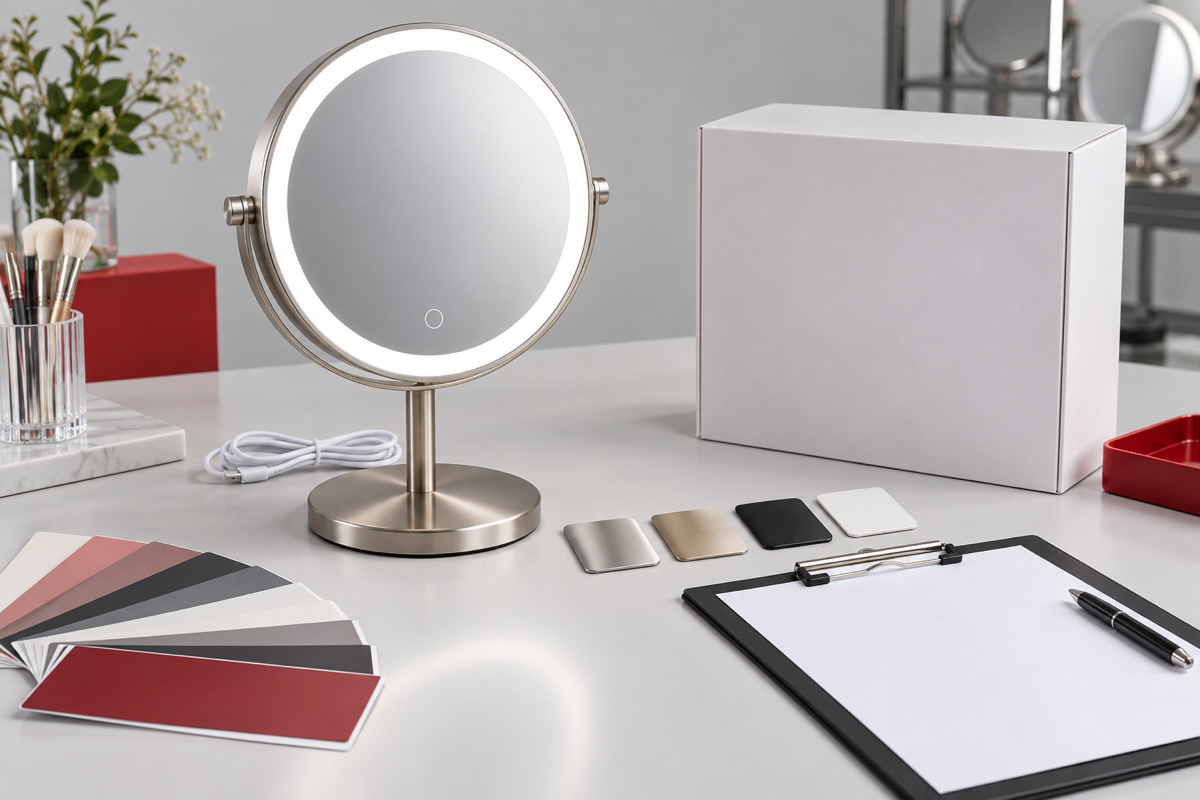
Color mismatch is rarely the most dramatic problem in mirror sourcing, but it is one of the easiest problems for customers to notice. A champagne frame that turns too yellow, a rose-gold base that looks different from the product-page photo, or a black finish that varies between production batches can weaken shelf presentation and increase return questions. The right process is to connect design approval, material selection, production tolerance, and final packing review into one OEM control plan.
Why Color Matching Matters for OEM Mirror Buyers
LED makeup mirrors are often sold as beauty, gifting, travel, or premium vanity products. The first impression is visual. Buyers may choose a color to match a cosmetics brand, a retail shelf theme, a seasonal gift box, or a broader assortment that includes compact mirrors, tabletop mirrors, and accessories.
For B2B buyers, the commercial risk is larger than “the color is not pretty.” Inconsistent color can create:
- product-page mismatch and customer complaints for e-commerce orders;
- weak retail display consistency across several SKUs;
- brand-kit conflict for private-label programs;
- sample approval disputes between buyer, factory, and inspection team;
- repeat-order variation when the second batch does not match the first;
- packaging artwork mismatch when box color, product color, and accessory color are approved separately.
The key sourcing rule is simple: approve the product color as part of the full sales unit, not only as a loose frame sample.
Start with the Correct Color Reference
Many OEM delays begin because the buyer says “rose gold,” “champagne,” “cream white,” or “matte black” without defining a physical reference. These names are useful for discussion, but they are not enough for production control. Different suppliers, coating vendors, plastic resins, lighting conditions, and camera settings can make the same color name look different.
Buyers should send one or more of the following references before requesting a final quotation:
- Pantone, RAL, or brand color number when available;
- approved physical color chip or material swatch;
- target product sample from another category;
- CMF board showing color, material, and finish direction;
- packaging artwork color standard if the product must match the box;
- product-page image only as supporting reference, not the final standard.
A digital image alone should not be treated as the production target. Screens, camera exposure, AI-enhanced product photos, and marketplace compression can all shift color. For mirror sourcing, a physical approved sample remains the practical anchor.
Compare Material and Finish Options Before Locking the Color
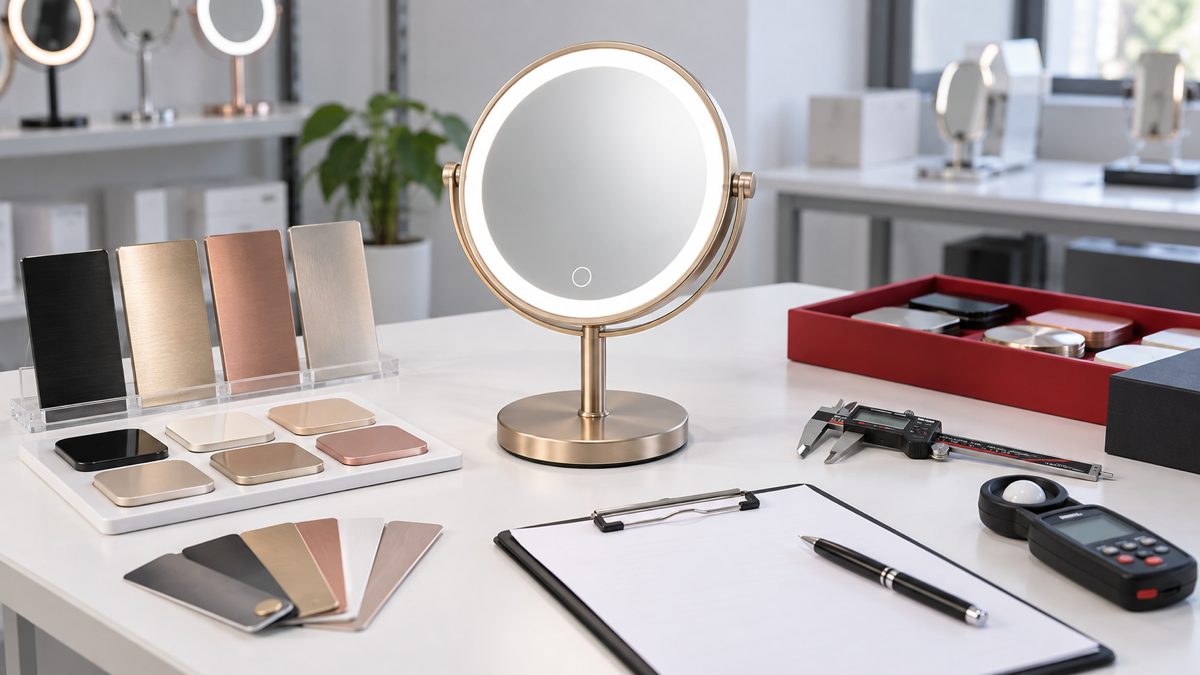
The same color behaves differently on ABS, metal, plated parts, spray-coated surfaces, and printed packaging board. A rose-gold finish on a metal stem may look richer than the same direction on a plastic frame. A matte black finish can hide fingerprints on some surfaces but show rub marks on others. A glossy white frame may look clean in photos but reveal molding marks more easily.
Buyers should ask the supplier to explain which parts use which process:
| Mirror Part | Common Finish Route | Buyer Checkpoint | Commercial Impact |
|---|---|---|---|
| ABS frame | molded color, spray coating, or plated finish | color stability, scratch resistance, molding marks | affects cost, MOQ, defect rate, and repeat orders |
| Metal stem or base | plating, anodizing, painting, or brushed finish | surface tone, corrosion risk, fingerprint control | affects premium feel and packaging protection |
| Mirror back shell | molded or painted plastic | color match to front ring and base | affects visual consistency in product photos |
| Buttons and trims | molded plastic or small plated parts | tone match under LED and daylight | small mismatch can look cheap |
| Retail box | printed paperboard or sleeve | product photo and color block accuracy | affects shelf and online brand presentation |
This comparison should happen before the buyer locks cost targets. A low-cost finish may be acceptable for value-channel orders, while premium retail or gift sets may justify a stricter finish process and more sample rounds.
Compare the finish route with our ABS vs metal LED makeup mirror frame guide, then record the signed reference and approval owner in the makeup mirror sample approval checklist.
Define an Acceptable Color Tolerance
For OEM mirror projects, “match the sample” needs an acceptance rule. Without tolerance, the factory, buyer, and third-party inspector may judge the same batch differently.
For many orders, buyers can use a practical approval method:
- keep one signed master sample at the factory and one with the buyer;
- compare production samples under the same light source;
- check several units from different cartons, not only one top sample;
- inspect frame, base, hinge, button, cable, manual, box, and insert together;
- record whether variation is acceptable for the target channel;
- document the result with photos and sample IDs before shipment.
For stricter private-label or retail-chain programs, buyers may also define instrument-based checks or a delta tolerance with the supplier and inspection team. The important point is not to overcomplicate every order. It is to make sure everyone uses the same approval standard before mass production.
Control Color Across Product, Accessories, and Packaging
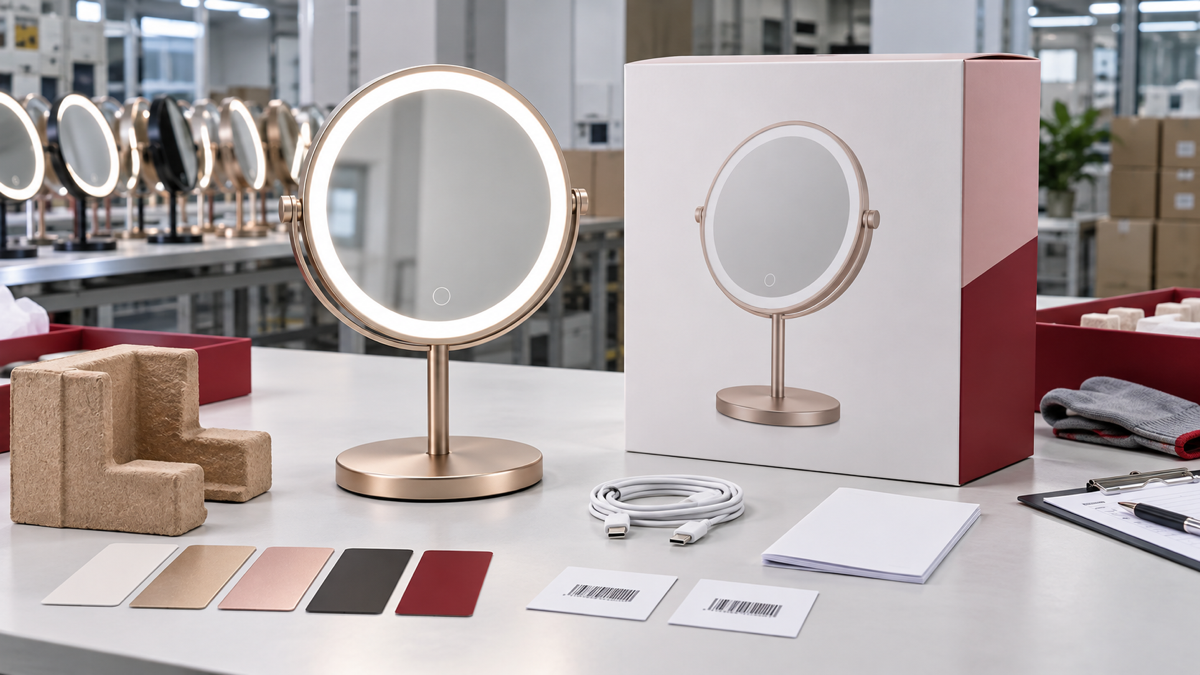
A complete LED makeup mirror sales unit usually includes more than the mirror. It may include a USB-C cable, charging base, pouch, retail box, molded insert, user manual, label, barcode card, and export carton. Color and finish consistency should be reviewed across the whole set.
For example, a champagne mirror can look premium when the frame, base, box photo, and pouch trim feel coordinated. The same product can look unfinished if the frame is champagne, the base is more yellow, the product photo on the box is rose gold, and the online listing shows a cooler silver tone.
This is why buyers should approve a packed sample, not only a naked product sample. The packed sample should include:
- final product color and finish;
- confirmed LED light color and mirror reflection;
- all visible accessories;
- retail box artwork or box mockup;
- manual and warranty card format;
- barcode and SKU label location;
- inner tray or molded insert color;
- export carton marking method for the same SKU.
Common Color Matching Mistakes
The first mistake is approving color under poor lighting. Warm office light, mixed warehouse light, and phone-camera photos can make one finish look acceptable when it will look different in a retail store or product-page shoot. A practical sample approval process should compare the mirror under neutral light, daylight, and the buyer’s expected sales environment when possible.
The second mistake is checking only the most visible part. On LED tabletop makeup mirrors, the frame, stem, hinge, base, and back shell may come from different processes. If the front ring matches the sample but the base does not, customers may still see the product as inconsistent.
The third mistake is separating packaging approval from product approval. E-commerce buyers depend on product-page accuracy, and marketplaces increasingly push sellers to keep product attributes, identifiers, and packaging information consistent. A mirror whose final color does not match the listing image or box photo can create avoidable customer-service work.
The fourth mistake is ignoring repeat orders. Buyers should ask whether the supplier can keep the same resin, coating vendor, plating standard, or approved swatch for reorder production. This matters for distributors and retailers building a long-term product line rather than a one-time promotion.
Production QC Checklist for Color Consistency
Before shipment, color matching should be part of final inspection. The inspection does not need to be complicated, but it must be specific.
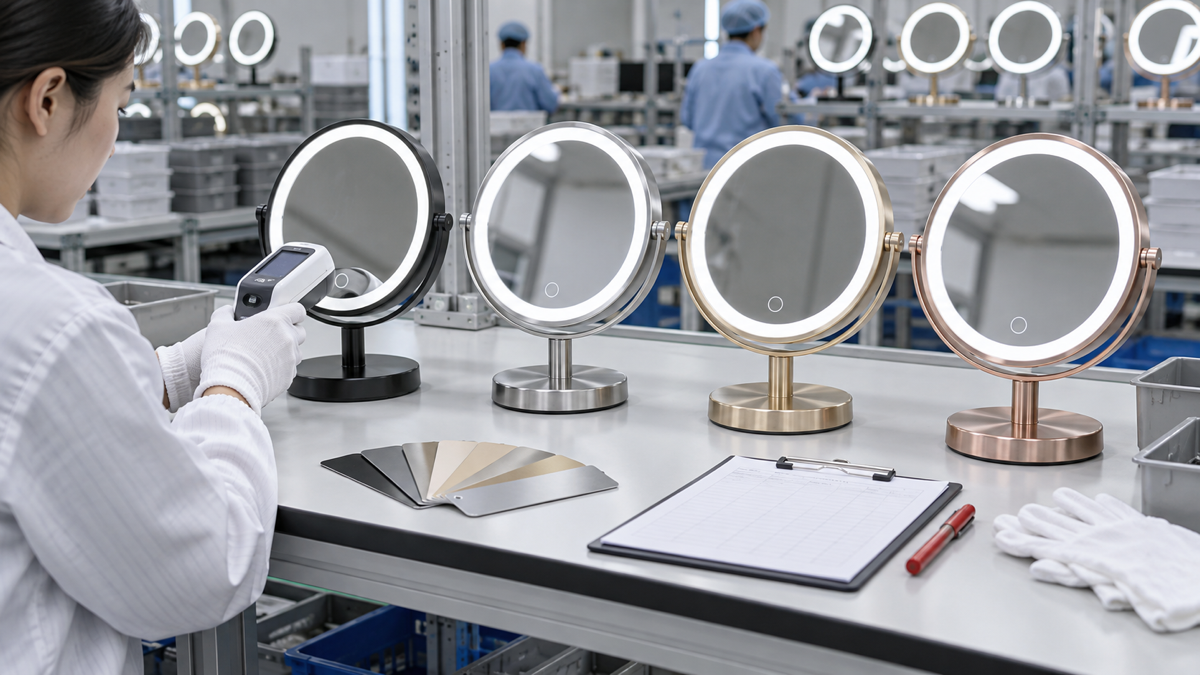
Use this checklist for bulk LED makeup mirror orders:
- Confirm the production sample matches the signed master sample.
- Check several cartons and production times, not only the first packed unit.
- Compare frame, stem, base, back shell, button, and accessory colors together.
- Inspect finish defects such as scratches, dark spots, uneven spraying, plating marks, rub marks, and visible molding lines.
- Review color under neutral light and with the LED ring switched on.
- Confirm packaging artwork, box image, label color, and online photo direction match the approved product.
- Check that the SKU, barcode, carton mark, and color name are consistent.
- Record sample IDs, carton numbers, inspection photos, and any accepted variation.
For e-commerce and retail buyers, this checklist should be included in the pre-shipment inspection brief. For private-label buyers, it should also be reflected in the approved specification sheet so future repeat orders can be compared against the same standard.
RFQ Details Buyers Should Send
An RFQ for custom LED makeup mirror color matching should include more than a target color name. Better information helps the supplier quote the right process, sample schedule, MOQ, and lead time.
Send these details when requesting a quotation:
- target product type: tabletop LED makeup mirror, compact mirror, travel mirror, or mirror set;
- frame material and preferred finish direction;
- Pantone, RAL, physical sample, or brand color reference;
- matte, glossy, brushed, plated, satin, or soft-touch requirement;
- expected sales channel: Amazon, retail, beauty brand, gift, wholesale, or distributor;
- packaging style and whether the box must match the product color;
- order quantity, launch date, and repeat-order plan;
- required sample rounds and approval deadline;
- inspection standard and whether instrument-based color checking is needed;
- acceptable cost range for color process and defect control.
If the order is still early, the supplier can usually suggest a practical finish route. If the buyer already has a brand standard, the supplier needs more precise samples and a stricter approval process.
Bottom-Line Recommendation
For custom LED makeup mirrors, color matching should be managed as a buyer-facing quality requirement. Approve the target color with a physical sample, confirm how each material will be finished, inspect the complete packed sales unit, and keep the master sample for repeat orders. The best OEM result is not only an attractive color in the first sample; it is a finish that stays consistent across bulk production, packaging, product photos, and future reorder shipments.
Mingda Mirror supports OEM and ODM buyers with LED makeup mirror product development, color and finish discussions, private-label packaging, packed-sample approval, and production QC coordination. Buyers can review our OEM/ODM customization service, compare related makeup mirror products, and send custom requirements through the contact page.
Before releasing a color-specific purchase order, send your physical color reference, finish specification, quantity by color, packaging artwork version, and launch date through the contact page. Ask for MOQ by finish, sample-round costs, an approval deadline, and written handling of rejected or changed color samples.
FAQ
Is a Pantone number enough for custom LED makeup mirror production?
It is helpful, but it is not always enough. Buyers should still approve a physical sample because different materials, surface textures, coatings, and lighting conditions can change how the color appears on the final mirror.
Should the retail box be approved at the same time as the mirror color?
Yes. For private-label and e-commerce orders, the mirror color, box image, color name, barcode label, and product-page direction should be checked together to avoid customer confusion and listing mismatch.
Can one color be used across ABS and metal parts?
It can be coordinated, but the result may not be visually identical because ABS, metal, plating, and paint reflect light differently. Buyers should review the full assembled sample, not only loose color chips.
How many samples should buyers check before bulk production?
Keep a signed master as the reference, then agree a sampling plan for the actual lot size, finish process, and buyer risk. Select samples across production batches and cartons; one attractive sample does not establish whole-lot consistency. Record acceptance criteria and who can approve deviations before production.
What should buyers confirm for repeat orders?
Confirm the approved color reference, material source, coating or plating process, supplier sample ID, packaging artwork version, and inspection records. This helps the next batch match the previous shipment more reliably.
Social Media Content Ideas
LinkedIn angle: explain why OEM mirror color approval should connect physical samples, finish process, packaging, and pre-shipment inspection instead of relying on product photos.
Facebook angle: show how private-label beauty brands can reduce customer complaints by matching mirror color, box artwork, accessories, and online listings before production.
Instagram angle: use the color-sample approval image to highlight champagne, black, rose-gold, and white finish options for LED makeup mirror programs.
CTA: Read the full checklist and send Mingda Mirror your target color, sales channel, packaging plan, and launch timeline for an RFQ-ready OEM recommendation.