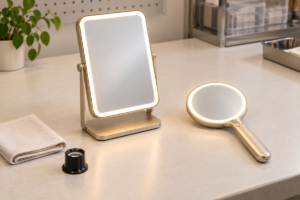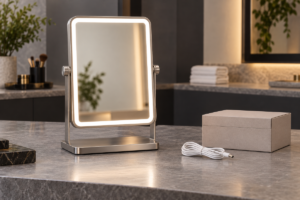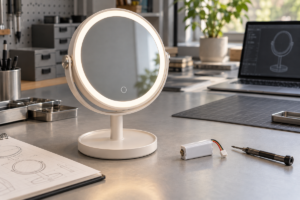

For most importers and private-label buyers, the short answer is this: LED makeup mirror certifications should be selected by target market, electrical design, and sales channel before the final sample is approved. The most common checkpoints are electrical safety, EMC, battery transport, chemical compliance, and the test reports large retailers or Amazon programs may request during onboarding.
This guide explains which certifications matter most, when they are mandatory, and what buyers should confirm before placing a bulk order.

Direct Answer: Which Certifications Matter Most?
If the mirror includes lighting, touch sensors, rechargeable batteries, or adapters, buyers usually need to confirm more than one document. For the US and Canada, electrical safety and retailer acceptance are often the first gate. For the EU and UK, CE or UKCA-related compliance and supporting test files are critical. For rechargeable models, battery transport documentation also matters because shipment problems can delay delivery even if the product itself performs well.
1. Start With the Sales Market, Not the Factory Promise
Buyers should first define where the mirror will be sold: Amazon US, a beauty chain in Europe, a private-label gift line in the UK, or a distributor program in another region. Certification expectations change by market, and many sourcing problems happen because the buyer asks about compliance too late.
If the product direction is still broad, it helps to first review the makeup mirror sourcing guide for beauty brands and retailers and then match the compliance plan to the chosen product route.
2. Core Compliance Areas Buyers Usually Need to Check
| Compliance area | What it covers | Why buyers should care | Typical relevance |
|---|---|---|---|
| Electrical safety | Wiring, drivers, switches, shock and fire risk | Reduces customs, retailer, and safety risk | Powered LED mirrors |
| EMC / interference | Electronic emissions and stability | Important when mirrors include digital or smart functions | LED mirrors with electronics |
| Chemical compliance | Restricted substances in materials and components | Supports legal market entry and retailer audits | EU, UK and brand programs |
| Battery transport | Lithium shipping documentation | Affects air, courier, and export handling | Rechargeable mirrors |
| Factory / system documents | Quality system and test traceability | Improves supplier trust and repeat-order control | Retail, private label, distributor programs |
3. North America: Safety and Retail Acceptance Come First
UL or ETL discussion
For the US and Canada, buyers often ask whether the powered mirror or its adapter has a recognized electrical-safety path. Depending on the structure, that may involve UL, ETL, or another retailer-accepted route tied to the relevant component or finished-product requirement. The exact requirement depends on how the product is powered and where it will be sold, so buyers should confirm the applicable standard instead of assuming one label covers every case.
FCC relevance
FCC concerns usually matter when the product contains electronic circuitry that can create interference, such as smart or digital functions. Buyers should not add this requirement automatically to every mirror, but they should ask whether the design triggers FCC testing expectations.
4. Europe and the UK: Documentation Discipline Matters
For EU and UK programs, buyers usually need a clean compliance file rather than a vague statement that the product is “export-ready.” Depending on the product structure, this can involve CE-related declarations, RoHS support, EMC evidence, low-voltage considerations, labeling format, and technical documentation that can be produced during customer or customs review.
Buyers planning multi-market programs should also check whether one mirror configuration will be sold across several regions or whether adapters, packaging marks, or manuals need to differ by market.
5. Rechargeable Makeup Mirrors Add Battery-Risk Questions
Rechargeable models create extra compliance and logistics work because lithium batteries affect test planning and shipment handling. Buyers should confirm battery specifications, transport documentation, charger design, carton marking requirements, and what evidence the supplier can provide before the order leaves the factory.
This is especially important for Amazon and e-commerce programs, where poor battery documentation can create listing, warehouse, or logistics friction. Buyers comparing formats can also review rechargeable vs. plug-in makeup mirrors and how Amazon sellers should choose makeup mirrors.
6. Certification Claims Should Be Matched to the Exact Mirror Version
One common sourcing mistake is assuming that a test report for one model automatically covers another. A different LED driver, adapter, battery pack, dimming board, or packaging setup can change the compliance situation. Buyers should confirm whether the documents apply to the exact configuration being quoted, sampled, and shipped.
Before mass production, it is safer to align the sample, BOM logic, labels, manual language, and packaging marks with the compliance file. That reduces the risk of passing sample approval but failing retailer onboarding or pre-shipment review.
7. Pre-Order Checklist for Buyers
- Confirm the target sales market and whether the mirror is for retail, Amazon, gifting, or distributor sale.
- Ask which compliance documents apply to the exact mirror structure, not just to a similar model.
- Confirm battery documentation early for rechargeable programs.
- Check whether adapter, label, user manual, and outer-carton marks must differ by market.
- Request sample-stage evidence before approving final packaging artwork.
- Align quality control and shipment preparation with the expected compliance file.
How Mingda Mirror Can Support Compliance Planning
Mingda Mirror works with business buyers on makeup mirror product planning, sample confirmation, packaging coordination, and export-oriented communication. Buyers can review what can be customized for LED makeup mirrors, use the sample approval checklist, and send detailed compliance questions through the Contact page.
Mirror Certification Checklist for Buyers
| Buyer check | Why it matters before bulk order |
|---|---|
| Target market and sales channel | Certification needs differ for retail, e-commerce, hotel project, and distributor orders. |
| Electrical safety documents | LED mirrors and lighted makeup mirrors should match the destination market’s safety expectations. |
| Battery or rechargeable design | Rechargeable makeup mirrors may need extra battery, charging, and transport documentation. |
| Packaging and labeling | Carton marks, manuals, barcode labels, and warning text should be confirmed before mass production. |
| Pre-shipment inspection | Buyers should verify documents, samples, functions, and packaging before balance payment. |
FAQ
Do all LED makeup mirrors need the same certifications?
No. Requirements depend on the target market, whether the mirror is rechargeable or plug-in, what electronics it includes, and which channel will sell it.
Is CE alone enough for every European order?
Not always. Buyers should confirm the supporting documentation, applicable directives, labeling details, and whether the exact mirror configuration matches the file.
Why should Amazon sellers care about compliance before listing?
Because missing or mismatched safety and battery documents can create platform, warehouse, or return-risk problems after the product launch.
What should buyers ask for before approving bulk production?
Ask for the exact compliance scope for the chosen model, any battery-shipment documents, label and packaging requirements, and confirmation that the approved sample matches the compliance path.
Bottom-Line Recommendation
Approve the exact selling configuration before committing to bulk production. Keep the mirror model, power components, battery option, labels, manual, and packaging version together in one approval record. Ask the responsible testing or compliance partner to confirm the document scope for the destination and sales channel; a file for a similar model is not a substitute for checking the ordered configuration.
CTA
If you are planning a retail, Amazon, or private-label LED makeup mirror program and need clearer compliance support, contact Mingda Mirror with your destination market, sales channel, model list, power and battery configuration, order quantity, launch deadline, and available document references. Request a model-by-model evidence checklist, open-item owner, and sample-review schedule with the quotation.