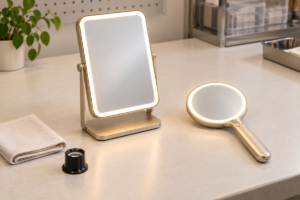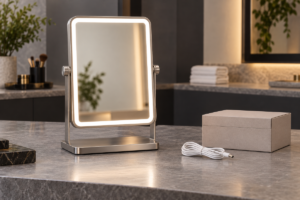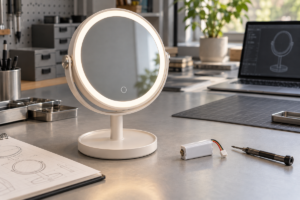

For e-commerce and retail buyers, rechargeable LED makeup mirror return risk usually comes from five controllable areas: lighting inconsistency, weak hinge or stand structure, battery and charging complaints, mirror surface defects, and packaging that cannot survive parcel delivery. A good pre-shipment QC checklist should test the mirror as a consumer will use it, then test the package as a carrier will handle it. Before confirming mass production, buyers should align the sample standard, inspection level, carton structure, charging accessories, and replacement policy with the supplier.
Why Return Risk Is Different for Rechargeable LED Makeup Mirrors
Rechargeable LED makeup mirrors sit between beauty accessories and small electronic products. Buyers are not only sourcing a mirror. They are also sourcing a lighting system, charging structure, hinge, plastic or metal housing, battery pack, cable, packaging set, and user experience.
That makes return prevention more complex than checking a plain cosmetic mirror. A customer may return the product because the LED ring is uneven, the touch sensor feels unreliable, the hinge angle slips, the battery drains quickly, the USB-C port is loose, the mirror arrives scratched, or the retail box is crushed.
For Amazon sellers, DTC beauty brands, retail chains, and distributors, each return can affect margin, review score, replacement cost, stock availability, and future ad performance. The practical goal is not zero defects, which is unrealistic in mass production, but a controlled system where the supplier, buyer, and inspection team all use the same measurable standard.
Return Risk Decision Matrix
Use this matrix before approving a rechargeable LED makeup mirror order. It helps identify which QC areas deserve stricter sample confirmation and pre-shipment inspection.
| Return driver | What the buyer should test | Typical sourcing consequence |
|---|---|---|
| Uneven LED light or color shift | Compare CCT, brightness, dimming range, glare, and light leakage across samples | Poor reviews for makeup accuracy and visible inconsistency between batches |
| Weak hinge, stand, or folding structure | Open-close cycle test, angle holding test, tabletop stability test | Higher return rate after repeated use, especially for travel and gift channels |
| Battery or charging complaint | Charging time, working time, USB-C port fit, cable quality, battery protection | Customer service pressure, safety concerns, and marketplace compliance risk |
| Scratched mirror or housing | Surface inspection under angled light, protective film check, tray fit | Cosmetic defects become visible immediately after unboxing |
| Package damage in parcel delivery | Inner tray compression, drop-test simulation, carton edge protection | Breakage, crushed gift boxes, and FBA or courier damage claims |
Start With a Golden Sample, Not a Verbal Specification
A written specification is necessary, but it is not enough for rechargeable LED makeup mirrors. The buyer and supplier should confirm a golden sample that defines the approved brightness, mirror tint, touch response, hinge resistance, stand angle, surface finish, charging accessory, logo position, retail box, inner tray, and export carton.
For private-label orders, the golden sample should include all branding elements, not only the mirror body. Logo printing, user manual layout, barcode position, color box material, molded tray depth, cable packing method, and carton mark style can all affect buyer complaints after launch.
Mingda Mirror recommends keeping one approved sample with the buyer and one sealed reference sample at the factory. During production and final inspection, both sides can compare mass-production units against the same physical standard instead of debating subjective descriptions such as “good brightness” or “acceptable hinge.”
Electrical and Lighting Checks That Reduce Complaints
Lighting complaints often sound like consumer preference, but many are caused by inconsistent production control. For a rechargeable LED makeup mirror, buyers should confirm:
- CCT range and tolerance, especially if the mirror has warm, neutral, and cool lighting modes.
- CRI target if the mirror is promoted for makeup accuracy.
- Brightness range at full charge and after partial discharge.
- Dimming smoothness, including whether the touch control jumps or flickers.
- LED diffusion quality, because visible LED dots can make the product feel lower-end.
- Charging port fit and cable retention, especially when using USB-C.
- Working time after full charge and charging time with the approved cable.
- Battery protection, insulation, and supplier documentation for the target market.
The common trap is approving a sample under showroom lighting only. Buyers should test the mirror in a darker room, under normal bathroom light, and after several charge-discharge cycles. This better reflects how customers will judge the mirror at home.
Mechanical Checks: Hinge, Stand, and Stability
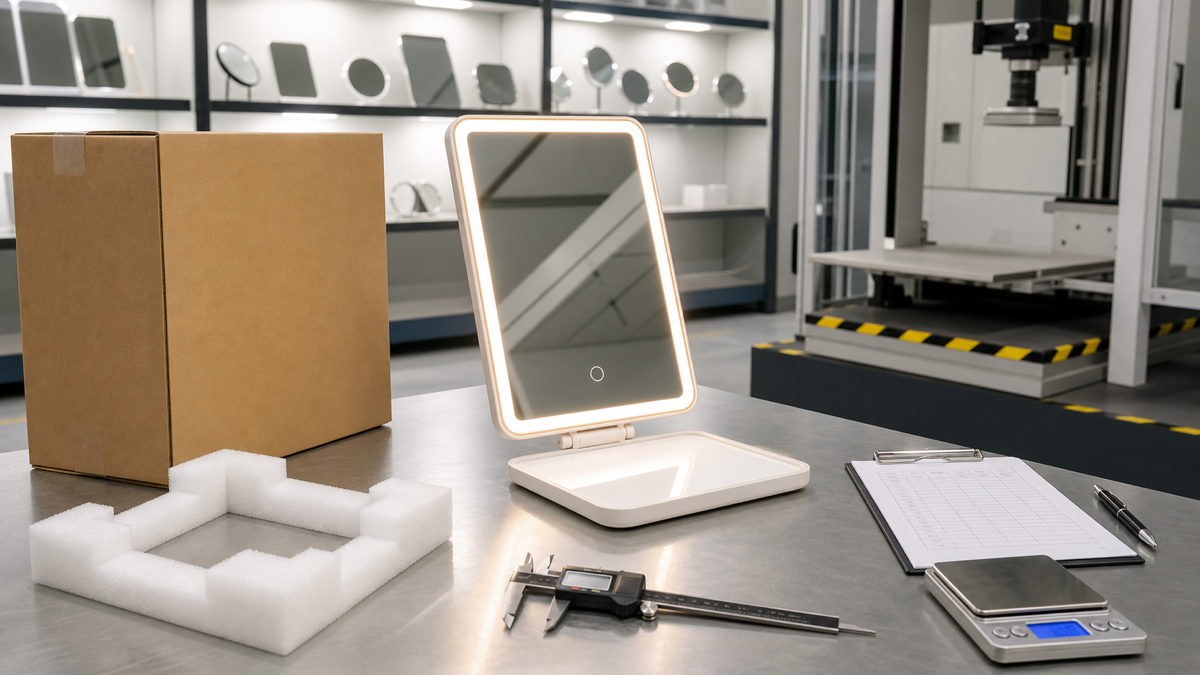
For tabletop and folding LED makeup mirrors, mechanical feel strongly influences return risk. A mirror that looks attractive in product photos may still fail in daily use if the hinge loosens, the stand slides, or the base feels unstable.
Ask the supplier to define the open-close cycle target, angle-holding requirement, base stability standard, and acceptable hinge tolerance. For travel mirrors, also test whether the mirror stays closed inside the package and whether the hinge is protected from pressure during shipping.
Retailers and distributors should pay special attention to display handling. A sample that survives one buyer review may not survive repeated opening, closing, touching, and moving in a retail environment. If the product will be sold through stores, the QC standard should be stricter than for a one-time online unboxing.
Packaging Checks for E-Commerce and FBA Channels
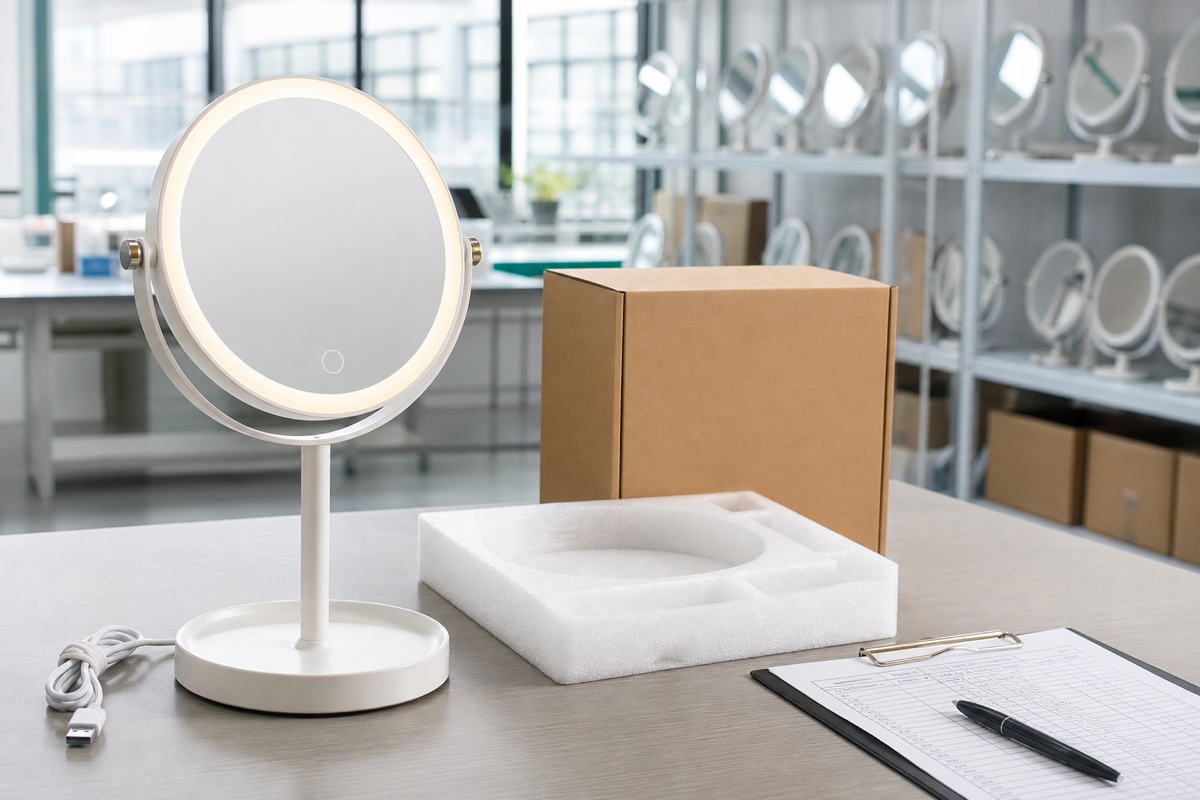
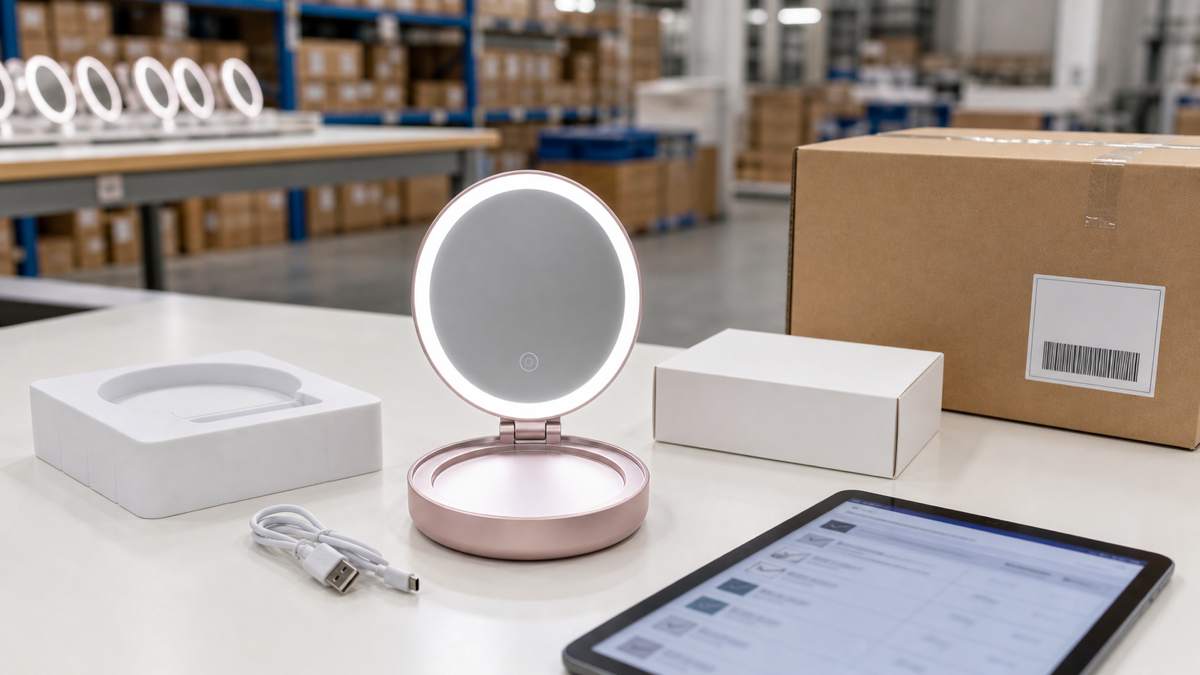
Packaging is often the difference between a profitable rechargeable LED makeup mirror and a high-return SKU. A beautiful retail box does not guarantee safe parcel delivery. E-commerce packaging must protect the mirror surface, LED rim, hinge, charging cable, and gift-box appearance through courier handling.
Pre-shipment packaging review should include:
- Inner tray fit: the mirror should not move freely inside the tray.
- Edge and corner protection: foam or molded pulp should protect pressure points.
- Mirror surface protection: film or sleeve should prevent scratches during vibration.
- Cable placement: accessories should not rub against the mirror surface.
- Retail box compression: gift-box corners should not collapse inside the master carton.
- Master carton strength: confirm carton material, sealing method, and stack plan.
- Shipping label area: leave practical label space without covering required marks.
For Amazon and other marketplace sellers, align packaging with the platform’s current prep, labeling, and damage-prevention rules before mass production. The buyer should not wait until the first FBA inbound shipment to discover that the package needs repacking or extra labeling.
Pre-Shipment Inspection Checklist for Buyers
Before releasing balance payment or approving shipment, the buyer should ask the supplier or inspection team to check a statistically meaningful sample quantity, not only one display unit.
- Confirm the model, color, logo, packaging, cable type, user manual, and carton marks match the purchase order.
- Inspect mirror glass for scratches, spots, distortion, glue marks, and poor edge finishing.
- Test every lighting mode, brightness adjustment, memory function if available, and touch response.
- Measure charging time and working time on sampled units.
- Check USB-C or charging port alignment and cable fit.
- Run hinge, foldability, stand-angle, and tabletop stability checks.
- Review surface color consistency across several units, not only one sample.
- Inspect inner tray, retail box, master carton, sealing, and drop-test simulation results.
- Check battery, adapter, cable, and labeling documents required by the target market.
- Record photos or video of key tests so approval evidence is clear.
This checklist should be attached to the RFQ or purchase order. When the supplier knows the inspection standard before quoting, the buyer receives a more realistic price and avoids quality arguments after production.
What to Confirm Before RFQ
To quote accurately, a mirror supplier needs more than a product picture. Send the target sales channel, estimated order quantity, mirror size, lighting modes, CCT preference, magnification requirement, battery capacity target, charging cable type, logo method, packaging structure, target market, required certification, and inspection level.
Buyers should also clarify whether the order is for Amazon FBA, retail shelf display, beauty-brand gift sets, wholesale distribution, or hotel amenities. Each channel has a different risk profile. For example, Amazon orders need stronger parcel packaging and clear accessory packing, while retail chains may care more about color-box appearance, barcode placement, and shelf-ready carton planning.
If you are still defining the product, review Mingda Mirror’s makeup mirror products and OEM/ODM customization capabilities before sending the RFQ. For packaging-heavy programs, include the carton and inner tray requirement early instead of treating packaging as a final detail.
Bottom-Line Recommendation
For rechargeable LED makeup mirror orders, the best return-risk control is to combine product QC and packaging QC into one approval process. Do not approve the mirror first and solve packaging later. Confirm the golden sample, battery and lighting standard, hinge durability, cosmetic surface limit, inner tray structure, carton strength, and inspection method before bulk production starts.
The supplier with the lowest unit price is not always the lowest-risk option. A slightly higher quoted price can be more profitable if it reduces parcel damage, battery complaints, unstable lighting, and replacement shipments.
FAQ
What is the most common return reason for rechargeable LED makeup mirrors?
The most common return reasons usually relate to lighting dissatisfaction, charging problems, unstable hinges, scratched surfaces, or damaged packaging. The exact priority depends on the sales channel and product design.
Should buyers test rechargeable LED makeup mirror batteries before shipment?
Yes. Buyers should test charging time, working time, port fit, cable compatibility, battery protection, and sample consistency. Battery-related complaints can create both return cost and compliance risk.
Is drop testing necessary for e-commerce mirror orders?
For parcel-shipped mirrors, yes. A basic packaging drop or transport simulation helps confirm whether the inner tray, retail box, and master carton can protect the mirror during courier handling.
How many samples should be inspected before shipment?
The inspection quantity should match order size, product risk, and buyer tolerance. For new models, new packaging, or rechargeable designs, buyers should use a stricter sample plan than they would for a repeat low-risk order.
Can Mingda Mirror support private-label rechargeable LED makeup mirror QC?
Yes. Mingda Mirror can support sample approval, lighting and charging checks, logo placement review, packaging structure, and pre-shipment inspection for private-label rechargeable LED makeup mirror programs.
RFQ CTA
If you are preparing a rechargeable LED makeup mirror order for Amazon, retail, wholesale, or a private-label beauty program, send Mingda Mirror your target channel, expected quantity, mirror size, lighting requirements, battery target, logo plan, packaging requirement, and inspection standard. Our team can help review the product and packaging risks before you confirm bulk production. Contact Mingda Mirror to request a sourcing and QC discussion.
Social Media Content Ideas
LinkedIn angle: Explain why rechargeable LED makeup mirror QC should combine lighting, battery, hinge, and packaging tests before shipment.
Facebook angle: Share a buyer-friendly checklist for reducing mirror returns caused by charging, scratches, and damaged packaging.
Instagram angle: Use the QC bench image to show how packaging, cable placement, and LED inspection protect the customer unboxing experience.
Short CTA: Read the full rechargeable LED makeup mirror QC checklist and contact Mingda Mirror for private-label sourcing support.