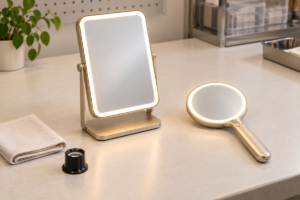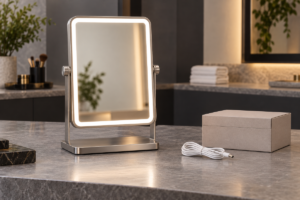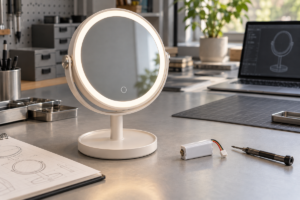

A practical Hollywood mirror quotation checklist should make every supplier quote the same product scope: mirror size, frame material, bulb layout, CCT, dimming, plug standard, installation method, packaging, logo options, sample cost, MOQ, lead time, testing, and replacement terms. Without this structure, buyers often compare a complete retail-ready quotation against a cheaper quote that excludes packaging, accessories, labeling, or after-sales responsibility.
This guide is written for importers, beauty brands, retailers, Amazon sellers, distributors, salon suppliers, and hotel/project buyers who need a clearer RFQ before ordering Hollywood vanity mirrors from an overseas manufacturer.
Why Hollywood Mirror Quotations Are Easy to Miscompare
A Hollywood mirror is not just glass and lights. The final cost depends on the frame, bulb or LED system, tabletop base, wall-mounting hardware, plug and voltage, carton structure, color box, barcode, manual, testing scope, spare parts, and shipping route. If one supplier quotes a basic export carton while another includes drop-tested retail packaging and private-label artwork, the unit price is not directly comparable.
Buyers should first decide what the order must achieve. A retail chain may need shelf-ready packaging and consistent barcode labeling. An e-commerce seller may need stronger parcel protection and clear user instructions. A salon or hotel project buyer may care more about installation hardware, replacement parts, and delivery schedule. Mingda’s Hollywood Mirrors page is a useful starting point for matching structure and style before sending an RFQ.
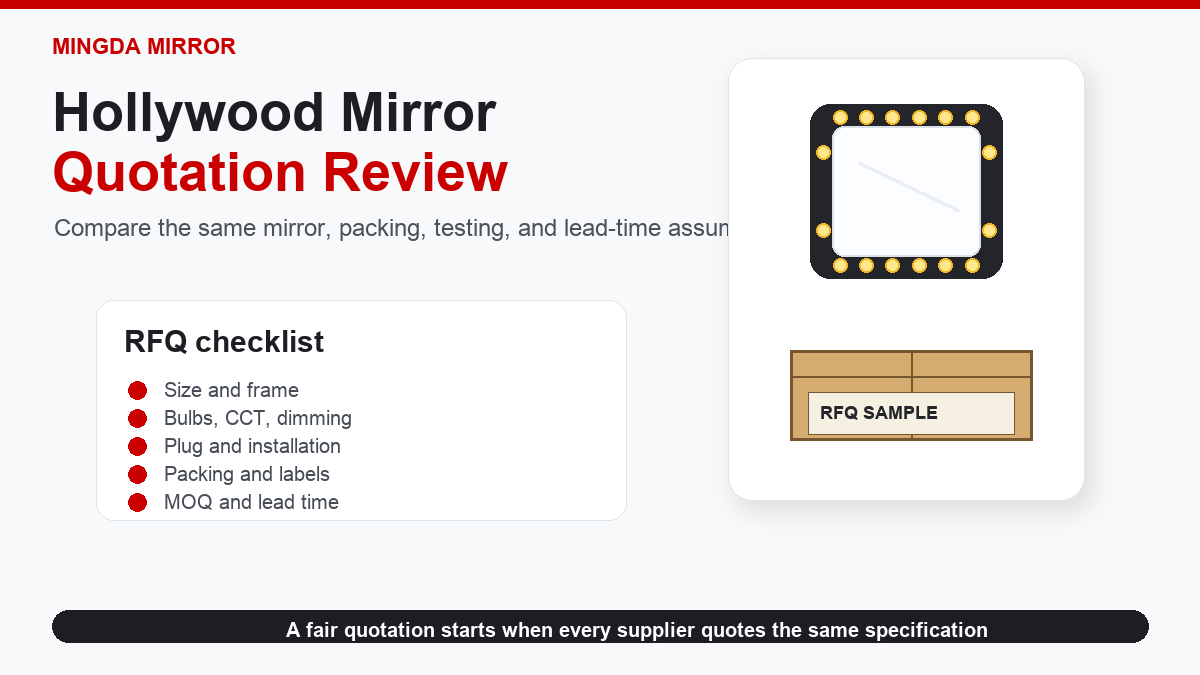
Hollywood Mirror Quotation Checklist
| RFQ item | What to define | Why it changes the quotation |
|---|---|---|
| Mirror size and shape | Overall dimensions, glass area, frame width, tabletop or wall-mounted design | Material use, carton size, tooling, and freight volume change quickly with size. |
| Lighting specification | Bulb count, CCT, CRI, dimming, switch type, voltage, plug, adapter, cable length | Electrical parts and testing requirements can create major price differences. |
| Frame and finish | Iron frame, coating color, surface standard, base stability, screw points | Finish quality affects sample approval, defect rate, and target retail positioning. |
| Branding and packaging | Logo, color box, manual, barcode, label, foam, carton, pallet plan | Private-label details affect MOQ, sample cost, lead time, and return risk. |
| Commercial terms | MOQ, sample fee, production lead time, payment terms, inspection, warranty scope | These terms determine real landed risk, not only factory unit price. |
The most important rule is simple: ask suppliers to quote from the same written checklist. If details are missing, each factory will fill the gap differently, and the buyer may choose a lower price that does not meet the real channel requirement.
Define the Sales Channel Before Asking for Price
A quotation for a tabletop Hollywood mirror sold through Amazon should not be built the same way as a wall-mounted mirror for a hotel vanity area. E-commerce orders need stronger parcel handling logic, clear instructions, and customer-ready accessories. Retail orders need shelf appearance, barcode placement, and packaging consistency. Distributor orders need stable replenishment specs and carton loading efficiency. Project buyers need installation kits, spare parts, and delivery timing.
When the channel is unclear, suppliers often quote the easiest version: standard size, standard plug, standard carton, and no special labeling. That may be acceptable for a trial wholesale order, but it can create problems for a brand launch, retail listing, or project delivery.
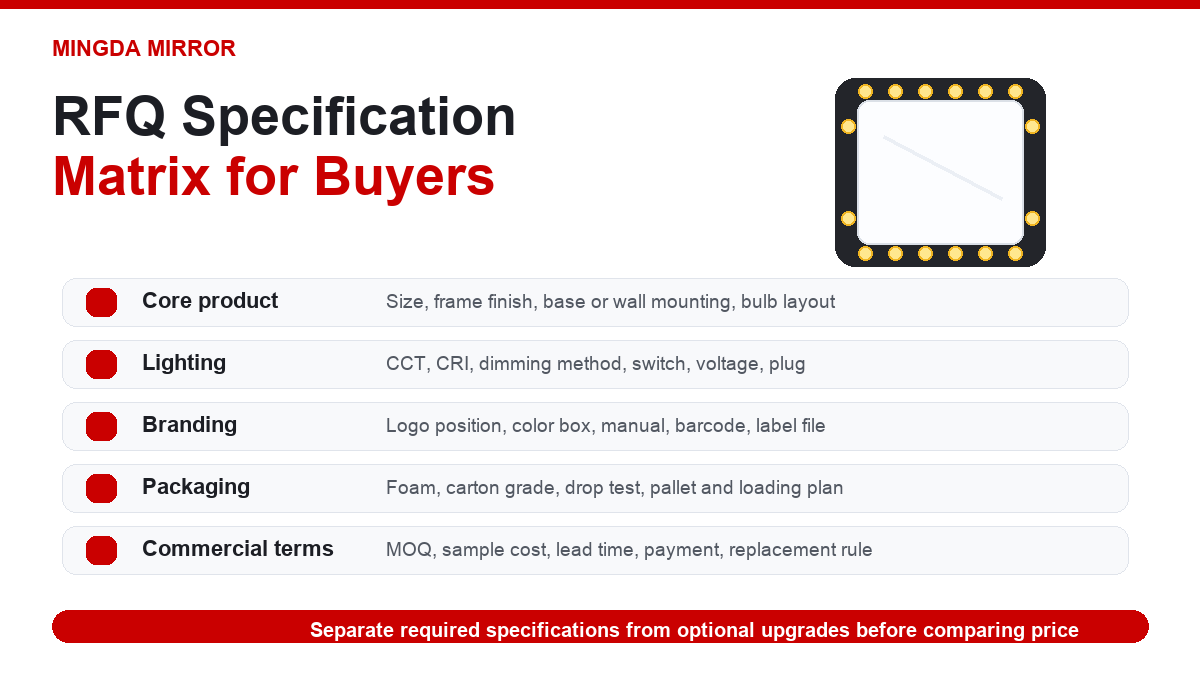
Separate Must-Have Specifications from Optional Upgrades
Not every feature belongs in every quotation. A buyer should separate non-negotiable requirements from value-added upgrades. Required items might include the mirror size, plug type, voltage, bulb count, switch type, packaging strength, and shipping marks. Optional upgrades might include premium color boxes, higher CRI lighting, extra finish colors, retail display packaging, backup accessories, or stricter testing.
This distinction helps purchasing teams compare prices without weakening the product. If a supplier is more expensive, the buyer can see whether the difference comes from a real specification, better packaging, more reliable testing, or simply a higher margin. Mingda’s tabletop vs wall-mounted Hollywood mirror guide can help buyers decide which structural items should be mandatory for each channel.
Pre-RFQ Checklist for Importers and Brand Buyers
- Confirm target market, sales channel, expected retail price range, and order quantity.
- Send size, frame finish, bulb layout, CCT, dimming method, plug, voltage, and cable requirements.
- State whether the mirror is tabletop, wall-mounted, or dual-use, and list all accessories required.
- Provide logo, color box, manual, barcode, carton mark, and label requirements if private label is needed.
- Ask for sample cost, sample lead time, bulk MOQ, production lead time, and packaging MOQ separately.
- Confirm inspection scope, electrical testing, packed-sample approval, and replacement responsibility.
- Request carton size, gross weight, loading quantity, and packaging photos before confirming a bulk order.
These details should be sent before the supplier calculates price. If they are added after the first quotation, the buyer may face revised pricing, delayed samples, packaging rework, or a lower margin than expected.
Quotation Comparison Matrix
| Comparison point | Low-risk quotation | High-risk quotation |
|---|---|---|
| Specification clarity | Lists size, material, lighting, plug, finish, packing, and accessories | Only gives a model name and unit price |
| Packaging scope | Defines foam, inner box, outer carton, labels, and carton size | Uses vague wording such as standard export packing |
| Customization terms | Shows MOQ, setup fee, sample time, and artwork approval steps | Mentions logo support without cost or approval details |
| Lead time | Separates sample, artwork, production, and inspection timing | Only states one optimistic production estimate |
| After-sales rule | Defines evidence, covered parts, claim window, and replacement method | No clear responsibility after delivery |
Where Low Quotes Usually Hide Cost
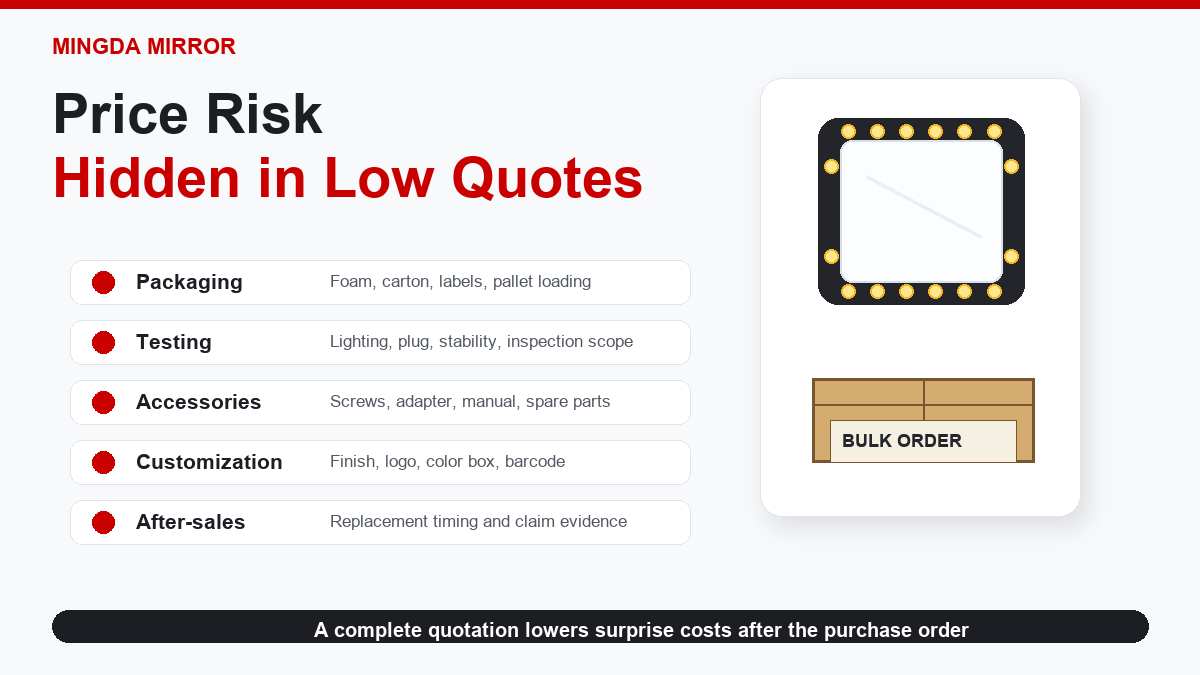
The lowest Hollywood mirror price is often missing something. Common gaps include weaker foam, thinner cartons, no color box, no barcode service, unclear accessory kits, limited plug options, no packed-sample approval, no replacement terms, or a sample that does not match future mass production. These gaps do not always appear until the buyer prepares retail listing files, books shipment, or receives customer complaints.
Packaging is a frequent hidden cost because Hollywood mirrors are heavier and more fragile than many compact cosmetic mirrors. Buyers can reduce this risk by reading Mingda’s guide on packing Hollywood mirrors to reduce breakage and by including the packing requirement directly inside the RFQ.
What Sourcing Managers Should Confirm Before Purchase Order
Before issuing a purchase order, sourcing managers should confirm the approved sample version, final BOM, artwork files, packaging dieline, manual language, plug type, inspection standard, carton data, payment schedule, shipping method, and claim process. For private-label orders, the team should also confirm whether the custom packaging MOQ is different from the product MOQ.
For larger importer, distributor, or project orders, the quotation should include sample approval steps and a realistic lead-time plan. A typical workflow may include specification confirmation, sample production, sample testing, artwork approval, packaging approval, deposit, bulk production, pre-shipment inspection, balance payment, and shipment. Mingda’s QC Process and Packaging & Logistics pages can support these checks during order planning.
Common RFQ Mistakes Buyers Should Avoid
The first mistake is asking only for the lowest price without defining the product level. The second is sending a photo and assuming suppliers will quote the same lighting, frame, plug, and packaging. The third is leaving packaging, logo, and inspection details until after the price is approved. The fourth is ignoring replacement responsibility until a breakage or defect claim appears.
Buyers should also avoid comparing sample prices without asking whether the sample uses the same parts, finish, and packaging planned for mass production. A beautiful sample with a different bulb system, different adapter, or stronger one-off packaging can mislead the purchasing decision.
Bottom Line
A good Hollywood mirror quotation checklist protects buyers from comparing incomplete offers. Define the market, mirror structure, lighting, packaging, customization, MOQ, lead time, testing, and after-sales terms before asking for price. Then compare suppliers on the same scope. The best quotation is not always the lowest number; it is the offer that matches the buyer’s sales channel, margin target, delivery plan, and return-risk tolerance.
FAQ
What should be included in a Hollywood mirror quotation?
A useful quotation should include size, frame material, lighting specification, plug standard, installation method, accessories, packaging, MOQ, sample cost, lead time, testing scope, payment terms, and after-sales responsibility.
Why do Hollywood mirror prices vary so much between suppliers?
Prices vary because suppliers may quote different lighting components, frame thickness, finish quality, packaging strength, customization scope, inspection standards, and replacement terms.
Should buyers request a sample before bulk production?
Yes. Buyers should approve a sample that matches the final specification, including lighting, plug, frame finish, accessories, labels, and packing method.
Can private-label packaging change MOQ?
Yes. Color boxes, printed manuals, logo parts, barcode labels, and special cartons may have separate printing or material MOQs that should be confirmed before purchase order.
How can importers compare two Hollywood mirror quotations fairly?
Importers should put both quotations into the same checklist and mark any missing items. A cheaper offer may be less complete if it excludes packaging, testing, customization, or replacement responsibility.
CTA
If you are preparing a Hollywood mirror RFQ for retail, e-commerce, salon, hotel, or distributor channels, contact Mingda Mirror with your target market, mirror size, lighting requirements, installation type, packaging style, logo needs, and estimated order quantity. Mingda can help turn those requirements into a clearer quotation and sample plan.
Home | Hollywood Mirrors | Tabletop vs Wall-Mounted Hollywood Mirrors | Pack Hollywood Mirrors | QC Process | Contact