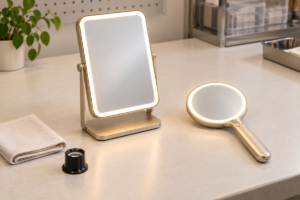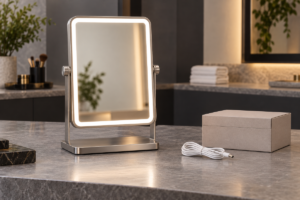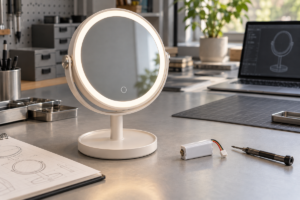

LED handheld mirror orders need MOQ and lead time planning earlier than many buyers expect, because lighting parts, rechargeable batteries, packaging, logo work, and sample approval can all affect the schedule.
For private label and retail buyers, the goal is not only to get the first shipment produced. The better question is whether the LED handheld mirror program can be replenished consistently after market feedback arrives.
MOQ Is Not Only About the Mirror
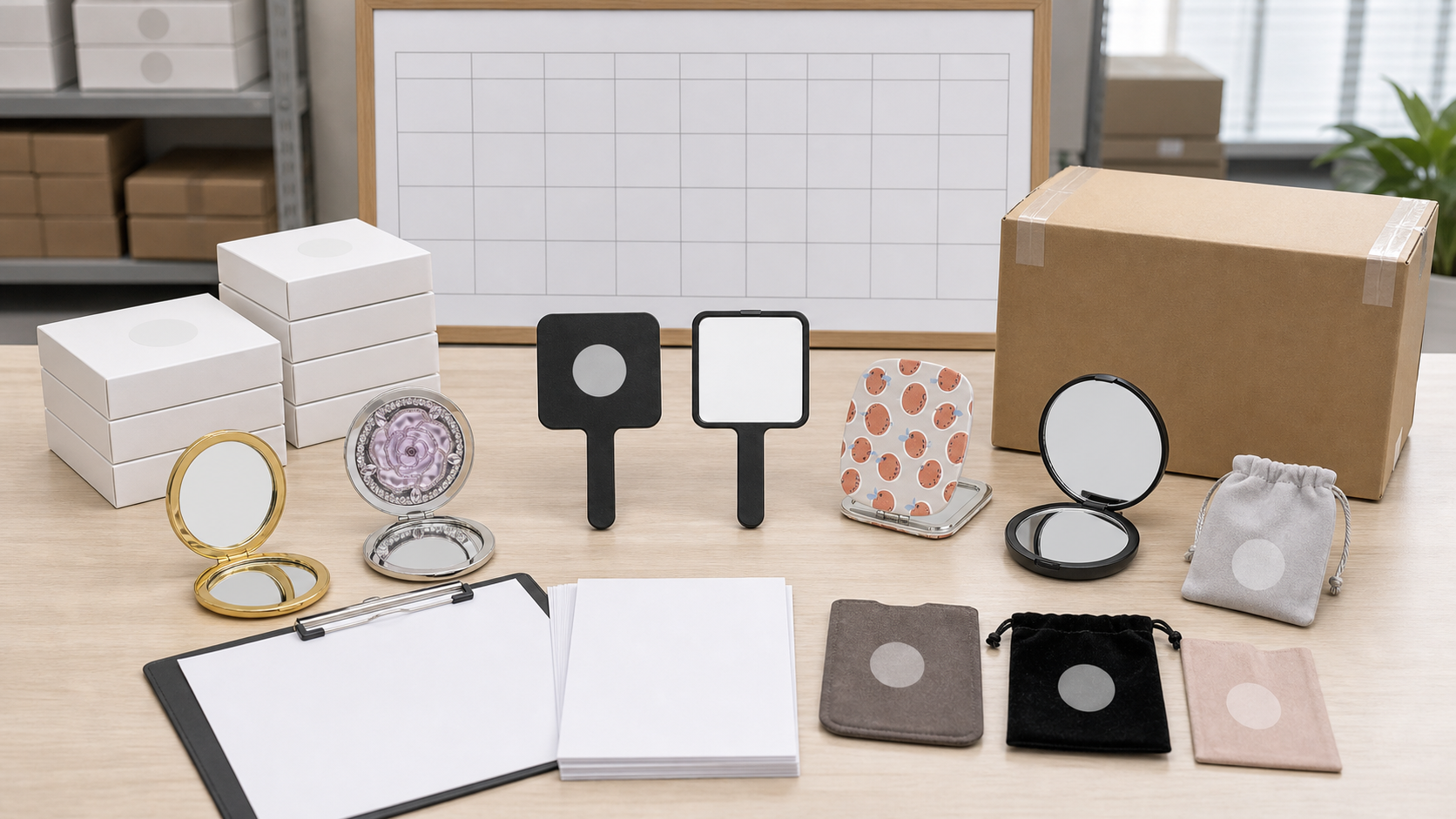
Many buyers ask for the MOQ as if there is only one number. In practice, a handheld mirror project can contain several minimums. The mirror body may have one MOQ, a custom color box may have another, a pouch may have a material minimum, and logo printing may require its own setup quantity. If these details are not separated in the RFQ, buyers may compare quotes that are not based on the same order structure.
For simple salon or value retail mirrors, MOQ can be easier to manage because the packaging is usually more standard. For travel compacts, decorative compacts, or private-label gift programs, packaging and finish choices often drive the real order planning. Buyers can connect this topic with Mingda's packaging and logo options guide and handheld mirror product line planning guide.
MOQ and Lead-Time Decision Table
| Order element | What changes MOQ | What changes lead time | Buyer action |
|---|---|---|---|
| Mirror structure | Custom mold, uncommon size, special hinge or handle | Tooling, sample correction, structural testing | Start with existing structures when speed matters |
| Finish and color | Custom color, plating, coating, decorative surface | Color matching, finish sample approval, cosmetic inspection | Approve physical finish samples before bulk order |
| Logo method | Printing, hot stamping, label, molded logo, pouch logo | Artwork proofing and logo test sample | Send vector artwork and color reference early |
| Packaging | Color box, pouch, insert tray, hanging card, gift box | Packaging proofing, material preparation, carton test | Quote mirror and packaging together |
| Replenishment plan | Multiple SKUs, mixed colors, split shipments | Production scheduling and inspection batching | Forecast reorder timing before launch |
Sample Orders and Bulk Orders Need Different Thinking
A sample order proves whether the product direction is right. A bulk order proves whether the product can be repeated, packed, inspected, and shipped consistently. Buyers should not approve a loose sample and assume the bulk order is solved. For compact mirrors, the hinge, surface finish, pouch, insert card, and box fit can all behave differently once products are packed in quantity.
Sample approval should include the real logo position and packaging when private label timing is important. If the sample only confirms mirror structure, there may still be delays from artwork, box proofing, pouch color, or carton testing. This is especially important for seasonal retail launches and e-commerce programs that have fixed listing or delivery dates.
How to Plan Replenishment Before the First Order
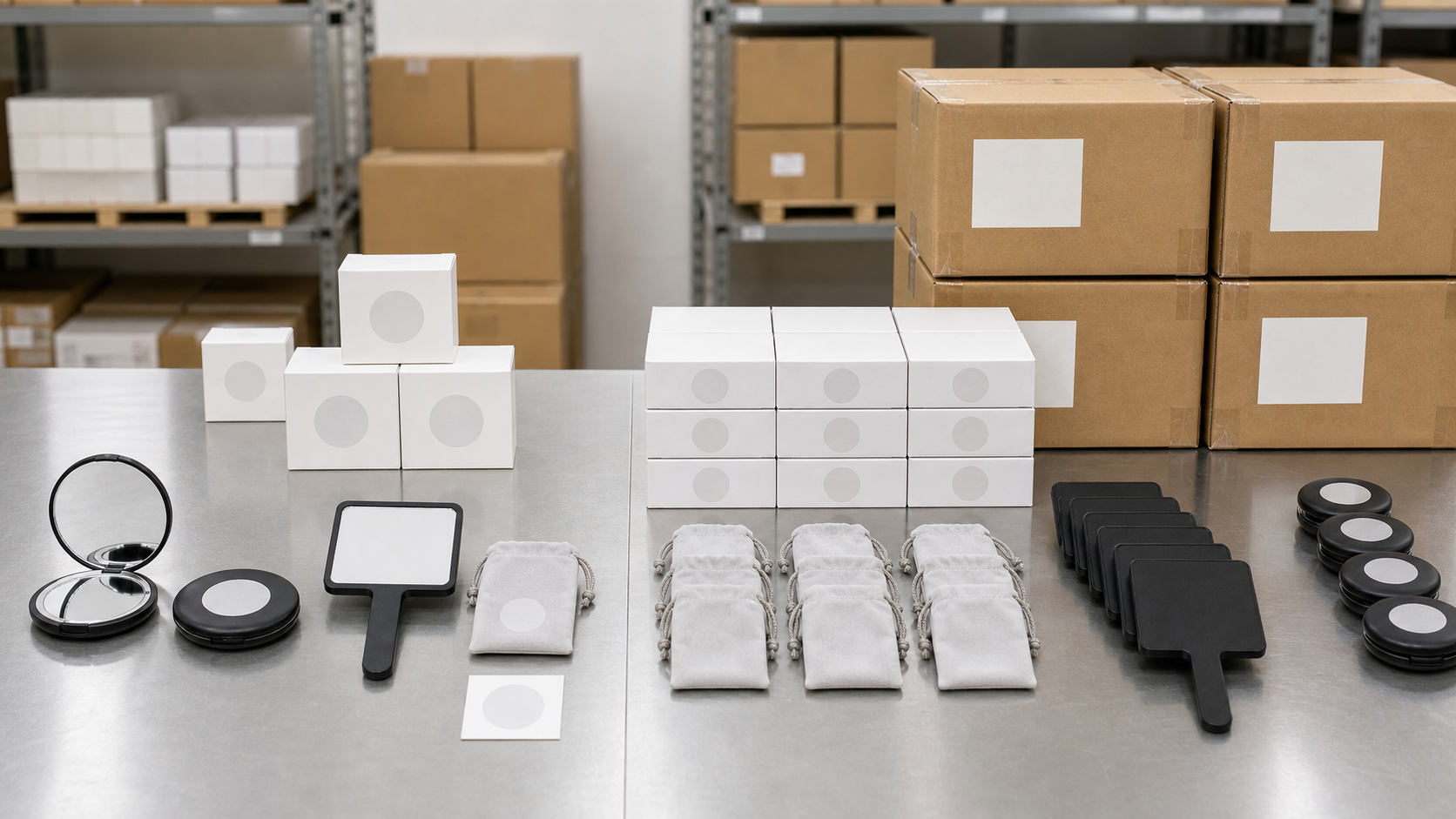
Replenishment planning begins before the first bulk order. Buyers should identify which SKUs are expected to sell fastest, which packaging materials need longer preparation, and whether future reorders can use the same artwork. If a buyer plans to test several SKUs, the first order should not create packaging or finish complexity that makes reorder decisions slow.
Retail chains and distributors should also consider carton count, warehouse handling, and replacement policy. E-commerce sellers should think about parcel damage and whether the package explains the product clearly enough to reduce returns. A short lead time is useful only when the product, package, and QC standard are already stable.
Pre-RFQ Checklist
- Confirm target order quantity by SKU, not only total order quantity.
- Separate mirror MOQ, packaging MOQ, logo MOQ, and finish MOQ.
- Ask whether packaging materials need extra preparation time.
- Send final logo artwork, color references, barcode needs, and destination-market label requirements.
- Approve a packed sample for compact mirrors and gift-packaged orders.
- Confirm inspection points for mirror clarity, hinge, frame, finish, logo, pouch, box, and carton.
- Plan reorder timing before inventory falls below the supplier's production lead time.
Common Planning Mistakes
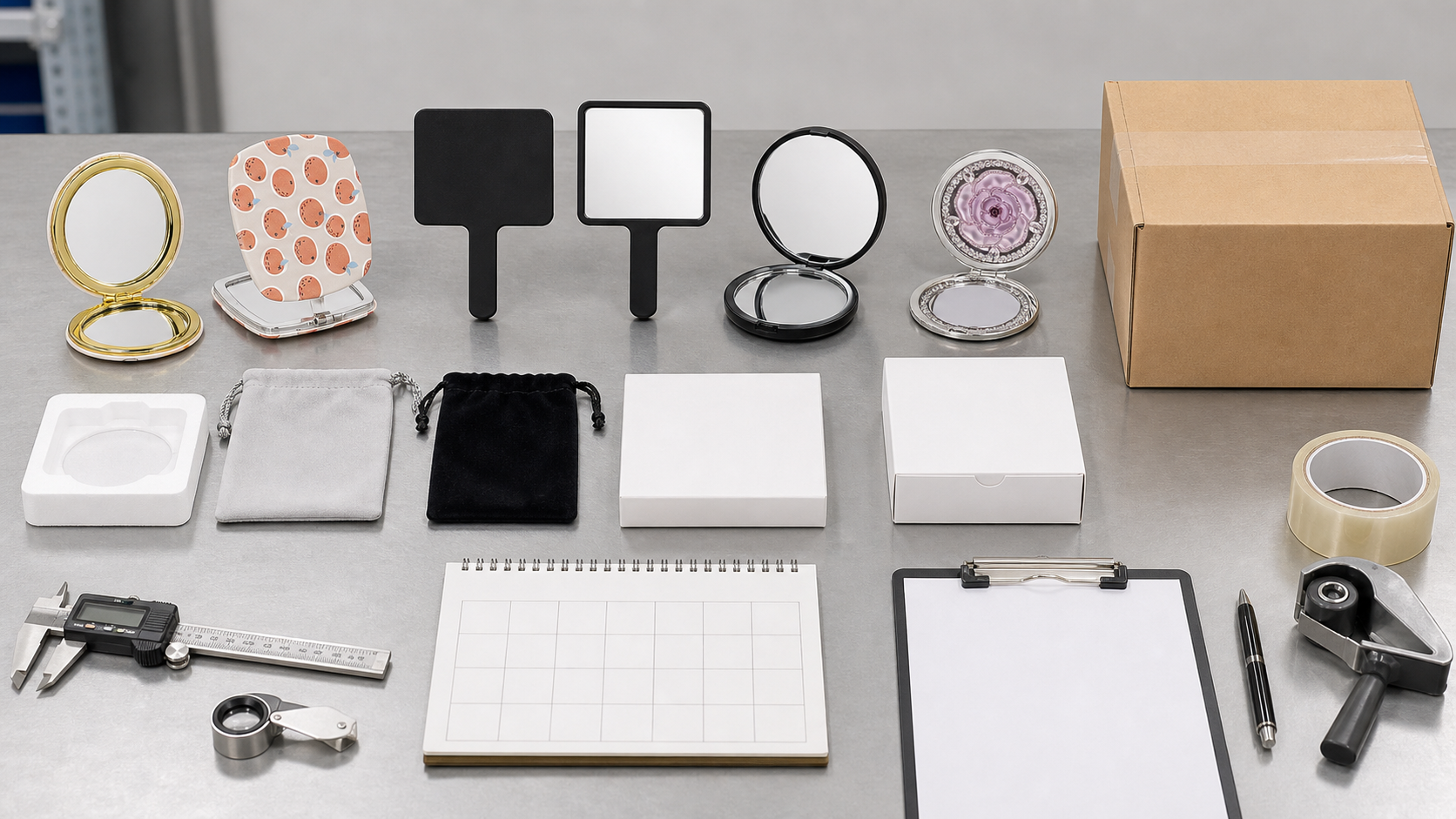
The first mistake is asking only for the lowest MOQ without checking whether custom packaging has a different minimum. The second is leaving logo and box artwork until after the mirror sample is approved. The third is ordering too many SKU variations before understanding which products will repeat. The fourth is ignoring carton and packaging approval even though handheld mirrors can still scratch, crack, or arrive with damaged packaging.
Another common issue is treating lead time as a fixed promise. Lead time depends on how clear the buyer's specification is, how quickly samples are approved, whether packaging materials are ready, and whether changes are requested after proofing. A buyer who sends complete RFQ information usually gets a more reliable timeline than a buyer who adds requirements later.
Bottom Line
For handheld mirror orders, MOQ and lead time are not just supplier terms. They are planning tools. Buyers should confirm mirror structure, finish, logo, packaging, packed sample approval, carton protection, and reorder rhythm before bulk production. The safest sourcing path is to keep the first order focused, approve the real packed sample, and plan replenishment around the longest material or production step.
FAQ
Why can handheld mirror MOQ change after packaging is selected?
Because custom boxes, pouches, inserts, labels, and printed materials may have separate material or printing minimums from the mirror itself.
Does logo printing increase lead time?
It can. Logo printing usually requires artwork confirmation, proofing, and sometimes a physical logo sample before mass production.
Should buyers approve a packed sample before bulk production?
Yes, especially for compact mirrors, decorative finishes, gift packaging, and e-commerce orders where surface protection and carton strength matter.
How should buyers plan replenishment?
Track sales by SKU, confirm supplier production lead time, keep artwork stable, and reorder before inventory falls below the longest production or packaging preparation window.
What should buyers include in an MOQ request?
Include SKU quantity, mirror type, finish, logo method, packaging format, barcode or label requirements, destination market, and target delivery date.
CTA
If you need to plan MOQ, lead time, and replenishment for handheld mirror orders, contact Mingda Mirror with your SKU list, packaging plan, logo files, quantity range, and target delivery schedule. Mingda can help clarify practical order assumptions before sampling and bulk production.
Home | Handheld Mirror Guide | Packaging and Logo Options | Product Line Planning | QC Process | Contact