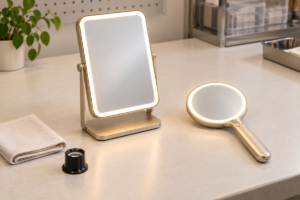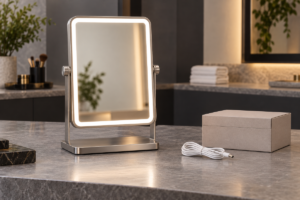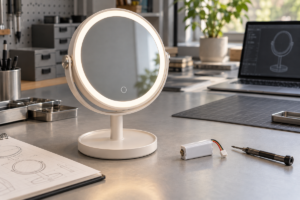

A strong private label LED handheld mirror product line should not be built by adding random mirror shapes. Buyers need a clear SKU structure around use case, lighting function, finish quality, packaging level, and target channel.
For retail, gift, salon, and e-commerce programs, the safest starting point is usually a small range of LED handheld or compact makeup mirrors with different price tiers, not too many similar products competing with each other.
Start With Channel Roles
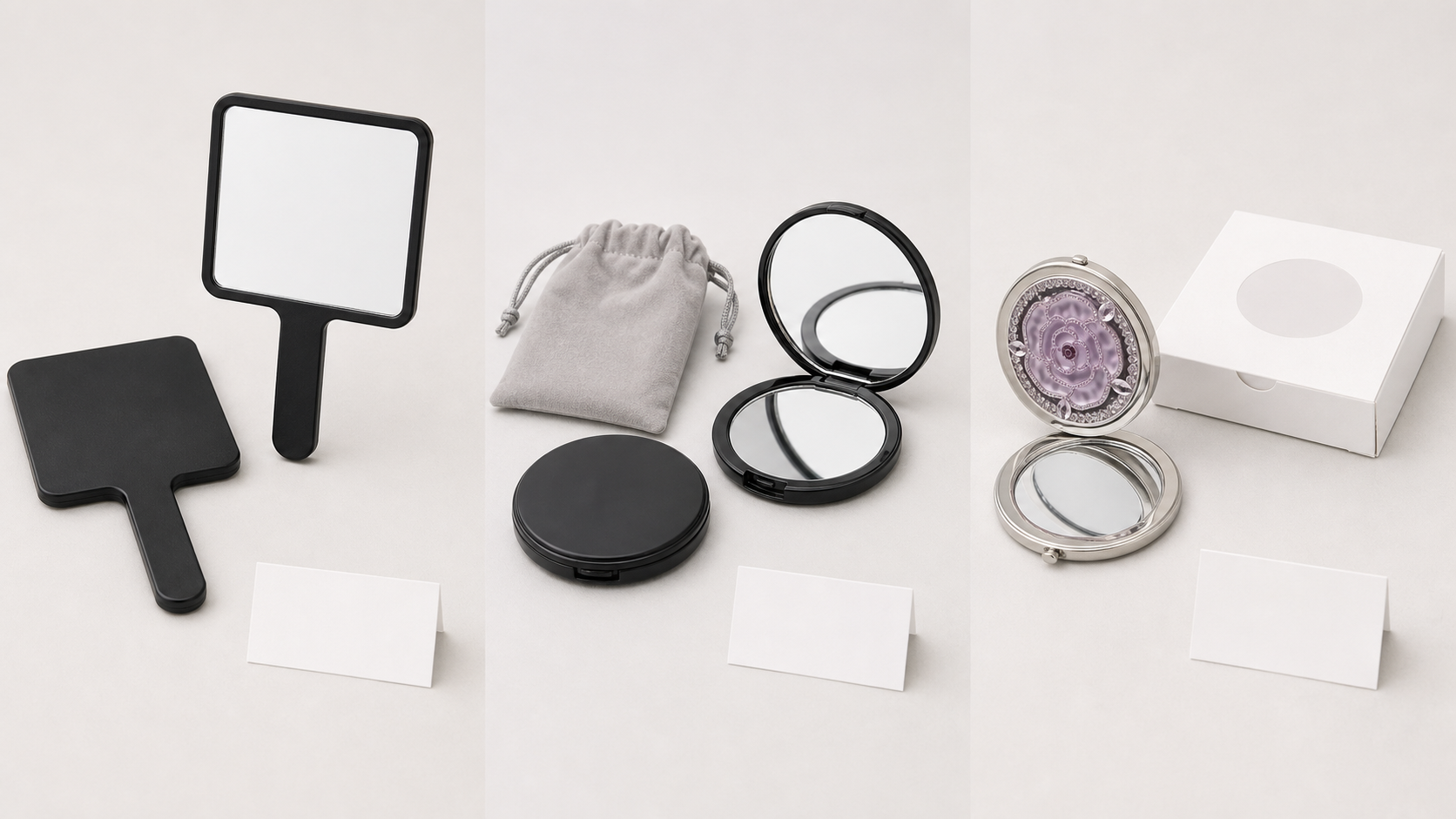
Every SKU should answer a commercial question. A salon handheld mirror should support daily use, clear reflection, handle comfort, and low complaint risk. A travel compact should support portability, protection, and sometimes magnification. A decorative compact should support shelf appeal, gifting, or promotional value. If buyers start only from appearance, the final line often contains three products that compete with each other instead of serving different customers.
Channel logic also affects packaging. A salon mirror can often use efficient protective packing. A travel compact may need a pouch or small color box. A gift compact may need stronger presentation and tighter cosmetic QC. Buyers can review Mingda's handheld mirror sourcing guide and handheld mirror packaging and logo guide for related decisions.
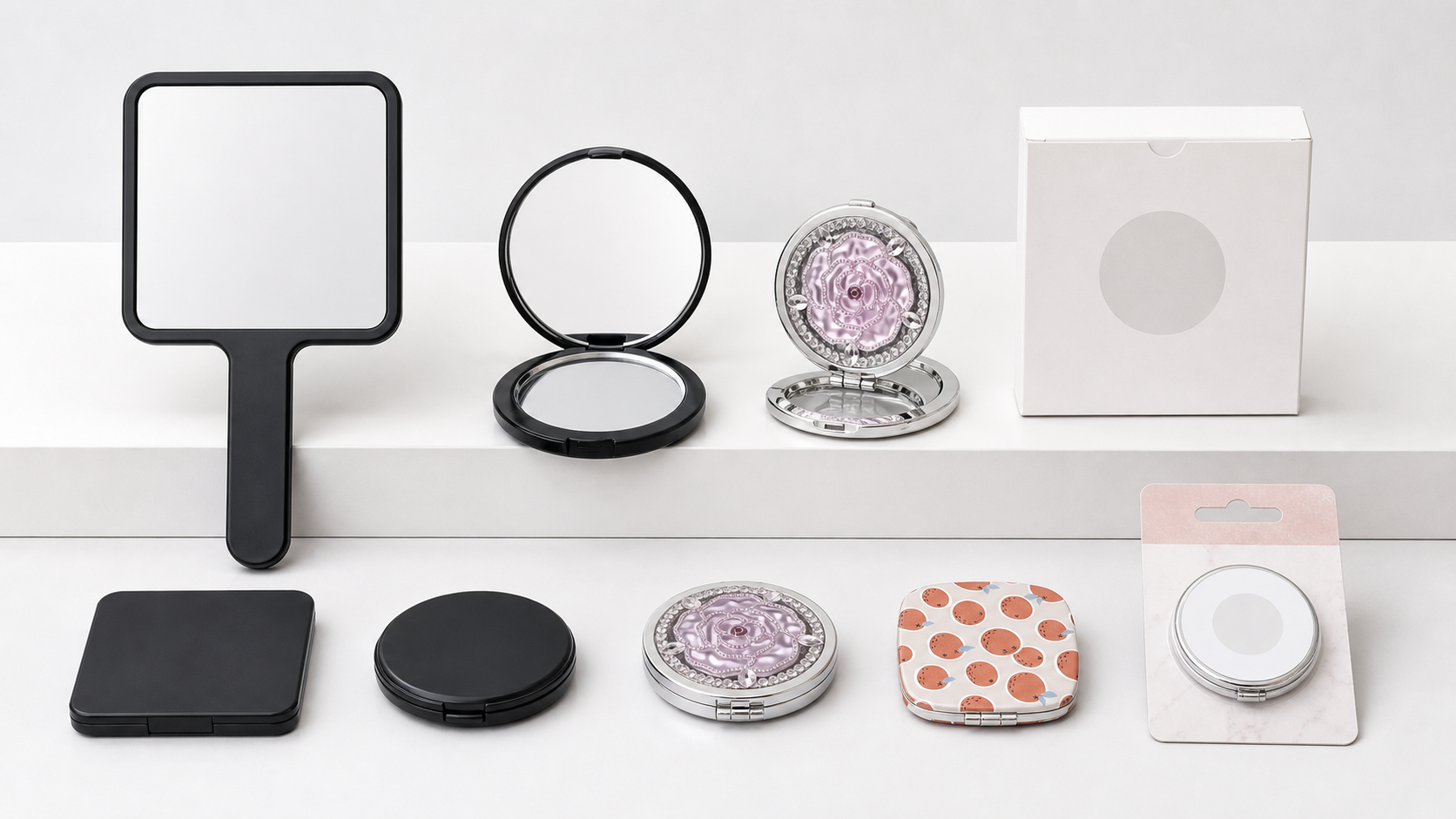
Recommended SKU Framework
| SKU role | Typical product type | Best-fit channel | Risk to control |
|---|---|---|---|
| Value utility SKU | Single-sided handheld mirror | Salon supply, value retail, wholesale replenishment | Handle strength, mirror clarity, frame scratches, carton efficiency |
| Travel convenience SKU | Double-sided compact mirror | Travel retail, beauty accessory, e-commerce | Hinge quality, magnification comfort, pouch or box protection |
| Gift or premium SKU | Decorative compact mirror | Gift, promo, private label beauty line | Finish defects, logo placement, packaging cost, cosmetic rejects |
This framework keeps the line focused. A buyer can add color, finish, or packaging variants later, but the first decision should be the SKU role. When the role is clear, price comparison, MOQ negotiation, and sample approval become much easier.
Do Not Overbuild the First Assortment
A common mistake is launching too many similar compacts at the same time. This can look attractive in a catalog, but it creates slower approval, higher packaging complexity, more inventory uncertainty, and harder reorder decisions. For a first private label launch, three to five well-defined SKUs usually give better control than a large assortment with weak differentiation.
Buyers should also avoid mixing every feature into one item. A compact mirror can be travel-friendly, decorative, logo-ready, and giftable, but each added feature changes inspection and packaging risk. A simple utility SKU and a premium compact SKU can coexist, but they should not be quoted as if they serve the same margin target.
Specification Decisions Before RFQ
- Define the target channel for each SKU before asking for final pricing.
- Decide whether each item is single-sided, double-sided, foldable, compact, or decorative.
- Confirm magnification needs only where the buyer can explain the user benefit.
- Choose material and finish based on durability and return risk, not only appearance.
- Match packaging to channel: protective sleeve, pouch, card, color box, or gift box.
- Prepare logo placement and artwork requirements before sample proofing.
- Ask whether mirror MOQ, packaging MOQ, and logo MOQ are the same or different.
These details should be included in the RFQ because they affect real landed cost. A low unit price without packaging, logo, and QC assumptions is not a complete comparison.
Sample Approval for a Product Line
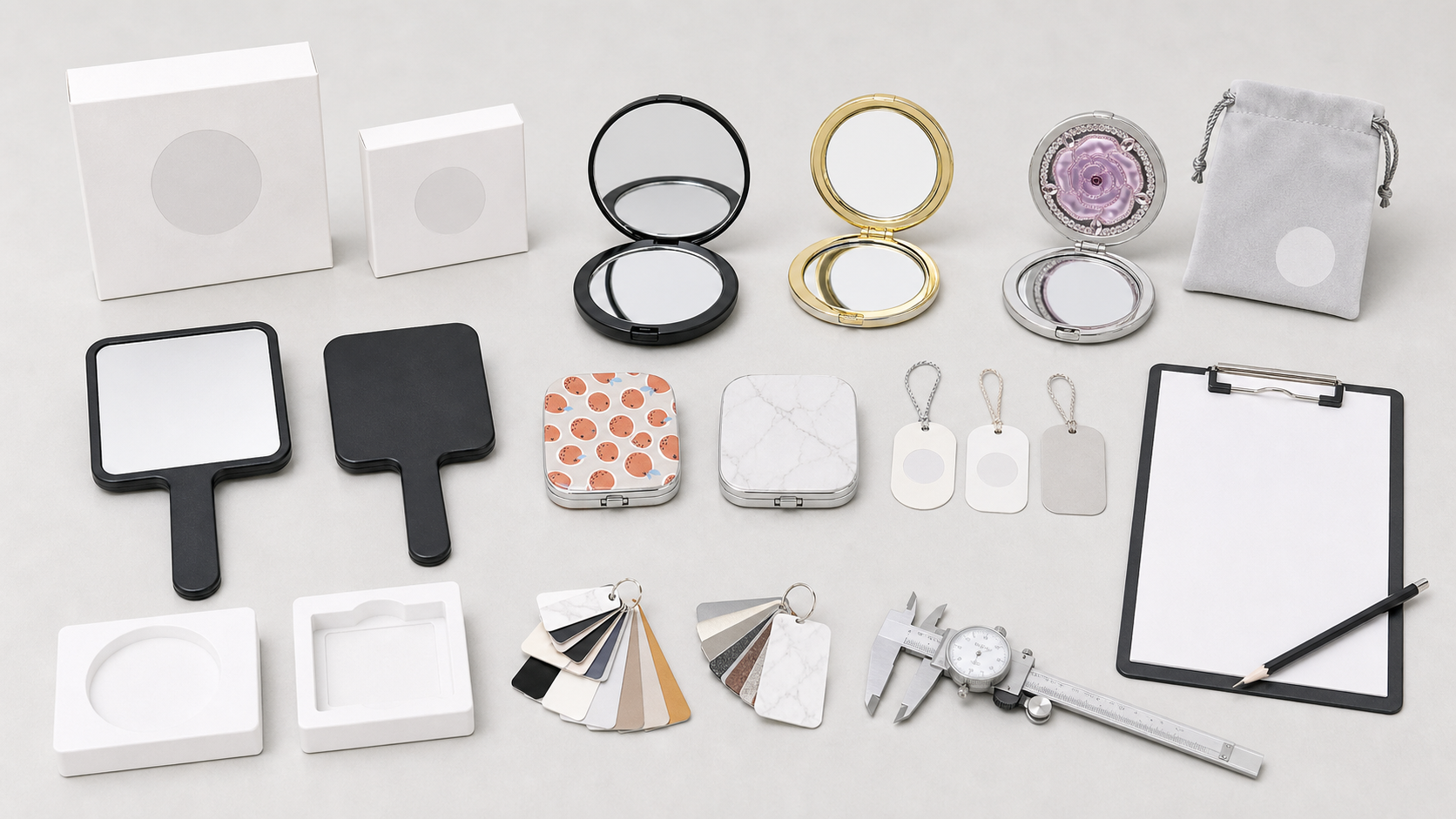
Sample approval should cover the line as a system. Buyers need to check whether the products look coherent together, whether packaging levels make sense, and whether each SKU has a clear price position. The sample review should include mirror clarity, frame strength, hinge feel, finish consistency, logo position, pouch or box fit, and carton protection.
For private label buyers, a line-level review also reduces future rework. If the value SKU uses one logo size, the travel compact uses another, and the gift compact uses a special box, those choices must be approved together. Otherwise the launch can be delayed by artwork, packaging, or inspection changes after the mirror itself is already accepted.
Common Product Line Mistakes
The first mistake is building the line around what looks different instead of what sells differently. The second is creating too many decorative variants before confirming stable demand. The third is ignoring packaging cost when comparing value and premium SKUs. The fourth is approving samples one by one without checking whether the full assortment has a clear commercial structure.
Another frequent issue is treating MOQ as an afterthought. A buyer may want five SKUs, three finishes, and custom packaging, but each layer can change the minimum order and lead time. That is why assortment planning should happen before final quotation, not after.
Bottom Line
For private label handheld mirrors, start with a compact line that has clear channel roles: utility, travel, and gift or premium. Add finishes and packaging only when they support the SKU's commercial job. Confirm MOQ, logo, packaging, sample approval, and QC standards before bulk production. A smaller, clearer product line is usually easier to launch, easier to replenish, and easier to improve after market feedback.
FAQ
How many handheld mirror SKUs should a private label buyer start with?
Many buyers can start with three to five SKUs if each one has a clear role, such as salon utility, travel compact, and gift compact.
Should a handheld mirror line include both single-sided and double-sided mirrors?
Yes, if they serve different channels. Single-sided mirrors often fit salon and value retail, while double-sided compacts fit travel and beauty accessory programs.
When should buyers add decorative compact mirrors?
Add them when the sales channel can support higher presentation value and the buyer is ready to manage finish, packaging, and cosmetic QC risks.
What should be approved before bulk production?
Approve mirror structure, finish, logo position, packaging, carton protection, inspection standards, and whether MOQ differs by SKU or packaging material.
Can Mingda help plan a handheld mirror line?
Yes. Mingda can help compare product types, packaging routes, private label options, and sample approval points before quotation.
CTA
If you are building a private label handheld mirror line, contact Mingda Mirror with your target channels, price bands, SKU ideas, packaging needs, and quantity range. Mingda can help organize practical options before sampling and bulk production.
Home | Handheld Mirror Guide | Single vs Double-Sided Comparison | Materials and Durability | Packaging and Logo Options | Contact