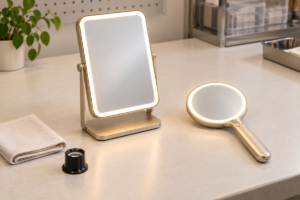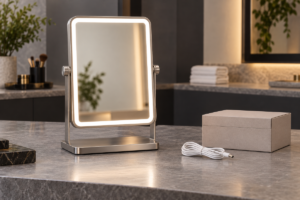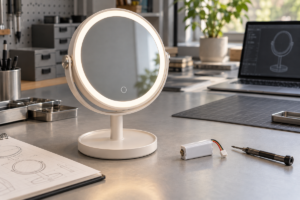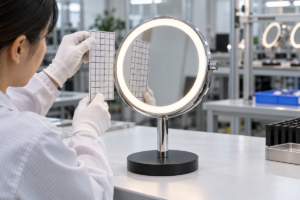

A makeup mirror product line should be built around buyer segments, not around random models. Beauty brands and retailers usually need an entry item, one or two core LED tabletop mirrors, a travel or compact option, and a premium upgrade with stronger lighting, magnification, packaging, and private-label value. The right line gives shoppers clear choices while helping the purchasing team control MOQ, sample approval, packaging cost, and replenishment risk.
This guide is written for beauty brands, retail chains, Amazon sellers, wholesalers, and distributors planning an own-brand or curated makeup mirror range.
Useful starting points: Makeup Mirrors | Makeup Mirror Sourcing Guide | Sample Approval Checklist.
Start with buyer scenarios, not model count
A practical assortment starts by defining where the mirror will be sold and who will use it. A mass retailer may need a stable tabletop LED mirror with simple controls and strong shelf packaging. An Amazon seller may need rechargeable convenience, clear listing photos, and parcel-safe cartons. A beauty brand may need a more refined finish, logo placement, and packaging that supports its price point. When the scenario is clear, each model has a role instead of competing against the other items in the same line.
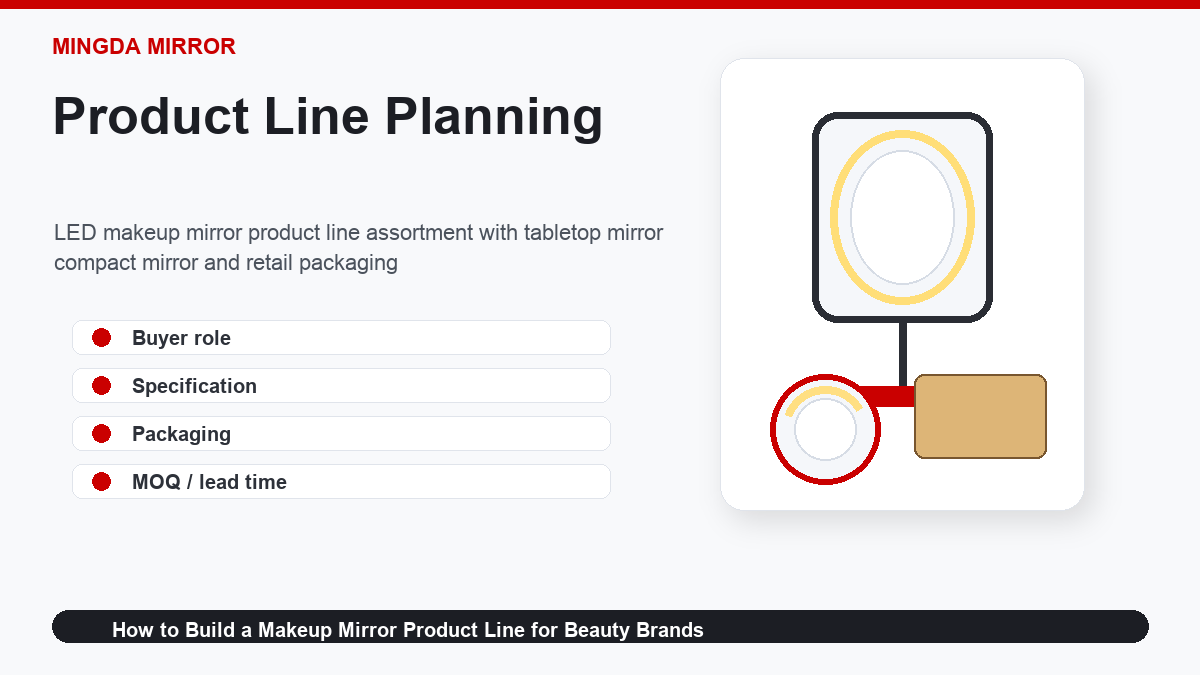
Build a three-tier product ladder
Most brands can start with three tiers: an entry mirror for price-sensitive shoppers, a core model for the main sales volume, and a premium item for margin and brand image. The entry tier should avoid fragile over-specification. The core tier should balance LED brightness, CCT, stable base, useful magnification, and strong packaging. The premium tier can add larger size, better CRI, rechargeable battery, metal finish, touch dimming, or a gift-ready color box. This ladder makes quotations easier because the supplier can price each tier against a clear commercial target.
Control lighting and magnification choices
Lighting should be selected by channel. Beauty users usually prefer comfortable, even lighting instead of extreme brightness. Buyers should confirm CCT, CRI, dimming method, diffusion, LED lifetime, and switch durability. Magnification should be offered carefully: 1x supports daily makeup, 5x or 7x supports detail work, and very high magnification can increase complaints if shoppers do not understand the working distance. A good line explains these differences through packaging, manuals, and sales copy.
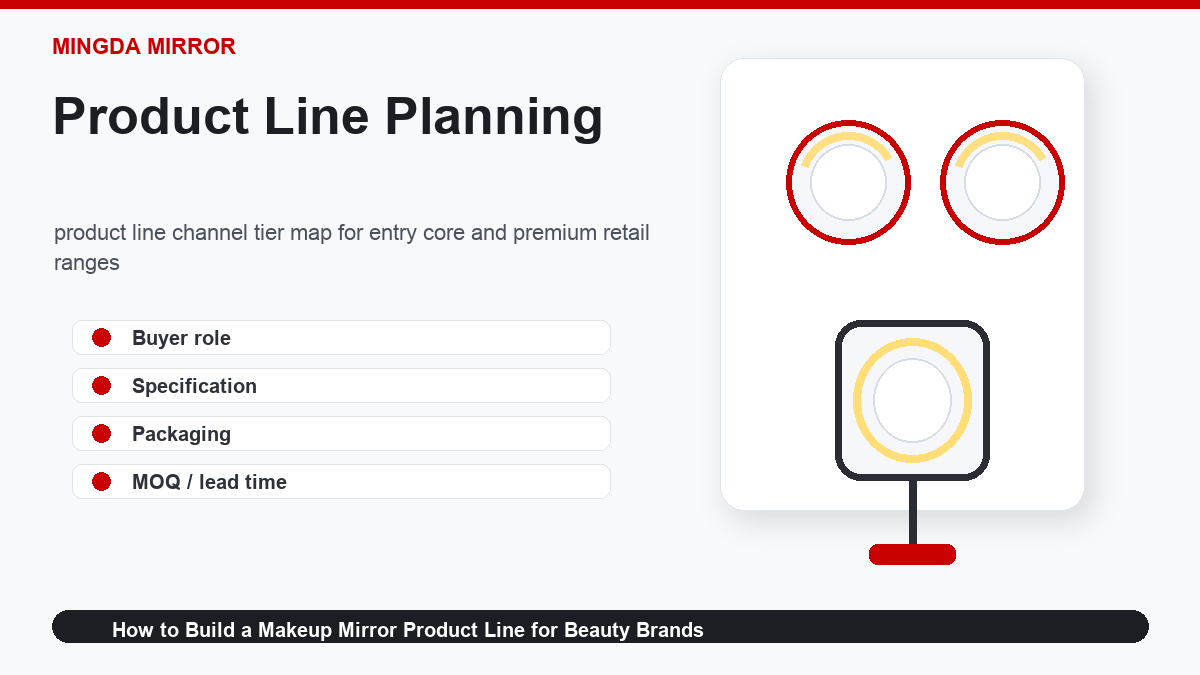
Plan power source and safety from the start
Rechargeable mirrors can improve convenience and listing value, but they add battery, charging port, cable, testing, labeling, and shipping considerations. Plug-in mirrors can be better for vanity placement and long use, but buyers must define voltage, plug type, adapter quality, and cable length. The purchasing team should decide whether each tier uses battery, USB charging, replaceable cells, or plug-in power before asking for price.
Make packaging part of the product line
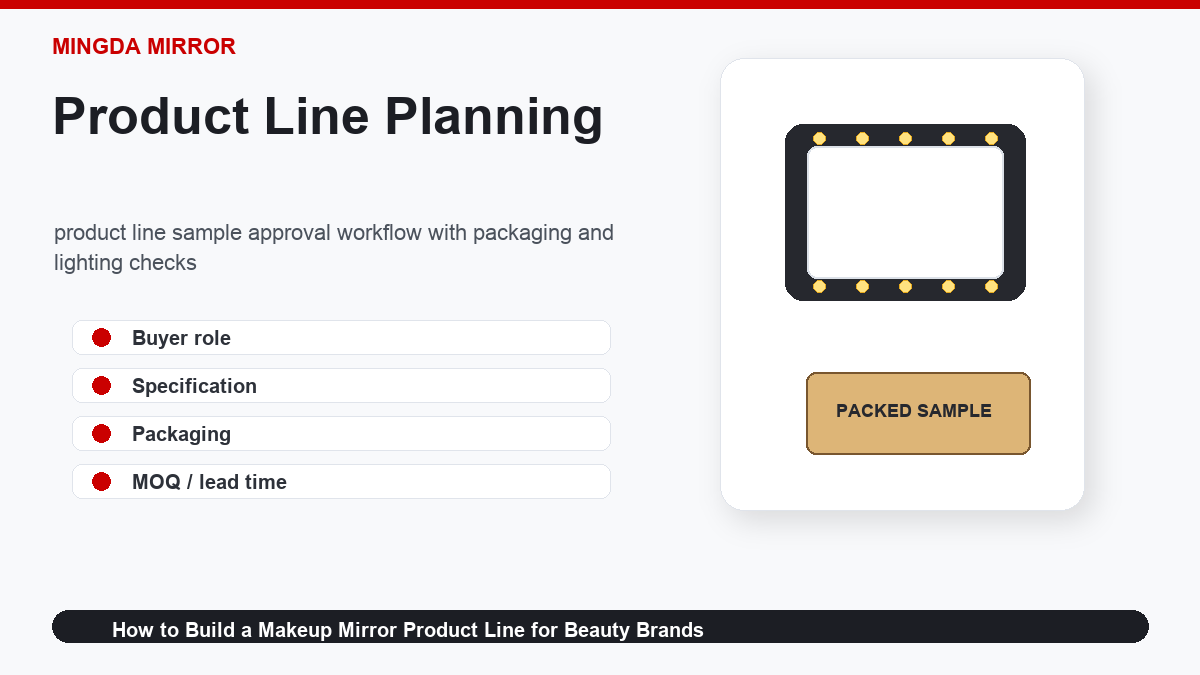
Packaging is not a late detail. It affects retail shelf presence, e-commerce return risk, MOQ, lead time, and landed cost. A beauty brand may need color boxes, inserts, logo labels, manuals, and barcode placement. An e-commerce seller may need stronger foam, drop-test logic, and clear accessory packing. Buyers should approve a packed sample, not only a loose mirror sample, before bulk production.
Keep customization commercially realistic
Logo, finish, color box, manual language, barcode, and bundled accessories can all support a private-label range. The risk is adding too many custom options before the first order volume is stable. Buyers should separate launch requirements from later upgrades and ask the supplier to quote MOQ, tooling, printing, artwork approval, and sample lead time for each custom item.
Buyer Decision Matrix
| Option | Best use | Best channel | Buyer risk to control |
|---|---|---|---|
| Entry tier | Simple LED tabletop or compact mirror | Price-sensitive retail, trial orders | Avoid weak stands, unclear battery instructions, and thin cartons |
| Core tier | Best balance of size, lighting, magnification, and packaging | Main sales volume for brands and retailers | Confirm CCT, dimming, mirror stability, and packed sample |
| Premium tier | Larger size, refined finish, rechargeable or better lighting | Margin, gifting, brand image, hero listing | Check battery compliance, accessory quality, and packaging MOQ |
Pre-RFQ Checklist
- Define target channel, retail price range, and expected monthly volume.
- Choose entry, core, and premium roles before selecting models.
- Confirm LED CCT, CRI, dimming, magnification, size, base stability, and power source.
- Request quotation for product, packaging, logo, manual, barcode, and spare parts separately.
- Approve loose sample, lighting sample, color box artwork, and packed sample before mass production.
- Set replacement rules and inspection points before issuing the purchase order.
Commercial Notes for Sourcing Managers
Sourcing managers should ask for separate lines for product cost, packaging cost, customization cost, sample cost, tooling or setup fees, and replacement terms. This prevents a low unit price from hiding missing cartons, labels, manuals, accessories, or after-sales responsibility. For private-label orders, confirm artwork approval timing and whether packaging MOQ is different from product MOQ.
Bottom Line
A strong makeup mirror product line is narrow, clear, and commercially controlled. Start with buyer scenarios, build three practical tiers, keep lighting and magnification understandable, and treat packaging and sample approval as part of the product rather than afterthoughts.
FAQ
What should buyers confirm before asking for a quotation?
Buyers should confirm target channel, expected price range, product role, key specifications, packaging style, logo requirements, order quantity, and sample approval steps.
How does MOQ affect product planning?
MOQ affects how many models, colors, packaging versions, and replacement parts can be managed safely. A focused launch usually reduces inventory and rework risk.
Should packaging be approved before bulk production?
Yes. Buyers should approve a packed sample because packaging affects breakage risk, retail presentation, barcode accuracy, carton size, and customer experience.
Can Mingda support private-label mirror orders?
Yes. Mingda can support logo, packaging, product selection, sample review, QC, and shipment planning for makeup mirrors, handheld mirrors, Hollywood mirrors, and related LED mirror products.
Social Media Content Ideas
LinkedIn: share one sourcing decision rule from this article for purchasing teams. Facebook: explain the buyer mistake this checklist prevents. Instagram: use the main comparison image as a short visual guide. CTA: read the full blog post and contact Mingda Mirror with target market, quantity, packaging, and customization details.
CTA
If you are planning a mirror order for retail, e-commerce, wholesale, beauty brand, distributor, or project channels, contact Mingda Mirror with your target market, quantity, specifications, packaging needs, and private-label requirements.
Home | Product | Makeup Mirrors | Hollywood Mirrors | QC Process | Contact