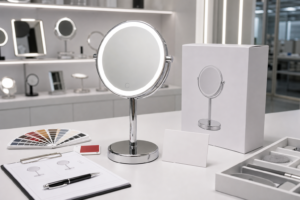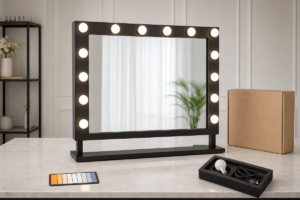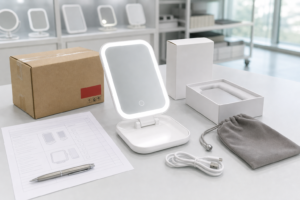

For private-label LED makeup mirror orders, logo placement should be decided before sampling, not after mass production starts. The safest approach is to match the logo method to the mirror material, lighting structure, retail channel, and packaging plan: screen printing works well on smooth bases or gift boxes, laser marking fits metal details, pad printing suits small curved parts, and packaging labels are useful when buyers need flexible SKUs. The right decision reduces sample revisions, avoids cosmetic defects, and helps buyers request a clearer quotation from the factory.
Beauty brands, retailers, Amazon sellers, and distributors often focus first on mirror shape, light color, magnification, and price. Branding is sometimes treated as a late design detail. In bulk sourcing, that creates avoidable cost and timing risk. A logo that looks elegant in a mockup may fail adhesion testing, sit too close to a touch button, reflect awkwardly in the mirror surface, or increase packaging complexity across multiple sales channels.
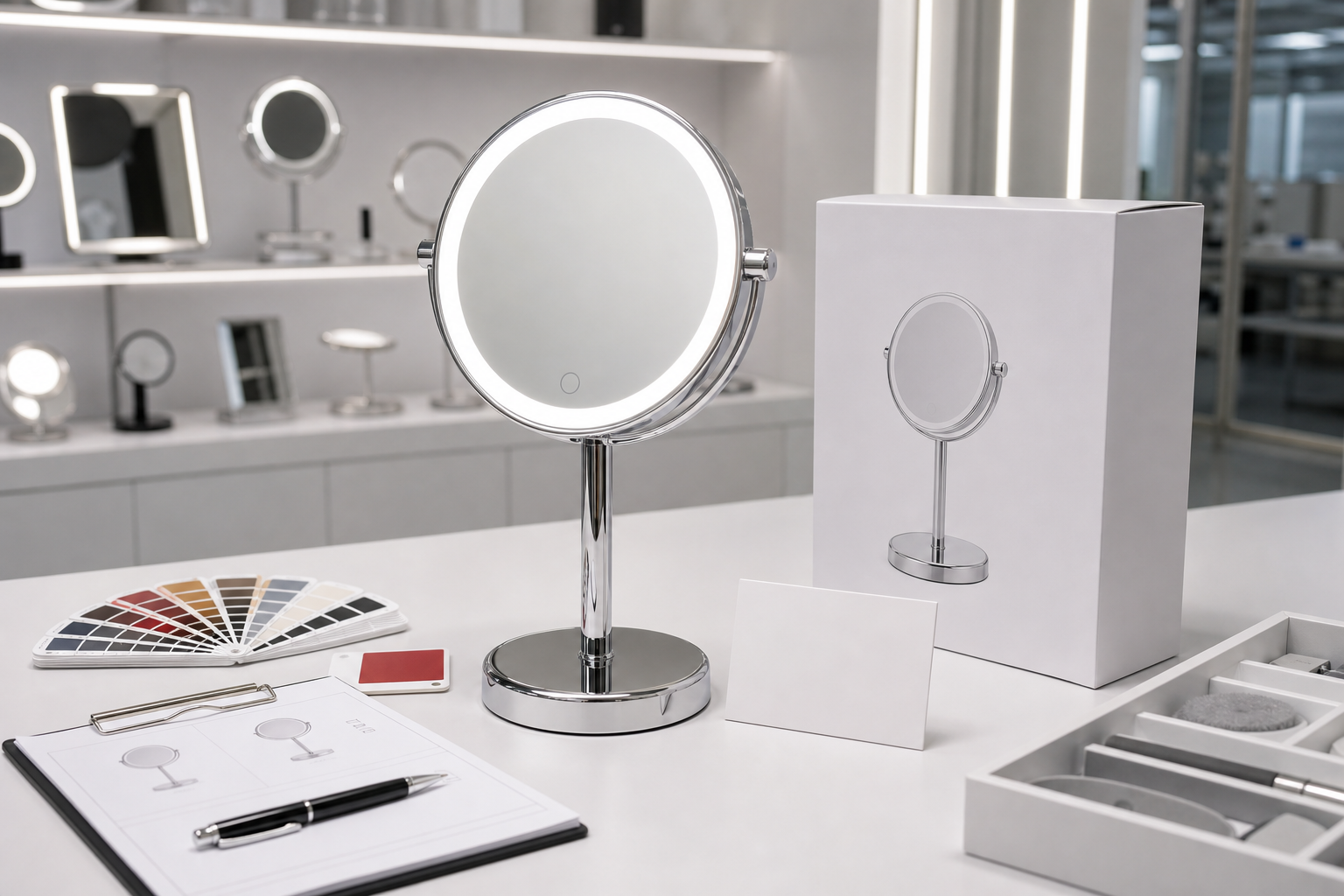
Why Logo Placement Matters in LED Makeup Mirror Sourcing
A private-label mirror is not only a product with a printed name. It is a retail promise. The logo position affects first impression, perceived quality, compliance review, photography, unboxing, and after-sales identification.
For an LED makeup mirror line, buyers normally need to confirm the visible brand area, printing tolerance, packaging artwork, and sample approval process before placing a purchase order. This is especially important when the mirror includes LED lighting, touch control, rechargeable batteries, USB-C charging, magnification, or a detachable stand.
The commercial impact is direct:
- A poor logo location can make a premium mirror look low-cost.
- A logo placed near the LED ring, touch button, or hinge can create production defects.
- A logo method that does not match the material can peel, scratch, fade, or look uneven.
- Inconsistent logo placement across batches can create retail review and return issues.
- Late artwork decisions can delay sample approval and mass production.
Common Logo Placement Options
Different mirror structures need different branding decisions. Buyers should not ask for one logo method across every model unless the material, surface, and sales channel are similar.
| Logo area | Suitable mirror type | Best method | Buyer advantage | Risk to check |
|---|---|---|---|---|
| Mirror base | Tabletop LED makeup mirrors | Screen printing, pad printing, metal badge | Visible in product photos and retail display | Scratching, uneven curvature, wrong scale |
| Back housing | Compact or rechargeable mirrors | Pad printing, UV printing, laser marking on metal parts | Clean front appearance, good for premium SKUs | Low visibility in e-commerce hero images |
| Mirror frame | Hollywood or large makeup mirrors | Laser marking, small metal logo plate, controlled printing | Premium brand feel without blocking lighting | Heat, bulb position, glare, surface finish |
| Gift box front | Retail and Amazon orders | Offset printing, sticker label, sleeve, hot stamping | Strong unboxing and shelf identity | Artwork delay, color inconsistency, barcode conflict |
| Instruction sheet or insert | Multi-market distribution | Printed insert, warranty card, QR card | Flexible language and market adaptation | Not enough product-level branding |
For first orders, many buyers choose a conservative combination: small product logo on the base or back housing, plus stronger branding on the retail box. This protects the product appearance while giving the brand enough visibility in packaging, marketplace photos, and offline display.
Match the Logo Method to the Material
The logo method should be selected after confirming the mirror surface, not only the buyer’s artwork file.
ABS or Plastic Housing
Plastic bases and back housings are common for rechargeable and tabletop makeup mirrors. Pad printing or UV printing can work well, but the buyer should request adhesion checks, rub testing, and color confirmation on the exact production material. Glossy, matte, and textured plastic surfaces can produce different logo results.
Metal Stand, Frame, or Base
For chrome, aluminum, or iron-framed components, laser marking or a small metal badge may feel more premium than basic printing. The buyer should confirm whether the mark remains visible under showroom lighting and whether the process affects coating, plating, or corrosion resistance.
Mirror Glass or Reflective Surface
Logo placement directly on mirror glass should be used carefully. It can interfere with makeup use, reflect in photos, or look intrusive. If buyers want a glass logo, they should keep it small, away from the main viewing area, and verify that cleaning does not damage it.
Retail Packaging
Packaging offers the most flexible branding area. It is useful for retail chains, beauty brands, gift channels, and Amazon sellers that need different barcodes, language versions, or seasonal artwork. However, packaging changes can affect MOQ, lead time, carton marking, and inventory planning.
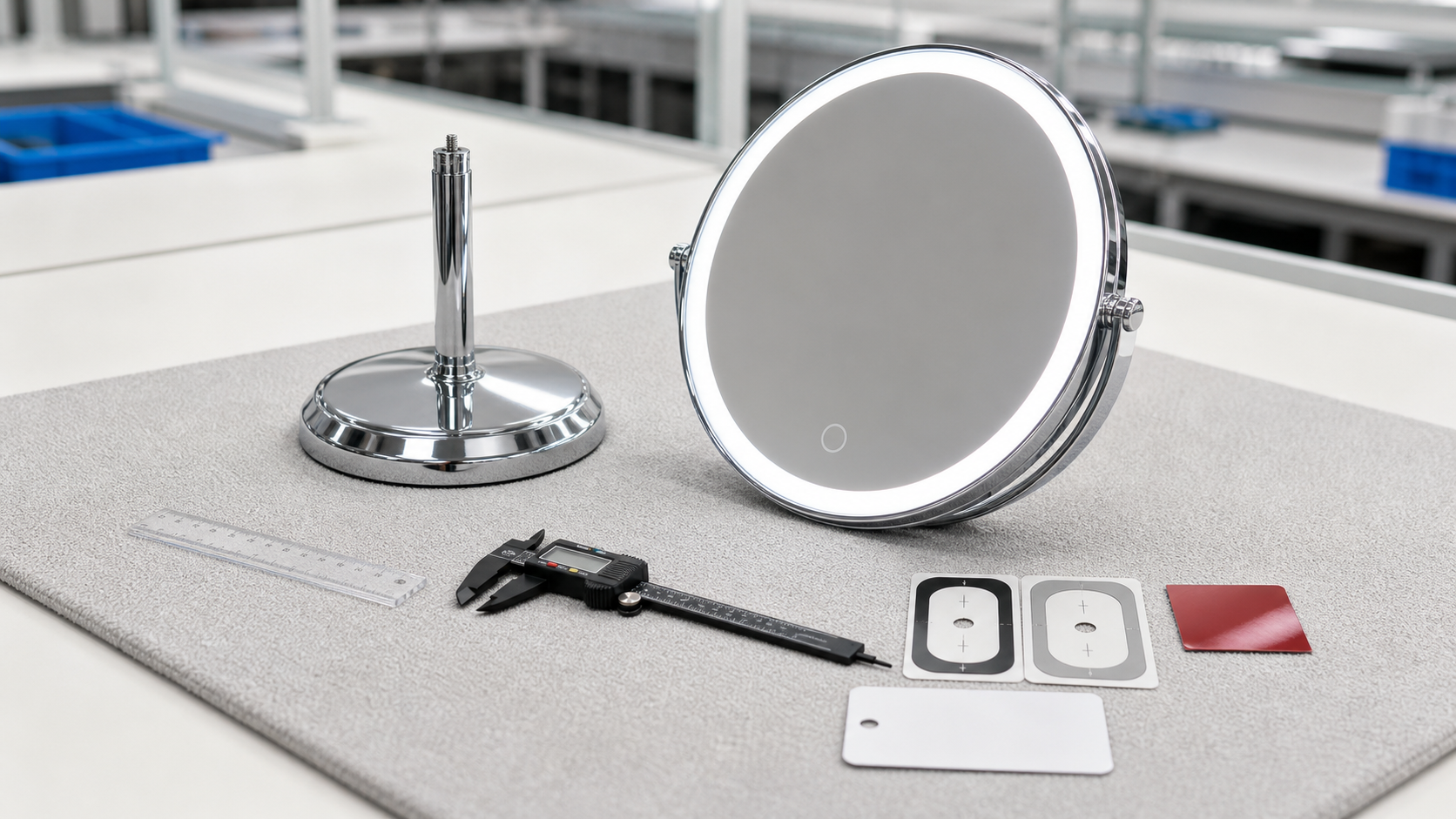
Sample Approval Checklist Before Bulk Production
Before approving a private-label LED makeup mirror sample, buyers should inspect branding as carefully as they inspect lighting and charging performance.
- Confirm the logo size in millimeters, not only as a percentage in a design file.
- Check logo position against the LED ring, touch button, charging port, hinge, stand, and magnification area.
- Inspect color under warm, neutral, and cool lighting when the mirror supports adjustable CCT.
- Rub the logo with a dry cloth and a slightly damp cloth to check early adhesion risk.
- Photograph the sample from the same angles used for marketplace listings or retail presentations.
- Confirm whether the same logo position can be maintained in mass production tolerance.
- Review packaging artwork, barcode area, warning labels, and shipping carton marks together.
- Keep one approved golden sample for future batch comparison.
This checklist is especially useful for Amazon and e-commerce buyers because product photos, unboxing experience, and customer reviews can expose small branding problems quickly. A logo that is too large, crooked, or easily scratched can make the product look inconsistent even when the lighting function is acceptable.
MOQ, Lead Time, and Cost Factors
Logo placement affects quotation details. A supplier may quote a different MOQ for printed product logos, custom packaging, metal plates, color boxes, or mixed-SKU orders.
Buyers should include these items in the RFQ:
- Mirror model, size, lighting mode, magnification, and power source.
- Logo file in vector format, such as AI, EPS, or editable PDF.
- Required logo size, color, and position.
- Preferred logo method if already known.
- Packaging type: white box, color box, gift box, mailer box, sleeve, or label.
- Sales channel: retail shelf, wholesale, Amazon FBA, beauty brand website, distributor catalog, or project use.
- Expected order quantity and number of SKU variations.
- Market requirements for manuals, labels, plugs, batteries, and certifications.
For a new private-label project, it is usually better to approve one stable logo and packaging system first, then expand colors or model variations after the first shipment. Too many branding variations in the first order can increase setup cost, sampling time, and warehouse complexity.
Packaging and Logo Decisions Should Be Approved Together
Product branding and packaging branding must support the same sales channel. Retail stores need shelf appeal and barcode discipline. E-commerce sellers need clean hero images, protective packaging, and clear accessory organization. Distributors need product identification, carton marks, and repeatable replenishment.
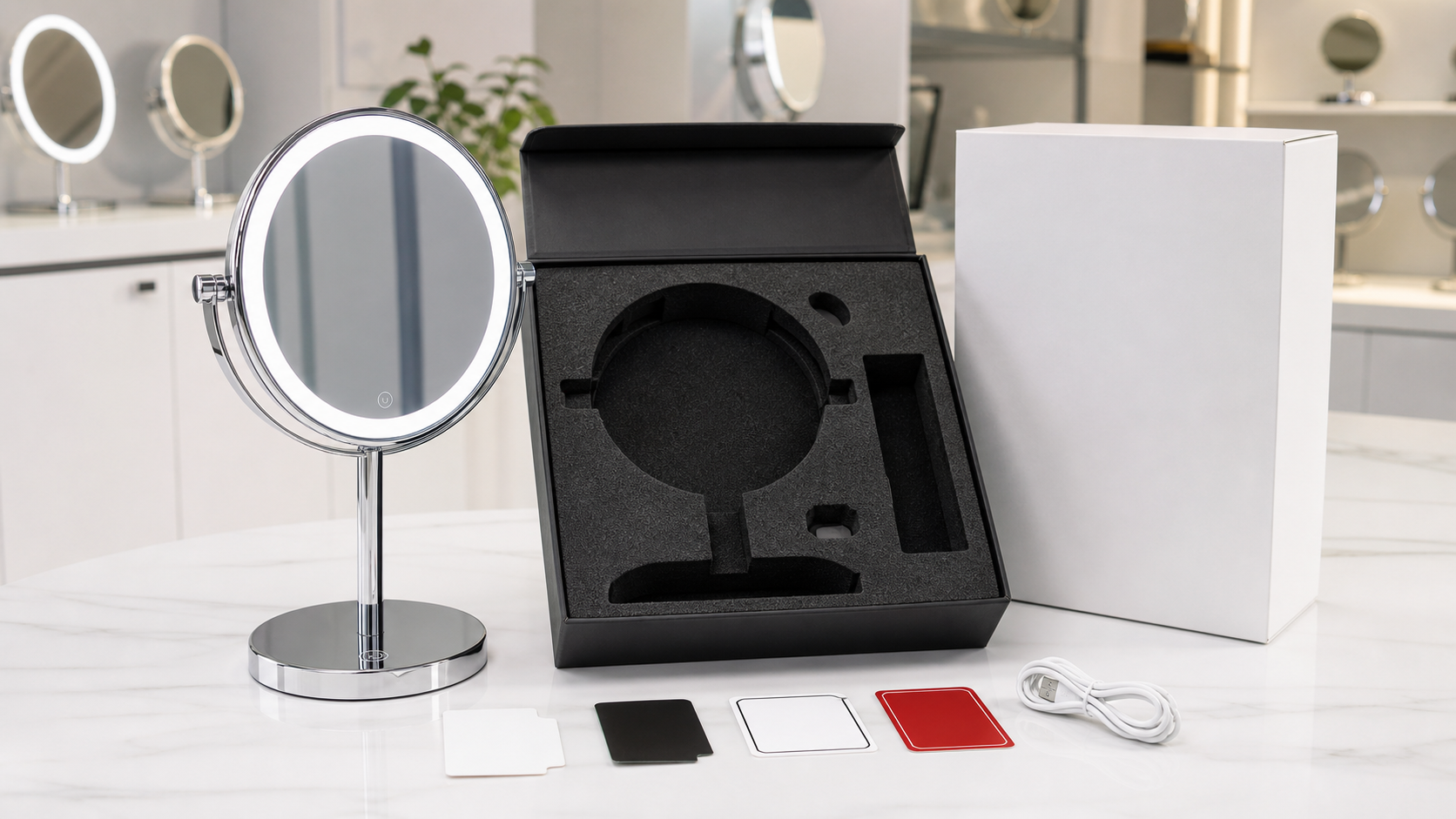
For rechargeable LED makeup mirrors, packaging should also protect the mirror, stand, charging cable, manual, and accessories without pressing against the LED ring or touch button. When branding is added to both product and packaging, buyers should ask the supplier to confirm whether the packaging insert still fits the final printed or labeled version.
Related sourcing checks are covered in Mingda’s guides on rechargeable makeup mirror battery and USB-C safety, custom packaging for makeup and Hollywood mirrors, and what buyers should send before requesting a custom mirror quotation.
Common Mistakes Buyers Should Avoid
The most common mistake is approving a logo only from a digital mockup. A mockup cannot fully show reflection, curvature, coating texture, printing tolerance, or packaging fit.
Other avoidable mistakes include:
- Placing the logo too close to the touch button or LED light guide.
- Using a logo color that disappears on chrome, white, or black surfaces.
- Changing packaging artwork after the golden sample has already been approved.
- Forgetting barcode, warning label, plug, battery, and manual requirements.
- Requesting several logo versions without confirming MOQ impact.
- Using a large front-facing logo that reduces the mirror’s premium appearance.
For private-label mirror orders, the goal is not to put the largest possible logo on the product. The goal is to create a product that feels consistent, reliable, and easy to reorder.
Bottom-Line Recommendation
For most private-label LED makeup mirror buyers, the best logo strategy is a modest product logo on the base or back housing, combined with stronger branding on the gift box, insert, and outer carton. This gives enough brand visibility while reducing cosmetic risk on the mirror itself.
If you are building a new mirror line, send the supplier your target sales channel, artwork file, logo placement idea, packaging requirement, and expected order quantity before sampling. Mingda Mirror can help evaluate whether the requested logo method matches the mirror material, lighting structure, packaging plan, and production timeline.
For OEM/ODM mirror projects, visit Mingda Mirror services or contact the Mingda team with your model, quantity, logo file, and packaging requirements.
FAQ
What is the best logo position for a private-label LED makeup mirror?
For tabletop LED makeup mirrors, the base or back housing is usually safer than the mirror glass. It keeps branding visible without affecting the user’s viewing area or the LED ring.
Can Mingda Mirror support custom logo and packaging for small trial orders?
Trial-order options depend on the model, logo method, packaging type, and quantity. Buyers should share the target MOQ and artwork early so the supplier can recommend the most practical branding route.
Should the logo be printed on the product or only on the box?
For premium retail or brand orders, use both when possible: a subtle product logo plus stronger packaging branding. For early market testing, packaging labels or sleeves may provide more flexibility.
What artwork file should buyers provide for logo sampling?
Vector artwork is preferred because it keeps edges clean and allows accurate scaling. Buyers should also provide Pantone or target color information when brand color consistency matters.
How long does logo sampling add to production planning?
Logo and packaging sampling can add several days or more depending on method, artwork readiness, and material testing. Confirm this during RFQ instead of after the production schedule is fixed.
Social Media Content Ideas
LinkedIn angle: explain why logo placement should be approved with material, lighting, and packaging checks before mass production.
Facebook angle: show how a small product logo plus strong packaging can make a makeup mirror line feel more retail-ready.
Instagram angle: use a sample-review image showing LED mirror, blank packaging, logo swatches, and QC tools.
CTA: Read the full sourcing guide and send your logo file, target model, and packaging plan to Mingda Mirror for OEM/ODM review.