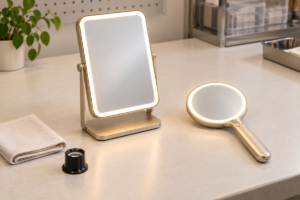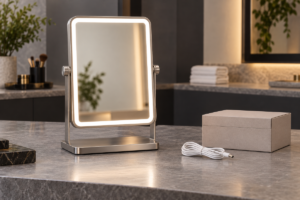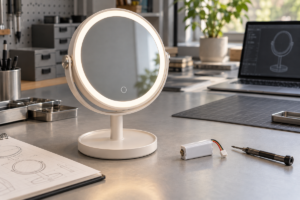

For rechargeable LED makeup mirror buyers, packaging approval should happen before bulk production, not after the product is already packed. The right package must protect the mirror glass, LED ring, hinge, base, USB-C cable, battery notices, manual, barcode, color box, and export carton through the real sales route. For Amazon, DTC, retail, and distributor programs, packaging is not only decoration. It directly affects breakage, accessory-missing complaints, battery-related confusion, freight cost, customer reviews, and repeat orders.
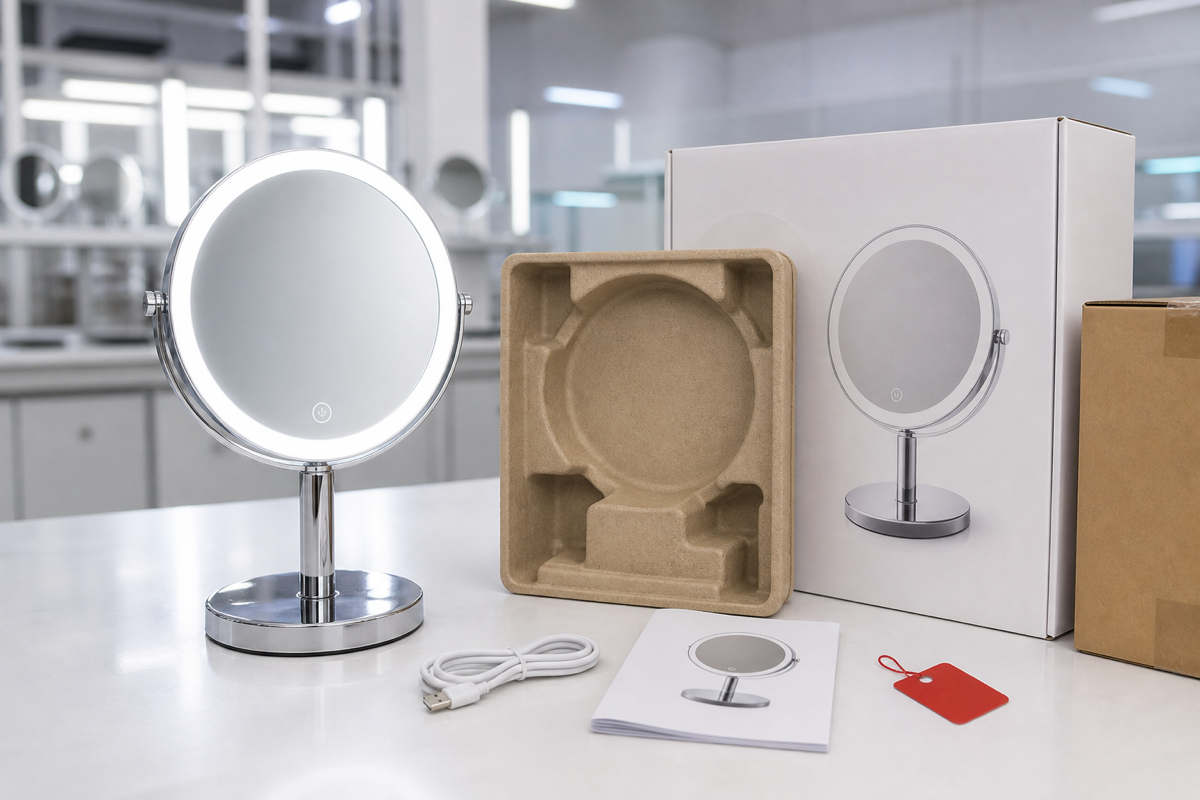
This guide is for beauty brands, e-commerce sellers, wholesalers, distributors, and OEM/ODM sourcing teams preparing rechargeable LED tabletop makeup mirrors for launch.
Why Packaging Approval Matters Before Production
Rechargeable LED makeup mirrors are more complex to pack than simple cosmetic accessories. The product includes mirror glass, lighting electronics, a rechargeable battery, charging port, touch control, stand or hinge parts, cable, and manual. If one part moves inside the box, the buyer may face cracked glass, scratched surfaces, loose USB-C ports, bent stands, missing cables, or confusing charging complaints.
The procurement risk is highest when the buyer approves the mirror sample but delays packaging decisions until mass production. By then, carton size, insert material, barcode position, manual language, accessory layout, and battery label may already affect cost and lead time.
Approve the product sample and packaging system together: inner protection, color box, accessory placement, carton packing, label content, drop-route target, and pre-shipment inspection standard.
Packaging Approval Matrix for E-Commerce Channels
Different sales routes need different packaging priorities. Retail needs shelf appeal; Amazon or DTC shipping needs stronger parcel-impact and accessory-control checks.
| Sales route | Main packaging risk | What buyers should approve |
|---|---|---|
| Amazon FBA | parcel impact, barcode errors, missing cable, battery labels | drop-route packaging, FNSKU/barcode area, accessory count, warning labels |
| DTC website | individual delivery damage and unboxing complaints | inner tray fit, outer carton strength, manual clarity, return-ready SKU labeling |
| Retail stores | shelf damage, weak presentation, unclear features | color box structure, product image, feature wording, hang tag or shelf label |
| Distributor cartons | compression, mixed SKU confusion, carton marks | master carton layout, SKU separation, carton marks, pallet plan |
| Gift programs | box deformation and low perceived value | premium insert, clean accessory layout, gift-box finish, protective overpack |
The safest starting point is to define the sales route first, then decide the insert, box, carton, and label requirements around that route.
Inner Protection: Keep the Mirror and LED Ring Stable
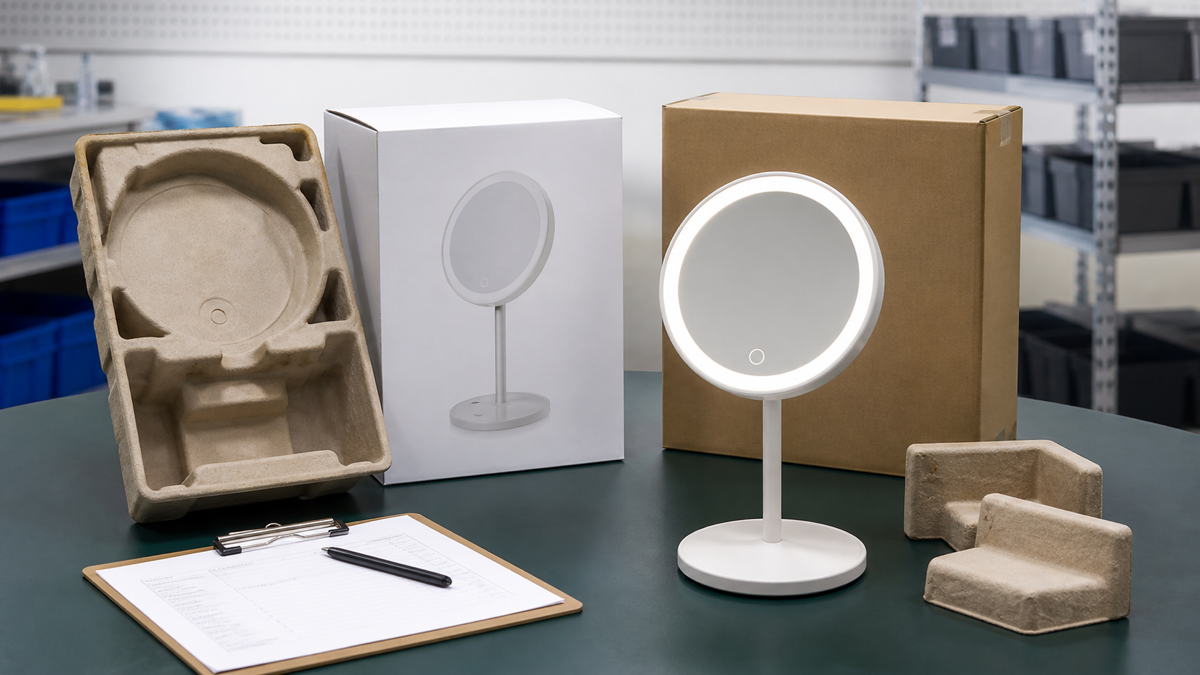
The inner insert is the first packaging item buyers should test. If it holds the mirror loosely, the mirror head, hinge, base, or USB-C port can rotate, rub, or hit the box wall during delivery.
Before approving the insert, check:
- The mirror head, base, stand, hinge, and LED ring each have fixed support.
- The glass surface does not touch hard packaging edges.
- The USB-C port is not pressed by the insert or cable.
- The mirror cannot rotate inside the box after shaking.
- The base and stem do not rub against the mirror surface.
- The insert still fits after color-box printing, manual placement, and accessory packing.
Common insert materials include molded pulp, EPE foam, EVA, paper card structures, and mixed solutions. Molded pulp can support sustainable packaging goals, while foam may offer stronger cushioning for heavier mirrors. Buyers should compare protection, appearance, cost, disposal expectations, and shipment route before final approval.
Accessory and Label Control
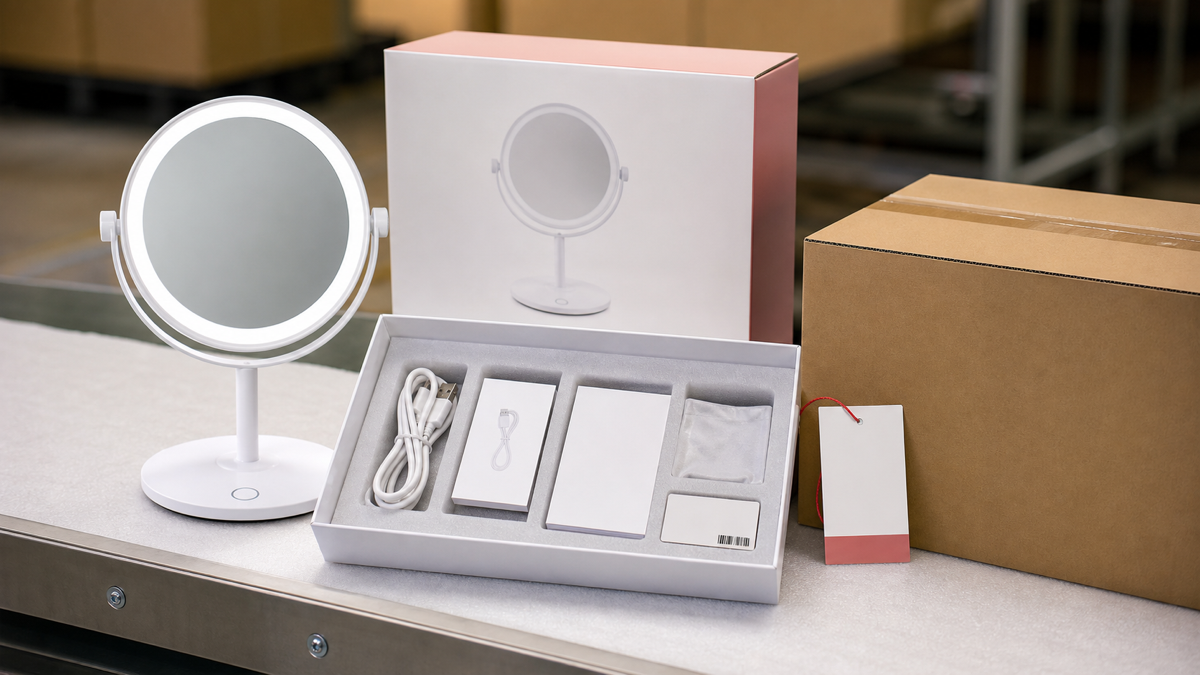
Many rechargeable LED makeup mirror returns are not caused by the mirror body itself. They come from missing cables, unclear manuals, wrong barcode labels, confusing charging instructions, or mismatched accessories.
For each SKU, define the packing list:
- Mirror unit and approved color or finish.
- USB-C cable type, length, color, and connector fit.
- User manual language and charging instructions.
- Battery or safety notice required for the destination market.
- Barcode, FNSKU, model number, carton mark, and country-of-origin wording.
- Polybag, accessory pouch, dust bag, or protective film.
The buyer should approve a final packed sample and keep photos of every layer. During production, inspectors can compare actual cartons with the packed sample instead of relying on a general purchase order description.
Battery and Charging Claims on Packaging
Rechargeable LED makeup mirror packaging often includes claims such as USB-C charging, dimmable lighting, long battery life, 3-color light, or magnification. These claims must match the approved product specification and test condition. If the box says “long runtime” but the buyer has not confirmed brightness level, battery capacity, charging time, and test method, customer expectations may exceed real performance.
Before printing packaging, verify:
- Battery capacity and runtime wording match the tested sample.
- USB-C charging description matches the supplied cable and port.
- CCT, dimming, magnification, and LED claims match the quotation.
- Product photos show the correct mirror shape, finish, base, and control button.
- No old model image, wrong cable, or outdated claim remains in the artwork.
Buyers should also confirm whether the package needs market-specific battery or transport wording, especially when the same mirror is sold through multiple markets or logistics routes.
Carton Size, Freight Cost, and Breakage Risk
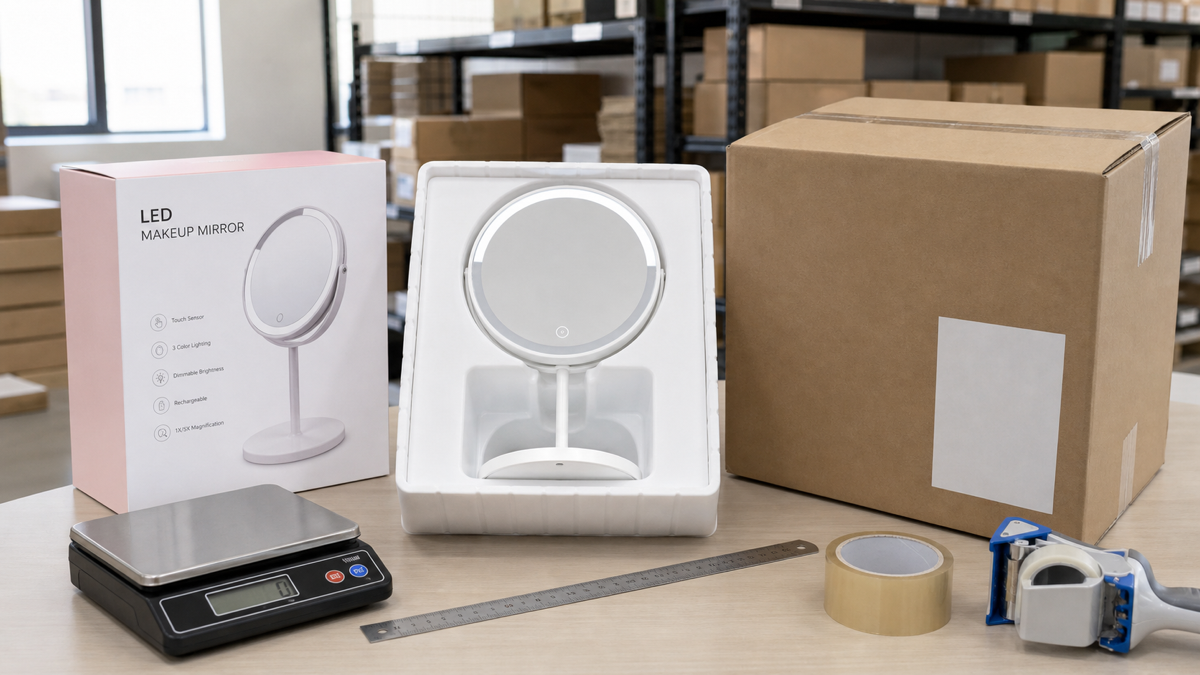
Right-size packaging is not only about reducing freight cost. If the carton is too tight, impact transfers directly to the mirror. If it is too large, the product may move, the insert may deform, and shipping cost increases.
For carton approval, buyers should check:
- Single-unit box size and master carton size.
- Carton board strength and edge-crush requirement for the shipment route.
- Quantity per carton and total packed weight.
- Empty space inside the carton and whether dunnage is needed.
- Pallet pattern, container loading, and mixed-SKU separation.
- Label position, barcode scan area, and carton mark visibility.
For Amazon and DTC programs, Mingda Mirror recommends testing the final packed sample in a shipping-like route, not only reviewing the empty packaging design. A good-looking color box is not enough if it cannot protect the mirror during parcel handling.
Pre-RFQ Details Buyers Should Send
Packaging quotations become more accurate when the buyer sends route-specific requirements early. A vague request such as “standard package” is risky because each supplier may define standard differently.
Send these details before RFQ:
- Target sales channel: Amazon, DTC, retail, wholesale, distributor, or gift.
- Mirror size, weight, battery capacity, and accessory list.
- Color-box requirement: plain, private label, retail-ready, or gift-ready.
- Insert preference: molded pulp, EPE, EVA, paper structure, or supplier recommendation.
- Barcode and label requirements for each market.
- Manual language and safety-warning requirements.
- Drop-test or delivery-route target if required.
- MOQ, launch deadline, sample deadline, and first shipment quantity.
These details help the supplier quote packaging cost, sample time, printing lead time, carton dimensions, and inspection scope more reliably.
Common Packaging Mistakes
Common mistakes include approving the mirror without the final packed sample, using the same box for retail shelf and parcel delivery, leaving labels or manuals until the end, choosing inserts only by unit cost, and changing the mirror base, cable, or battery after packaging approval without retesting box fit.
Bottom-Line Recommendation
For rechargeable LED makeup mirror buyers, packaging should be approved as a functional sourcing specification, not just a printed box. The best approval file includes a complete packed sample, inner protection check, accessory list, label control, battery and charging wording review, carton-size confirmation, and pre-shipment inspection standard.
Mingda Mirror supports rechargeable LED makeup mirror OEM/ODM development, private-label packaging, sample packing review, lighting and battery QC, carton planning, and e-commerce-ready shipment control. Review our Makeup Mirrors, OEM/ODM Services, QC Process, and Product pages, or contact Mingda Mirror with your mirror specification, sales channel, packaging route, label needs, and first-order quantity.
FAQ
What packaging should rechargeable LED makeup mirror buyers approve before bulk production?
Buyers should approve the complete packed sample, including the mirror, insert, color box, accessories, manual, battery or charging notices, barcode labels, export carton, carton marks, and inspection standard.
Is molded pulp better than foam for LED makeup mirror packaging?
Molded pulp can support sustainability and retail presentation, while foam may offer stronger cushioning for heavier mirrors. The best choice depends on mirror weight, box structure, drop route, cost target, and buyer sustainability requirements.
How can Amazon sellers reduce mirror breakage during delivery?
Amazon sellers should test the final packed mirror through a parcel-style route, confirm the insert prevents movement, protect the glass and LED ring, verify barcode placement, and avoid cartons that are either too tight or too oversized.
What accessory details should be included in an RFQ?
The RFQ should specify USB-C cable type and length, manual language, battery notice, barcode or FNSKU needs, warranty card, accessory pouch, protective film, and whether the package is retail-ready or e-commerce overpacked.
Why does packaging affect rechargeable mirror reviews?
Packaging affects whether the mirror arrives unbroken, whether accessories are present, whether charging instructions are clear, and whether the customer understands the battery and lighting functions. Poor packaging can create avoidable returns even when the mirror itself is well made.